
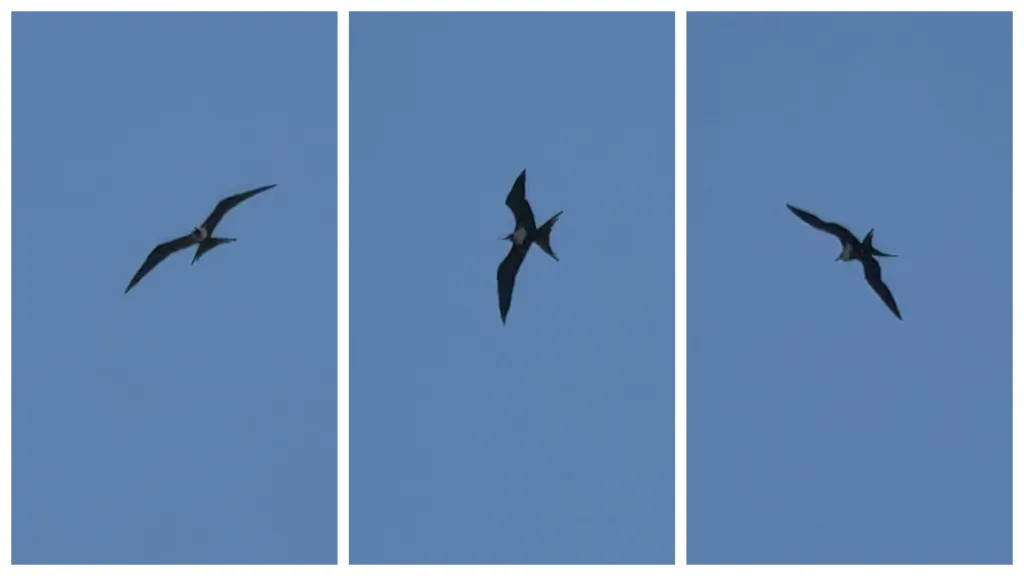
A recent bird sighting suspected to be a Lesser Frigatebird — not a species known to live anywhere near the California coast — is creating a buzz among ornithologists and bird-watching enthusiasts.
Read more US military strikes another alleged drug boat in the eastern Pacific, killing 2
And if the bird turns out to be what experts believe it to be, the sighting would be a first for Orange County and only the third-ever documented in the state.
Images of the bird off San Clemente were taken by Jim Serpa, who was out for a morning walk along the beach trail on May 21, when the unlikely sight caught his eye.
He fumbled to get his phone out, thinking he had missed the large, exotic bird above. But a minute or two later, it soared by again, and he was able to quickly snap a few images.
Serpa is a retired State Parks ranger, so he knows what’s common to see around the region, both in the water and in the air. And he knew, he said, this was a unique visitor for the local coastline; the black bird’s wings spanned about 4 feet across and its markings were unlike native bird species.
Serpa initially thought it was a Magnificent Frigatebird, he said, which he’s seen before off the island of Kauai in Hawaii, but never around Orange County.
“They have that incredible silhouette, the tail and the v-shape look on their wings,” he said. “It looks like a stealth bomber or something.”
Nancy Kenyon, a volunteer with the Sea & Sage Audubon Society, looked at Serpa’s photos, but a few characteristics didn’t quite match the Magnificent Frigatebird. So she sent Serpa’s images over to Ryan Winkleman, Orange County rare bird report compiler.
In the meantime, a few more reports and photos of the unusual bird came in from San Clemente and Dana Point the next day, piquing interest even more.
Read more Federal judge refuses to block Trump order to create federal voter list and limit mail voting
It was determined that the bird is likely an adult female Lesser Frigatebird, the distinguishing point being a visible presence of a white hindcollar on the bird — the area wrapping up around the back of its neck — which would be lacking on a Magnificent Frigatebird, Winkleman noted.
Lesser Frigatebirds are of “sufficient rarity” in California, he noted, and any reports have to be accepted or rejected by the statewide California Bird Records Committee, instead of by local reviewers.
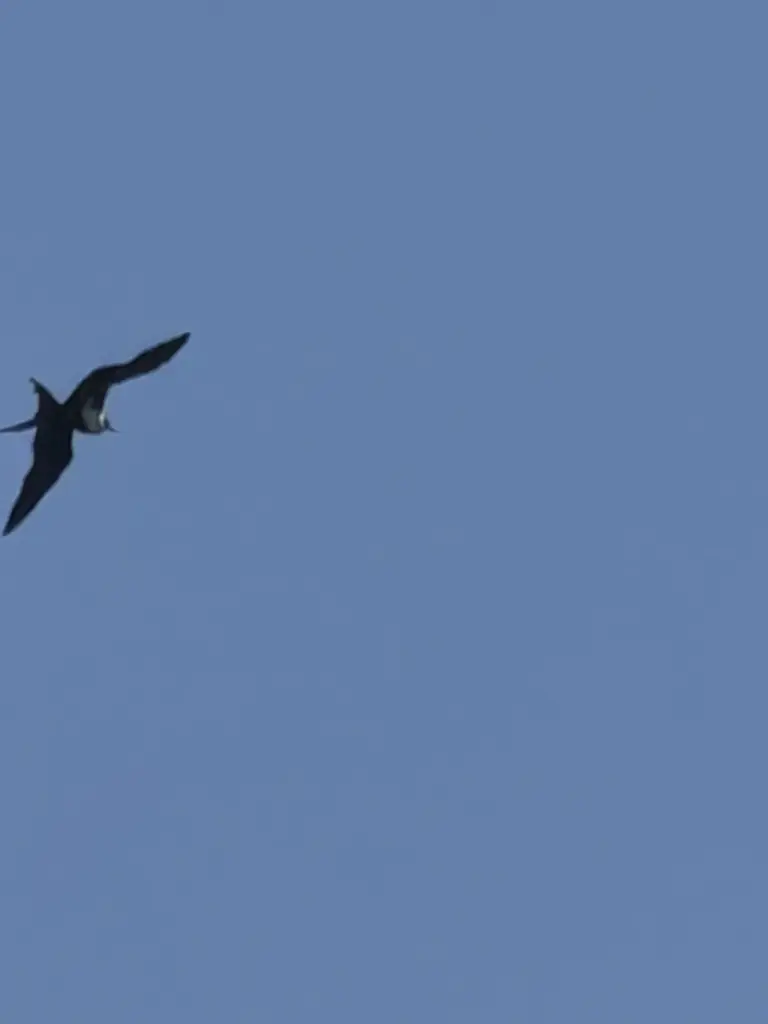 Former State Parks ranger Jim Serpa snapped a photo of a bird that could turn out to be the first-ever documented Lesser Frigatebird off O.C.’s coast, with the sighting under review by the California Bird Records Committee. (Photo courtesy of Serpa)
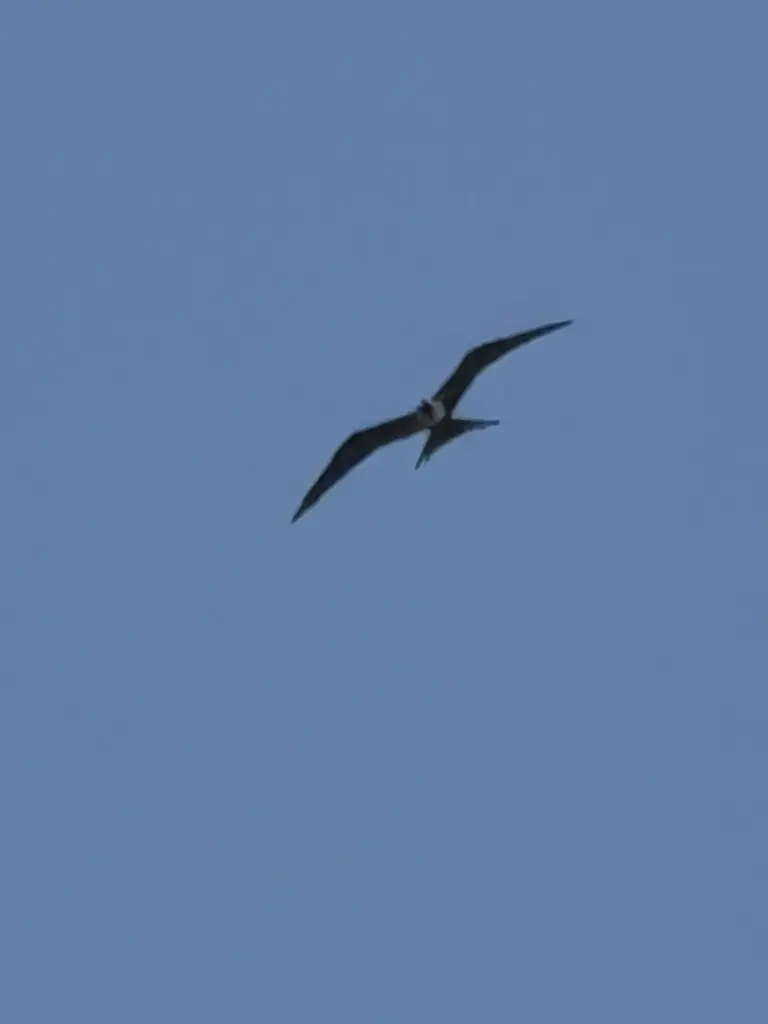 Former State Parks ranger Jim Serpa snapped a photo of a bird that could turn out to be the first-ever documented Lesser Frigatebird off O.C.’s coast, with the sighting under review by the California Bird Records Committee. (Photo courtesy of Serpa)
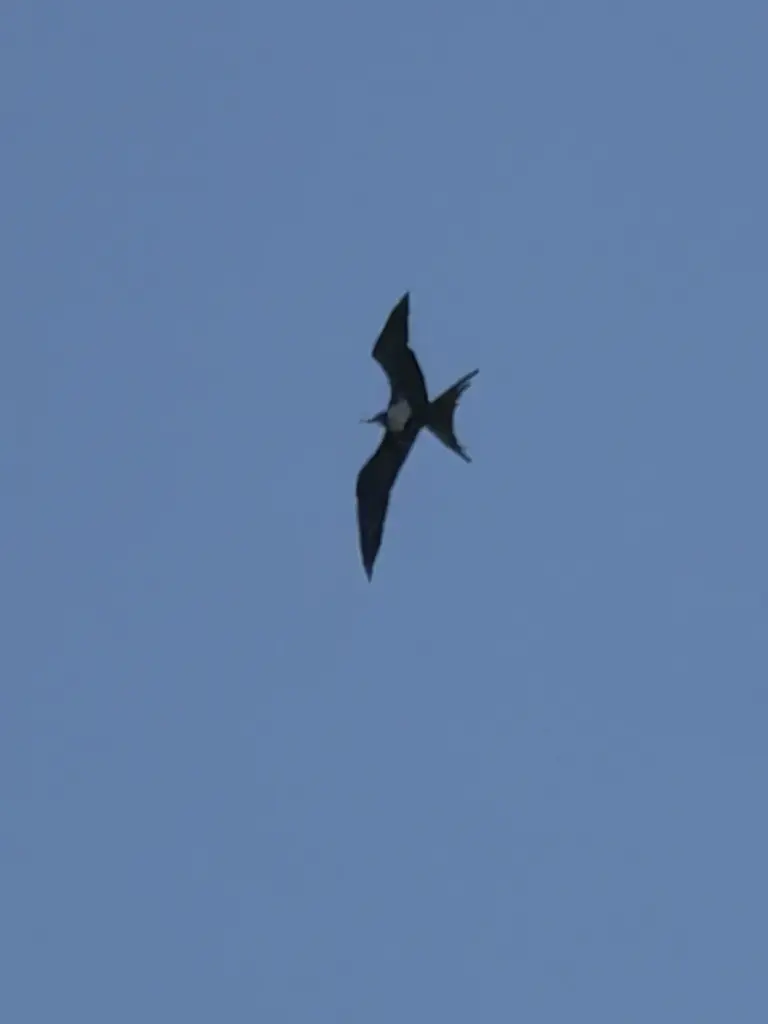 Former State Parks ranger Jim Serpa snapped a photo of a bird that could turn out to be the first-ever documented Lesser Frigatebird off O.C.’s coast, with the sighting under review by the California Bird Records Committee. (Photo courtesy of Serpa)
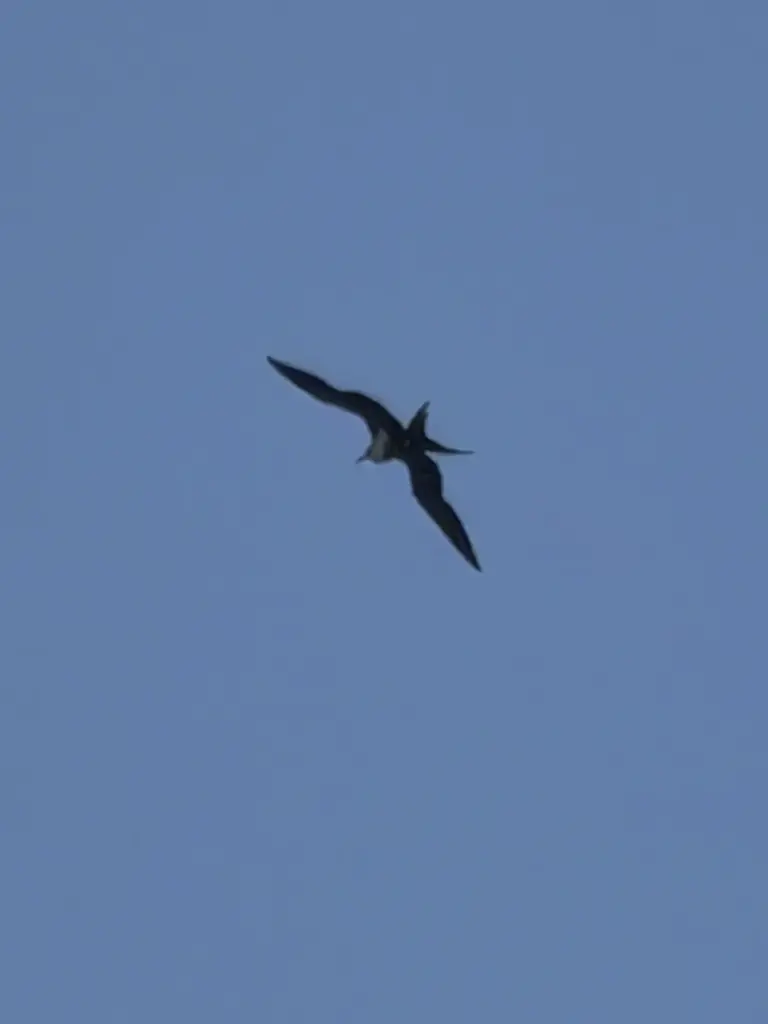 Former State Parks ranger Jim Serpa snapped a photo of a bird that could turn out to be the first-ever documented Lesser Frigatebird off O.C.’s coast, with the sighting under review by the California Bird Records Committee. (Photo courtesy of Serpa)
“If this record is accepted by the CBRC, it would only be the third record for California, and the first ever record for Orange County,” he wrote in an email.
In all of the United States, it could be only the sixth recorded sighting, though there was another bird this week, interestingly, reported in Ohio under review that could also be a Lesser Frigatebird.
California Bird Records Committee secretary Tom Benson said the species is normally found in the tropical, primarily western, Pacific and Indian oceans, “so it’s a long way from where it started,” he noted.It’s unknown what could have brought the bird to this coast.
“Any theories would be pure speculation without careful analysis of a number of factors related to weather, climate, and sea conditions,” Benson noted. “Sometimes birds just show up in unexpected places.”
It typically takes up to six months before records are reviewed by the California Bird Records Committee, since they regularly receive submissions for verification from all over the state.
Serpa has a tip for anyone wanting to see a rare species show up along the coast.
Read more Think it’s hot now? The next five years will smash records, UN says
“Keep your eyes open out there,” he said. “You never know what’s gonna come by.”