
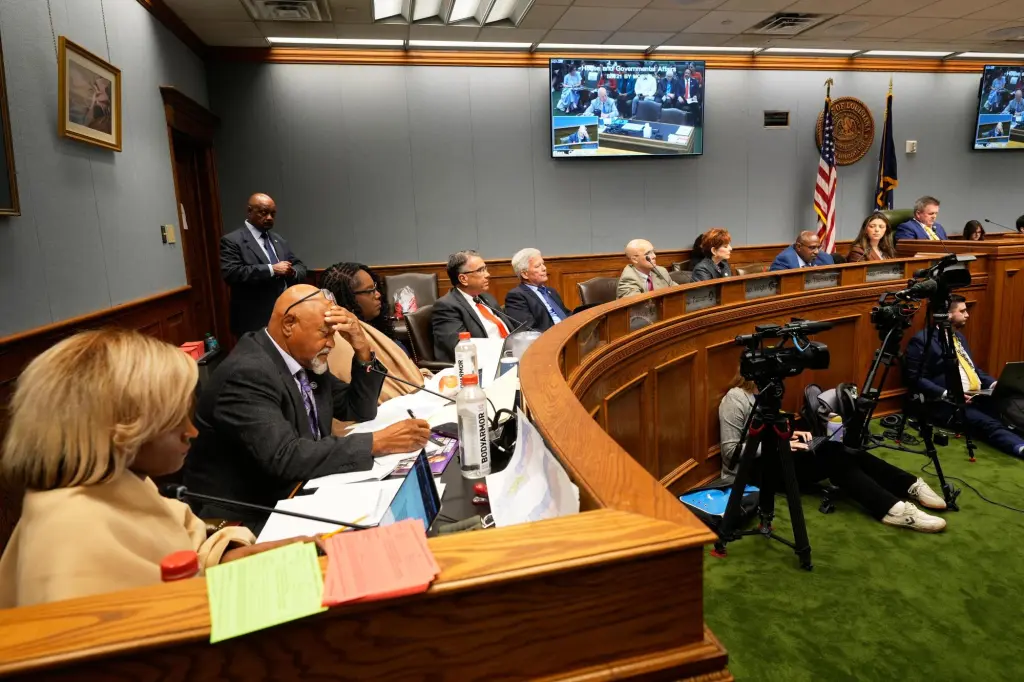
By DAVID A. LIEB and JACK BROOK
Republican lawmakers in Louisiana are poised to eliminate a majority-Black congressional district that elected a Democrat in response to a recent U.S. Supreme Court ruling that its map constituted an illegal racial gerrymander.
Read more France’s parliament votes to repeal slavery-era Black Code, with tears and history in the chamber
A redistricting plan under consideration Thursday in the state House would give Republicans a chance at picking up an additional seat in this year’s midterm elections. It also would protect U.S. House Speaker Mike Johnson from facing a more difficult reelection.
“We drew this map in an effort to safely maximize Republican strength,” said state Rep. Beau Beaullieu, a Republican who chairs the chamber’s redistricting committee.
If passed by the House, the plan would need only a final Senate vote to go to Republican Gov. Jeff Landry.
Since the Supreme Court’s decision in late April, several other Southern states already have seized upon a weakened federal Voting Rights Act to try to redraw their own congressional districts. It’s the latest flare-up in a heated national redistricting battle heading into the November elections, spurred along by President Donald Trump.
So far, Republicans are winning the redistricting contest. But that doesn’t necessarily mean they will win the U.S. House in November. Democrats need a net gain of only a few seats to flip control of the chamber. Trump faces negative approval ratings. And in midterm elections, the president’s party typically loses congressional seats.
 Louisiana Sen. John “Jay” Morris, R-Dist. 35, testifies during a House and Governmental Affairs Committee hearing over redistricting in Baton Rouge, La., Thursday, May 21, 2026. (AP Photo/Gerald Herbert)
 Louisiana state Rep. Gerald Beaullieu, R-Dist. 48, chairman of House and Governmental Affairs Committee, listens during a hearing over redistricting in Baton Rouge, La., Thursday, May 21, 2026. (AP Photo/Gerald Herbert)
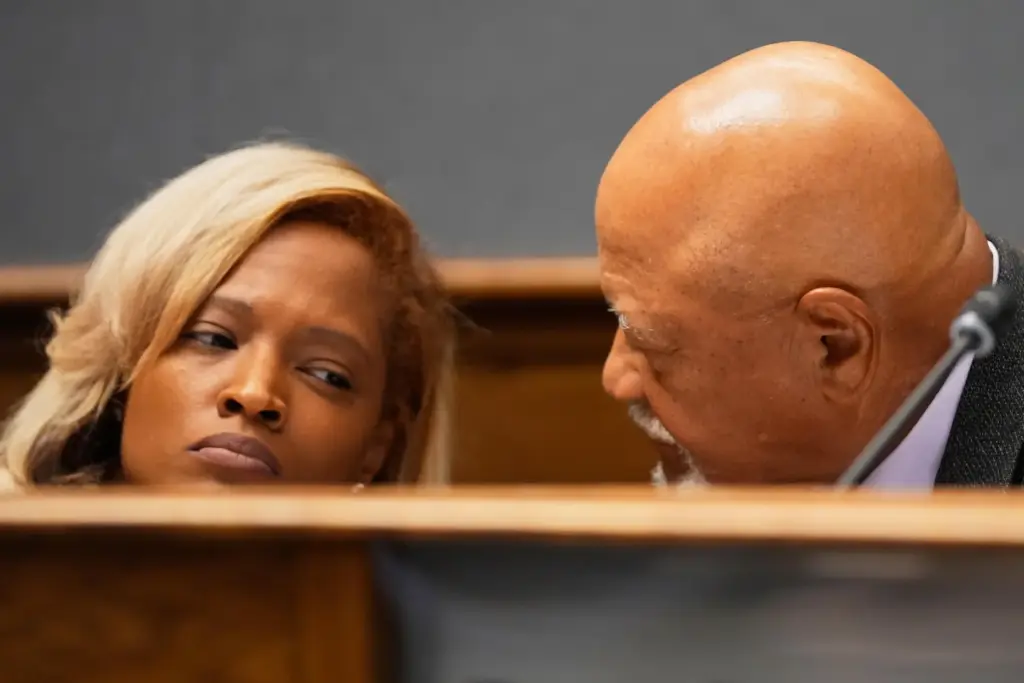 Louisiana state Rep. Wilford Carter, Sr., D-Dist. 34, talks with Rep. Joy Walters, D-Dist. 4, during a House and Governmental Affairs Committee hearing over redistricting in Baton Rouge, La., Thursday, May 21, 2026. (AP Photo/Gerald Herbert)
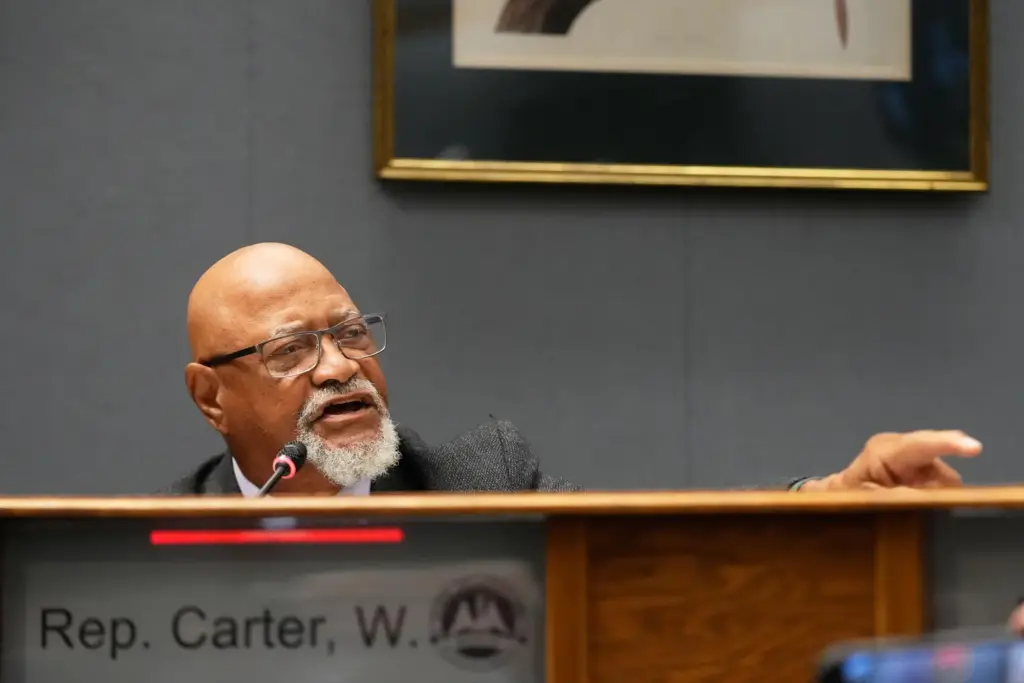 Louisiana state Rep. Wilford Carter, Sr., D- Dist. 34, speaks during a House and Governmental Affairs Committee hearing over redistricting in Baton Rouge, La., Thursday, May 21, 2026. (AP Photo/Gerald Herbert)
Louisiana makes a third attempt at redistricting
In 2022, Republicans in the Louisiana Legislature overrode the veto of Democratic Gov. John Bel Edwards to enact new congressional districts based on the 2020 census. Five Republicans and one Democrat won election under those lines in 2022. But the federal courts said the map violated the Voting Rights Act by not including a second district with a majority-Black population.
The Legislature responded in 2024 by creating a second majority-Black district, stretching more than 200 miles northwest from Baton Rouge to Shreveport. That map resulted in the election of Democratic U.S. Rep. Cleo Fields. But that map also was challenged, and the Supreme Court struck it down as an illegal racial gerrymander.
Landry then postponed the state’s May 16 U.S. House primary until later this summer to allow time for state lawmakers to again redraw districts before Monday’s scheduled end of their session.
The latest plan scraps the snaking district represented by Fields and instead clusters it around predominantly white communities in the Baton Rouge area and southern Louisiana. It adds part of Baton Rouge to a heavily Democratic, majority-Black district based in New Orleans currently represented by Democratic U.S. Rep. Troy Carter.
New map could face more litigation
Beaullieu said Republicans opted against a new map aimed at winning all six of the state’s U.S. House seats because it would have required adding more Democratic voters to Republican-held districts. He said that could have backfired by allowing Democrats to win two or three seats, potentially jeopardizing the reelection of Johnson or Majority Leader Steve Scalise.
Some people remained unsatisfied.
Republican U.S. Rep. Clay Higgins, a staunch Trump supporter whose southern Louisiana district contains several parishes split up by the redistricting legislation, denounced the plan in a social media post as a “Frankenstein looking thing” and an “insanely bad map.”
Read more Carney calls for new partnership with US as Trump mulls whether to renew free trade agreement
The plaintiffs behind the lawsuit that prompted the Supreme Court to strike down Louisiana’s 2024 map threatened further litigation because the state’s proposed redistricting still leaves a majority-Black district in place, according to court filings this week.
Louisiana state Rep. Kyle Green, who chairs the House Democratic Caucus, said Thursday that the proposed map could still constitute a racial gerrymander because it packs Black voters into a single congressional district.
State Sen. Jay Morris, the Republican sponsoring the redistricting bill, said he expects further litigation but is unconcerned.
“I believe this map is easily defendable under the Constitution because we did not racially gerrymander it,” Morris told The Associated Press.
Republican lawmakers said their latest redistricting considered political party affiliation but not race.
But Democratic state Rep. Edmond Jordan, who chairs the Louisiana Legislative Black Caucus, said party politics are inextricably tied to race in the state. He warned that “drawing a map around partisanship would produce exactly the racial results that the Constitution forbids.”
Other Southern states have acted quickly
In the month since the Supreme Court’s ruling, several Southern states already have acted on redistricting.
Florida’s Republican-led legislature passed new congressional districts just hours after the ruling, completing a redrawing that already was in the works in anticipation of the decision. A state judge this week declined to block use of those districts, which could yield Republicans as many as four additional seats in the midterm elections.
Tennessee adopted new U.S. House districts a week after the ruling, carving up a majority-Black district based in Memphis in a Republican attempt to win an additional seat.
Alabama also attempted to change its congressional districts, though a federal judicial panel this week blocked a Republican-drawn map that it determined intentionally discriminates against Black people. The state’s Republican attorney general has asked the U.S. Supreme Court to let the map be used this year. Republican Gov. Kay Ivey also pushed back a deadline to certify candidates for an Aug. 11 special congressional primary from Friday to next Wednesday, in hopes the Supreme Court will issue a decision by then.
Despite pressure from Trump, South Carolina’s Senate this week opted against congressional redistricting. Some senators said it was too late to make changes since in-person early voting had begun. Other Republican lawmakers had reservations that the plan could backfire by allowing Democrats to win more seats.
Read more Pressured shoppers keep stretching budgets, aiding retailers
Associated Press writer Kim Chandler contributed to this report.