
By BASSEM MROUE, KAREEM CHEHAYEB and NATALIE MELZER
BEIRUT (AP) — Israel’s government ordered strikes on the southern suburbs of Beirut on Monday, a day after its ground forces reached their deepest point in Lebanon in 26 years and as Hezbollah fired rockets at northern Israel, including the outskirts of the coastal city of Haifa.
Read more Where in California do landlords offer the most discounts?
A joint statement by Israeli Prime Minister Benjamin Netanyahu and Defense Minister Israel Katz said that following what they called repeated violations of the ceasefire by Hezbollah and the “attacks against our cities and citizens,” they have ordered the Israeli military to attack targets in Beirut’s southern suburbs known in Arabic as Dahiyeh.
Hezbollah agreed to halt attacks on Israel when the ceasefire was signed in mid-April, but resumed following Israeli strikes in Lebanon that Israel characterized as self-defense.
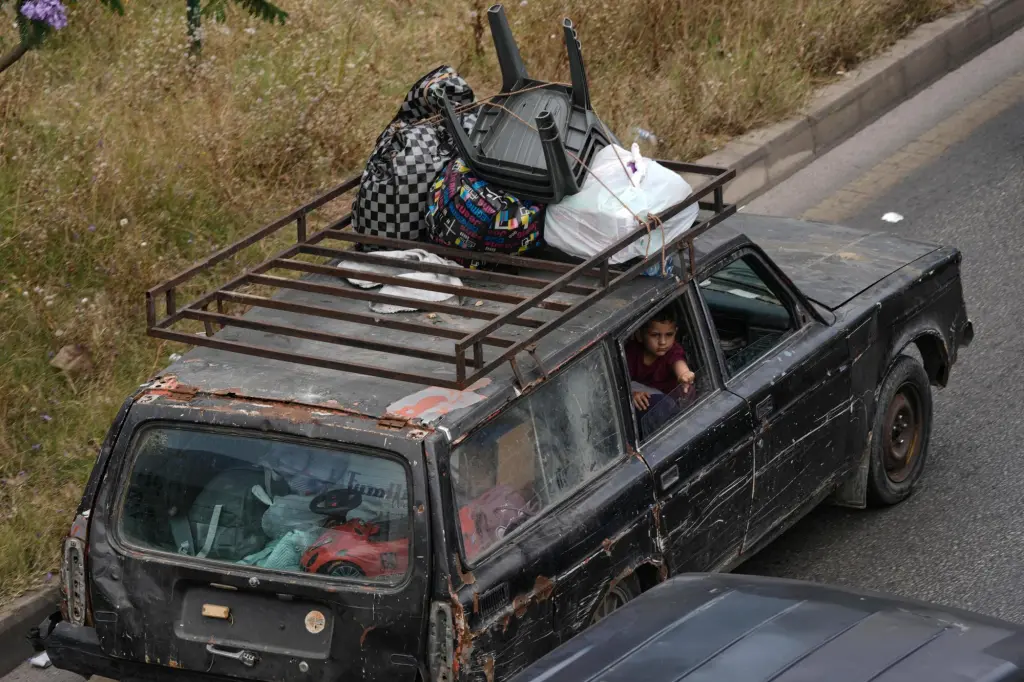
After Monday’s warning, large numbers of people were seen fleeing Dahiyeh, jamming roads leading out of the suburb, where Hezbollah enjoys wide support.
Israel and Hezbollah exchange fire overnight
Israeli airstrikes overnight on southern Lebanon left six people dead, including a Syrian citizen in a village near the city of Nabatiyeh, the state-run National News Agency said. Israel struck other towns and villages near the major city, close to the strategic Beaufort Castle and other towns the Israeli military captured in recent days.
The Israeli military, meanwhile, said its air force had intercepted two projectiles launched from Lebanon toward Israeli territory, as well as a suspicious aerial target in the area where Israeli soldiers operate in southern Lebanon. No injuries were reported, the military said.
Hezbollah said it carried out rocket and missile attacks on northern Israel on Sunday. It said early Monday it attacked Israeli troops in Zawtar al-Sharqieh, just north of the Litani River, and struck what they said was Israeli military infrastructure in Tiberius, a few dozen miles south of the border.
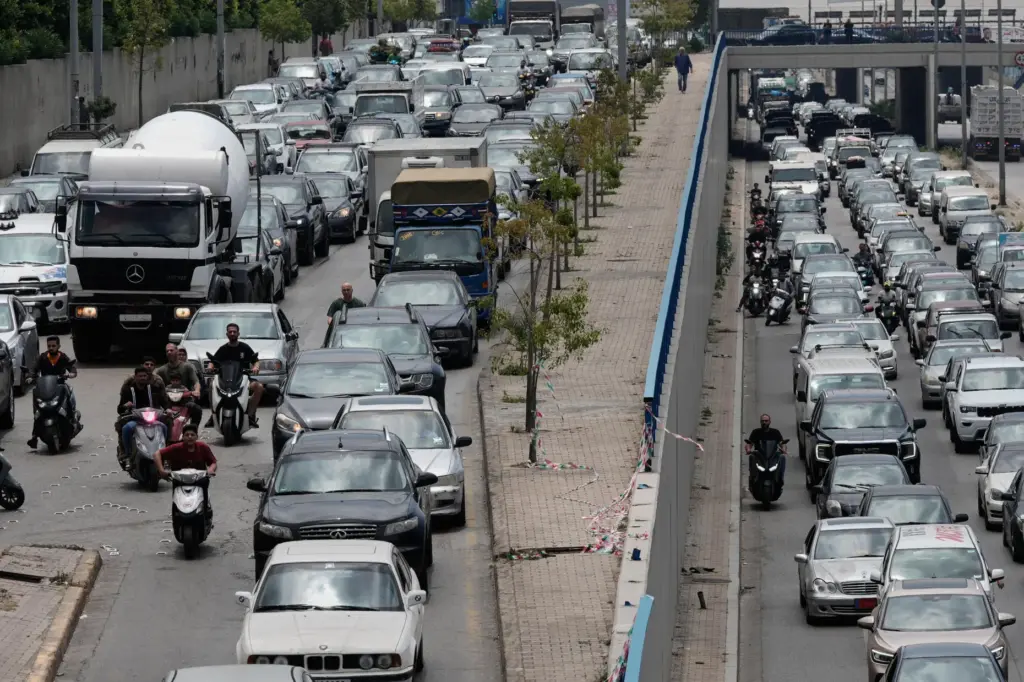 Cars sit in traffic on a highway as residents flee following an Israeli threat to strike Dahiyeh, Beirut’s southern suburbs, Lebanon, Monday, June 1, 2026. (AP Photo/Bilal Hussein)
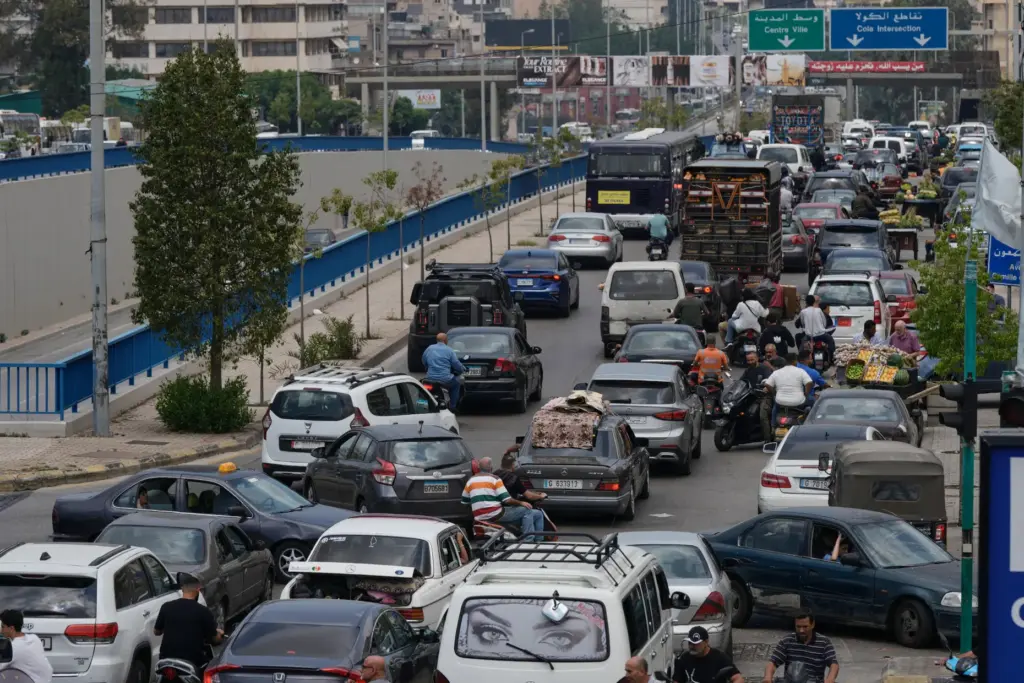 Cars sit in traffic on a highway as residents flee following an Israeli threat to strike Dahiyeh, Beirut’s southern suburbs, Lebanon, Monday, June 1, 2026. (AP Photo/Bilal Hussein)
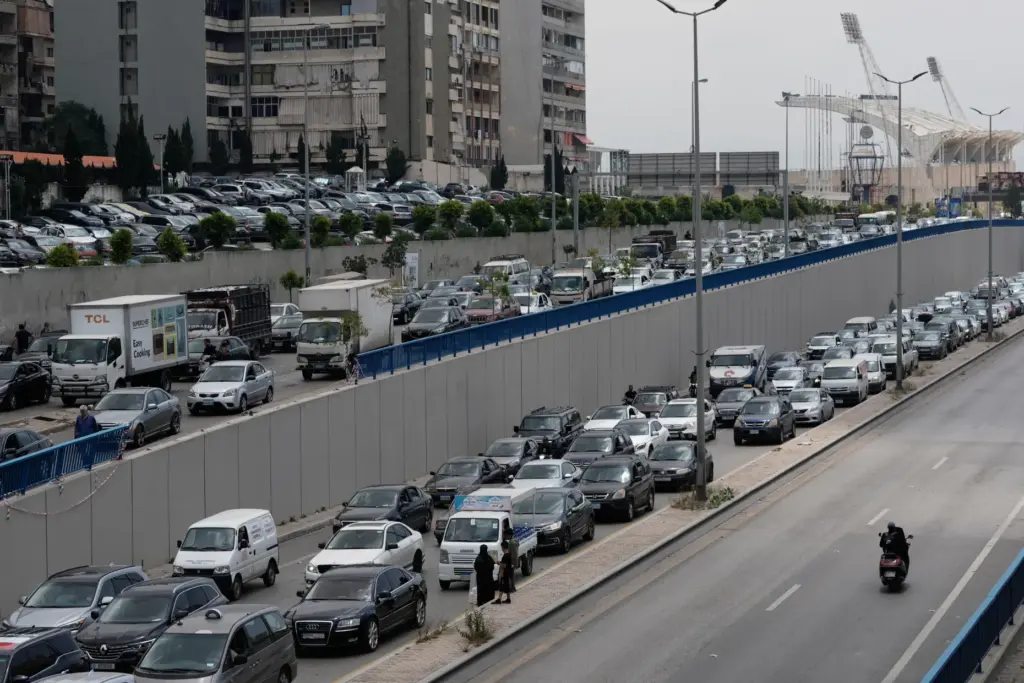 Cars sit in traffic on a highway as residents flee following an Israeli threat to strike Dahiyeh, Beirut’s southern suburbs, Lebanon, Monday, June 1, 2026. (AP Photo/Bilal Hussein)
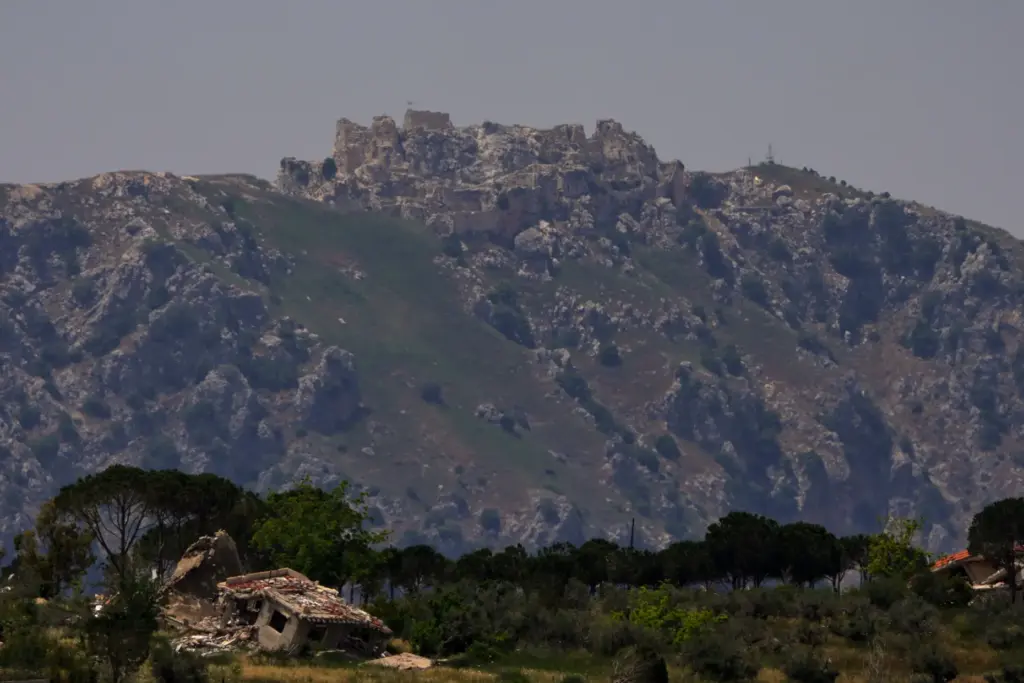 A view of the Beaufort Castle in southern Lebanon as seen from northern Israel, Sunday, May 31, 2026. (AP Photo/Ariel Schalit)
Israel and Lebanon set to hold talks in Washington
The latest attacks came despite a nominal ceasefire that has been in place since April 17 and just before Lebanon and Israel hold their next round of direct talks in Washington starting Tuesday. Hezbollah has rejected direct talks, counting on pressure from Iran, which has demanded an end to the war in Lebanon in its talks with Washington.
The talks between officials from Israel and Lebanon, which began in April in Washington, were the first in more than three decades between the countries, which have no formal diplomatic relations.
Lebanese officials have been scrambling in diplomatic calls, including with Washington, in a desperate bid to push back Israel’s military escalation after Netanyahu’s announcement, a Lebanese diplomatic official said. Beirut is still committed to holding talks to end the conflict despite the boiling tensions, the official said, who spoke to The Associated Press on condition of anonymity in line with regulations.
Iran Foreign Minister Abbas Araghchi asserted Monday that any ceasefire agreement between Washington and Tehran is a “ceasefire on all fronts, including Lebanon.”
“Its violation on one front is a violation of the ceasefire on all fronts,” Iran’s top diplomat said in a post on X.
Beirut has been mostly spared from airstrikes since the ceasefire went into effect, apart from two targeted attacks on the city’s southern suburbs in May.
Read more Wall Street poised to open with gains, oil jumps again after the US and Iran trade strikes
A U.S. official said late Sunday that Secretary of State Marco Rubio had spoken to Lebanese President Joseph Aoun and Israeli Prime Minister Benjamin Netanyahu to propose a fresh path to continue ongoing negotiations, as President Donald Trump weighs a tentative ceasefire extension with Iran.
Under the proposal, Hezbollah would halt all attacks on Israel and Israel would refrain from escalating military operations in the Lebanese capital of Beirut, according to the official who spoke on condition of anonymity to discuss private diplomatic conversations.
The official said Aoun was open to the idea but that Lebanese parliament chief Nabih Berri had responded by demanding that Israel first stop all military action.
The official said the Trump administration does not expect Israel to give up retaliating for Hezbollah strikes on its territory.
Berri, a key Hezbollah ally, said in a statement Sunday that he can guarantee the militant group’s “full, comprehensive and immediate commitment to a ceasefire.” Berri added: “But who will force Israel to stop its aggression?”
Aoun on Monday said in comments released by his office that “Lebanon is facing a fierce and condemned Israeli aggression.” Aoun added that his government is continuing work to end “the suffering of the Lebanese in general and the southerners in particular.”
Later, the president issued a statement reiterating Beirut’s commitment to negotiations, saying it is “safer” than war.”
“It will not solve the problem within moments, but it is a process that needs time,” he said. “And we have no other choice.”
The latest round of fighting between Israel and Hezbollah has killed 3,412 people in Lebanon and displaced more than 1 million people.
Israel’s military said a soldier was killed in southern Lebanon overnight in a drone attack by Hezbollah. Hezbollah’s use of hard-to-detect fiber-optic drones has been deadly for the Israeli military, which is struggling to respond.
According to Netanyahu’s office, at least 26 Israeli soldiers and a defense contractor have been killed in or near southern Lebanon. Two civilians have also been killed in northern Israel.
Melzer reported from Tel Aviv, Israel. Associated Press writer Matthew Lee contributed to this report from Washington.
Read more Newark mayor imposes curfew around Delaney Hall after clashes over immigration detention center