
By JENNIFER McDERMOTT
Renewable energy groups are suing the U.S. military because they say national security reviews for new wind farms on private land have been effectively frozen for months. The groups say this logjam jeopardizes $47 billion in investments and thousands of jobs in 21 states.
Read more Judge extends block on Trump’s $1.8 billion ‘Anti-Weaponization Fund’
President Donald Trump has frequently talked about his hatred of wind power and calls turbines ugly. Currently, about 10% of the electricity generated in the United States comes from wind farms, making it the nation’s largest source of renewable energy. Solar is the fastest-growing.
The lawsuit against the Pentagon and Defense Secretary Pete Hegseth was filed in U.S. District Court in Oregon by nine groups, including Renewable Northwest and the Advanced Power Alliance. They allege that a policy of inaction “poses an existential threat to the wind energy industry across the nation by effectively halting all new development activity.”
The Pentagon says it has to balance new sources of energy against military needs. A military office known as the siting clearinghouse, which checks energy projects for national security risks, is actively evaluating these projects — but it’s a complex process where different agencies have to work together, the Pentagon says. The Pentagon evaluates land-based wind energy projects during the Federal Aviation Administration review.
Late Thursday, the plaintiffs filed a motion asking the court to order the Pentagon to resume its ordinary review process for new wind energy projects. They included an economic analysis by global consulting firm Charles River Associates Inc.
When asked about the economic benefits at risk on Thursday, the department said it does not comment on open litigation.
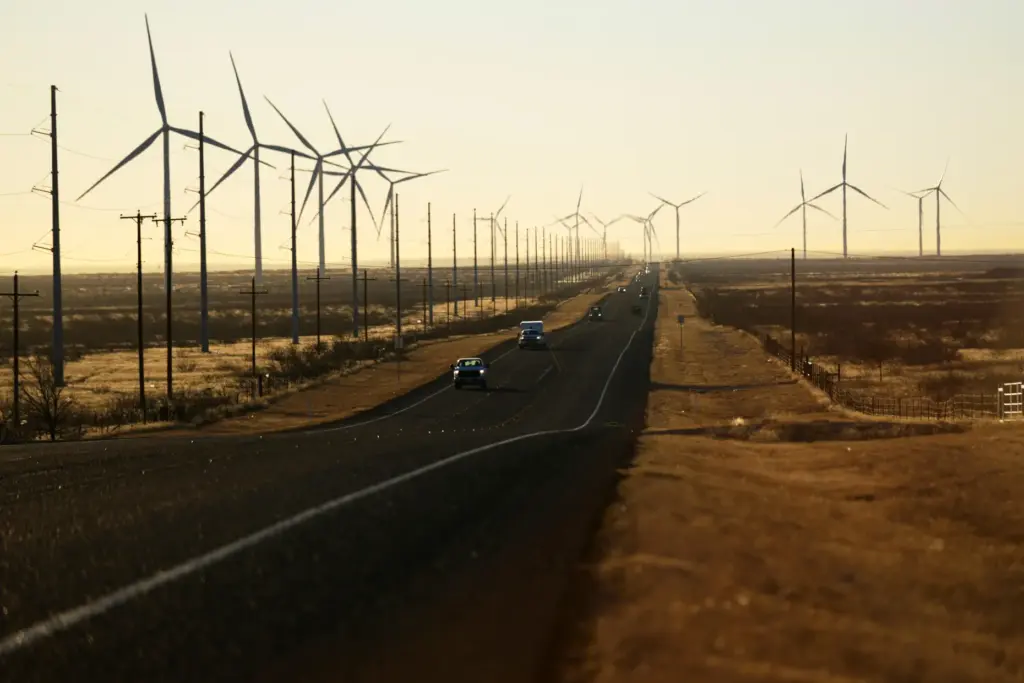 FILE – Wind turbines are visible along Route 176 as vehicles travel eastbound Feb. 24, 2025, in Andrews, Texas. (AP Photo/Julio Cortez, File)
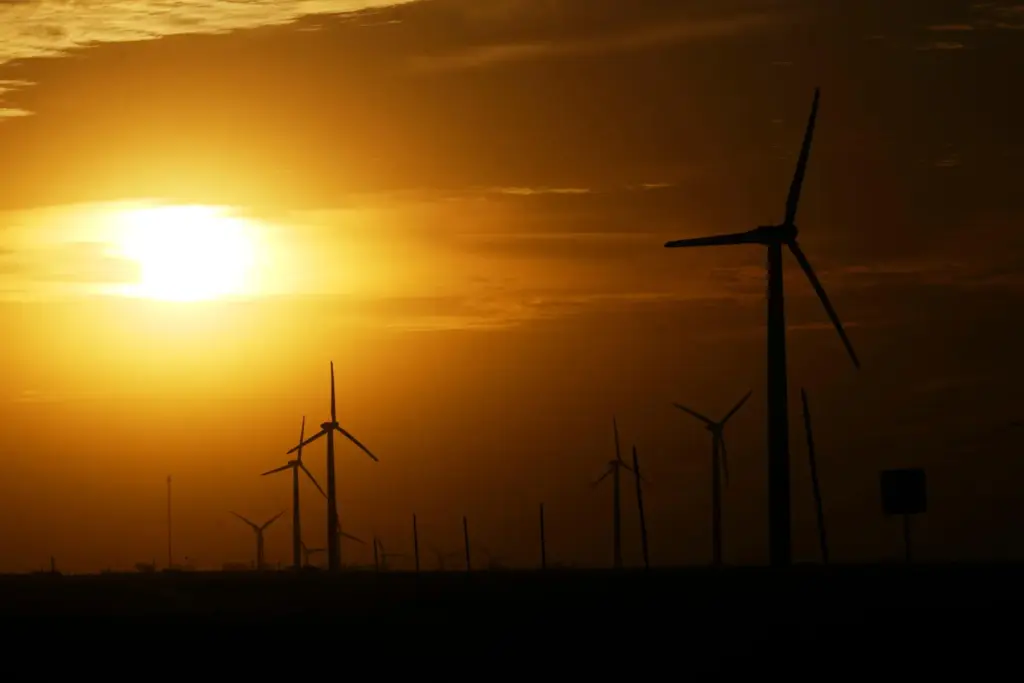 FILE – Wind turbines are visible as the sun begins to set Feb. 26, 2025, in Roscoe, Texas. (AP Photo/Julio Cortez, File)
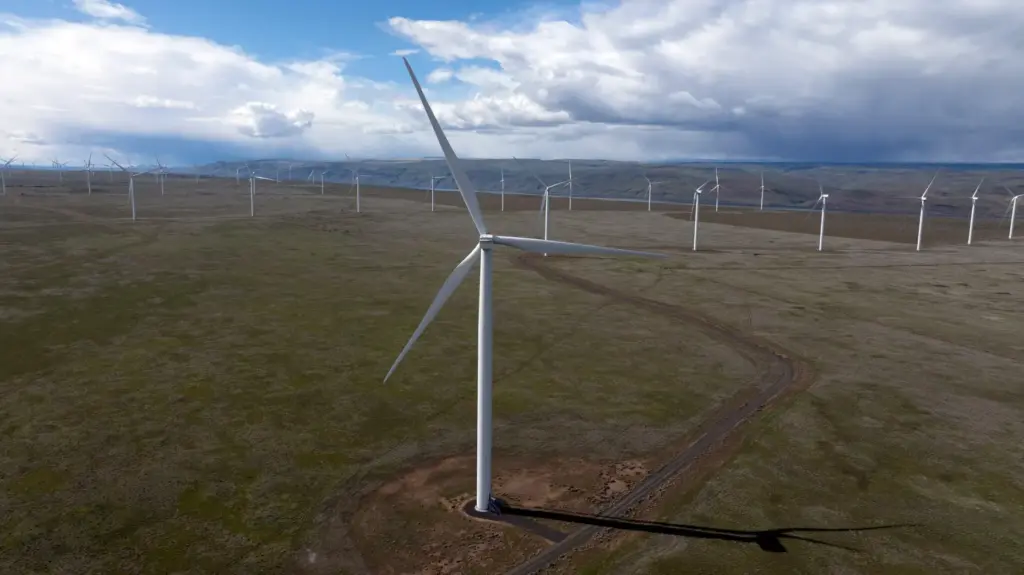 FILE – Wind turbines oeprate on April 1, 2025, in Boardman, Ore. (AP Photo/Jenny Kane, File)
Trump ordered a temporary halt to leasing and permitting for wind energy projects. However, a federal judge struck down that order blocking wind development. Trump is particularly hostile toward offshore wind, and the administration recently started buying back leases to stop offshore wind development.
The American Clean Power Association first raised the issue with the stalled national security reviews, sending a letter to the Pentagon in March to demand an explanation. CEO Jason Grumet said Thursday that the U.S. wind industry needs the government to carry out the normal review and permitting processes to keep the lights on for families and businesses.
Here are some key numbers that show the impact, as described in the economic analysis:
106 projects
There are at least 106 wind projects impacted by the delays. It’s a conservative estimate that only includes projects that could be independently verified in the FAA database. All new wind projects will be affected if the reviews don’t move forward.
Read more Ukraine hits fuel supplies to Crimea, sparking a fuel crisis on the Russian-held peninsula
The renewable energy groups allege that the Pentagon stopped countersigning final agreements starting in August 2025 and then progressively slowed the rest of the review process until all stages stopped in April. The first quarter of 2026 was the slowest start to the year for new installations of land-based wind power since 2018.
$47 billion
Charles River Associates estimated that the affected projects represent more than $47 billion in investments. This is the cost to build the projects and deliver energy, including buying turbines, hiring contractors, financing commitments, paying to enter the interconnection queue to connect to the electric grid and other sunk development costs.
21 states
These projects span 21 states. While they are geographically dispersed, a significant share is concentrated in states with strong winds. That includes Texas, Kansas and Illinois. Thirteen of the 21 states voted for Trump in the 2024 election.
Existing land-based wind projects can be found in 43 states, Guam and Puerto Rico, ACP said in its 2025 annual report. In 2025, 15 states added a new onshore wind farm. Texas has the most wind power installed, followed by Wyoming and Oklahoma.
30 gigawatts
If these 106 wind farms are built, they will provide nearly 30 gigawatts of electricity that could power millions of homes. Of that total, about 12 gigawatts is in Texas.
75,000 wind turbines
There are more than 75,000 onshore wind turbines across the country, generating about 161 gigawatts of clean power, according to ACP. That is enough electricity for more than 46 million American homes.
120,000 jobs
The analysis estimates that the affected projects support more than 120,000 jobs. This includes about 29,000 direct construction jobs, more than 80,000 indirect and induced construction jobs and nearly 10,000 jobs related to wind farm operations. The entire land-based wind industry supports over 380,000 jobs across all 50 states, according to ACP.
The Associated Press’ climate and environmental coverage receives financial support from multiple private foundations. AP is solely responsible for all content. Find AP’s standards for working with philanthropies, a list of supporters and funded coverage areas at AP.org.
Read more Analysis: Iran’s stranglehold on Strait of Hormuz loosens as Gulf Arab oil reaches market