
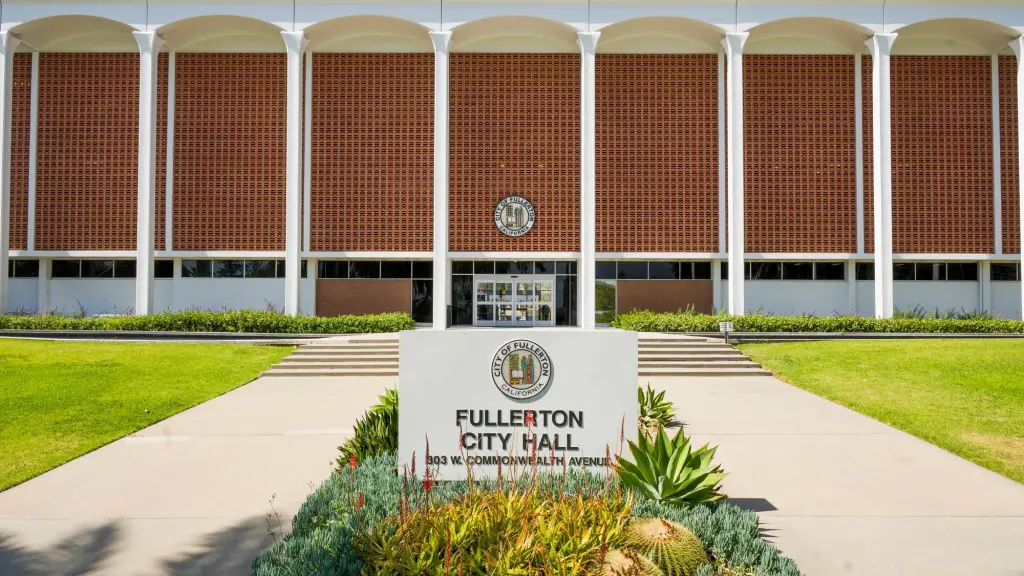
Fullerton leaders decided this week to make some deep cuts to help close a $3.8 million budget shortfall, using one-time funds to finish closing the gap without drawing on the city’s reserves.
Read more Wisconsin governor calls for transparency after Madison officer fatally shoots man with knife
The City Council was presented with three scenarios for funding this new fiscal year, which opened at the beginning of the month, choosing the one that kept the city’s cushion of savings intact.
Mayor Fred Jung and councilmembers Nick Dunlap and Jamie Valencia said the choice is the most sustainable path to keep the city’s reserve about a 10% minimum over the next several years.
But councilmembers Shana Charles and Ahmed Zahra warned that wiping out funding for so many vacant jobs with the proposed cuts would leave remaining staff overworked and risk what Charles called a “death spiral” of attrition and retraining costs.
The council will have to finalize the budget at its next meeting. It should have been in place before July 1, but the city manager delayed presenting a plan at community meetings or to the council until after the results of an independent audit of the city’s budgeting process were reviewed last month, which reported no signs of fraud or intentional misconduct.
Because recurring pension and labor costs continue to outpace revenue growth, staff emphasized the remaining gap is structural and will not go away after a single fiscal year. The other scenarios proposed to temporarily balance the budget for one year, but neither address the root problem.
The budget the council majority supported will leave almost no corner of city government unaffected, officials said. City Manager Eddie Manfro previously told the council he did not take the reductions lightly, but called them “a fiscal reality.”
It will leave 35 vacant positions unfunded and instead aims to balance the budget over the next three years.
The question of creating a half-cent local sales tax to fund streets and infrastructure work fell short of the four-vote threshold required under state law to place the measure on the November ballot.
Under both versions of the ballot measure presented, 75% of revenues would have gone to road repairs until the city’s average Pavement Condition Index hit a score of 80, after which the tax revenue could support broader infrastructure needs. Fullerton’s current citywide score is 67.8, considered the lowest in Orange County.
At the current funding rate, city staffers estimate that street reconstruction would take roughly 100 years to complete, considered far beyond the typical 20-year pavement design life, while restoring the network is estimated to cost about $200 million.
Read more Last winter’s extreme snow drought was a sign of the West’s future, Colorado study finds
Charles urged her council colleagues not to wait, saying she had been working on the tax measure language for the last three years and arguing that deteriorating streets represent an urgent need.
“When you can pick up a piece of your street and come to council, that’s what the urgency is,” she said.
Dunlap called the proposal rushed, saying the city gets “one shot to get it right,” while Zahra urged colleagues to “build trust over the next two years and focus on 2028” before asking residents for more money.
Public comment at this week’s meeting reflected the divide, as some residents pleaded to the council to let voters decide.
Fullerton resident Shirley Ramirez, who said she lives in District 4, told the council she “would have brought you a piece of my street,” adding that she has replaced numerous tires and watched neighbors in wheelchairs struggle to navigate roads she described as being in “complete total disrepair.”
One longtime resident challenged the premise that more tax revenue would fix the problem, noting that 23 of 34 Orange County cities don’t have a local sales tax on top of the sales tax that is charged across Orange County (7.25% is the base statewide sales tax and a half cent goes toward transportation needs in the county).
“How is it they get it right?” he asked the council. “It’s not a money issue. It’s a management problem. Where are you putting the dollars?”
But even the deepest cuts may not be enough on their own. The external audit by accounting firm Grant Thornton cautioned the city will likely still fall below its 10% minimum reserve level within four years. It’s unclear how that will be addressed as the timeline gets closer.
Residents interested in learning more about the final budget can attend the council’s public hearing scheduled for 5:30 p.m. Aug. 18.
Read more Sex work or starve: Aid workers in Nepal left jobless by USAID cuts turn to sex work to survive