
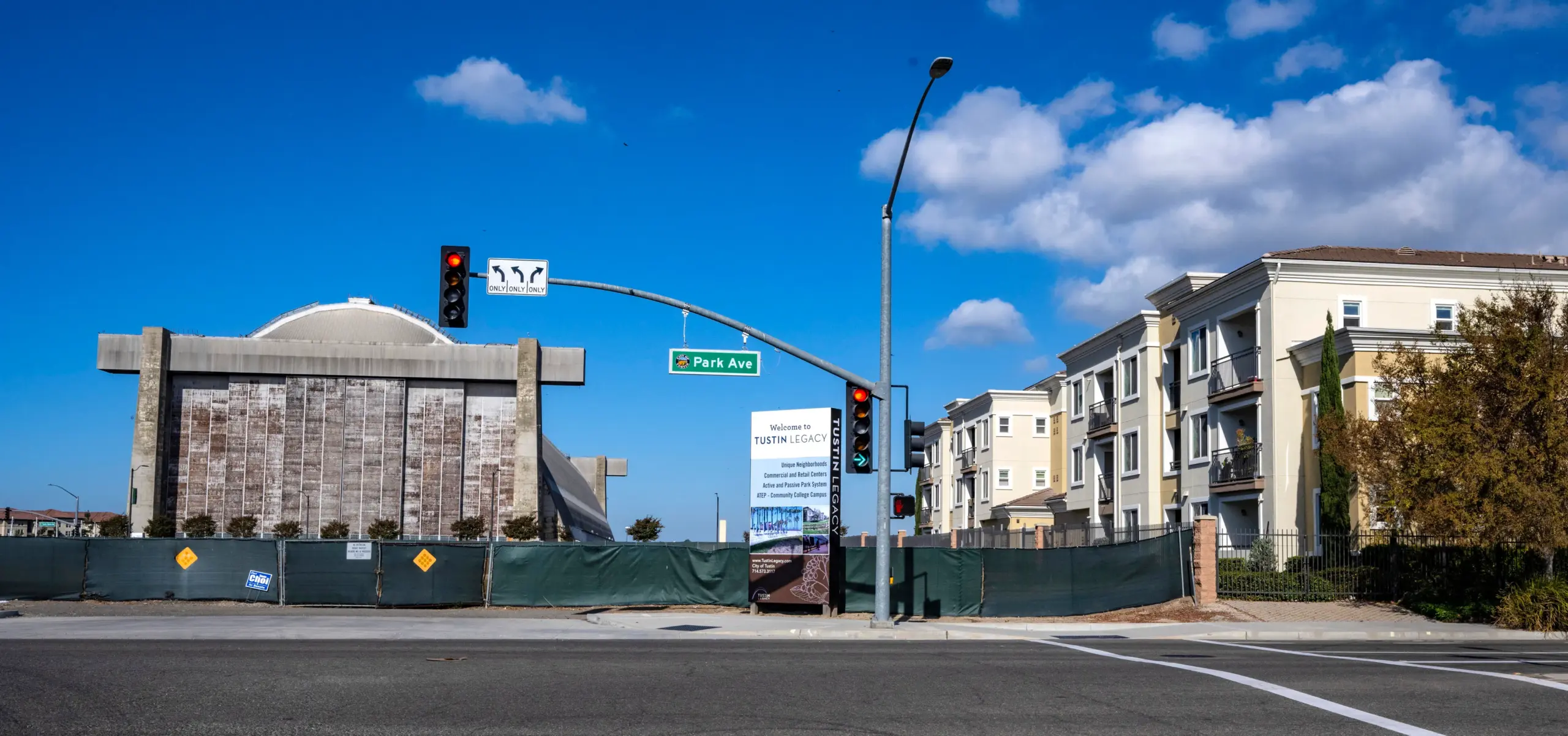
Tustin leaders are weighing the future of the remaining South Hangar, a massive World War II-era blimp hangar that still stands after a fire destroyed its North counterpart in 2023.
Read more Canada is ready to celebrate new bridge to US amid tariff troubles with Trump
Earlier this week, City Councilmembers put out the call for private companies, nonprofits or other government agencies interested in preserving, managing or redeveloping the massive structure to submit their competitive offers.
“It’s important that our offering reflect the possibility of both short- or medium-term uses as well as long-term uses,” Councilmember Lee Fink said, adding he is excited to see what ideas come forward.
The 17-story-tall South Hangar was built in 1942 to house blimps patrolling the West Coast during World War II, scanning for Japanese submarines. The mostly wooden structure is about 1,000 feet long and 300 feet wide. And while its twin, the North Hangar, had sat largely vacant for more than 20 years and was showing signs of decay, Tustin holds a lease with the Navy for the South Hangar, which has been used for events and was previously rented out for various uses.
Fink called the south hangar a “unicorn,” describing this offering as a completely unique process unlike previous property deals for the Tustin Legacy neighborhood that is slowly replacing the former base. The competitive offering, he said, is a crucial first step to “see what’s out there,” and listed possibilities such as road racing, history museums or film production. The hangar and surrounding property is about 32 acres.
He also flagged concerns about potential costs given the hangar’s age and condition, but argued the city should be honest that there are costs both to keeping and to demolishing the structure, and that outside help, whether private or federal, will likely be needed.
A baseline estimate to stabilize the building and continue current use is about $22.6 million, according to a city staff report, but rehabilitation costs could reach $271 million.
Read more Democrats to finalize their 2028 presidential nominating calendar, led by more diverse states
Councilmember Ryan Gallagher called the first step a routine part of the process, with the city simply putting out an offering via a designated broker. He acknowledged that the options so far include city-funded rehabilitation, demolition, or maintaining the current status quo, which costs roughly $1 million a year in security costs alone.
When the city gauged interest in the hangar in 2015, it heard from major players including the NFL and motocross, Councilmember John Nielsen noted, though nothing materialized.
He also pointed out the hangar “is part of our city identity,” even appearing in Tustin’s logo.
“It’s very, very important to me, and I know to everyone else here that we take special care with the hangar,” he said, “because it is a symbol of our city, and it is a symbol of our military past.”
City officials expect to start evaluating submitted proposals by early next year and return to the council with some recommendations by the middle of 2027.