
Those who are familiar with the history of baseball, or at least read the book or saw the movie, “Eight Men Out,” will remember that the Black Sox scandal, the attempt to fix the 1919 World Series, led to a major course correction on the part of baseball in particular and sports in general.
Read more Simone Biles back in hospital after ‘almost dying’ in June
Before then, bookies and gamblers and casino owners were a part of the landscape, and baseball the institution seemed relatively fine with it, or at least unconcerned. But the uncovering of the 1919 plot led to the installation of the game’s first commissioner, Judge Kenesaw Mountain Landis. And one of his first acts was to permanently ban the eight players who either plotted or accepted money to be part of the plot (although there remains argument after all these years about whether Shoeless Joe Jackson, one of those banned, was merely collateral damage).
The other thing Landis immediately did was to sever whatever ties remained between baseball and gambling interests.
Today he might be spinning in his grave.
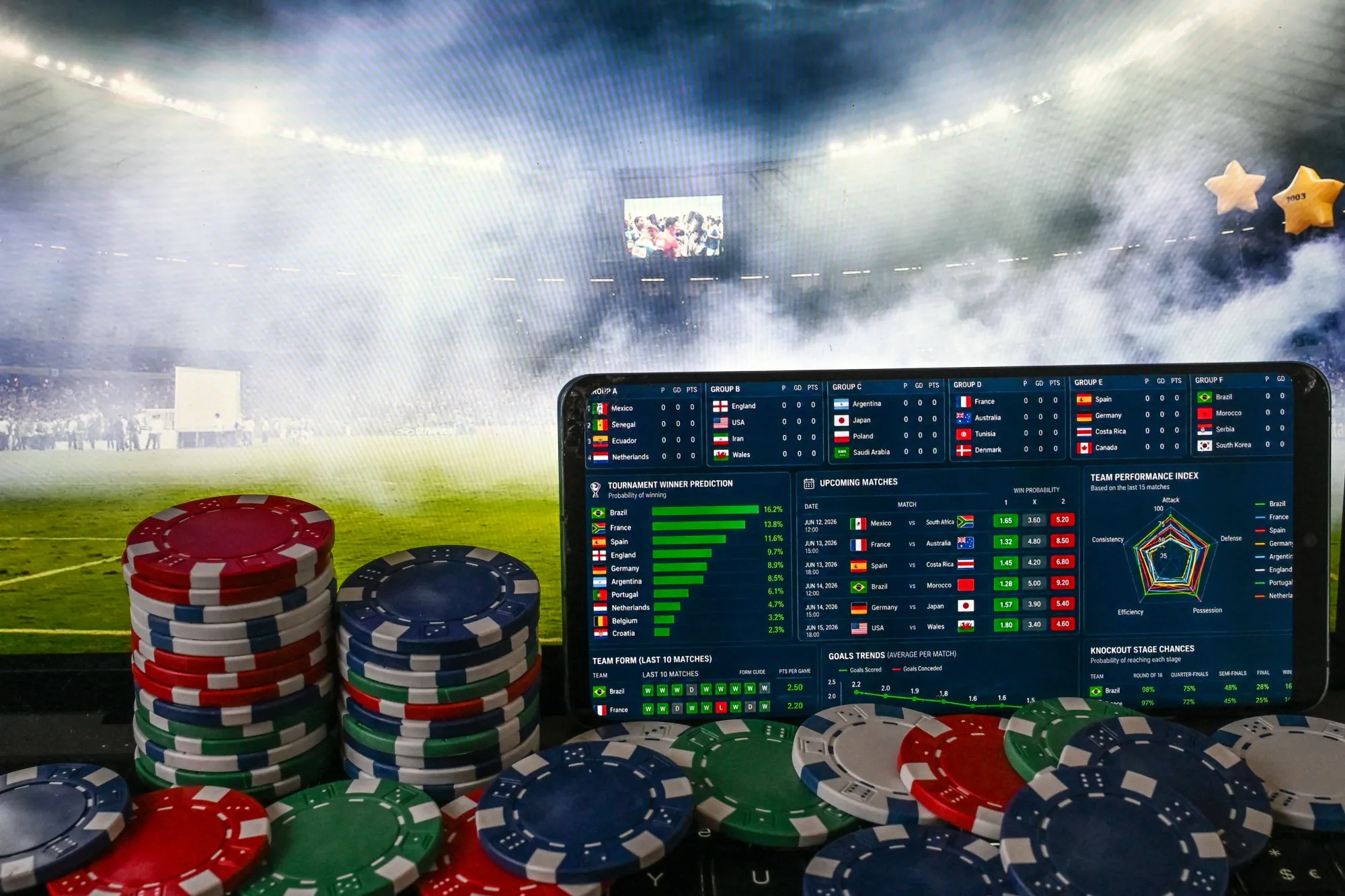
The relationship between organized sports and organized gambling in this country is as close as it’s been for more than a century, sometimes uncomfortably so. Teams and leagues not only accept the industry’s advertising money but have formed partnerships with gambling interests.
FanDuel and DraftKings, originally conceived as facilitators of daily fantasy sports, now broker bets the same way that, say, Bet MGM does. Prediction markets like Kalshi and Polymarket might couch the process differently, but it’s the same concept: Putting your money behind your opinions or your instincts.
“The actual behavior, the actual act (with the prediction markets) is exactly the same as sports betting,” said UCLA professor Timothy Fong, a clinical professor of psychiatry and co-director of the UCLA Gambling Studies Program, whose mission “is to reduce the individual, familial, and societal harm caused by problem gambling,” according to the program’s website.
Even if you don’t bet, you are subject to the new partnership between sports and gambling. It is almost impossible to tune into a televised or streamed sports event and not see plenty of advertisements – including drop-ins to game broadcasts with information on odds and money lines – touting not only the excitement but the ease of making a bet.
The betting boom and busts
The American Gaming Association reported that U.S. sports betting revenue in May 2026 alone came to $1.34 billion, part of $7.06 billion in overall gross gaming revenue for the month. For the first five months of 2026, the handle for sports betting was $7.08 billion, part of an overall gaming total of $34 billion, and that sports betting figure was up by 8.5% from a similar period in 2025.
As a consequence, that border between the games and the bets keeps getting trampled. For instance:
• A federal investigation into fixed poker games last fall ensnared, among others, then-Portland Trail Blazers coach Chauncey Billups, Miami Heat guard Terry Rozier and former journeyman player and coach Damon Jones, who allegedly were used as lures to bring in players who were, simply, the marks.
The natural question, which hasn’t yet been answered: Why were they dragged into the scheme? We don’t know for sure, but Rozier had previously been investigated by the NBA over suspicious prop bets, according to a report by The Athletic.
• Another prop bet scandal involved Jontay Porter, who was banned from the NBA in 2024 for “fixing outcomes” by manipulating his play, or his availability, and alerting bettors who would place prop bets on the information he provided such as minutes played. He get sucked into that scheme in order to help pay off large gambling debts.
• And there were the revelations of quarterback Branden Sorsby, whose expectations of transferring to Texas Tech and playing his senior year in 2026 – or applying for the NFL supplemental draft – were derailed last month after revelations that he had made thousands of bets totaling $90,000 as a college athlete, including bets on games involving his own team when he was a freshman at Indiana.
Oh, there’s far more than we can get to in this space, and that includes the social media harassment that players and their families have experienced from gamblers who lost their bets. We are reminded of the social media post last summer by Jordan Whitlock, wife of Boston Red Sox pitcher Garrett Whitlock, exposing some of the threatening direct messages her husband had received after a bad outing.
“No one should have to deal with this in any work setting,” she wrote. “Leave people’s families out of it. That line should not be crossed. This is not ‘a part of the game.’ This is unacceptable.”
Regrettably, it’s also unsurprising.
SCOTUS opens Pandora’s box
The thread that runs through all of this seems to be the bromance between the sports and gambling industries. And if you’ve wondered if the Supreme Court screwed up in 2018, when it overturned the federal ban on sports betting by a 6-3 vote in Murphy v. National Collegiate Athletic Association … well, you aren’t alone.
That decision, which allowed states to legalize sports gambling without federal interference, opened the door. Currently 39 states as well as the District of Columbia have legalized sports betting either in person or online, with 30 of them specifically allowing betting online or through phone apps.
Read more Tour de France: Pogačar nears record-tying 5th title
California is one of the 11 states in which sports betting remains illegal, but we see all of the ads. Not having ever been tempted to visit any of those apps – I made one sports bet in my life years ago in Las Vegas, lost it and didn’t feel compelled to make another – I have no idea if those apps are geofenced to prevent access from states such as this one.
But I’m guessing that for the resourceful gambler, there’s always a way.
It’s “frictionless gambling” in this era, as Fong put it in a recent conversation. If it’s on your phone or on your laptop, you can make a bet with the ease with which you would send an email, and you’re exposed to ads during every game touting how fun and exciting it is – what’s stopping you?
“People (are) telling you you should do this,” Fong said. “This is a good thing. This is a harmless thing. This is something everyone does well with, right?”
And if you are an athlete who gets caught up in the excitement … well, all of those warnings about the integrity of the game and the risks and ethical quandaries of betting, whether it’s your sport or not, are likely drowned out by the feedback telling you how enticing it is. Anti-gambling signs from the NCAA used to be posted throughout college locker rooms and on athletic department bulletin boards, and they prompted a healthy fear – if you did so and got caught, your career was likely done.
Are they still posted? And do athletes still have that fear of God thrown into them because of the consequences? It doesn’t seem so.
Fong compared it to doctors who might have a similar temptation.
“There’s going to be a percentage of those doctors that end up developing some sort of addiction, right?” he said. “But there are going to be a lot more doctors that develop addictions to opioids when you give them unfettered and free access to opioids. And that’s exactly what happened with anesthesiologists. For years, they would have higher rates of drug addiction because they had opiates in their hand.”
With athletes, he said, “they’re going to be susceptible to the same (gambling) ads. They’re going be susceptible if they have the same mental health problem the other gambling addiction people have. And they’re going to be susceptible if they’re in and around gambling all the time.”
The leagues bear some responsibility, he said, but they aren’t alone. They can, however, provide their employees with the tools to handle the temptation. After all, it’s in the interest of the leagues and the gambling companies that there be no question the games are legitimate. Any bit of doubt, and two industries are damaged.
And yet the popularity of prop bets – which don’t necessarily affect the outcome of a game but are both easier to influence and more susceptible to fixing, as the cases involving Porter, Rozier and Cleveland Guardians pitchers Emmanuel Clase and Luis Ortiz showed – would also seem the easiest to eliminate, if the gambling industry had any interest in doing so.
Organizations including the NCAA, the NFL, the MLB Players Association and the Association of Certified Gaming Compliance Specialists have advocated for the elimination of prop bets. But they’re still out there, largely because they’re lucrative for those who offer them.
Inevitable union
In all likelihood, the sports industry figured it would be better to partner with the betting industry rather than trying to fight it. Fong suspected that some leagues and organizations figured that “we may not be around forever if we don’t keep up with the times,” but he also kept hearing this: “If we don’t do this, we can’t control it, meaning that it’s so big anyway we might as well embrace it and be part of it.”
But what if the sports industry had kept gambling at arm’s length, or at least tried to separate itself somewhat if not totally?
“If they were really cautious about this,” Fong said, “they would say, ‘Oh, well, we have gambling-free broadcasts. We’ve removed the gambling signage in the stadiums and kept it inside 21-and-over gambling lounges. We don’t have those brazen ads that are not quite tasteless but really just celebratory of the gambling experience. You don’t see that with tobacco and cannabis ads because they’re highly regulated.”
Maybe, he suggested, any individual sport’s share of the revenue from gambling interests could be specifically used toward retired players’ benefits or something that “clearly looks like it’s for good.”
But at this point I’m not sure such image-polishing would make that much difference.
And how long will it be before fans who don’t have any interest in placing a bet get sick enough of the gambling ads to just turn the games off?
Read more Orange County restaurants shut down by health inspectors (July 16-23)