
By Rebecca K. O’Connor | Contributing Columnist
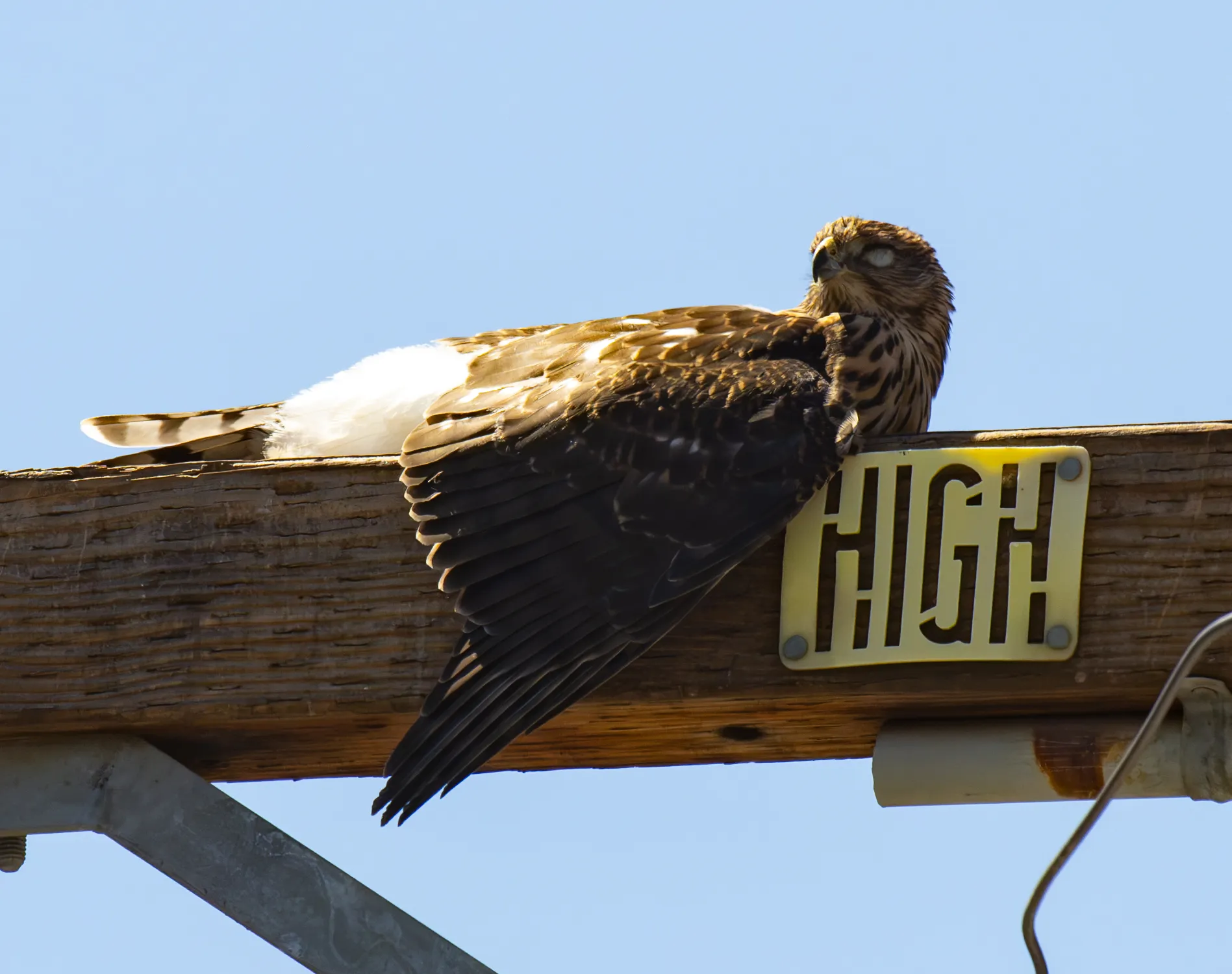
Hearing the familiar “squee” call of a juvenile Cooper’s hawk in my backyard, I looked up and then laughed. Four young hawks were sitting in the limbs of a snag, observing and seemingly commenting on my activities. I knew all four of these hawks; I had raised them from chicks who had fallen from their nests. I fed them, treated them for illnesses and released them. They were currently exploring and learning to hunt while still benefiting from a feeding station in my backyard.
Read more Netanyahu’s first meeting with Trump since the Iran war began is a chance to smooth over strains
Cooper’s hawks (Astur cooperii) are crow-sized hawks with broad rounded wings and a long tail. Weighing at most 24 ounces, they will not prey on your pets unless your pet is a bird, which is their primary diet. While I know them as social, curious, and charismatic, Cooper’s hawks are so often misunderstood and overlooked.
Today, Cooper’s hawks are abundant in urban settings, but this was not always the case. The species declined sharply through the 1940s to 1970s, years when the pesticides DDT and dieldrin were being widely applied in North America. Yet, the species decline went almost unnoticed, according to Brian Millsap, senior research scientist at New Mexico State University Department of Fish, Wildlife and Conservation Ecology.
“It could and should have been the first thing that alerted us to the problems with organochlorine pesticides, but almost no one was watching,” he said. “Their decline was even more astounding because they went from being one of the most common hawks over most of North America to one of the rarest in only a couple decades.”
Arguably, the 1972 ban on DDT and the implementation of the Migratory Bird Treaty Act saved the species from widespread extirpation.
Cooper’s hawks are woodland hawks with the perfect physique to hunt through dense stands of trees. As “urban forests” were created to green our cities, we expanded their habitat. In my lifetime, a hawk I once rarely saw became one I see often if I look for them. They are, in fact, an incredible conservation success story that happened in our backyards.
This summer after being added to Bear Paw Ranch’s wildlife rehabilitation permit, I rolled up my sleeves to help with the nestling season. So far, I’ve had 13 Cooper’s hawks in my care since the beginning of June. Six of them have been released in my backyard and are doing well. Soon they will disperse to find their own territory, but it’s hard not to worry about them.
A 2024 paper published in the Journal of Raptor Research and co-authored by Millsap, “Causes of Death of Female Cooper’s Hawks from an Urban Setting in New Mexico, USA,” confirmed what I suspected were the dangers for a young Cooper’s hawk. Mortality is the highest in the first four months after a Cooper’s hawk leaves the nest. Collisions with human-made hazards like windows and vehicles cause 45% of the deaths of first-year hawks in the study.
Read more Senate expected to confirm Jay Clayton as next intelligence director
Surprisingly, over the course of the study, eight female hawks were purposely killed by either being shot or bludgeoned to death despite their federal protection. I imagine that the rise of bird feeder cameras and the keeping of backyard chickens may cast Cooper’s hawks as villains. It seems some challenges to Cooper’s hawks remain and we should be keeping an eye on their populations.
“They are now an even better sentinel to watch for early warnings about other environmental perturbations (e.g., West Nile virus, HPAI, second-generation rodenticides, etc.)” Millsap said. “Sure, they play a critical role as an apex predator in woodlands across the continent, but they are valuable to all as a proven indicator of ecosystem health.”
At Rivers & Lands Conservancy, we know that conservation isn’t only about setting aside swathes of critical habitat but also about the habitat we choose to create in our yards, parks and cityscapes. California native plants support the insects that support the songbirds. Songbirds support Cooper’s hawks. And they all support our souls.
Soon, my young Cooper’s hawks will have dispersed. I’ll go back to spotting the secretive hawk only on occasion, but they will still make me smile. I hope you’ll look up and smile too.
Rivers & Lands Conservancy connects our community to natural, wild, and open spaces of Southern California through land conservation, stewardship, and education.
Rebecca K. O’Connor is the co-executive director of Rivers & Lands Conservancy, has an MFA in creative writing and writing for the performing arts from UC Riverside and is the author of several books on the natural world.
Read more Zelenskyy will visit Trump at the White House before Sen. Graham’s funeral