
There is a proposal to remember Mary Nomura, a Japanese American singer who was incarcerated at the Manzanar War Relocation Center during World War II, by renaming a post office in Irvine.
Read more US job openings slip to 7.4 million, but labor market remains resilient in face of fighting in Iran
Nomura was sent to Manzanar at 16 years old, along with her siblings, shortly after President Franklin D. Roosevelt signed Executive Order 9066, which authorized the forcible removal of roughly 120,000 Japanese residents to camps. During her time at the internment camp, Nomura became known as the “Songbird of Manzanar” after performing in talent shows and other entertainment programs.
Nomura died at the age of 100 on April 6 at her home in Huntington Beach.
“She represents the vibrancy of Asian American culture, but her story (also) represents the past, present and future of our standing in this country,” said U.S. Rep. Dave Min, who said he will be introducing the necessary legislation this month to rename the post office on Sand Canyon Avenue.
“Honoring someone from that period who lived such a positive life after that, despite the trauma of being interned — I just think it’s a great story,” he said.
If the renaming bill is passed by Congress, the Irvine post office would be the first in the nation to honor a survivor of the Manzanar camp, where more than 11,000 Japanese Americans were incarcerated between 1942 and 1945, according to the Manzanar National Historic Site website. Min, who is of Korean descent and represents a district that is nearly one-third Asian, said the bill would bring to light an underrepresented piece of American history — one that remains deeply rooted in Asian American communities, especially in Orange County.
“It’s important that we remember our history at a time when a lot of people are trying to whitewash our history,” Min said. “We have to acknowledge the good and the bad of (American) history, and part of that is this anti-Asian racism that existed and is really epitomized in the internment of the Japanese Americans in World War II.”
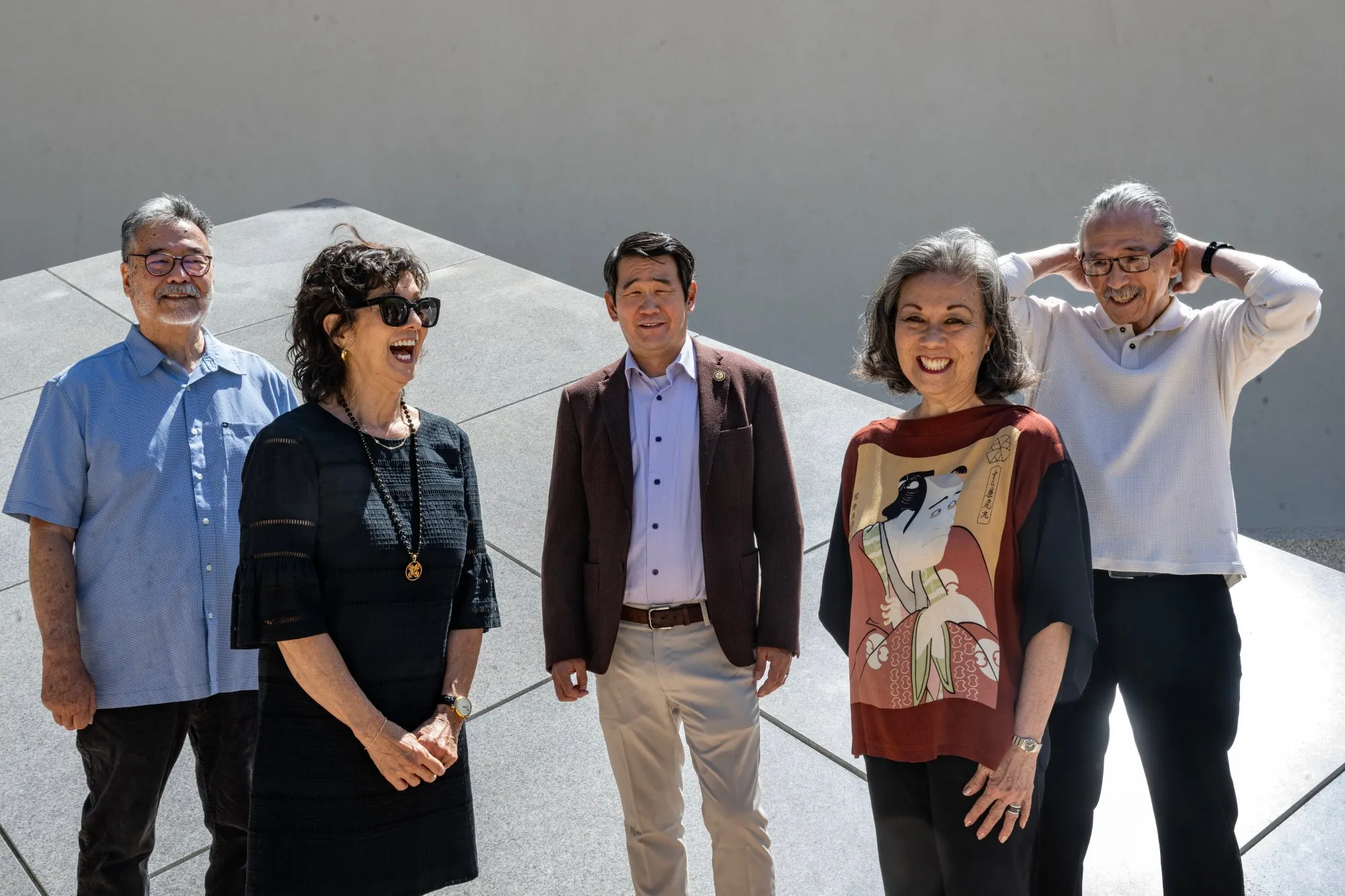
Min’s staff reached out to the Nomura family in June, after hearing of the singer’s passing. They gathered recently at the Noguchi Garden with the congressman to celebrate Nomura’s legacy and discuss the future of the bill.
Nomura is survived by her five children, 13 grandchildren and various great-grandchildren.
Born in Los Angeles, Nomura is the fifth child of her musician and dance teacher mother and carpenter father. After the war, she returned to Pasadena to start a family with her husband Shiro Nomura, before later moving to Garden Grove in 1959, according to her oldest daughter Lisa Ishibashi.
There, Nomura and her husband started Shi’s Fish Market while continuing to focus on their family. Though Mary Nomura prioritized her family life, she continued to exercise her talents in the house, instilling a love for music and performance in each of her children, Ishibashi said. This love lives on in each subsequent generation, too, said her eldest granddaughter, Erin Nomura.
Read more Ebola kills 1,700 in eastern Congo as the fastest-growing outbreak surges
“She brought music into our lives,” said Erin Nomura. “She touched so many people, especially in (the Manzanar) camp through her singing. … Now, my son Mason is just a lover of all things jazz and old-time music, and that’s her legacy.”
Mary Nomura was also a beloved community member and played an important role in preserving the history of Manzanar at the Japanese American National Museum, said her eldest son, Alan Nomura. He said Mary Nomura and her husband contributed significantly to the museum’s archives exploring firsthand experiences at the camp. For Mary Nomura’s children, including her son, Norman, and youngest daughter, Nina Williams, remembering the singer is an important part of keeping Japanese American history alive.
However, the honor itself would come as a surprise to Mary Nomura, her children said.
“She was not somebody who would demand attention or expect any accolade — she was just a good person,” Ishibashi said. “She may have had this persona of the ‘Songbird of Manzanar,’ but she used to say, ‘I don’t know why they call me that. I’m more like the ‘Old Crow of Manzanar.’”
Despite the harsh living conditions of Manzanar, Erin Nomura said her grandmother preferred to highlight the positive memories, including how she met her husband during the camp’s New Year’s Eve dance.
“My grandfather would say he was on a date with another woman, heard (Mary) singing and said he was going to marry that woman,” Erin Nomura said. “Even though a lot of people have bad feelings about the war and camp, she remembered it partly as a love story.”
Mary Nomura’s children said they look forward to sharing her story with more people and hope that the post office’s renaming will cement the public visibility of Japanese American history in Orange County.
With support from House Republicans, Min said he is optimistic that the bill will pass relatively quickly.
“Representation matters,” Min said. “To see buildings named after people that share a similar background to you — that’s important for young people to see, and I think it’s exciting to bring a post office to Orange County that is named after someone who played an important role in history.”
Read more Firefighters scramble to contain fires outside Athens before winds and high temperatures return