
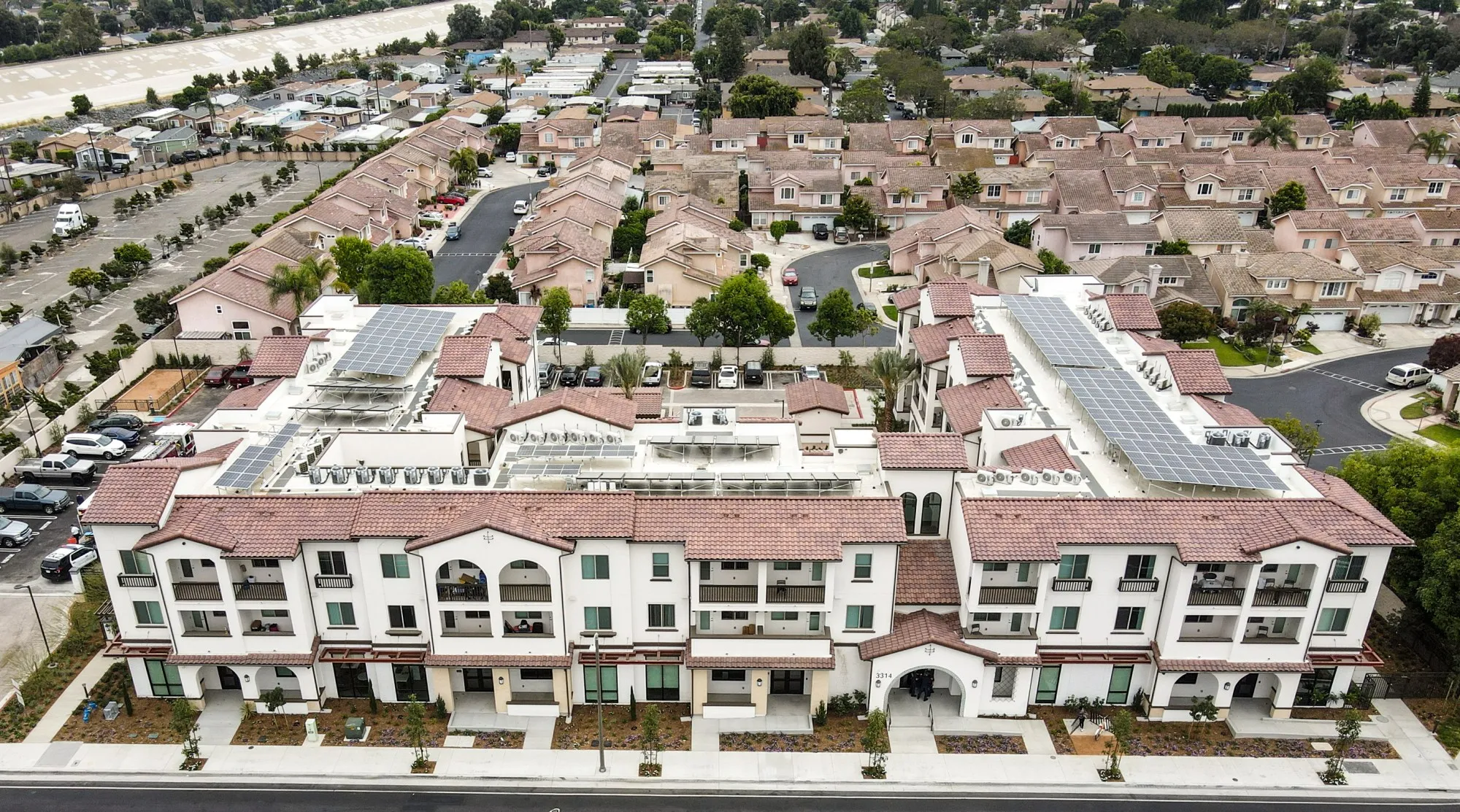
For the first time since the 1960s, Santa Ana is rewriting its zoning code – a set of rules and regulations that, while amended over the years to address individual issues, have never been reworked as a whole.
Read more Palestinian American returns to besieged West Bank home but Israeli settlers remain
The “comprehensive zoning code update” includes modernizations to reflect new state laws and is considered an important step in implementing the city’s general plan. A long-term blueprint adopted in 2022, the general plan addresses the economic growth of the city, as well as land use and quality of life.
“Good codes make good communities,” Santa Ana Senior Planner Siri Champion said during a Planning Commission study session on Aug. 10. The meeting marked the second of two sessions held this year where staff gave an overview of the ongoing process of updating the zoning codes.
The draft is not yet final, and nothing is set in stone until the City Council votes later this year, officials said. Comments are open through the Planning Commission’s public hearing on Aug. 24, when the commission will hear from the public before making its recommendation to the City Council.
Residents and business owners can review the draft and submit comments online through the city’s Zoning Code Update page.
The update would adopt new zoning districts, guiding what can be built, where and how, as well as permitted uses and standards to maintain existing neighborhoods and create new ones that reflect the general plan’s objectives. According to Champion, the changes are guided by planning principles that address housing production, economic development and neighborhood preservation, among others.
For many residents, the biggest impact will probably be that very little changes at all. Under the proposed map, most single-family and low-density neighborhoods stay the same, with their underlying zoning largely unchanged, according to staff. Existing neighborhoods that don’t fit the new rules would be grandfathered in. Residents in historic districts would also get new design protections against “McMansionization,” or oversized additions changing their block’s character, according to staff.
Major changes are instead concentrated in five growth corridors: West Santa Ana Boulevard, South Main Street, South Bristol Street, Grand and 17th Street, and the area around the 55 Freeway and West Dyer Road. Zoning proposed in those areas would accommodate development for multifamily housing, offices, and other commercial uses.
Read more Trump threatened to bomb Oman because he’s unhappy with country’s deal with Iran, officials say
In those five areas, the new proposed districts would allow for denser housing development and more vertical construction in “urban neighborhood” districts, as well as “mixed-use corridors.”
A “residential industrial interface” buffer zone would establish rules around noise, hours and dust, aiming to shield residents who live near industrial areas by pushing the heaviest uses further from homes and schools. Industrial businesses located, not just in the five new corridors but also near homes and schools, face the most restrictions, with additional rules around heavy emissions and noxious fumes.
City officials said the rest of the changes are meant to make life easier for small businesses and owners by easing parking requirements, increasing signage options, and offering a new minor permit that skips the public hearing requirements and is instead handled by city planners, speeding the approval process for uses such as indoor recreation, adult daycare, and vehicle rentals.
The proposed updates also include several “flex” industrial districts, seen as a competitive advantage for economic growth, prioritizing businesses in research, tech, and small manufacturing over heavy industry.
Central to those districts is courting the defense industry, with Santa Ana already hosting subcontractors for SpaceX and Anduril, a military technology company whose clean, modern, campus-style development at the south end of the city near Dyer Road is now a model that Planning Commissioner Christopher Leo and some staff have described as a competitive advantage they hope to replicate elsewhere.
Moving forward, the proposal is set to go to a council study session on Sept. 15, followed by the council’s first reading and public hearing on Oct. 6 and a second reading on Nov. 17, when the council is expected to adopt the changes.
Read more OpenAI launches ChatGPT for Teens, promising a more age-appropriate chatbot