
By JOSE HERRERA | City News Service
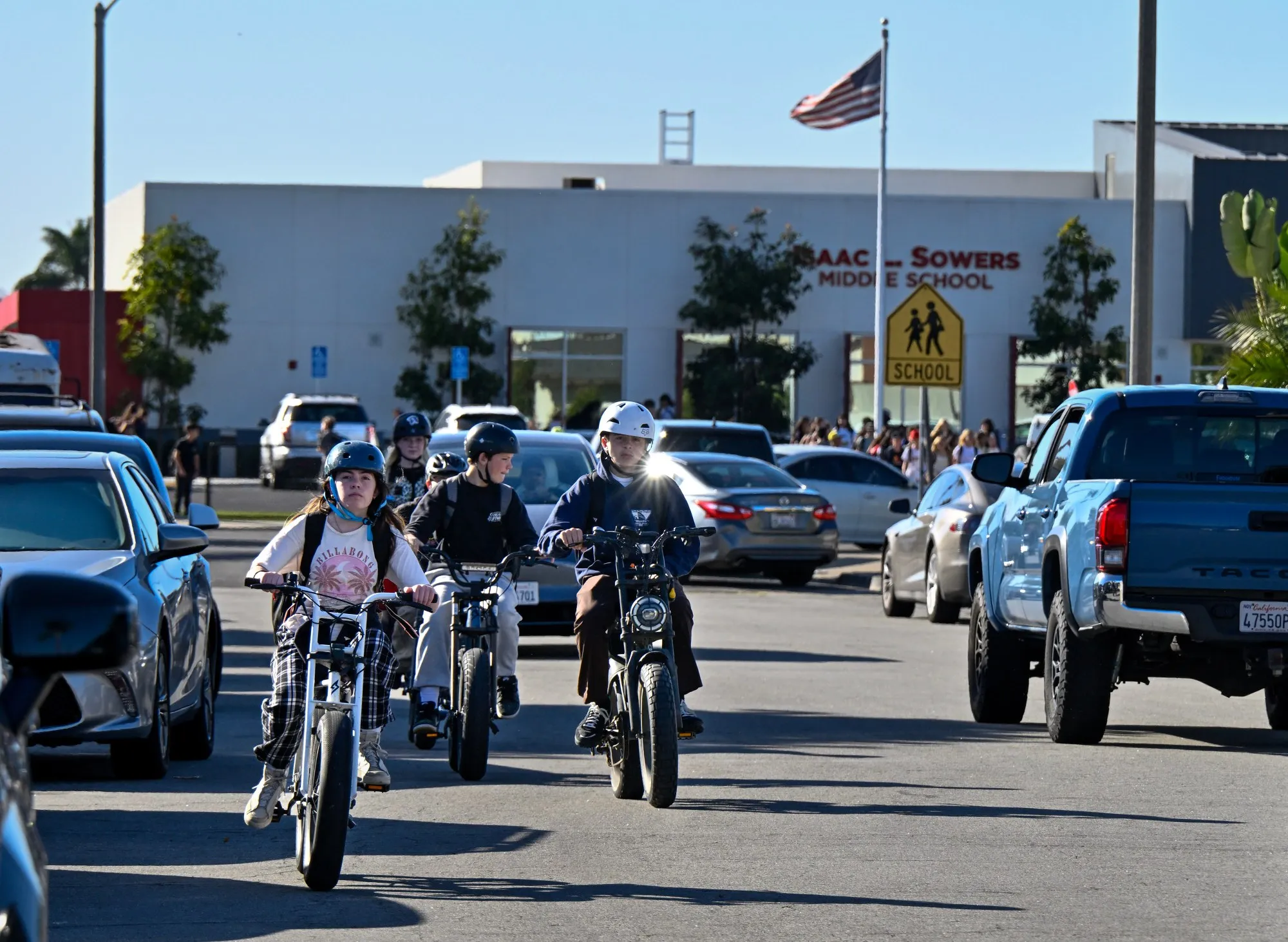
The Los Angeles City Council ordered staff on Tuesday to issue recommendations for regulating electric-powered modes of transportation amid the growing proliferation of e-bikes, e-motos and electric mopeds.
Read more Orange County to sue Garden Grove aerospace company over chemical tank crisis
The council unanimously approved a motion introduced by members Heather Hutt, John Lee and Traci Park that instructed the Department of Transportation, the Los Angeles Bicycle Advisory Committee, city attorneys, the Los Angeles Police Department, Bureau of Street Services and LA Metro to provide guidance within 90 days on how to go about regulations such devices.
The report is expected to cover the following:
— Requiring all e-bikes, e-motos and electric mopeds in the city to meet legal standards and requirements
— Banning the sale or resale of e-bikes, e-motos and electric mopeds that do no meet legal standards and requirements
— Banning the conversion of e-bikes to a higher class or e-moto or electric moped
— Banning the sale of e-motos or electric mopeds that are not street legal out of the box and/or which require an M1 driver’s license to be operated legally
— Requiring educational learning for all riders under 18 or who do not have a driver’s license; and
— Rules for storage and charging of e-bikes, e-motos and electric mopeds to prevent hazardous waste and battery fires
There was no discussion on the matter.
The three council members acknowledged in the motion that there are significant benefits for the use of e-bikes and e-motos, such as improved cardiovascular health, reducing commuting costs and eco-friendly transportation. But they also noted a surge of vehicle collisions involving electric mopeds and electric motorcycles in Los Angeles and in the surrounding Southern California region.
Local authorities have reported a significant increase in trauma cases such as head injuries and fractures, particularly among juvenile riders.
Read more US economy expands at sluggish 1.5% pace in second quarter, but consumer spending stayed strong
E-bikes are classified into three main categories based on speed and motor assistance type to help define whether they can be legally ridden. Class 1 is pedal-assist only up to 20 mph, Class 2 includes a throttle and pedal-assist that is also capped at 20 mph, and Class 3 is a pedal-assist with speeds up to 28 mph.
Classes 1 and 2 are usually allowed on bike paths, while Class 3 is typically restricted to road use and requires riders to be 16 or older, according to the motion. All Class 3 riders must wear helmets, while Class 1 and 2 riders under 18 are required to wear helmets.
“Electric motos and mopeds, on the other hand, are not street legal out of the box. They are marketed to teens and parents of teens as a fun, efficient way to get around, but they often lack the required elements to make them legal, such as turn signals, proper lights and license plates,” the motion reads. “Additionally, they require that riders have a M1 (motorcycle) license, which is not disclosed to those purchasing them. Nearly all reported crashes are from illegal devices, not legal e-bikes.”
There are nine pending pieces of state legislation related to e-bikes, e-motos and similar mobility devices. The City Council also asked city analysts to report back with recommendations on whether the city should adopt resolutions of support for any of the potential bills.
The council also required the Los Angeles Police Commission to require the annual publication of data on e-bike, e-moto and electric moped collisions, injuries and deaths that include enough identifying information to allow policymakers to make necessary adjustments to increase safety.
In May, the council instructed city attorneys to draft an ordinance to ban electric bikes from being used on bicycle paths, equestrian and hiking trails.
In 2022, Assemblywoman Laura Friedman, D-Burbank, authored AB 1909, also known as the OmniBike Bill. Gov. Gavin Newsom signed the bill that year, and it went into effect on Jan. 1, 2024.
The law expanded regulations for cyclist safety, e-bike access and clarified legal rights for bicyclists in California. It also authorized local authorities to prohibit the use of any electric bicycle or any class of electric bicycle on an equestrian trail, hiking or recreational trail, as well as a bicycle path.
Read more Key inflation gauge remains elevated during Iran war and ongoing US trade fights