
Food safety
This summer has seen a lettuce cyclospora outbreak that is now the third-largest outbreak of foodborne illness in American history, with at least 10,930 of the illnesses in 17 states as of Aug. 20.
Read more Pilot seriously injured when airplane stalls, crashes in Big Bear
The U.S. Department of Agriculture says one in six Americans will get foodborne illness of some type each year.
All but three of the largest documented outbreaks occurred in the last three decades. The Centers for Disease Control and Prevention created PulseNet in 1996 to link foodborne illnesses using the DNA fingerprints of the bacteria found to be making people sick.
According to PIRG, a federation of independent, state-based, citizen-funded Public Interest Research Groups, here are some of the worst documented outbreaks in order:
• Ice cream with Salmonella in 1994: 224,000 illnesses nationwide.
• Milk with Salmonella in 1985: 168,000 to 197,000 illnesses estimated, at least nine deaths.
• Iceberg lettuce with cyclospora parasites in 2026: 10,930 illnesses in 17 states, with 454 hospitalizations and two deaths.
• Eggs with Salmonella in 2010: 3,578 illnesses in multiple states.
• Peppers with Salmonella in 2008: 1,442 illnesses, 286 hospitalizations and two deaths in 43 states and the District of Columbia.
• Onions with Salmonella in 2020: 1,127 illnesses and 167 hospitalizations in 48 states.
• Whole, fresh onions with Salmonella in 2021: 1,040 illnesses, 260 hospitalizations in 39 states and the District of Columbia and Puerto Rico.
• Imported cucumbers with Salmonella in 2015: 907 illnesses, 204 hospitalizations and six deaths in 40 states.
• Peanut butter with Salmonella in 2008: 714 illnesses in 46 states and nine deaths, leading to one of the largest food recalls in U.S. history.
• Undercooked hamburgers at Jack in the Box in 1993: More than 700 people, mostly children, sickened by E. coli, and four deaths. This outbreak led to an overhaul in guidance for meat cooking temperatures.
Prevention steps and strategies
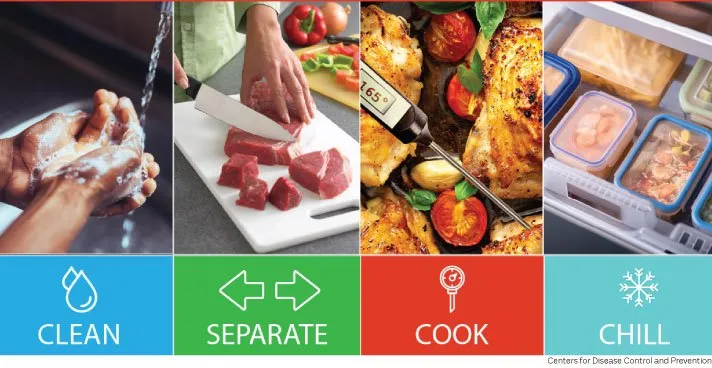
According to the Centers for Disease Control and Prevention, the four main steps to food safety are: clean, separate, cook and chill.
Wash your hands and surfaces
Germs that cause food poisoning can survive in many places and spread around your kitchen.
Wash your hands before during, and after preparing food and before eating. Wash for at least 20 seconds with soap and warm or cold water.
Wash utensils, cutting boards and countertops with hot, soapy water after preparing each food item.
Rinse fresh fruits and vegetables under running water.
Reminder
Always wash hands after handling uncooked meat, chicken and other poultry, seafood, flour or eggs.
Riskier foods
Some foods are more likely to contain harmful germs, including:
Raw or undercooked poultry, meat, seafood or eggs
Raw or undercooked sprouts
Unwashed fruits and vegetables
Cut melon
Unpasteurized milk, juice, cider or soft cheese
Raw dough or raw batter made with uncooked flour
Separate foods to avoid cross-contamination
Raw meat, chicken and other poultry, seafood, and eggs can spread germs to ready-to-eat food unless you keep them separate. The
Read more Virginia family with 4 relatives missing in the Nepal-China floods pleads for more rescue help
table below shows how to keep risky foods from cross-contaminating other foods.
When grocery shopping
Keep raw meat, poultry, seafood and their juices away from other foods.
When storing food
Keep raw or marinating meat, poultry, seafood and eggs separate from all other foods.
Store raw meat, poultry, and seafood in sealed containers or wrap them securely so the juices don’t leak onto other foods.
When preparing food
Use one cutting board or plate for raw meat, poultry and seafood and a separate cutting board or plate for produce, bread and other foods that won’t be cooked.
Keep in mind
Raw chicken is ready to cook and doesn’t need to be washed first. Washing these foods can spread germs to other foods, the sink and the counter and make you sick.
Keep your refrigerator cold
Keep your refrigerator at 40°F or below and your freezer at 0°F or below, and know when to throw food out before it spoils. If your refrigerator doesn’t have a built-in thermometer, keep an appliance thermometer inside it to check the temperature.
Storing food in the refrigerator
Package warm or hot food into several clean, shallow containers and then refrigerate. It is OK to put small portions of hot food in the refrigerator since they will chill faster.
Refrigerate perishable food (meat, seafood, dairy, cut fruit, some vegetables and cooked leftovers) within 2 hours. If the food is exposed to temperatures above 90°F, like a hot car or picnic, refrigerate it within 1 hour.
Thaw food properly
Thaw frozen food safely in the refrigerator, in cold water or in the microwave. Never thaw food on the counter because bacteria multiply quickly in the parts of the food that reach room temperature.
Types of recalls
Recalls are actions taken by a firm to remove a product from the market. Recalls may be conducted on a firm’s own initiative, by FDA request, or by FDA order under statutory authority.
Class I recall: a situation in which there is a reasonable probability that the use of or exposure to a violative product will cause serious adverse health consequences or death.
Class II recall: a situation in which use of or exposure to a violative product may cause temporary or medically reversible adverse health consequences or where the probability of serious adverse health consequences is remote.
Class III recall: a situation in which use of or exposure to a violative product is not likely to cause adverse health consequences.
Market withdrawal: occurs when a product has a minor violation that would not be subject to FDA legal action. The firm removes the product from the market or corrects the violation. For example, a product removed from the market due to tampering, without evidence of manufacturing or distribution problems, would be a market withdrawal.
Medical device safety alert: issued in situations where a medical device may present an unreasonable risk of substantial harm. In some case, these situations also are considered recalls.
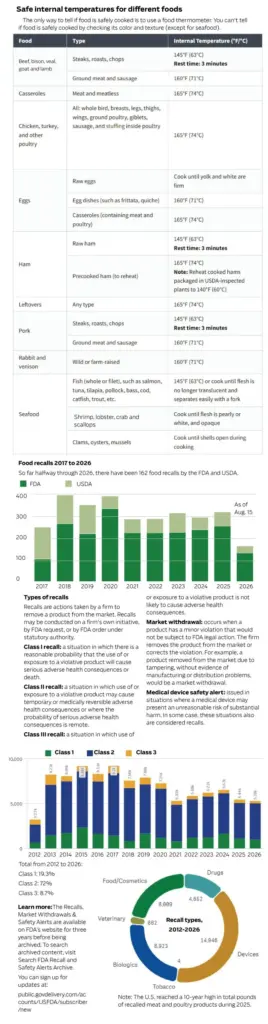
Learn more:The Recalls, Market Withdrawals & Safety Alerts are available on FDA’s website for three years before being archived. To search archived content, visit Search FDA Recall and Safety Alerts Archive.
You can sign up for updates at: public.govdelivery.com/accounts/USFDA/subscriber/new
Sources: Centers for Disease Control and Prevention, NIH, PIRG research, FDA, USDA, foodsafety.gov, KCRA
Read more Honduran national arrested, charged with fraudulently registering to vote in LA County