
HAVANA (AP) — Cuba’s tourism has nosedived since the U.S. has ramped up its pressure on the island this year, threatening international tour operators and imposing an energy embargo.
Read more Justice Department sues Kansas school system over policies on transgender students
Tourism on the island declined by 62% from January to July of this year compared to the same period in 2025, according to official figures that highlighted the enormous drop in the island’s strategic sector.
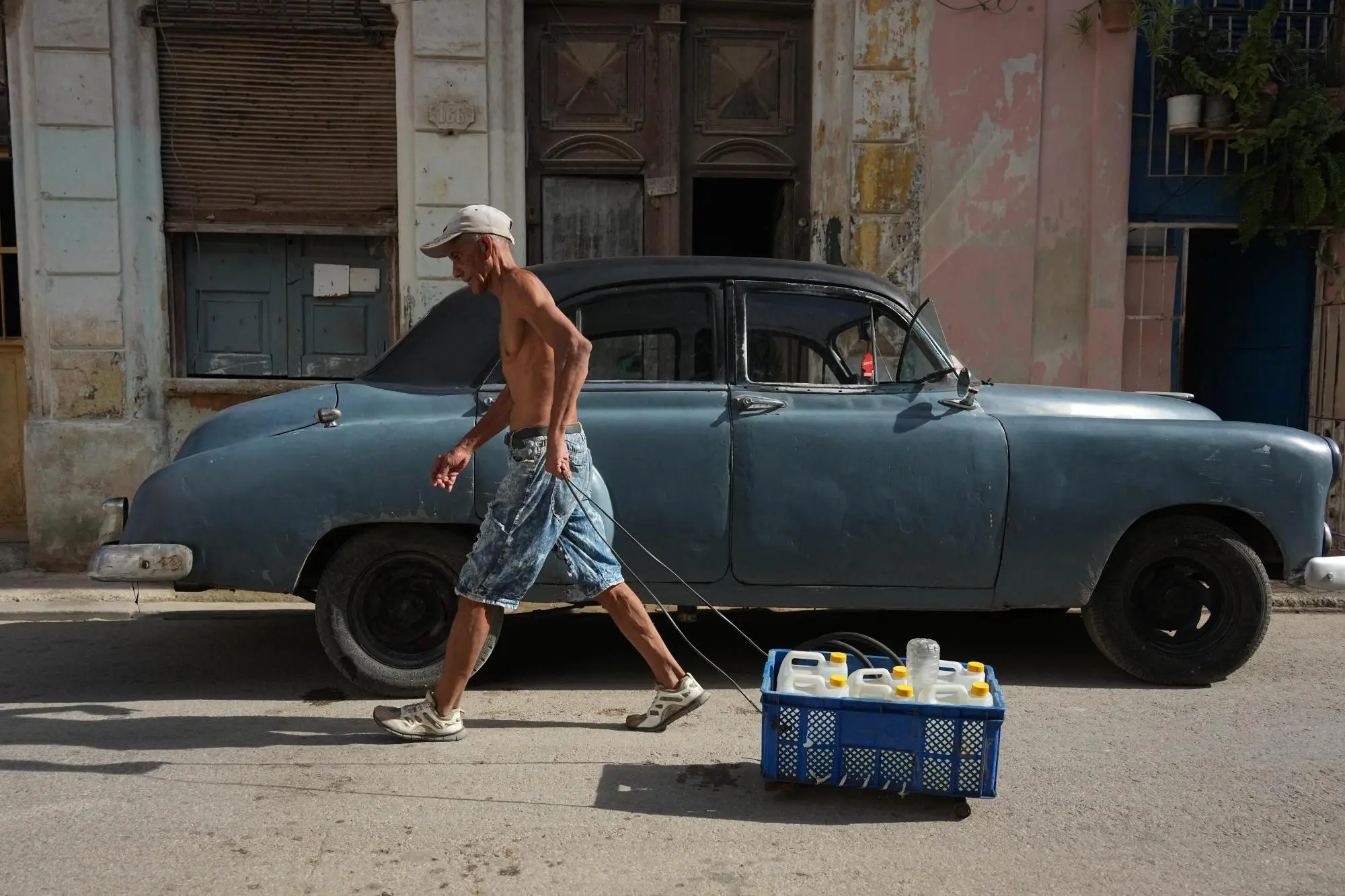
 A man pushes a cart filled with water containers while another man rests on a sofa on a street in Havana, Cuba, Thursday, Aug. 27, 2026. (AP Photo/Ramon Espinosa)
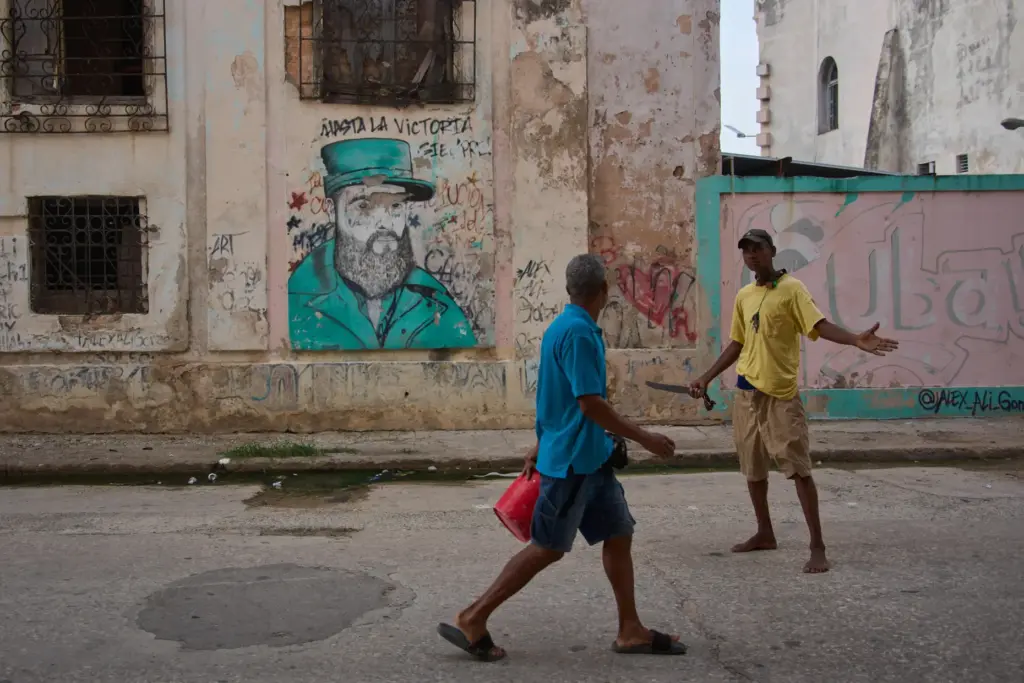 Men argue in front of a weathered mural of Fidel Castro in Havana, Cuba, Wednesday, Aug. 12, 2026. (AP Photo/Ramon Espinosa)
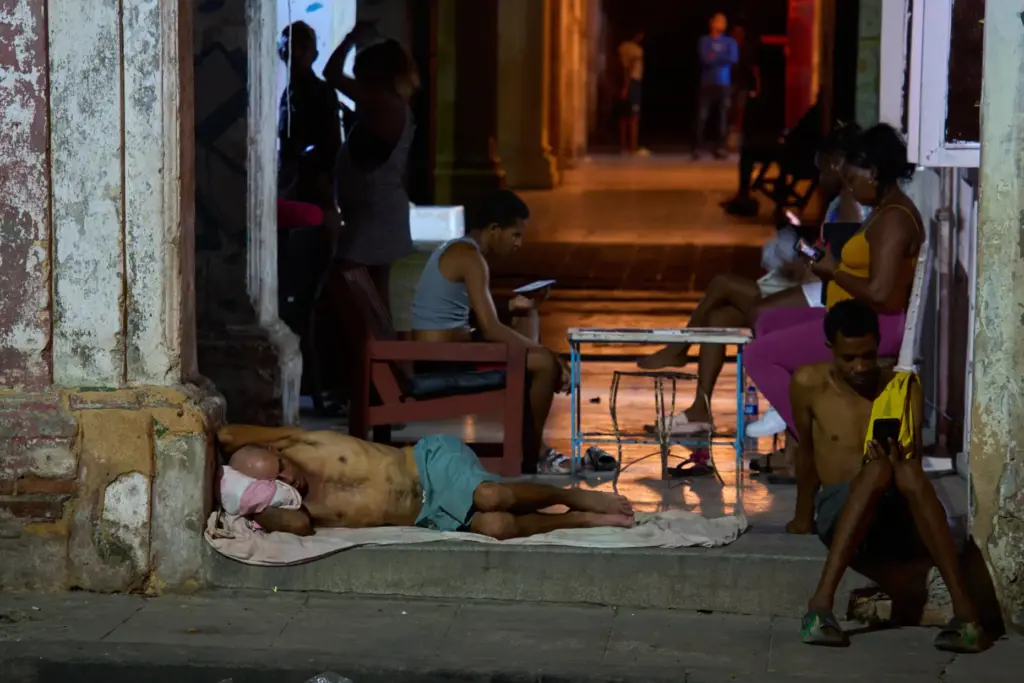 A man sleeps in the doorway of his home while others pass the time trying to cool off in the street in Havana, Cuba, Tuesday, Aug. 4, 2026. (AP Photo/Ramon Espinosa)
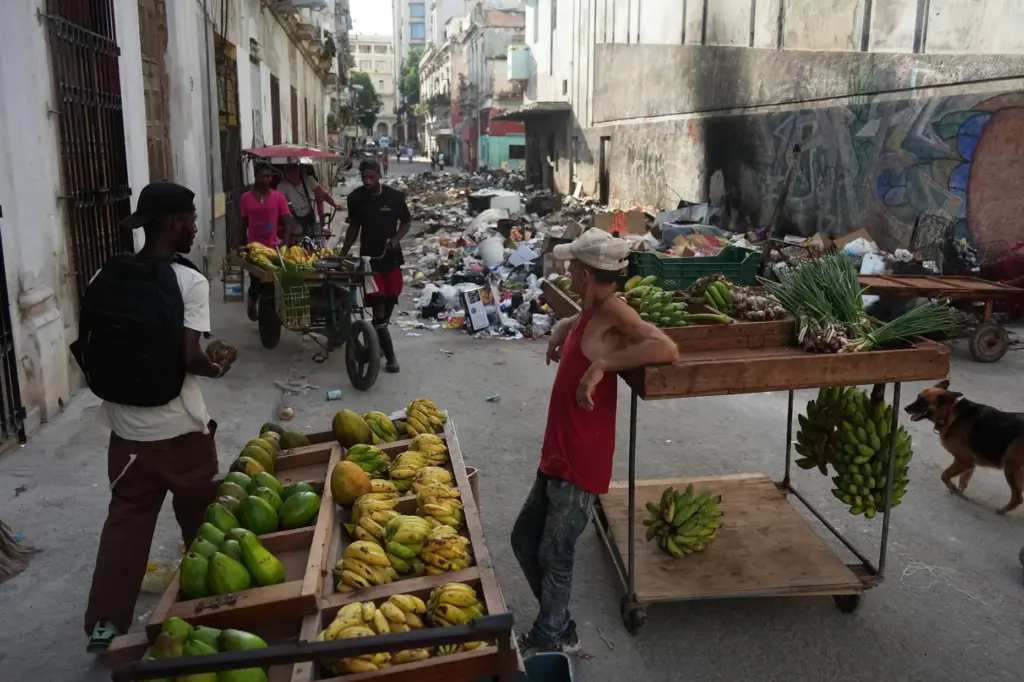 A man sells fruit during a power outage in Havana, Cuba, Monday, Aug. 3, 2026. (AP Photo/Ramon Espinosa)
A report published by the National Office of Statistics and Information (ONEI) indicated this Tuesday that 419,000 visitors have arrived in Cuba so far in 2026, compared to 1.1 million during the same period in 2025.
The ONEI report quantifies the notable absence of tourists on the island’s streets, with hotels, hostels, and private accommodations closed, as well as beaches, shops, and attractions with few international visitors.
U.S. President Donald Trump imposed a radical energy embargo on the island in January, pressuring for a change in its political and economic model. This exacerbated a preexisting crisis caused by other U.S. sanctions and a failed internal financial reform that triggered inflation.
Read more California legislative session ends: Newsom to decide on ICE limits, social media bills
Between May and July, the U.S. State Department announced sanctions against the heart of this industry on the island, with measures ranging from freezing accounts to being barred from operating in the U.S. financial system.
Chains such as Meliá and Iberostar — two long-standing partners of the island since the 1990s — and Royalton then suspended all their contracts in the Caribbean nation. Visa and Mastercard payment gateways were also withdrawn. Major airlines such as World2Fly, Air France, Turkish Airlines, and Iberia had already suspended their flights after the government said planes could no longer refuel on the island.
Cuba received approximately 4.3 million tourists in 2019, and over the past 30 years, the travel industry had become an economic engine. Authorities acknowledged that revenues reached $3 billion annually.
Read more Stan Kroenke delivers hope, brings leverage Arte Moreno couldn’t with Angels
Follow AP’s Latin America coverage at https://apnews.com/hub/latin-america