
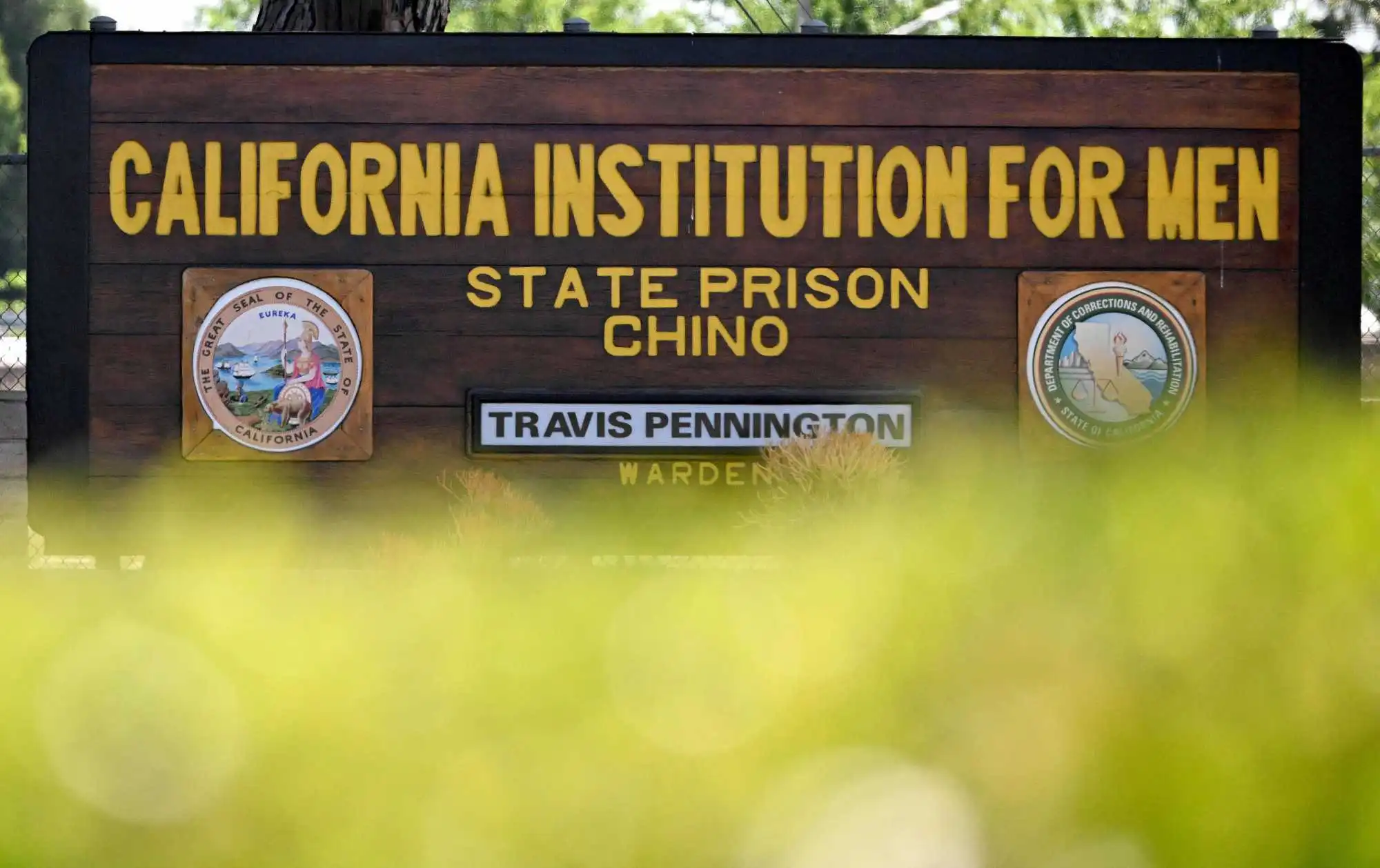
The city of Chino is pressing state corrections officials to move quickly to address deteriorating conditions at the California Institution for Men after an audit confirmed long-standing concerns about the aging prison and found that its deteriorating infrastructure poses a potential security risk.
Read more Missouri candidate charged with trying to plant cocaine on his political rival
The Aug. 13 report by the California state auditor found CIM’s infrastructure in poor condition and in need of significant repair or replacement. It noted a 2019 recommendation to the California Department of Corrections and Rehabilitation to complete 26 projects at a cost of $1.2 billion to address such infrastructure needs as roofing repairs, replacement of the water distribution system and the repair or replacement of multiple housing units.
But in the seven years since the assessment, the CDCR has funded only four of the 26 projects and completed none of them, according to the audit findings. CIM also has a significant maintenance backlog. A correctional plant manager told auditors the prison was unable to complete about 25% of its work orders because it lacks replacement parts or adequate annual funding.
The audit found persistent problems with plumbing, roofs, temperature control, windows and doors, as well as kitchen equipment. The problems have affected sanitation, living conditions and access to education and rehabilitation programs.
State auditors said they did not identify any specific infrastructure problem posing an imminent public safety threat, such as a failure of the prison’s security perimeter. But they warned that the cumulative effect of CIM’s deteriorating infrastructure increases the risk of a security incident.
Long-term plan
The findings validate concerns Chino officials and residents have raised for years about CIM, which opened in 1941 and is one of the state’s oldest prisons, Mayor Eunice Ulloa said in a statement.
“Now that we have these findings, our focus must be on ensuring the State follows through on the recommendation and develops a responsible long-term plan for CIM,” Ulloa said.
A CDCR spokesperson said the agency agrees that its annual special-repair budget is insufficient to address the prison’s needs and that significant additional investment will be required to complete the work needed to bring the facility up to modern building standards.
“The department looks forward to engaging with appropriate stakeholders to develop proposals and ultimately improve the living and working conditions both at CIM and across the CDCR system,” CDCR spokesman Will Matthews said.
History of concerns
Chino’s concerns about CIM predate the latest audit by years.
A by the state Office of Inspector General warned that dilapidated housing, failing plumbing, leaking roofs and other conditions at the minimum-security prison posed safety and security risks. Those concerns persisted when a state consultant assessed the prison in 2019. The consultant identified 25 critical deficiencies related to life safety or impending failure, according to the recent audit.
In 2024, Chino officials and local law enforcement opposed the transfer of condemned inmates from San Quentin to CIM following the closure of segregated death row units. They cited concerns about the prison’s age, deteriorating conditions and proximity to homes, schools and businesses, and the prison’s history of inmate escapes and other security problems. One police lieutenant said a 2018 escape involved a defective perimeter alarm that had been broken for three years.
More than 3,600 residents signed a petition opposing the prisoner transfers, prompting city officials to call for an independent examination of the prison.
Read more Trump administration stalled a survey of PFAS in wastewater, former EPA officials say
In March 2025, Chino formally asked the state to conduct a comprehensive audit of CIM’s infrastructure, maintenance, funding, operational impacts and public safety. Assemblymember Michelle Rodriguez backed the request and submitted it to the Joint Legislative Audit Committee, according to a city news release.
Costs, long-term plans
CDCR provided almost $240 million to CIM for infrastructure maintenance, repairs, and upgrades from fiscal years 2020–21 through 2024–25. About $141 million, or 60%, went toward a new mental health facility, while $85 million went toward repairs such as roof replacement on multiple buildings, electrical renovations, and urgent repairs to water treatment and storage facilities, according to the audit.
Despite that spending, the audit found it has not been enough for CIM to consistently meet safety and habitability standards. Across CDCR’s 31 prisons, the department had about $1.6 billion in unfunded special repair projects in 2025.
And at the Chino prison, the pace of spending has been particularly slow — so slow that addressing its current infrastructure needs could take decades.
“At this rate of spending, and assuming no cost increases or additional infrastructure needs, it would take CDCR 70 years to address the $1.2 billion in needed infrastructure repairs and upgrades that CDCR’s consultant identified in its 2019 facilities condition assessment,” according to the audit.
CDCR’s Infrastructure Master Plan, released in May, proposed renovating or rebuilding CIM and four other prisons, estimating the cost of repairs and replacement at CIM could reach $2.6 billion. Although CIM has the greatest infrastructure needs of the five prisons identified for the initial work, the plan calls for construction to begin no earlier than July 2029. CDCR will need to work with lawmakers to determine what should be done and how to pay for it, according to the audit.
Prioritize repair projects
The state auditor recommended that CDCR improve how it manages CIM’s maintenance backlog by giving prison staff clearer instructions for tracking and closing work orders and regularly auditing maintenance records to ensure they accurately reflect outstanding repairs.
CDCR also should establish clear policies for deciding which major repair projects receive funding and explain how those decisions are prioritized.
Finally, the auditor recommended that CDCR move up its timeline for repairing or replacing CIM’s deteriorating facilities by one year and begin planning the work by July 2028.
Chino officials said they will keep pressing CDCR and state lawmakers for a long-term plan to address CIM’s deteriorating conditions while working with local public safety agencies and residents to track the state’s progress.
“CIM is part of the Chino fabric, and it is incumbent upon us and the CDCR to ensure this facility remains safe and operational for the employees who work there and for the surrounding residents, businesses and neighborhoods,” Chino Councilmember Marc Lucio said.
Read more Del Mar consensus picks for Thursday, September 3, 2026