
EDITOR’S NOTE: This story includes discussion of suicide. If you or someone you know needs help, the national suicide and crisis lifeline in the U.S. is available by calling or texting 988.
Read more Former hockey players at University of Michigan sue, say they were sexually abused decades ago
By LEAH WILLINGHAM and MICHAEL CASEY
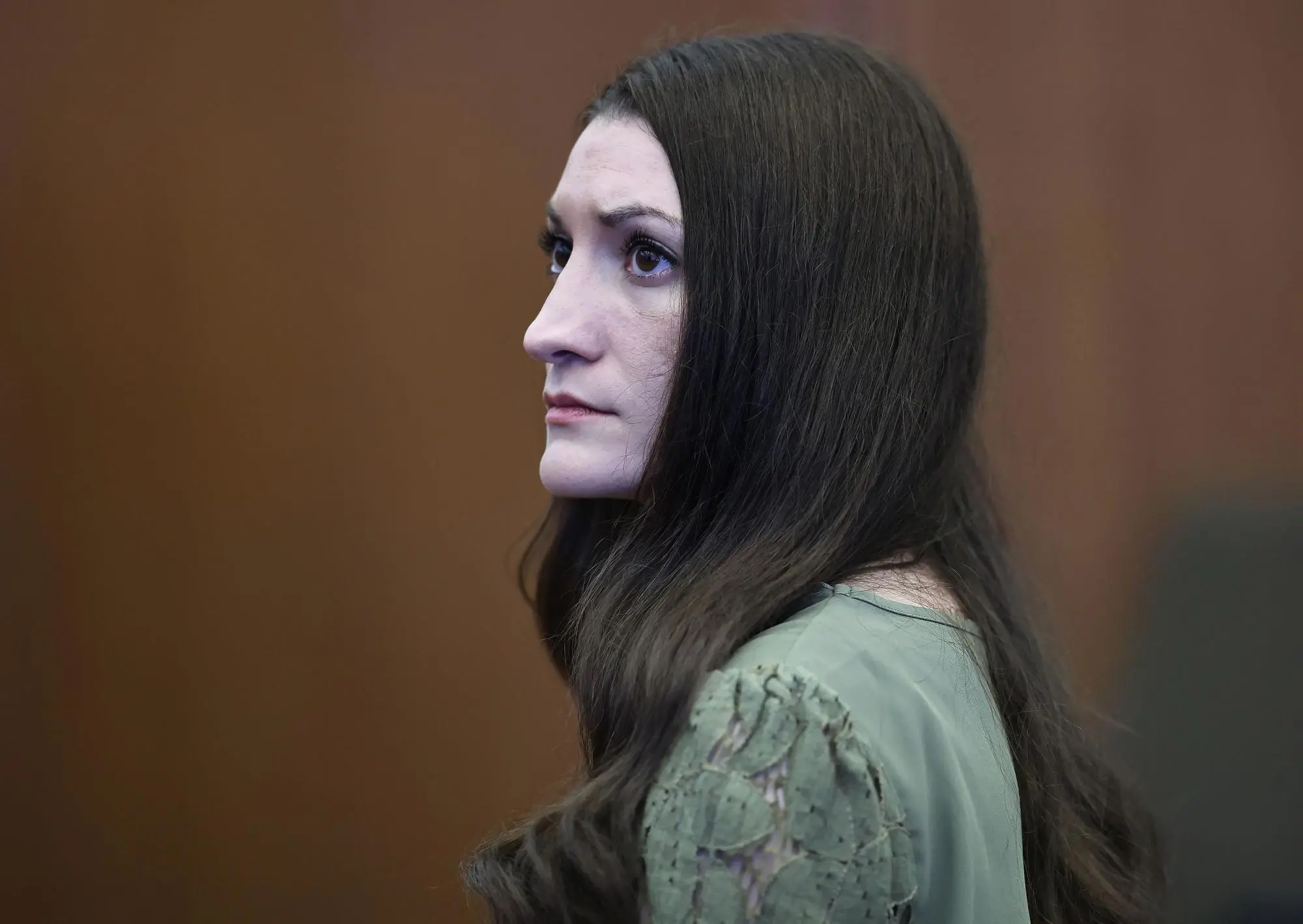
BOSTON (AP) — Lindsay Clancy shouldn’t be tried a second time for killing her three young children because prosecutors don’t have enough evidence, her lawyer told a judge Thursday, saying the court should decide she’s not guilty by reason of insanity.
Eleven of 12 jurors were ready to clear Clancy of criminal responsibility last Friday, but their deadlock forced the judge to declare a mistrial, leaving the case unresolved.
Attorney Kevin Reddington’s motion asked the same judge to acquit Clancy, which would prevent a second trial. Prosecutors have yet to say whether they’ll seek to put the 36-year-old former labor and delivery nurse on trial again, and Plymouth County District Attorney Timothy Cruz did not respond to a phone message Thursday seeking comment.
Neither side disputed that Clancy strangled 5-year-old Cora, 3-year-old Dawson and 8-month-old Callan Clancy in the family’s home in 2023 before trying to end her own life. But her attorney said she was a loving mother in the grip of a rare condition called postpartum psychosis, while prosecutors argued she knew what she was doing.
The trial generated intense interest for weeks, drawing attention to maternal mental health after childbirth.
Under Massachusetts law, prosecutors had to prove either that Clancy did not have a mental disease or defect or that, despite having one, she retained the substantial capacity to appreciate the wrongfulness of her actions or conform her conduct to the law.
Read more Surrogate asks the Supreme Court to intervene over care for a sick baby
Reddington argued in Thursday’s court filing that prosecutors proved neither, and asked Judge William Sullivan to consider the motion at a court conference scheduled for Sept. 29.
The defense attorney said none of the psychiatric experts, either called by the prosecution or defense, disputed that Clancy was suffering from a mental illness. “The testimony bears on which illness she had, not on whether she had one,” he wrote.
Prosecutors pointed to Clancy’s actions in the weeks, days and hours leading up to the killings — driving, planning a child’s birthday party, bringing her daughter to a doctor’s appointment — and her ability to perform other everyday tasks as evidence she was of sound mind when the killings took place.
“Competence at routine tasks,” Reddington argued Thursday, “during a crisis which every witness agreed was acute, is not proof of criminal responsibility beyond a reasonable doubt.”
The judge acknowledged during jury deliberations that the trial had been emotionally and physically exhausting for everyone. Much of the testimony was excruciating to hear, from the heartbreaking 911 call made by the children’s father who found their bodies, to the descriptions of how they died.
Clancy was brought to tears several times. At one point, the judge called a short break as Clancy’s loud sobs filled the courtroom while the children’s autopsy photos were shown. She remains paralyzed from the waist down after jumping from the home’s second story, and is expected to stay at a psychiatric hospital until her case is resolved.
Read more Appeals court cites detention of Japanese Americans in ruling blasting Trump immigration policy