
By ISABEL DEBRE
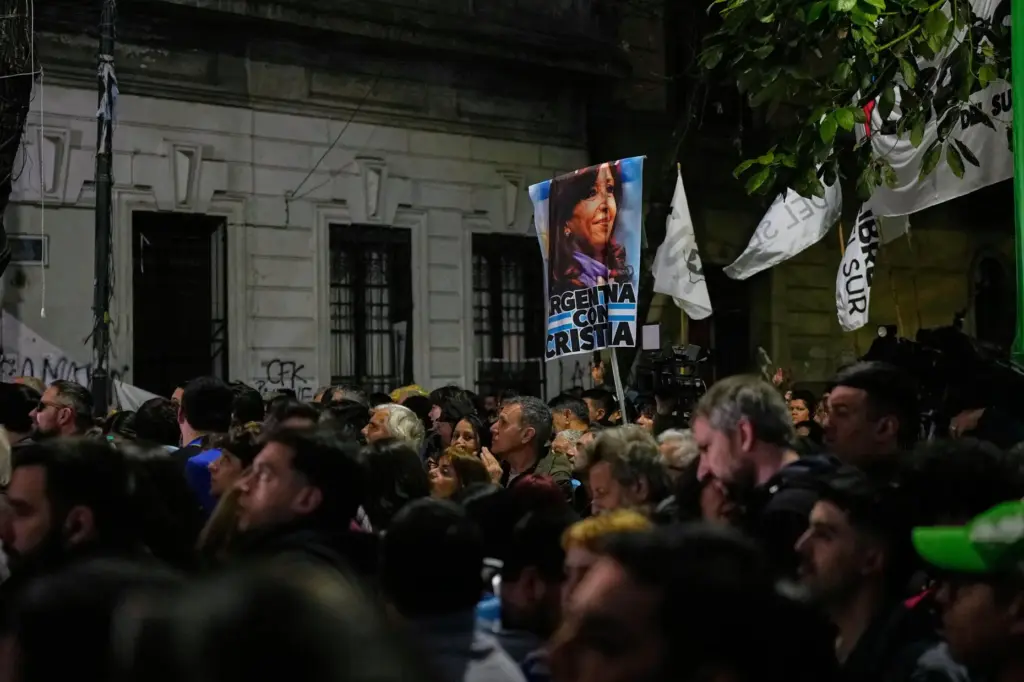
AVELLANEDA, Argentina (AP) — Several nights a week, scores of supporters of Argentina’s divisive former president, Cristina Fernández de Kirchner, gather outside the French-style apartment building in Buenos Aires where she is under house arrest, beating drums, blaring trumpets and chanting, “Cristina for president!”
Read more Irvine police find pipe bomb in car at Chevron station after arresting 2 men on drug-related charges
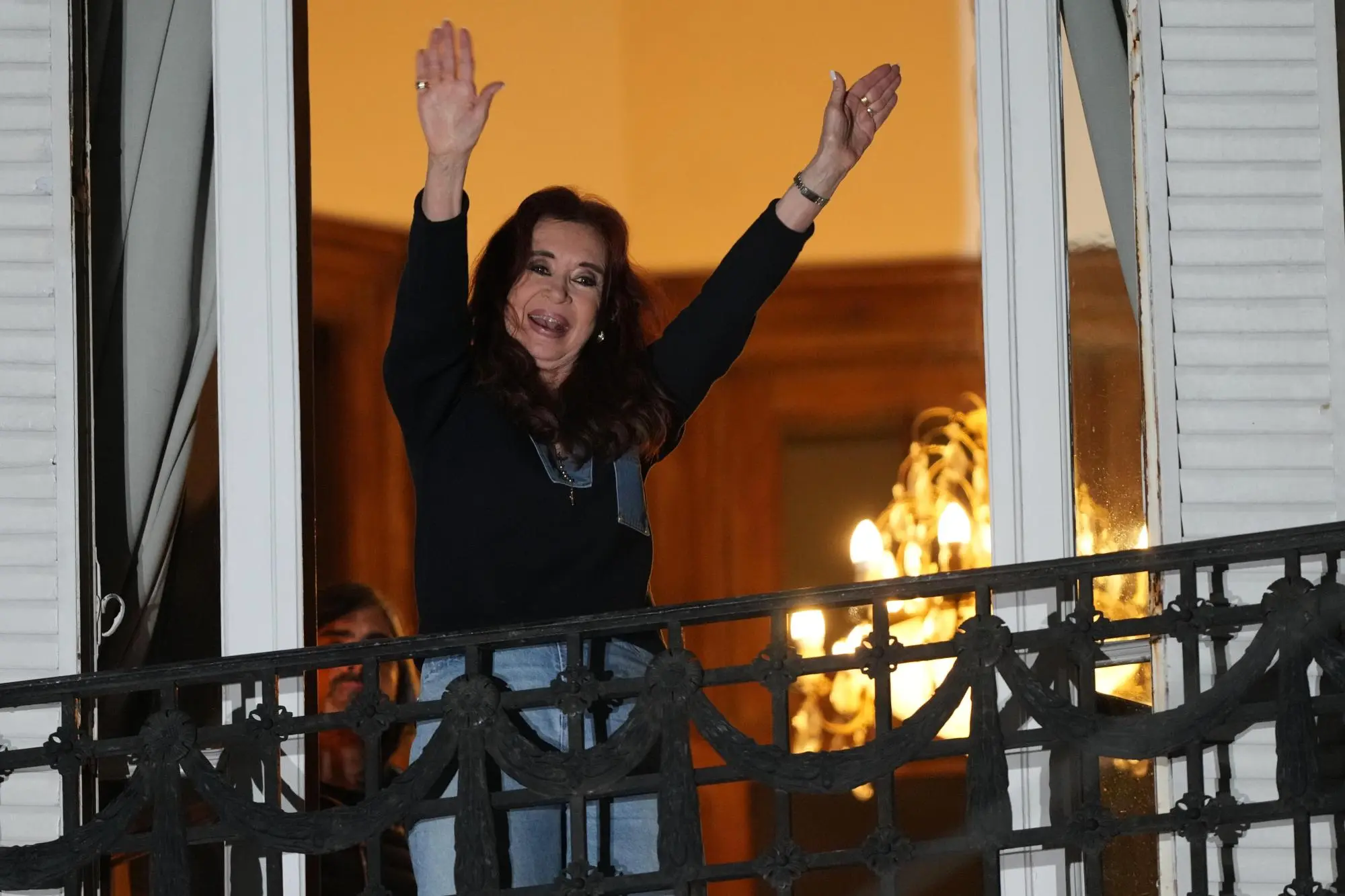
After about an hour, Fernández gives them what they came for: She steps onto the third-floor balcony — as close as she can get to the crowds below while serving her six-year corruption sentence — and waves with both hands.
“I not only have hope. I have certainty that Cristina will be freed and will return as president,” said Graciela Nadal, 66, who keeps daily vigil outside Fernández’s home with other members of the Cristina Libre, or Free Cristina, movement, an almost cult-like group demanding the release of the former leader.
More than a year after the Supreme Court upheld her conviction for defrauding the state during her two terms as president, from 2007 to 2015, and banned her from holding office for life, Fernández remains among the most polarizing figures in Argentina and the most influential living leader of Peronism, the populist movement focused on labor rights that has dominated Argentine politics since the 1940s.
To some, she is a political prisoner, punished for standing up to powerful interests. To others, she personifies the corruption and economic mismanagement that have roiled Argentina for decades.
But just over a year before libertarian President Javier Milei seeks reelection, Peronism’s enduring obsession with the 73-year-old former president is taking a toll, undermining its attempt to shape a political alternative just as frustration with Milei’s austerity program gives the movement an opening.
“The opposition is in a big mess. And they now have a big opportunity,” said Marcelo J. García, Americas director at the risk consultancy Horizon Engage. “How they resolve their problems of narrative and leadership will be crucial.”
The stakes extend beyond Milei’s free-market experiment. The opposition’s efforts to regroup and respond to Milei, politicians say, could become a test case for progressive movements across Latin America reeling from a string of election losses and struggling under pressure from the Trump administration.
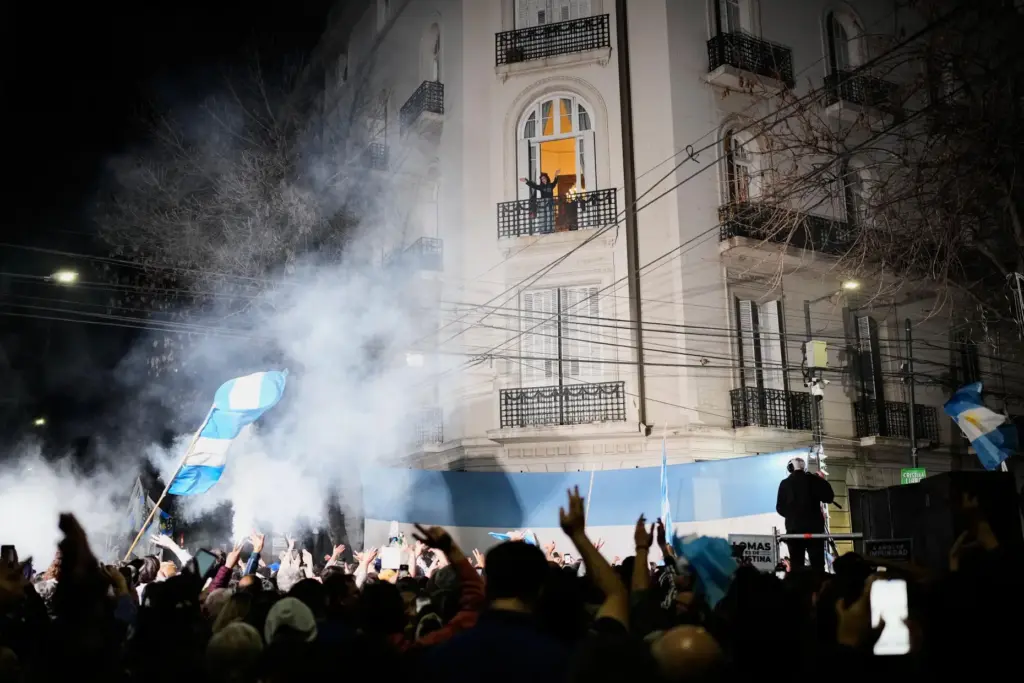 Former Argentine President Cristina Fernandez, who is serving a prison sentence under house arrest for corruption, waves from the balcony of her home during a rally marking the fourth anniversary of the assassination attempt against her in Buenos Aires, Argentina, Tuesday, Sept. 1, 2026. (AP Photo/Natacha Pisarenko)
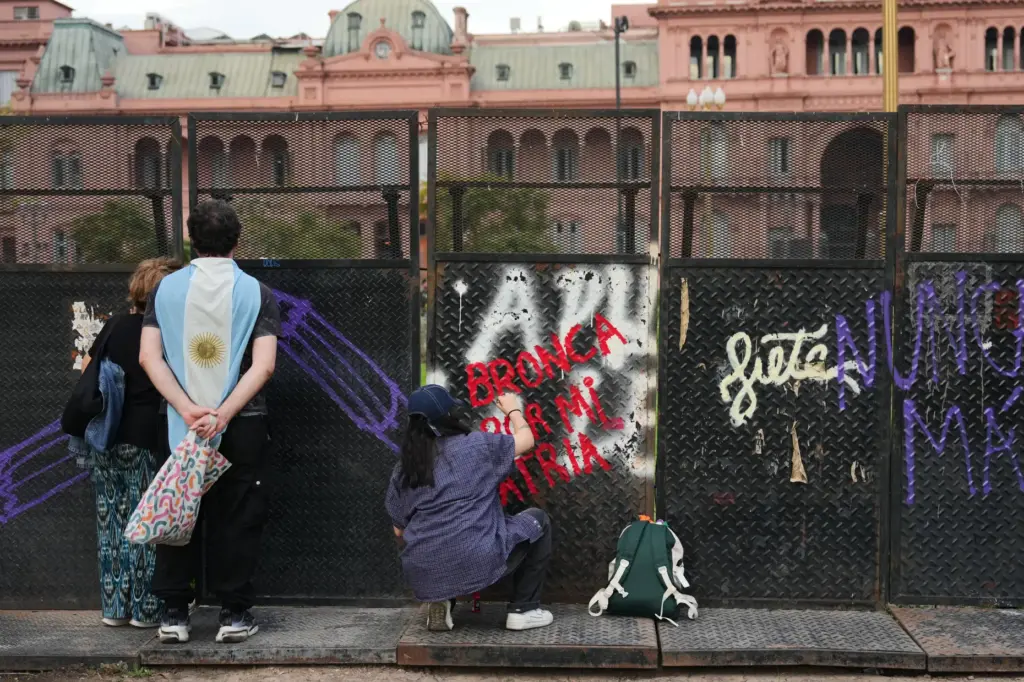 An anti-government protester writes “Anger over my country” in Spanish on a fence outside the government house in Buenos Aires, Argentina, Saturday, Sept. 19, 2026. (AP Photo/Rodrigo Abd)
 Supporters watch as former Argentine President Cristina Fernandez, who is serving a prison sentence under house arrest for corruption, waves from the balcony of her home during a rally marking the fourth anniversary of the assassination attempt against her in Buenos Aires, Argentina, Tuesday, Sept. 1, 2026. (AP Photo/Natacha Pisarenko)
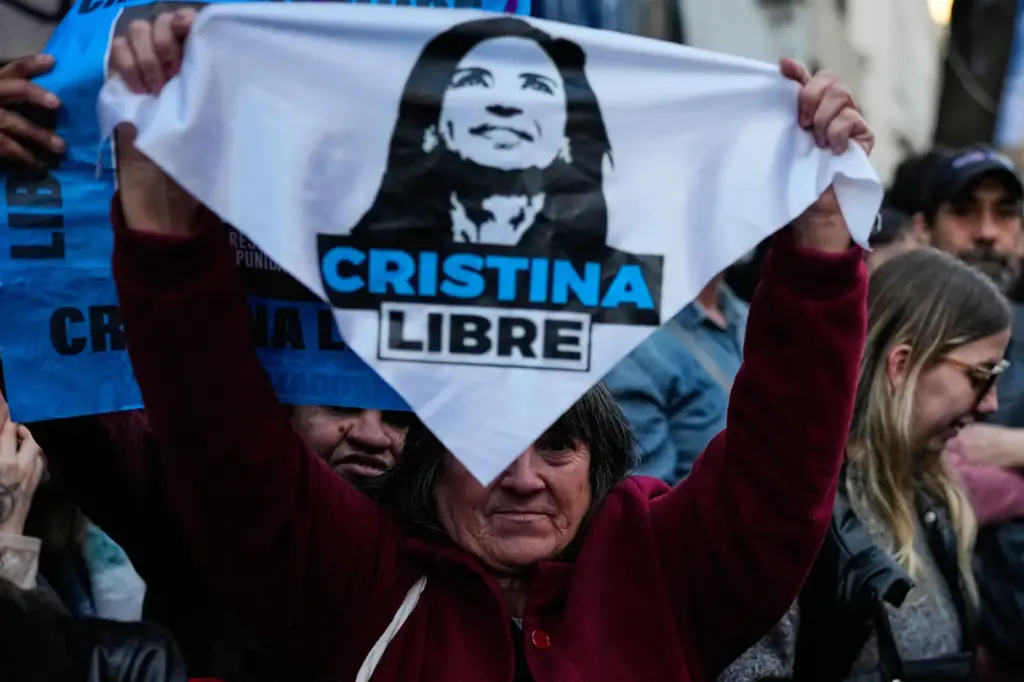 A supporter of former Argentine President Cristina Fernandez, who is serving a prison sentence under house arrest for corruption, holds a sign reading “Cristina Free” outside her home during a rally marking the fourth anniversary of the assassination attempt against her in Buenos Aires, Argentina, Tuesday, Sept. 1, 2026. (AP Photo/Natacha Pisarenko)
From house arrest, Fernández divides Peronism
At a recent rally outside Fernández’s home marking the anniversary of the 2022 assassination attempt against her, Máximo Kirchner, her son and a Peronist lawmaker, spoke at length about the movement’s past — just not its recent past.
To thunderous applause, Kirchner praised the expansive welfare programs of his mother’s presidency, which ended over a decade ago. But he said nothing about her subsequent term as vice president under Alberto Fernández (2019-2023), whose administration presided over the triple-digit inflation that helped vault Milei to power in 2023 on a pledge to shrink the government.
“Those were better years — years in which thousands upon thousands of Argentine families lived better than they do now,” Kirchner said of his mother’s earlier tenure.
Through dramatic budget cuts, Milei has stabilized Argentina’s currency and brought annual inflation down from nearly 300% in 2024 to just over 30% this year. But many Argentines have yet to see the economic revival that he promised would follow the pain: Paychecks buy less, utilities cost more and jobs are disappearing as cheap imports pummel local industry.
The Peronists won roughly a third of the vote in last year’s midterms and remain Milei’s likeliest challengers in a presidential runoff next year. Even from her wrought-iron balcony, analysts say, Fernández has held back potential successors to pursue her own comeback.
She recently took her case to the U.N. Human Rights Committee, challenging her conviction and disqualification from public office on the grounds of political persecution. But a favorable U.N. ruling alone would not put her back on the ballot, as Argentine courts would still have to lift the ban. Undeterred, her devotees continue their efforts to free their icon.
Read more A nation renamed stands up at the UN: ‘Say our name. Naoero.’
“If the leader next year isn’t her, it will be whoever she says,” said Silvia Santacruz, 52, a Cristina Libre activist who described Fernández as a reincarnation of Evita Perón, the wife of Peronism’s founder and a heroine to its followers.
That loyalty complicates the ambitions of Peronists promising a fresh start — chief among them Axel Kicillof, the left-wing governor of Buenos Aires province, home to more than a third of Argentines. Fernández’s economy minister from 2013 to 2015, Kicillof was seen as her natural heir before the two fell out over who should lead the movement.
“Historically, Peronism has revolved around strong leaders, with a serial monogamy,” said María Esperanza Casullo, an Argentine political scientist. “Now it finds itself in a completely new situation: Cristina is no longer its undisputed leader, but she has retained the ability to prevent new leadership from consolidating.”
That leaves Kicillof in limbo.
“Because Cristina can’t compete, we cannot resolve this leadership crisis democratically,” said Juan Grabois, an opposition lawmaker trying to mend the rift between Kicillof and Fernández in preparation for the October 2027 election. “We have to seek reconciliation because Cristina is still the person in Peronism who commands the greatest acceptance.”
Under Milei, economic pain throws Peronism a lifeline
What unites Peronists at the moment is their determination to defeat Milei.
Kicillof and others have seized on widespread economic hardship under Milei to rekindle support for the movement’s traditional pillars — free education, public health care and workers’ rights.
“Milei is not bringing order to Argentina. He is tearing it apart,” Kicillof told tens of thousands of supporters on Saturday in the industrial city of Avellaneda. The crowd roared in agreement.
He acknowledged that broadening Peronism’s appeal would take more than dismantling Milei’s agenda, saying, “In addition to being the opposition, we now have to build a national alternative. … We have to bring in Argentines from all over, including sectors that never worked alongside us.”
But he said nothing about the pitfalls of budget-busting populism, raising questions about how a movement so recently associated with spiraling inflation could win over moderates and reassure markets. After last year’s Peronist victory in Buenos Aires provincial elections, investors dumped Argentine bonds en masse, triggering a currency crisis that prompted the Trump administration to prop up Milei with a $20 billion bailout.
“If we don’t win next year’s election, it’s because, as a society, we are choosing to commit suicide,” Milei said earlier this month.
Despite chants of “Axel for president” during the rally, Kicillof dodged questions afterward about his own ambitions.
“This is a year for building, not for candidacies,” he told The Associated Press.
That work is taking him beyond Argentina. Later Wednesday, he is scheduled to meet with New York Mayor Zohran Mamdani, whose campaign electrified U.S. progressives.
“We’re going to New York to listen,” he said. “Because what’s happening with far-right leaders is causing concern everywhere.”
Read more Trump’s Board of Peace proposes $2.45 billion blueprint to begin Gaza reconstruction