
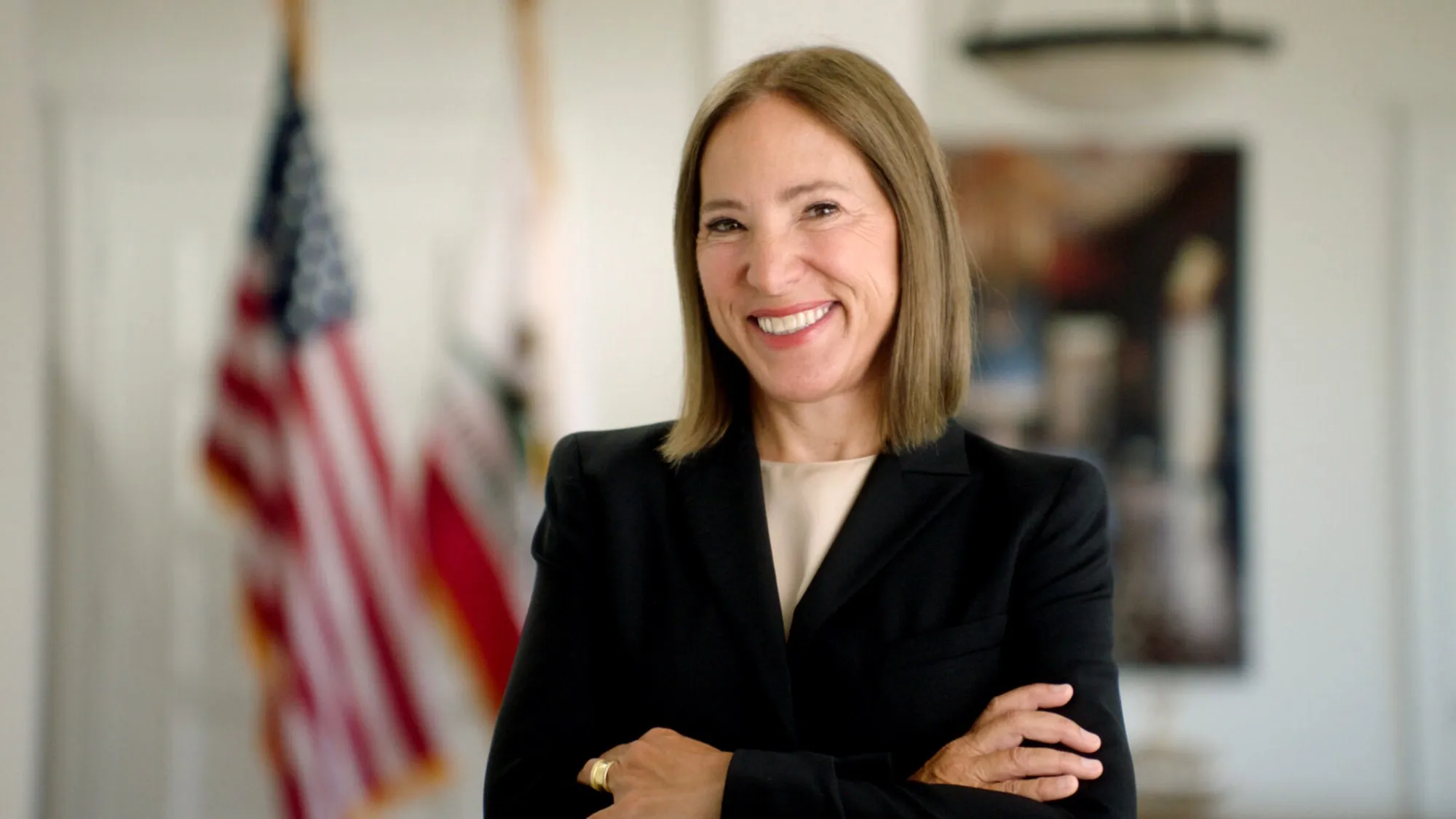
Ahead of the November general election, the Southern California News Group compiled a list of questions to pose to the candidates who wish to represent you. You can find the full questionnaire below.
Read more Rob Bonta, California attorney general candidate, 2026 election questionnaire
Name: Eleni Kounalakis
Age: 60
Current job title: Lieutenant Governor of California
Political party affiliation: Democrat
Incumbent: No
Other political positions held: United States Ambassador to Hungary
City where you reside: San Francisco
Campaign website or social media: eleniforca.com
California’s high-speed rail project has been beset by delays, ballooning costs and federal funding cuts. Should the state continue with this project? Why or why not? If you support moving forward with the project, what do you propose doing to contain costs for taxpayers? (Please answer in 200 words or less.)
High speed rail is an investment in the future of California. But it will only get done if the numbers add up. As treasurer, I will work with all stakeholders to push costs down and speed up the timeline. If elected, I will prioritize bond financing for public transit, rail, clean transportation, and active transportation projects that connect communities to jobs and education, reduce household transportation costs, and advance our climate goals.
How can you ensure that local governments and organizations are receiving state-allocated funds on time so that work on important projects doesn’t lapse? (Please answer in 200 words or less.)
If elected treasurer, I will invest in systems to streamline the disbursement process for bond-fueled and state-allocated dollars administered through the financing authority the office chairs. I will also push for standardized timelines and clear public benchmarks for fund releases, so local governments know what to expect and can plan projects accordingly. I will also strengthen coordination between the Treasurer’s Office, state agencies, and local partners to catch delays before they force projects to stall or lose momentum. As lieutenant governor, I’ve seen firsthand how funding delays can derail good projects. As treasurer, I will bring that firsthand understanding to making the state a faster, more dependable partner.
Launched in 2022, California offers a scholarship account savings program called CalKIDS for the state’s kids. What’s something you’d like to do to strengthen this program? And similarly, is there something additional the treasurer’s office could do to ensure more families can have access to these funds? (Please answer in 200 words or less.)
The Treasurer’s Office administers some of the state’s most important programs for building long-term financial security for California families. As treasurer, I will work to raise awareness for programs like CalSavers, CalKIDS, ScholarShare 529, and CalABLE to help families save for education, prepare for retirement, and plan for the future — particularly for working families, people with disabilities, and communities historically excluded from wealth-building opportunities. These are excellent programs but far too few eligible Californians know they exist.
What do you see as the future of digital financial assets in California’s economy? (Please answer in 200 words or less.)
As treasurer, I will ensure the state approaches this space with the same rigor we apply to any financial innovation: protecting consumers, safeguarding public funds, and maintaining the fiscal discipline that keeps California’s credit rating strong. That means working with regulators and industry to establish clear rules of the road, exploring how digital tools can improve efficiency and transparency in state financial operations, and staying engaged as federal and national frameworks around digital assets continue to develop. I will not put public funds at risk chasing novelty, but I also won’t let California miss out on opportunities for new types of investments if they are sound, secure, and of course, legal. The state’s economic future depends on staying ahead of change while protecting the people and institutions that depend on us to manage their money wisely.
What is one way you’d like to see the treasurer’s office address housing affordability in the state that either hasn’t been done before or executed fully, in your opinion? (Please answer in 200 words or less.)
For decades, California has underbuilt our housing stock relative to population growth and job creation, driving up rents and home prices and forcing families farther from work, school, and community. As stated above, I’ve spent nearly two decades as a housing developer and have firsthand experience financing and building housing communities across California, giving me a practical understanding of how capital markets, public financing tools, and local land-use policies affect housing delivery in the real world.
As lieutenant governor, I have engaged in this work at the statewide level, supporting policies that expand housing supply, strengthen accountability, and advance affordability. As a member of all three boards that oversee California’s higher education systems, I spearheaded the approval of over 60,000 new beds on our college campuses, demonstrating my commitment to the issue and ability to make a difference.
If elected state treasurer, I will oversee agencies such as CDLAC and CTCAC, directing billions of dollars toward building, preserving, and financing affordable housing and supporting homeownership programs.I believe the STO can go one step further and partner directly with local governments to move projects from approval to construction faster — because nothing drives up the cost of housing construction more than red tape and time delays.
Many people don’t fully understand the role of the treasurer. How would you describe what the treasurer does to someone unfamiliar with the position, and what do you think is the single most important aspect of this job? (Please answer in 200 words or less.)
The California State Treasurer is the state’s chief banker and investment officer, responsible for managing and safeguarding public funds and ensuring the state can finance its priorities at the lowest possible cost.
Constitutionally and in statute, the treasurer manages the state’s cash through the Pooled Money Investment Account (PMIA), oversees issuance of state bonds and short-term notes, and serves as agent for the sale and repayment of debt. The treasurer chairs or serves on numerous financing authorities that fund housing, schools, infrastructure, and economic development.
Read more Michael Gates, California attorney general candidate, 2026 election questionnaire
The treasurer also sits on the boards of CalPERS and CalSTRS, helping oversee pension investments and protect retirement security. In addition, the office administers major savings and consumer programs—like ScholarShare 529, CalABLE, CalSavers, and CalKIDS—and promotes financial transparency and responsible fiscal management across state governments.
What is one specific policy you’d implement to ensure the state’s money is being utilized correctly? (Please answer in 200 words or less.)
If elected, I will use the office as a bully pulpit (just as I have as lieutenant governor) to speak out clearly and often for fiscal discipline and responsible budgeting. The specific indicators that I will monitor include the structural budget gap, debt-service-to-revenue ratio, reserve levels, revenue volatility, and credit rating outlooks. Together, these metrics provide a clear view of the state’s fiscal health and whether we are maintaining the confidence of investors and taxpayers. One measurable target is to keep the state’s debt-service-to-general fund revenues ratio at or below 6%, leveraging our state’s financial strength while preserving — and improving — California’s strong credit rating.
How would you increase transparency of how California’s money is being spent? (Please answer in 200 words or less.)
While the state has several dashboards and tools to see where and how taxpayer dollars are spent, we can do more. If elected treasurer, I’ll treat transparency as a core management function, and make the state’s finances understandable in plain language, and in real time.
First, I would build a public-facing “California Balance Sheet” dashboard that shows, in one place, how money flows in and out of the state: cash holdings (PMIA), bond debt, pension assets, and major investments. It would translate complex data into clear metrics — cost of borrowing, debt per capita, investment returns versus benchmarks, and fees — so Californians can see how we’re performing.
Second, I would standardize simple, consistent reporting: short quarterly updates that explain what changed, why it matters, and what it means for taxpayers.
Finally, I would pair that transparency with accountability — regular public briefings and open data — so residents, journalists, and policymakers can track whether we are lowering costs, protecting assets, and making smart, long-term financial decisions.
Tell us about a time you’ve changed your mind on a political position. What was it, and what changed your mind? (Please answer in 200 words or less.)
In both the public and private sectors, I’ve built my career on listening first. Good policy is rarely static, and my experience has taught me that the right position is one that reflects the facts on the ground: updated data, experts’ and professionals’ opinions, and the lived experiences of people impacted every day. When new evidence or a community’s perspective makes clear that an approach isn’t working, I believe leaders have a duty and responsibility to adjust. As treasurer, I will bring that same humble discipline to governing state finances: informed by evidence, accountable to results, and willing to evolve when California’s needs do.
Bonus question: What is the best book you’ve read this year? Explain why you found it compelling.
I’m an avid reader but one book stands out this year: “The Ministry of Time” by Kaliane Bradley. It’s strange, funny, and phenomenal science fiction on the surface, but at its heart it’s about a young woman doing something very ordinary and very hard: helping someone impossibly displaced learn how to live in a new world, day by day, without a map.
I recognize that work. I’m the daughter of an immigrant. My father came to California with nothing and worked hard every day to give his children a feeling of belonging and empowerment that we could build from. I’ve spent my career doing exactly that, and I think about the thousands of families across California doing the same thing today: starting over, working hard, and hoping the place they’ve chosen will choose them back.
Bradley writes that feeling with so much tenderness, respect, and love. It’s a book about what it means to be an outsider, and the power of community that invites each other in. That brave compassion is easy to overlook in public life, but it’s often the whole job — and it’s the part of my father’s story I hope I’ve honored.
Read more PEN America: Nearly 12,000 school book bans in a year, a record high