
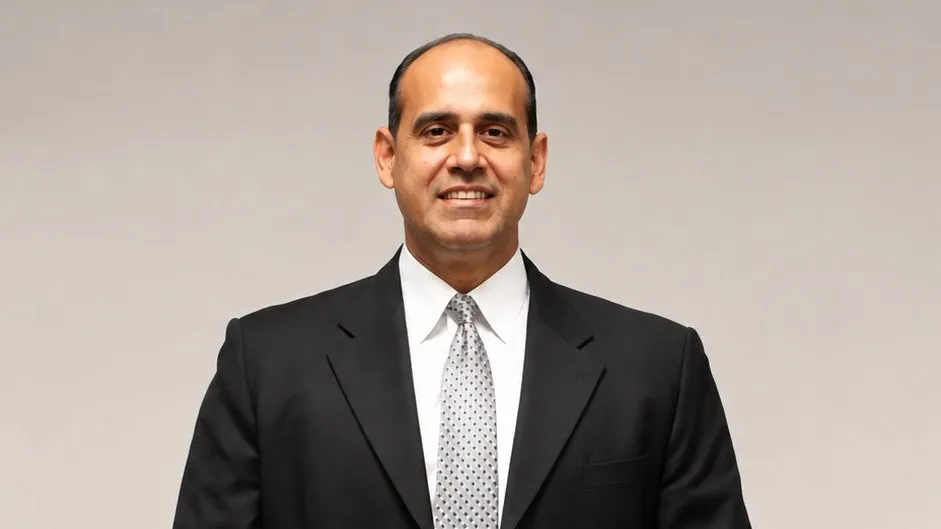
Ahead of the November general election, the Southern California News Group compiled a list of questions to pose to the candidates who wish to represent you. You can find the full questionnaire below.
Read more Meet the 3 Marvel flight instructors on Disneyland’s Iron Man thrill ride
Name: Rama R. Maline
Age: 61
Current job title: Deputy Attorney General
Incumbent: No
Other political positions held: None
City where you reside: Seal Beach
Campaign website or social media: voterama.org
What are the top two needs of your college district, and how are you prepared to address them? (Please answer in 200 words or fewer.)
Workforce readiness: The first need is program alignment with real career outcomes — credentials that translate directly into jobs, particularly in the legal, healthcare, and technical fields where local employers are actively hiring. Too often, programs stay static while the job market moves, and students end up with credits that don’t convert into employment.
Accountability: The second need is fiscal accountability — ensuring every dollar the district spends is tied to a measurable outcome for students, not absorbed into administrative overhead that no one is required to justify.
My approach: I’m prepared to address both because I’ve lived them from different sides of the desk. I’ve taught paralegal studies at Cerritos College since 2007, so I know firsthand what employers expect graduates to walk in the door knowing, and where our curriculum lags behind. Before I was a lawyer, I passed the CPA exam and worked as a state tax auditor, which gave me a disciplined, numbers-first approach to budgets. As trustee, I’d push for stronger industry advisory partnerships to keep programs current, and for regular, transparent budget review so every spending decision is explainable — not just to the board, but to the taxpayers and students funding it.
To you, what is the role of community college in education? Is it driving policy, being involved in curriculum, something else entirely? (Please answer in 200 words or fewer.)
Mission: Community colleges exist to make opportunity affordable and reachable for the students they serve. They should also vigorously support transfer pathways to four-year universities, career training that leads to real, high-paying jobs, and a genuine second or third chance for students whose paths haven’t been linear. I don’t see the trustee’s role as writing curriculum; that’s faculty expertise, and trustees who wade into it are usually working outside their competence.
Oversight: Setting policy direction, managing the budget responsibly, hiring and evaluating district leadership, and making sure programs stay connected to what students and local employers actually need rather than what’s administratively convenient.
My approach: I think of it much like appellate litigation, my career for nearly 30 years — you’re not re-litigating every ground-level decision, but making sure the process was sound and the institution genuinely serves the people it exists for. Trustees who overreach into curriculum decisions create confusion and resentment among faculty; trustees who disengage from budget and policy oversight are failing the actual job they were elected to do. I want to bring the same rigor I’ve applied in courtrooms for three decades to this oversight role, without ever micromanaging the classroom itself.
In October, Long Beach City College will break ground on a new student housing facility at its Liberal Arts Campus that will provide 431 total units to students. Is student housing a priority that your college should pursue? If so, explain how you intend to take on such an endeavor in a timely, cost-effective manner. If you don’t, how should your college district support students searching for affordable housing options near campus? (Please answer in 200 words or less.)
Identifying the problem: Long Beach City College’s 431-unit project reflects a real problem — housing costs are pushing capable students out of school before they finish. Whether my district should pursue a comparable large-scale build depends on honest answers about land availability and debt capacity that I don’t have yet as a candidate, and I wouldn’t promise a specific project without a real feasibility study first.
Realistic solutions: Where a large housing development isn’t realistic in the near term, the district still has an obligation to act rather than shrug. That means formal partnerships with local cities and affordable-housing developers, emergency housing grants or short-term rental assistance for students facing sudden crisis, and a real, actively maintained resource hub connecting students to existing local housing programs rather than leaving them to search alone with a stale list of links.
Cost-efficient solutions: Cost-effectiveness matters here — a rushed or over-leveraged housing project that strains the district’s budget doesn’t actually help students either. I’d rather see a phased approach: stand up partnerships and emergency support quickly, then evaluate a larger housing project once the real numbers are vetted.
What actions would you suggest to prevent a cyberattack similar to the Canvas data breach in May? How can your district ensure students’ information is safe? (Please answer in 200 words or less.)
The Canvas breach showed that a district’s data is only as safe as the vendors it contracts with — the vulnerability wasn’t in the district’s own servers; it was in a third-party platform everyone trusted without asking hard enough questions. As trustee, I’d push for real vendor accountability: independent security audits and strict breach-notification requirements written directly into every technology contract, not left to the vendor’s discretion or public relations timeline.
Internally, I’d want mandatory multi-factor authentication district-wide, regular independent penetration testing rather than self-reported compliance, and a dedicated cybersecurity budget line that exists before an incident happens, not one improvised in a panic afterward. Just as important is transparency toward the people actually affected — students and employees deserve fast, plain-language notice when their information may be exposed, not a delayed, lawyer-scrubbed disclosure months later.
My background as a career prosecutor handling sensitive cases, and as an auditor who understands internal financial controls, gives me a practical sense of what real accountability looks like in practice. It’s a system that’s actually tested, audited, and verified on a regular schedule — not just a compliance checkbox the district can point to after something has already gone wrong.
How do you feel artificial intelligence is, or isn’t, safe in the classroom? In what instances should it be expanded in the classroom? What about when it should be limited? (Please answer in 200 words or less.)
AI belongs in the classroom as a tool that sharpens student work, not a substitute for the thinking behind it. I already see its value in paralegal education — students use it to draft, research, and issue-spot faster, the same way they’ll use it in law offices right after graduation. It should be expanded wherever it builds real, transferable workplace skills: legal research, structured writing feedback, accessibility accommodations for students with disabilities, and tutoring support for students juggling jobs and family who can’t always get office hours. It should be limited wherever it substitutes for a student’s own reasoning — exams, case briefs, anywhere we’re trying to measure whether someone can think and argue like a working professional. The line isn’t the technology itself; it’s whether the student is still doing the intellectual work.
Read more Orange County football Top 25: Mater Dei remains at No. 2 after loss
What concerns me most right now is inconsistency — AI policy is often decided ad hoc, course by course, sometimes instructor by instructor, which isn’t fair to students trying to understand what’s actually allowed. The district needs clear, uniform guidelines developed with faculty input, so expectations are consistent and students aren’t penalized for guessing wrong. Trustees need to provide direction on this important policy ground.
How do you believe schools can better teach or engage students in civil discourse? How would you like to see your district tackle this issue? (Please answer in 200 words or less.)
I’ve spent nearly 30 years arguing before appellate courts, including at every level of the state and federal courts, where disagreement is structured, evidence-based, and still fundamentally respectful of the other side. That’s the model I’d bring to campus discourse — not avoiding hard topics out of discomfort, but teaching students how to argue a position, genuinely engage the strongest version of the opposing view, and reach a reasoned conclusion without personal contempt or attacks for whoever disagrees with them.
I’d like to see the district invest in structured debate and moot-court-style programming across disciplines, not confined to pre-law students, so that students practice disagreement as a learnable skill rather than experience it as raw conflict to be avoided. Trustees can support this concretely by protecting faculty and students from outside political pressure, and by making sure civics and critical thinking remain embedded in general education rather than treated as an optional elective. Civil discourse isn’t taught by simply telling students to be nicer to one another. It’s taught by giving them a rigorous framework for how to disagree well, which is exactly what my legal practice has demanded of me every working day.
What experiences and priorities do you bring to this role? What have you learned in prior leadership roles that makes you the person for the job? (Please answer in 200 words or less.)
Proven experience for 30 years: I’ve spent nearly 30 years as a California deputy attorney general handling criminal trials and appeals, with more than 30 published opinions and arguments before the U.S. Ninth Circuit Court of Appeals and the California Supreme Court.
I’ve also taught paralegal studies at Cerritos College since 2007, so I know community college students and faculty from the inside, not just from a boardroom seat once a month.
Before law, I passed the CPA exam and worked as a state tax auditor, which shaped how I think about budgets, internal controls, and accountability long before I ever set foot in a courtroom.
What I bring to this role is the combination of all three: courtroom-tested judgment under real pressure, direct classroom experience with what students actually need to get hired, and a numbers person’s discipline about where district money goes and why. Leadership in the Attorney General’s Office and in the classroom has taught me the same lesson repeatedly — results matter more than good intentions, and you owe the people you serve a clear, honest account of your decisions, especially, and most importantly, when something didn’t go the way you planned it to.
If your campaign had a mascot, what would it be and why? (Please answer in 200 words or fewer.)
My mascot would be a guide dog stationed at a lighthouse — two protectors working the same shift, at two different scales.
The lighthouse does the quiet, structural work: standing watch, warning people away from the rocks before they ever ask for help. That’s the prosecutor in me — building systems, policies, and safeguards that protect people who never even know they were at risk.
The guide dog does the personal work: walking alongside one person at a time, making sure they actually get where they’re going, safely, step by step. That’s the professor in me — the part of the job where I’m not managing a system; I’m sitting across from a single student who needs someone to actually notice them and help them get through.
I don’t think protection only happens at the policy level, and I don’t think it only happens one relationship at a time either. It takes both. A trustee who only builds structure from a distance misses the students standing right in front of them. A trustee who only mentors individually never fixes what’s broken for everyone else. I want to be both the lighthouse and the dog leading someone safely past it.
Bonus question: What is the best book you’ve read this year? Explain why you found it compelling.
“Co-Intelligence: Living and Working with AI” by Wharton professor Ethan Mollick.
I found it compelling because its central idea — that AI succeeds and fails unpredictably, so the real skill is learning to work alongside it rather than ban it or blindly trust it — matches exactly what I already see teaching paralegal studies and forces the same shift I’m now proposing for the whole district: grading students on their thinking and process, not just the polished final product.
Read more Dan Albano’s biggest revelations from Week 6 in Orange County football