
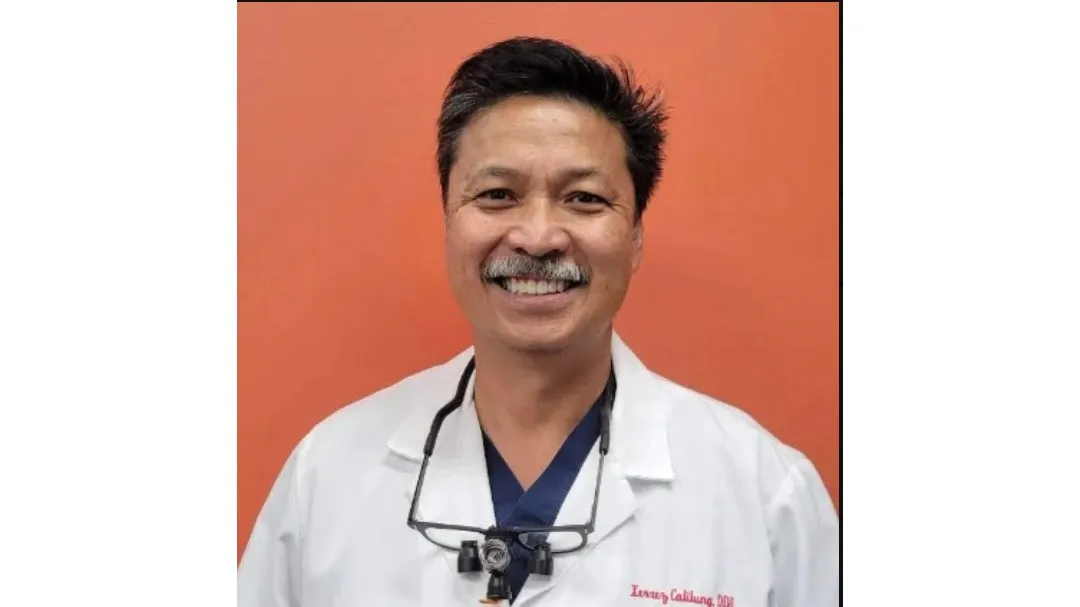
Ahead of the November general election, the Southern California News Group compiled a list of questions to pose to the candidates who wish to represent you. You can find the full questionnaire below.
Name: Xerxez Megino Calilung
Age: 63
Current job title: Dentist / Owner of Dental Arts of Irvine
Incumbent: No
Other political positions held: None
City where you reside: Costa Mesa
Campaign website or social media: votexerxez.com
What are the top two needs of your college district, and how are you prepared to address them? (Please answer in 200 words or fewer.)
The top two needs of our college district are fiscal stewardship and workforce-aligned educational pathways.
First, our community colleges must ensure strict financial accountability and waste elimination. With 36 years of experience running a private healthcare practice, I understand how to manage complex budgets, optimize resources, and ensure that every dollar directly supports student success and classroom instruction rather than administrative bloat.
Second, education must directly translate into stable careers. As a past professor at the University of Southern California Dental School and a long-standing local professional leader, I have spent decades mentoring students and bridging the gap between education and practical application. Our district needs stronger, proactive partnerships with local industries and trades to provide students with high-quality, hands-on training and career placement.
To address these needs, I am prepared to apply my decades of leadership experience—including my service on local advisory boards and community leadership roles—to ask the tough questions, collaborate with stakeholders, and implement practical, results-driven solutions. I am committed to keeping our colleges accessible, fiscally sound, and deeply connected to the economic vitality of Orange County.
To you, what is the role of community college in education? Is it driving policy, being involved in curriculum, something else entirely? (Please answer in 200 words or fewer.)
Community colleges serve as the essential catalyst and economic bridge for our community. Their primary role is neither strictly driving broad political policy nor micromanaging curriculum from an ivory tower; rather, it is about empowering students with practical, high-value skills and providing an accessible gateway to lifelong success.
Having practiced healthcare in Orange County for 36 years and served as a past professor at the University of Southern California Dental School, I have seen firsthand how vital practical training is. Community colleges must act as responsive engines for our local economy, collaborating closely with local industries and healthcare providers to ensure that programs directly match real-world employment demands.
Both policy and curriculum should always serve one core mission: measurable student outcomes and workforce readiness. By maintaining strict fiscal accountability and focusing resources where they matter most—in classrooms, labs, and student support services—we can ensure that every student has an affordable, reliable path to a meaningful career. That is the true calling of our community college district.
In October, Long Beach City College will break ground on a new student housing facility at its Liberal Arts Campus that will provide 431 total units to students. Is student housing a priority that your college should pursue? If so, explain how you intend to take on such an endeavor in a timely, cost-effective manner. If you don’t, how should your college district support students searching for affordable housing options near campus? (Please answer in 200 words or less.)
Student housing is increasingly becoming a critical priority because housing insecurity directly impacts a student’s ability to stay in school and succeed. When students face unstable living conditions, academic performance inevitably suffers.
However, pursuing large-scale construction projects like on-campus housing requires strict financial stewardship. To tackle such an endeavor in a timely and cost-effective manner, the district must leverage prudent fiscal planning, maximize voter-approved bond funds efficiently, and partner with experienced developers and project managers to prevent costly delays or administrative waste.
Where building on-campus housing is not immediately feasible or fully sufficient, our district must aggressively support students by strengthening community partnerships. This includes expanding emergency housing assistance programs, connecting students with local housing navigators, and maintaining reliable off-campus resource databases.
Drawing from my decades of experience balancing budgets and managing operations in private practice, I know we must protect taxpayer resources while addressing students’ basic needs. Whether through smart facility development or robust support networks, removing barriers to stable housing is vital to ensuring every student has a dependable path to educational and career success.
What actions would you suggest to prevent a cyberattack similar to the Canvas data breach in May? How can your district ensure students’ information is safe? (Please answer in 200 words or less.)
Protecting student data requires the same uncompromising rigor and accountability that we demand in healthcare patient privacy under HIPAA. To prevent cyberattacks and secure educational records, our district must move beyond basic compliance and implement a proactive, multi-layered security architecture.
First, we must enforce strict vendor vetting and continuous risk assessments for all third-party learning platforms and cloud integrations, ensuring software vendors meet high cryptographic standards. Second, mandatory multi-factor authentication (MFA) and granular access controls must be deployed across all accounts to safeguard sensitive student details from unauthorized exposure.
Drawing from my decades of experience managing confidential records in healthcare, I know that data privacy is a sacred trust. Our district must treat student information with the same vigilance as Protected Health Information (PHI)—mandating regular security audits, comprehensive staff and student cyber-awareness training, and robust data encryption both in transit and at rest. Furthermore, we must establish an immediate, transparent incident response protocol.
By applying strict healthcare-grade data stewardship to our educational systems, we can eliminate systemic vulnerabilities, protect our community’s privacy, and ensure that our students’ personal and academic data remains entirely secure.
How do you feel artificial intelligence is, or isn’t, safe in the classroom? In what instances should it be expanded in the classroom? What about when it should be limited? (Please answer in 200 words or less.)
Artificial intelligence is a powerful tool that can profoundly enhance learning when integrated with clear ethical boundaries. In the classroom, AI is safe and should be expanded as a collaborative resource—such as a personalized tutor to help students grasp complex concepts, simulate real-world scenarios, practice technical problem-solving, or assist faculty with administrative workflows. Exposure to AI tools prepares students for modern workforce demands.
However, AI must be strictly limited where it compromises academic integrity, original critical thinking, or data privacy. It should never replace genuine human mentorship, nor should it be used to generate unvetted core assignments, take exams, or bypass the fundamental cognitive struggle required to master a discipline. Furthermore, student data privacy must be strictly protected when utilizing AI platforms to prevent unauthorized profiling or data harvesting.
As a health professional and educator who utilizes advanced practice software, I believe technology must serve humanity, not replace it. Our district should embrace AI thoughtfully—expanding its utility for practical skills training and efficiency while strictly limiting its use in ways that erode authentic assessment, personal accountability, and the irreplaceable value of human instruction.
How do you believe schools can better teach or engage students in civil discourse? How would you like to see your district tackle this issue? (Please answer in 200 words or less.)
Civil discourse is the bedrock of a healthy democracy and an effective academic community. Schools can better engage students by creating structured, respectful environments where diverse viewpoints are welcomed, and critical thinking is prioritized over emotional reaction.
To tackle this in our district, we must actively integrate forums, town halls, and moderated debates directly into campus life. Classrooms should serve as safe spaces for rigorous intellectual exploration rather than ideological conformity. Faculty should be supported in modeling respectful disagreement, teaching students how to evaluate evidence objectively, listen actively, and articulate arguments based on facts.
Furthermore, student government and campus organizations should be encouraged to host cross-disciplinary dialogues addressing real-world community challenges. As a leader who has navigated complex organizational dynamics and board governance, I know that progress happens when we listen to differing perspectives and collaborate on common goals. By championing open inquiry and mutual respect, our community colleges can teach students not just what to think, but how to think critically together.
What experiences and priorities do you bring to this role? What have you learned in prior leadership roles that makes you the person for the job? (Please answer in 200 words or less.)
I bring decades of real-world leadership, fiscal accountability, and educational experience to this role. As a practicing general dentist and business owner operating a private practice for 36 years, a past professor at the University of Southern California Dental School, and a board member and past president of the Orange County Dental Society, I understand how to manage complex budgets, build consensus, and deliver results. My service on the Costa Mesa Sanitation District Citizens Advisory Committee further highlights my deep commitment to public stewardship.
Prior leadership has taught me that effective governance requires three core priorities: fiscal responsibility, workforce alignment, and unwavering student advocacy. Running a practice and leading professional organizations taught me how to eliminate waste, balance budgets, and ensure every resource directly serves the community. I know how to listen to stakeholders, ask the tough questions, and implement practical solutions.
I am running for the Coast Community College District to ensure our colleges remain financially sound, accessible, and deeply connected to local economic needs. My background uniquely equips me to provide steady, experienced oversight that puts student success first.
If your campaign had a mascot, what would it be and why? (Please answer in 200 words or fewer.)
If my campaign had a mascot, it would be an owl.
Throughout my 36 years practicing healthcare in Orange County and serving in various community leadership roles, I have learned that effective governance requires wisdom, careful observation, and thoughtful listening. An owl symbolizes these exact qualities.
In higher education governance, we cannot afford knee-jerk reactions or short-term fixes. We need leaders who observe carefully, study the budget details, listen to students and faculty, and look at the big picture with clear vision. Furthermore, education is about illumination—shedding light on pathways that transform students’ lives and equip them for the workforce. An owl represents the dedication to lifelong learning, prudent oversight, and steady guidance that I plan to bring to the Coast Community College District.
Bonus question: What is the best book you’ve read this year? Explain why you found it compelling.
The most compelling book I have read recently is “Weightless” by Dr. Rocio Salas-Whalen.
As a healthcare professional, I found her approach profoundly refreshing because it shifts the paradigm of modern medicine from oversimplified advice to evidence-based, compassionate care. Dr. Salas-Whalen emphasizes that true wellness is not about personal failure or outdated willpower models, but about understanding complex conditions and equipping patients with the proper tools, science, and guidance to succeed. What makes this book so powerful is its dedication to empowering individuals through education, structured support, and sustainable strategies rather than quick fixes. This philosophy directly mirrors my approach to community college governance. Whether dealing with student success, health initiatives, or fiscal responsibility, we must look past superficial fixes and implement structured, supportive, and evidence-based solutions that uplift our entire community.