
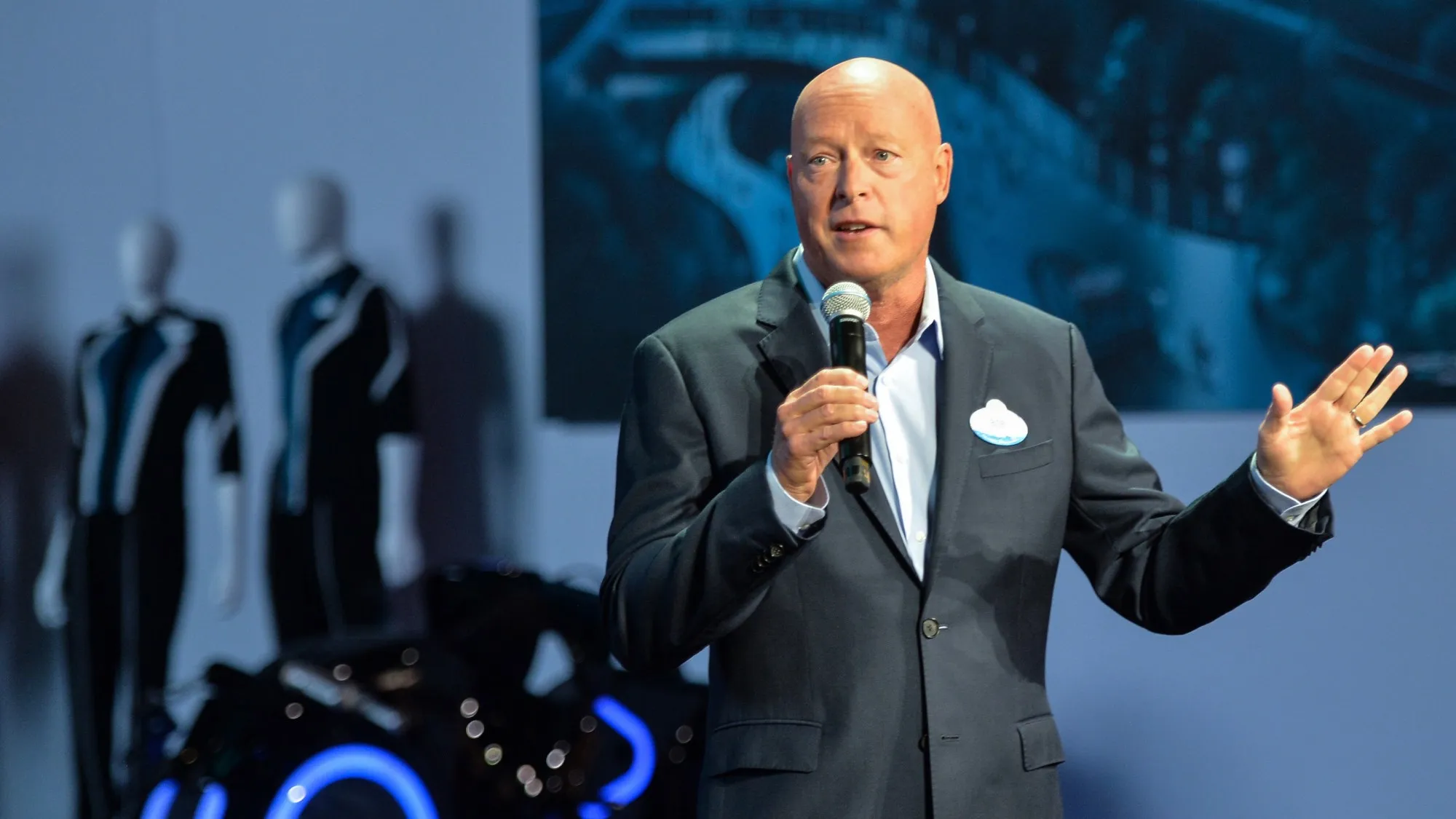
Disneyland annual passholders paid relatively little for unfettered access to the Anaheim theme park and stood in the way of maximizing profits, according to a new memoir by former Disney CEO Bob Chapek.
Read more Dan Albano’s Orange County high school football Top 35 rankings
Disneyland’s Magic Key annual passholders who overused the parks and underpaid for the privilege were worth less to Disney than out-of-state families who spent more and stayed longer, Chapek writes in his new book “Behind the Castle Walls.”
“The passholder experience was a fantastic deal for the passholder, but a terrible one for Disney and its more vacation-oriented guests,” Chapek wrote.
ALSO SEE: Disneyland won’t raise Magic Key prices in 2026
Disneyland introduced annual passes in 1983 as a way to backfill the park when attendance was lower during the off season.
Three decades later, Disneyland was bursting at the seams with too many visitors by the time Chapek took over Disney’s theme park division in 2015.
Annual passholders were the problem. The 1.1 million passholders could show up anytime they wanted and overwhelm the park.
“The pressure from the passholder not to change the status quo was enormous,” Chapek wrote.
The biggest problem was Disneyland’s most loyal customers were spoiling the experiences of big-spending out-of-state vacationers that were the park’s highest value customers and worth six times more per day than the locals.
Chapek was certain Disneyland was “leaving revenue opportunities on the table to avoid stirring the hornet’s nest.”
Chapek wanted to lower the number of passholders — or at least limit the frequency of their visits — in order to better commercialize the park.
ALSO SEE: Disneyland ends Magic Key no-show policy that frustrated passholders
Disneyland considered killing the decades-old annual pass program — a move Chapek knew would be unpopular.
“We understood we would get blasted if I attempted to eliminate annual passes altogether, so I moved to shift the math,” Chapek wrote.
Shifting the math meant focusing more on free-spending vacation travelers who stayed on property in Disney hotels and less on budget-conscious annual passholders who dropped in for just a few hours after work or school.
ALSO SEE: Disneyland has 1.1 million Magic Key annual passholders
Chapek wanted to offer elite access and bespoke experiences to well-heeled visitors as a way to keep ticket prices down for everyone else.
Read more Cypress man gets 144 years to life for fatal shooting in Long Beach of 12-year-old boy
“The fact remains that some customers generated more revenue than others,” Chapek wrote. “Not that I didn’t appreciate the passion and enthusiasm the passholders had for Disney.”
There were two long-standing Disneyland traditions that stood in Chapek’s way of modifying the popular passholder program. The first was an “unwritten principle” that everyone deserved the same experience. The second was an “inviolable virtue” that everyone must be treated equally.
“People in the company were afraid to change the outdated system, given the fear of a backlash from the loyal passholders who loved the flexibility and value the current system had afforded them for decades,” Chapek wrote.
Chapek was determined to not let convention, legacy or dogma prevent him from maximizing economic returns at Disneyland.
ALSO SEE: Disneyland raises ticket prices with the smallest increase in years
He instituted a tiered ticketing system, steadily raised prices and limited passholder access.
“What seemed like a straightforward solution to me provoked predictable reactions ranging from unease to outrage among passholders,” Chapek wrote. “In particular, the passholders felt the changes did not fit their personal interests and deemed them unfair.”
Chapek continued to raise annual pass prices when the increases had little-to-no impact on the overall number of passholders.
The top-tier Disneyland annual pass cost $699 when Chapek became Disney parks boss in 2015 and $1,599 when he was fired as CEO in 2022 — a 128% increase. Today, the most expensive Disneyland Magic Key pass costs $1,899.
The yearlong COVID-19 closure of Disneyland and DCA brought with it a reservation system that remained after pandemic restrictions were lifted.
For Chapek, the reservation system helped manage the number of daily visitors and passholders while improving the quality of the guest experience.
Reservations were seen as “heresy” by passholders who wanted to show up spontaneously while also paying the least possible amount per visit, according to Chapek.
“I was the one tarred and feathered when the reservation system proved unpopular among superfans,” Chapek wrote. “Annual passholders complained about the limited flexibility and reservation times and the restrictions on the practice known as parkhopping, or going to multiple parks in one day.”
Read more Passenger breaches John Wayne Airport gate, temporarily steals vehicle that tows jets