
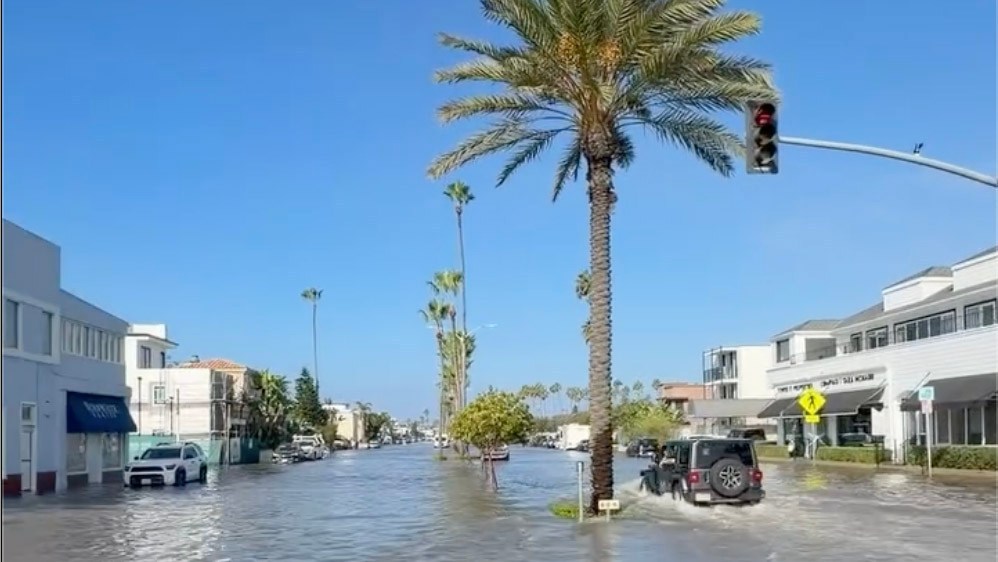
A hurricane swell and an overlapping south swell, combined with high tide, flooded the streets of Newport Beach and Laguna Beach with salt water Friday morning, shutting down roadways and snarling traffic throughout the coastal towns.
Read more Trawl fishing catches huge amounts of seafood. It also devastates the seafloor
City workers scrambled to pump the salt water back to the sea.
And the worst is likely yet to come. Waves are expected to get even bigger over the weekend, with tides even higher in the morning hours. Rain from Tropical Storm Rachel is in the forecast this weekend.
The National Weather Service issued a coastal flood advisory for Orange County beaches that will remain in effect until 2 p.m. Tuesday, warning of flooding in low-lying coastal areas during high tides.
Both coastal towns have suffered severe erosion in recent months, as consistent swells have battered the coastline, eroding the beach buffer between the ocean and the roadways. Friday morning, seawater flooded nearby streets, despite city efforts to build berms, set up sandbags and hold back the ocean.
Newport Beach was preparing in the morning to declare a local emergency to get resources quickly and officials are asking people to stay clear of the flooded areas of the Balboa Peninsula, with police allowing only residents into the area. City spokesperson Georgia Rios also said cars low to the ground and Teslas should avoid the area; the electric cars can catch fire in salt water.
City staffers are out assessing any damage to homes, and about 40 to 50 workers are involved in pumping water out of the streets, Rios said.
Newport Beach maintains a network of 86 tidal valves designed to prevent rising ocean water from backing up through storm drains, along with 18 pumps used to remove standing water from streets near the harbor. The city has previously identified the Balboa Peninsula, Balboa Island, Newport Island and other low-lying harborfront neighborhoods as areas particularly vulnerable to flooding during unusually high tides.
View this post on Instagram
Another six crews are rebuilding berms on the beach, with more flooding anticipated through the weekend, Rios said.
Bill Sharp, who has lived in West Newport for 65 years, said he has seen streets in the low-lying areas flood over the decades. But Friday’s scene was something different.
“I’ve never seen it like this, ever,” Sharp said. “There’s been moments where it’s coming up and washed into the streets in certain spots. But this is from River Jetties to the Wedge, it’s coming over the berms and filling the streets.”
“It’s unprecedented,” he added.
Usually, the flooding comes when high tides, surf and rain combine in winter months, but rarely in dry summer months.
Read more No. 21 UCLA football takes on ‘disruptive and physical’ No. 13 Oregon
Sharp said he walked through the shin-deep water in the roadway at 51st Street.
“It’s flowing heavily over, water rushing from the ocean to the street,” he said. “It’s going over the berms, all the way to the houses. A series of berms and dikes are diverting it to the streets.”
While houses weren’t “falling into the ocean,” he said a number of the homes had drenched front yards and water was flowing around structures and into the streets.
“There’s not massive destruction, but everyone is getting wet,” Sharp said.
At the Wedge, where the local surfing community has been sounding the alarm for months about the recent speed of erosion, bodysurfer Sean Starkey showed videos on social media of water gushing into the yards of multi-million-dollar beachfront homes.
“Starkey had gone out the night before to check on the beach as water was getting near the homes. He had warned the city that a natural sand berm created by the waves was hard packed enough to keep the water at bay, but city crews flattened it out to create a slope, which allowed the water to run up the small sliver of what’s left of the sand, he said.
“Pure insanity,” he said.
Sharp has seen a thousand 6-foot swells, with 6-foot tides, like what showed up on Friday. But this time, it was different, he said.
“It’s a foot higher than it’s supposed to be,” he said. “Whether it’s the Kelvin wave, or the water is thicker, or whatever it is, the waves are coming in with an extra foot of water underneath them.”
A Kelvin wave is a warm-water anomaly that travels from around the equator and pushes water levels higher for extended periods.
Sandbags are available at Newport Beach’s Corporate Yard, 592 Superior Ave. For those on the peninsula, lifeguards have stocked up in the back of their trucks to get them to residents, Rios said.
“We are going to have staff out all weekend, we are expecting a continued amount of flooding, especially on Sunday and Monday. We have all staff out right now, monitoring utilities, pumps, reinforcing and adding more berms and have public safety out here to help,” she added.
The flood comes just ahead of a City Council study session set for 4 p.m. Tuesday, Oct. 13, at Newport Beach City Hall, to review the history of sand nourishment and shoreline structures, current conditions along the city’s coastline, and proposed plans and ongoing efforts to replenish sand in selected shoreline areas.
Read more No. 19 USC football faces defining moment at Penn State