
For decades, Pomona’s Holt Avenue corridor gained notoriety for the sex workers soliciting along the stretch known as “The Blade.”
Read more Clippers’ Isaiah Jackson eager for his opportunity to start
Now, Pomona police want you to notice something different: Flock cameras.
The cameras have been strategically placed along Holt, meant to curb the human trafficking and prostitution that has long plagued the area.
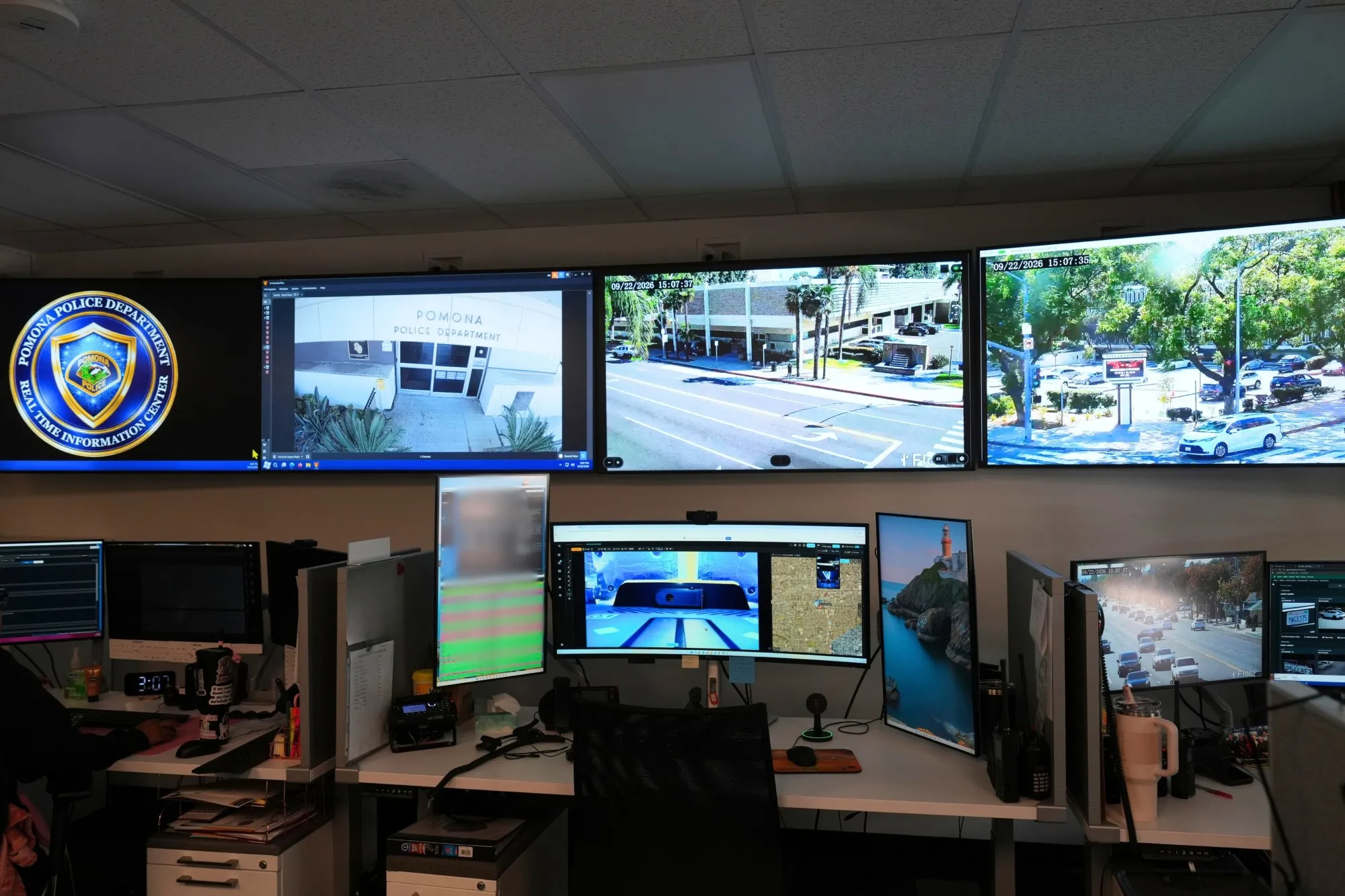
In June 2025, the Pomona Police Department launched a real-time-information center, a hub for surveillance and data analysis that provides information to officers in the field. It includes feedback from Flock cameras, and the department is seeing less activity in the normally “burning red” hotspot along the Holt corridor, Sgt. Jesus Cardenas said.
Prostitution-related arrests have jumped up in Pomona, increasing from 47 arrests in 2024 and 96 in 2025, to 313 in 2026 as of Oct. 13, Lt. Robert Sheppmann said.
The 2026 arrests include 77 made under the city’s beefed-up nudity and public indecency law, which since Sept. 3 has allowed officers to make arrests for lewd acts in public for “general intent” instead of the harder-to-prove “specific intent.”
Trafficking arrests, which target pimps actively trafficking victims, have declined over the past three years, from four in 2024 to two in 2025 and one in 2026.
Cardenas credits the center and the Flock cameras as integral elements in reducing sex-crime activity.
“If there’s someone that comes and makes contact with (a human-trafficking victim) and they get in the vehicle, we’re able to track that individual so that way they don’t flee the area or take off with the human-trafficking victim,” Cardenas said on Sept. 21.
Pomona’s real-time-information center features several large screen displays along one wall and two data analysts, a drone operator and a dispatcher. During calls, the team can use the screens to flip between different cameras across the community, including 70 Flock cameras equipped with automatic license-plate-reader technology and 37 Flock Safety Condor cameras, which are AI-integrated, pan-tilt-zoom cameras that display live feeds but can’t automatically read license plates.
Using the Flock license-plate readers lining Holt Avenue, when officers aren’t in the area, the team identifies the cars of sex purchasers, also known as “johns,” and sends “john letters” to the registered owners of the vehicles.
These cease-and-desist letters warn them that their car was caught on camera, acting as a deterrent. The team also places signs along the street to alert people of the presence of the cameras. Preventative measures like these are vital, Cardenas said, amid ongoing staffing shortages that are already stretching the department’s resources.
Read more 2026 Election: Five Westminster candidates want to be mayor
Cardenas said the technology has affected trafficking-adjacent crimes such as gang activity, stabbings and shootings.
“We’re getting a lower number of reported incidents, which shows success for us,” Cardenas said. “We’re not getting as many calls for service for these types of crimes anymore.”
But the use of Flock has been a pressure point at recent City Council meetings and police-oversight commission meetings in Pomona. Dozens of community members have raised concerns over privacy, data sharing and potential misuse, while calling for contract reviews — mirroring anxieties about police technology that have been sweeping the country.
Ivan Hernández, one of the directors at a Pomona-based social-action nonprofit, Gente Organizada, said his concerns extend beyond privacy ones to the way that surveillance technology is affecting certain communities.
“I think as cities get gentrified or they try to improve them, it begs the question, ‘Who is it being improved for?’ ” Hernández said. “These systems and tools are being used to over-police folks that are just trying to survive, like sex workers. This has been used to criminalize them when they haven’t really committed a crime beyond existing in our community.”
Gente Organizada, which focuses on assisting marginalized communities such as immigrant families, has participated in the ICE Out of Pomona movement. Hernández said potential data sharing with federal agencies is a concern within the community.
No federal agency is listed among the 248 agencies that Pomona police shares data with, according to the department’s Flock transparency portal.
At the Sept. 8 police-oversight commission meeting, Eunice Russell, the panel’s chair, said she sent 47 questions to the department to address the public’s concerns surrounding police technology. And at the Sept. 14 council meeting, City Manager Anita Gutierrez said the city attorney was reviewing the Flock contract to address data privacy and that the city would initiate “any changes that may be needed.”
Gente Organizada’s Hernández wants more.
“I just want it to be a larger question around the need of this, and not just, ‘We’ll put a Band-Aid on it and we’ll protect our data,’ ” Hernández said. “I question why it’s even in our community in the first place.”
Read more 2026 Elections: In RSM, 5 candidates are running for seats in 2 districts