
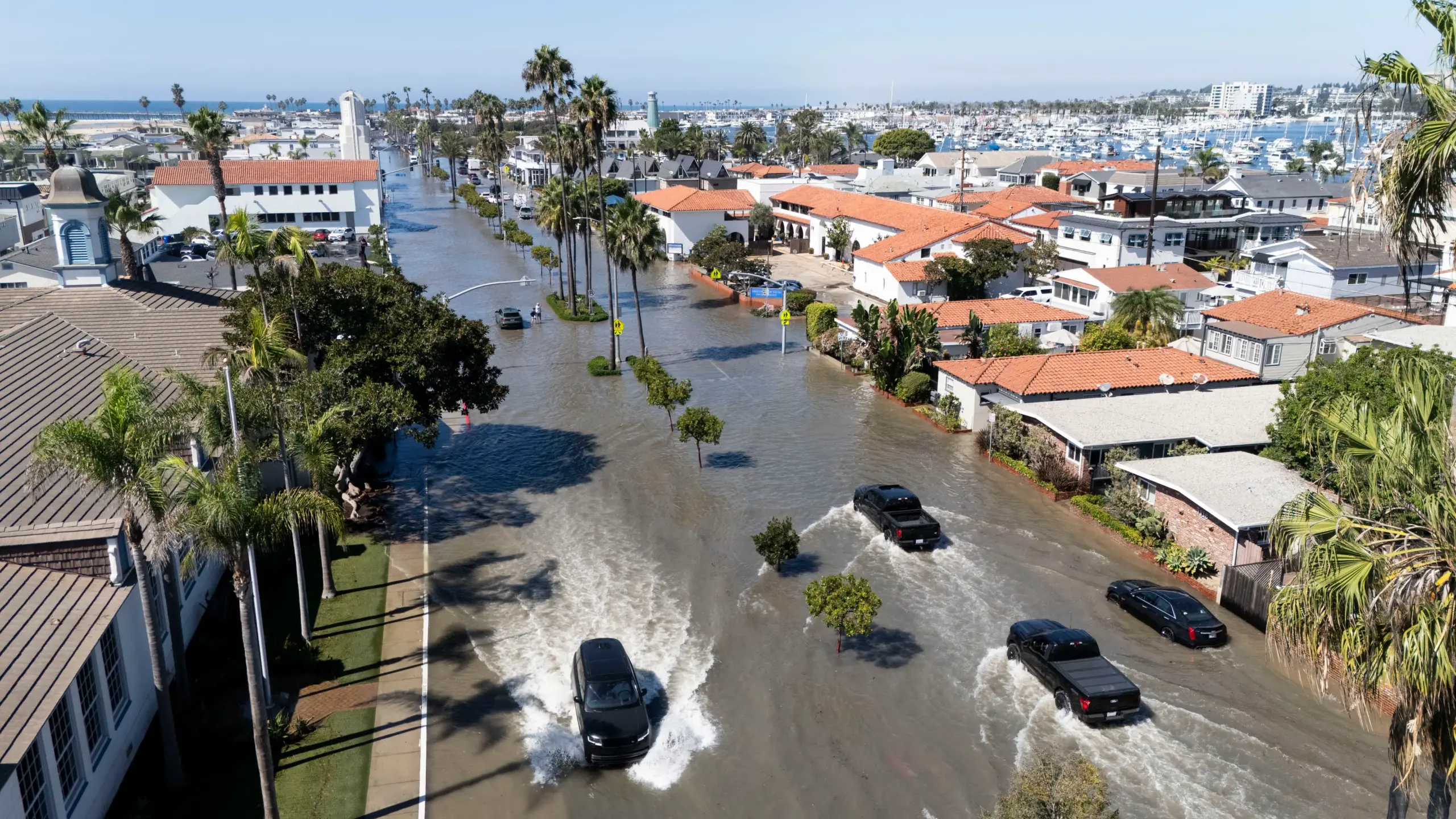
Kelvin has left the Southern California coastline – for now.
The big Kelvin wave that came through in recent weeks has moved out of the area, according to Andrew Leising, a research oceanographer for the National Oceanic and Atmospheric Administration. The slow-moving warm water waves start at the equator and stretch for thousands of miles across the Pacific Ocean.
Read more Rescuers search for survivors after deadly earthquake in China’s Tibet region
“They pass through and they keep going,” Leising said. “They keep going up the coastline.”
There could be up to four more on the way, he said, coming in spurts every couple weeks in coming months, all with different strengths.
“The one that came through was possibly the strongest one,” he said.
There’s another Kelvin wave that will hit the southern tip of Baja in late October and make its way up the coast, reaching local waters by the end of November, he said.
“The next one a bit bigger, roughly hitting sometime in probably later November – unfortunately, it could come around that next king tide,” he said.
King tides, which are seasonal and tied to gravitational pull, are expected Nov. 24-25, with tides upward of 7 feet expected. Add extra water levels anywhere from a foot or two from a Kelvin wave, and low-lying areas could see flooding.
Kelvin waves make water “thicker,” Leising said, making the whole water column “taller,” up to about a foot.
“Thanksgiving will be, I think, the worst time,” he said.
Coastal cities will be keeping an eye out for any swells; if big waves combine with the high-tide levels, it could spell trouble like what happened on Oct. 9 when Newport Beach’s streets and homes were flooded, and beachfront homes in Long Beach and Dana Point were battered by raging hurricane-fueled surf.
A third Kelvin wave is on track to show up in late December or early January, Leising said.
Read more Melania Trump helps forge ceasefire deal in Russian-occupied Oleshky, the White House says
“They kind of come in pulses,” he said.
Kelvin waves are difficult to see with the naked eye because they are large in scale, slow-moving, and don’t break onshore like typical ocean waves, according to NOAA.
Kelvin waves move slowly — at about five to 10 mph — and can take about two to three months to cross the Pacific Ocean before reaching the South American coast and moving up toward the US.
Kelvin waves that travel alongside the coastline are called “coastally trapped.”
During an El Niño event, there can be several Kelvin waves that form, often as a series of successive waves that occur over the span of many months.
Kelvin waves can make surface water temperatures warmer than normal as they push down the cooler water and also temporarily raise sea levels due to the larger volume of warm water occupying more space than the colder water.
On top of everything else, the planets are literally aligning so the king tides are at the high point of an 18-year cycle, Leising said.
“Seasonally we get king tides this time of year, but it’s even higher because of the alignment of the planets,” he said. “It’s unfortunate, we have this triple threat coming: high tides and king tides, and the Kelvin waves and the water already warm, expanding and making it higher.”
Winds and currents can also impact the water levels, he added.
Good news is the ocean is cooling off overall. By December’s king tide, while water levels will be higher than they should be, the overall ocean cooling could have reduced volumes, Leising said.
Read more Newport Harbor football cruises to win over Brea Olinda with sizzling offense
“That could help us out some.”