
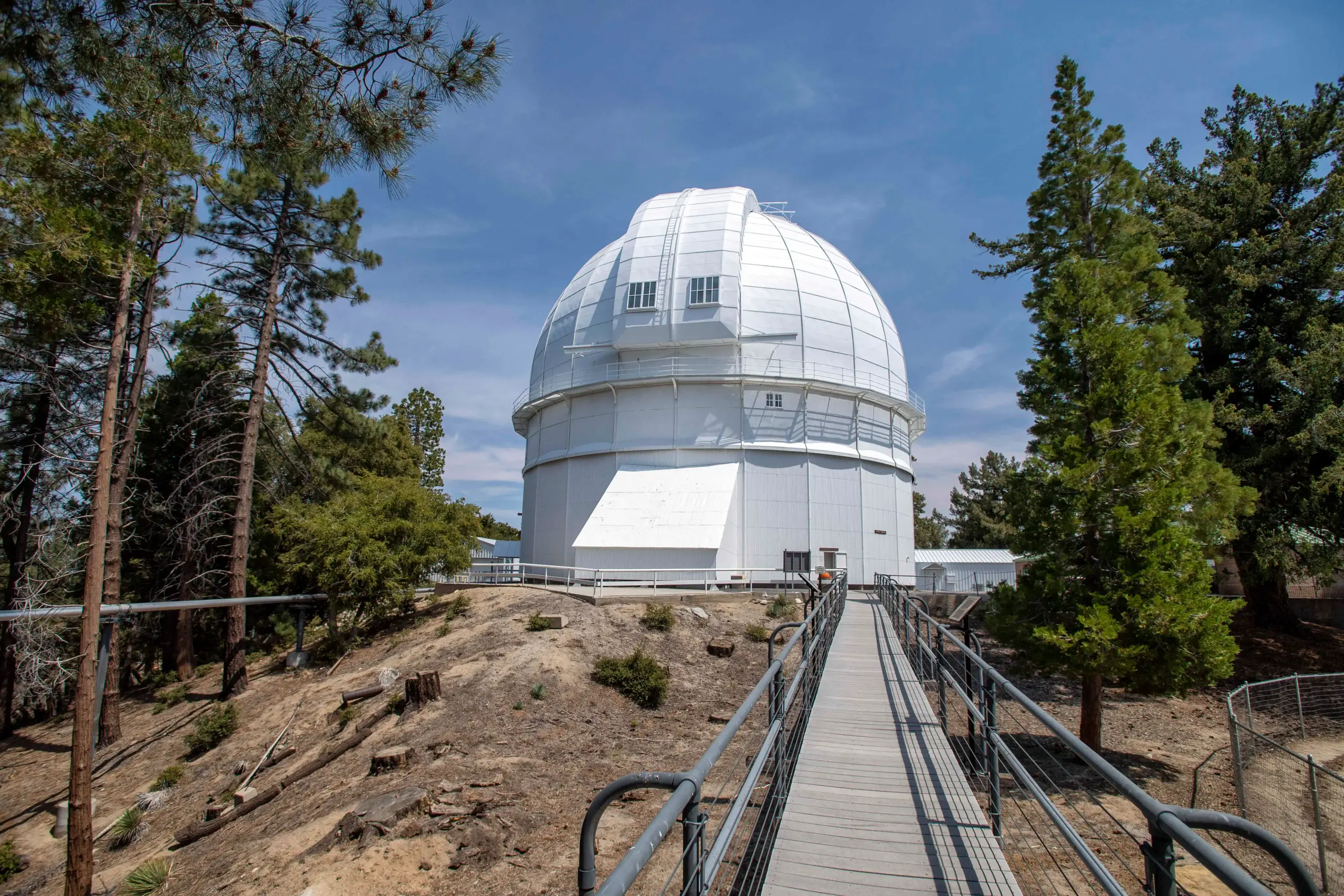
The road to get there is long and winding, but the views are spectacular, the air is fresh, and on a clear day you can almost see forever.
Read more Dana Carvey still serving up something special
The Mount Wilson Observatory boasts a long and illustrious history in the world of astronomy. The mountaintop location sits in the San Gabriel range at 5,770 feet and offers a premier site for stargazing due to its proximity to the ocean and the breezes that clear debris from the air.
It was originally a Tongva Native American site, later named Wilson’s Peak after the second mayor of Los Angeles and grandfather of Gen. George Patton.
At one time, a hotel and its recreational activities occupied the site, but in 1904, astronomer George Ellery Hale decided to place a telescope atop the mountain. He was able to convince philanthropist Andrew Carnegie – who was fascinated by Hale’s spectroscopic study of the sun – to fund the establishment of a solar telescope.
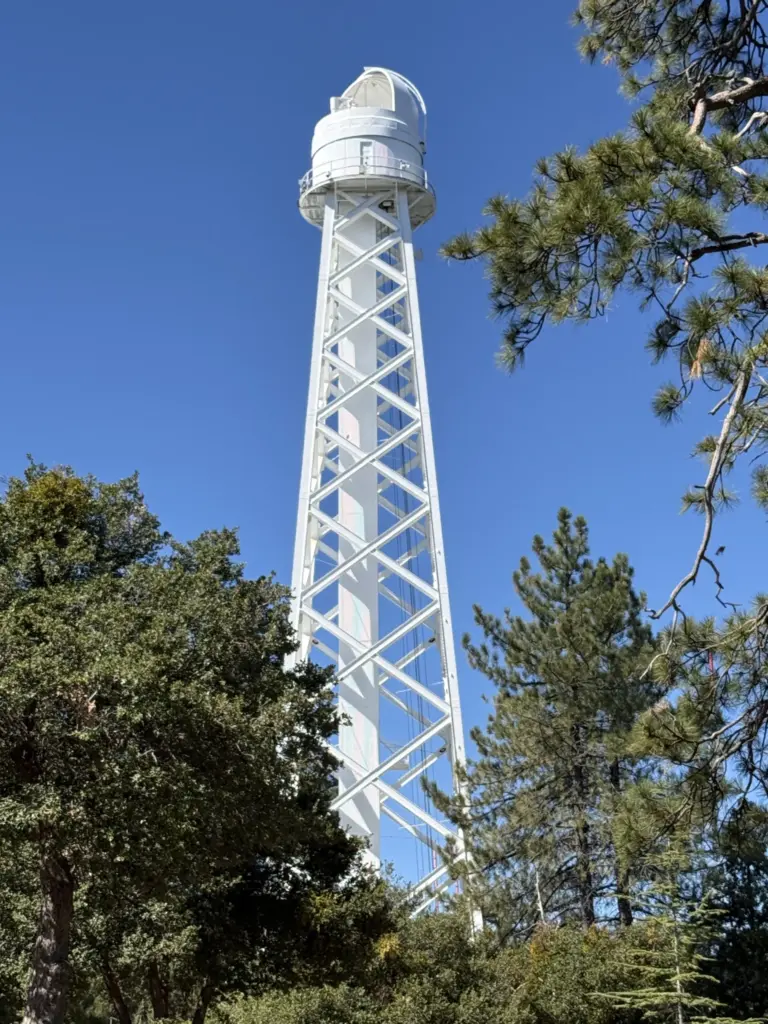 A 150-foot tower topped by a dome houses the solar telescope at the Mount Wilson Observatory in the San Gabriel Mountains on Sept. 30, 2026. (Courtesy of Penny E. Schwartz)
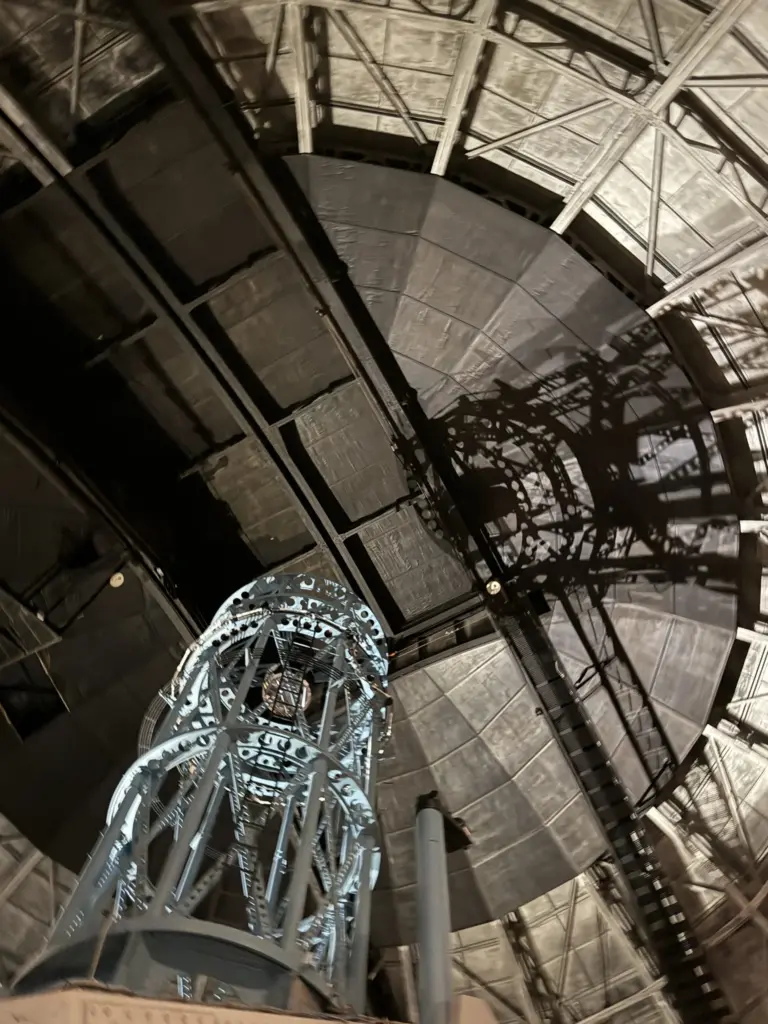 Inside the dome housing a 100-inch reflecting telescope at the Mount Wilson Observatory in the San Gabriel Mountains on Sept. 30, 2026. (Courtesy of Penny E. Schwartz)
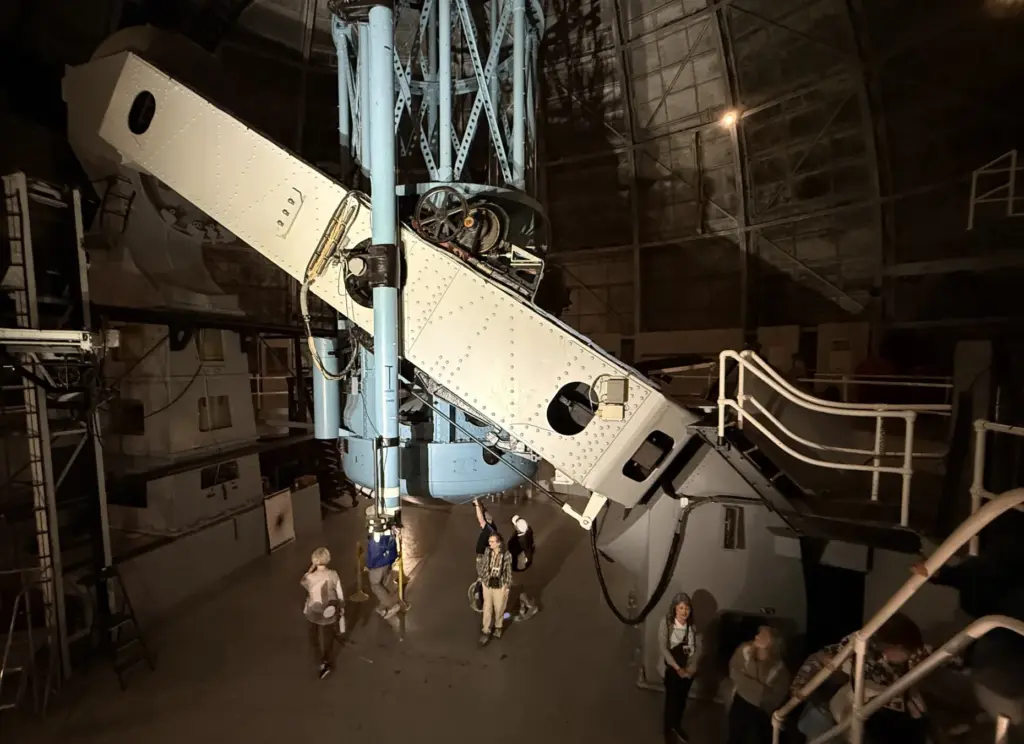 A 100-inch telescope is used for viewing the night sky at the Mount Wilson Observatory in the San Gabriel Mountains on Sept. 30, 2026. It was one of the world’s largest telescopes when it was built in the early 20th century. (Courtesy of Penny E. Schwartz)
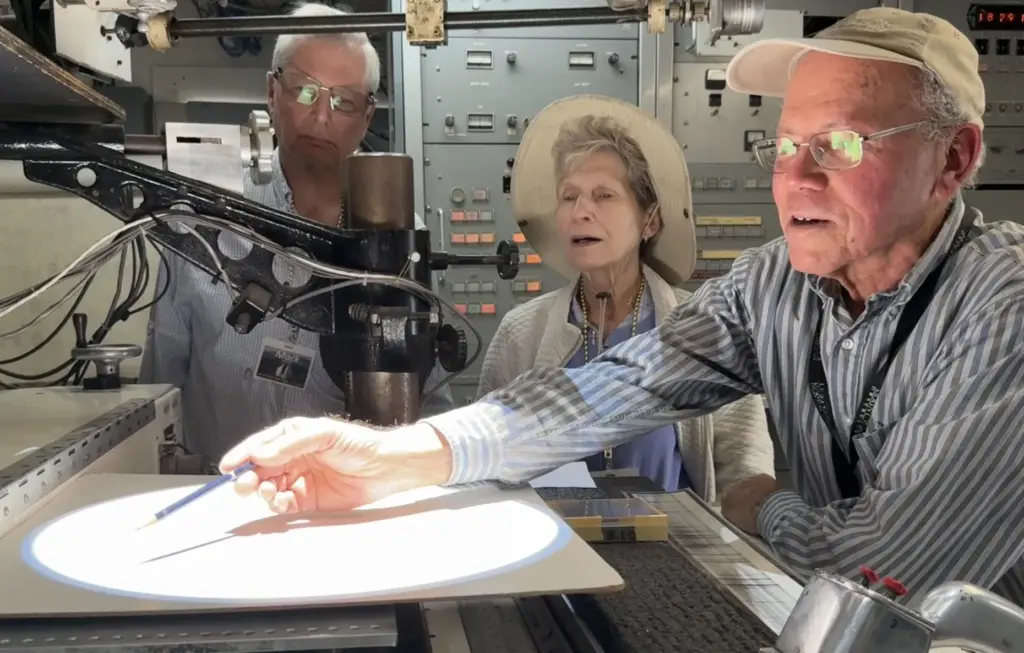 Technician Steve Padilla points out sunspots on an image of the sun at the Mount Wilson Observatory in the San Gabriel Mountains on Sept. 30, 2026. Padilla climbs a 150-foot tower to a dome housing a solar telescope each morning and evening to open and close the dome and makes daily sketches of the recorded sunspots. (Courtesy of Penny E. Schwartz)
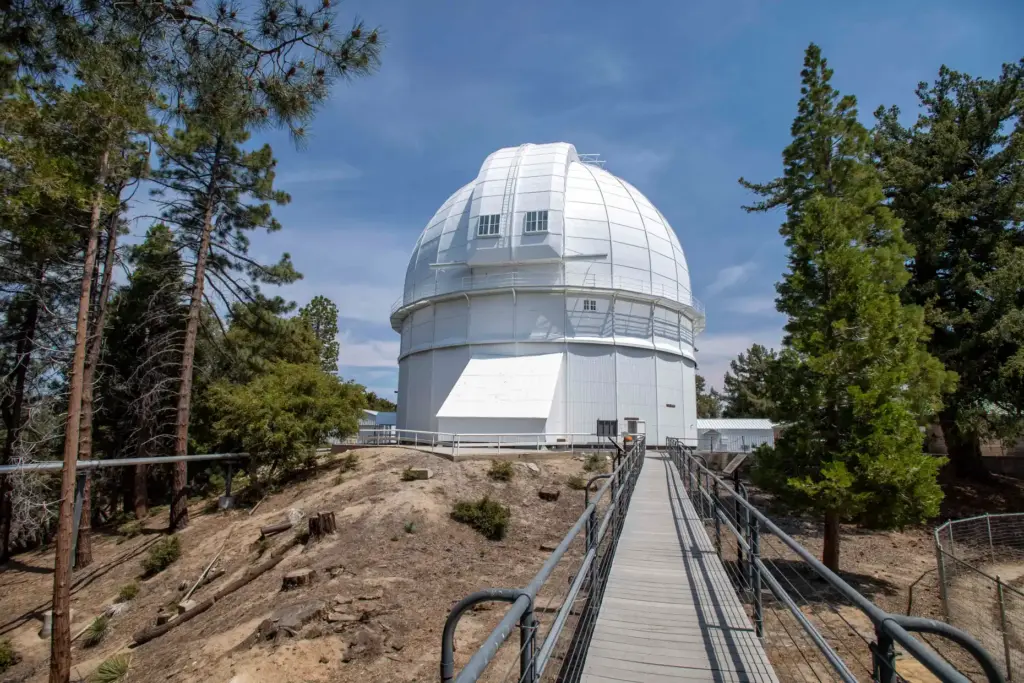 A dome at the Mount Wilson Observatory in the San Gabriel Mountains houses a 100-inch telescope, which was one of the largest in the world when it was built in the early 20th century. (Photo by Hans Gutknecht, Los Angeles Daily News/SCNG)
The Mount Wilson Observatory complex came to include what were two of the world’s largest telescopes at the time – a 60-inch and a 100-inch reflecting telescope as well as the state-of-the art solar telescope, Hale’s first and fondest love.
“Every piece of legacy material came up here on the backs of donkeys between 1904 and 1917,” said one of the docents, pointing out a mule trail cut into the side of the mountain that provided slow and tedious access to the site.
The thought of those donkeys carting all that monumentally heavy equipment up the switchbacks was mind-boggling as the group visited a succession of enormous domes and telescope housings that weighed hundreds of tons.
Both of the reflecting telescopes for viewing the night sky were massive in scope. In the first half of the 20th century, they represented the “new astronomy” that sought to answer questions about the universe and Earth’s place in it rather than just to record observations.
The 60-inch reflector telescope provided a prototype of the telescopes that followed.
“Every large telescope in the world today is a technological descendant of the innovative telescopes of Mount Wilson Observatory, and scientific discoveries made here remain at the forefront of modern cosmology and astrophysics,” proudly declares an informational sign at the entrance to the grounds.
Both telescopes can be viewed inside their domes, which were cool and quiet after the heat outside. The domes can be opened at night and rotated so that the massive telescopes can record their views of the heavens.
They’re available for rent by individuals or groups that want to spend a half or full night in discovery mode.
Read more Mission Hospital in Laguna Beach will not create a mini version with an ER
The telescope that intrigued the most was the solar telescope, which daily records sunspots, areas on the sun with lower temperatures caused by magnetic winds.
The dome for this one is at the top of a 150-foot tower that is climbed each morning by the technician who opens it for the day. Then he descends the ladder (there is also an elevator, we were told) to a small room inside the tower at ground level, where he draws a daily map of sunspot activity.
We saw only a few black dots, but activity these days is reduced because we are in the waning days of one of the recurrent 11-year sunspot cycles.
I found this display and recording interesting because I could somewhat understand what the technician was doing, and I could see the reflected sunspots with my own eyes. The dedication of the sunspot meister was inspiring as he has been performing his tasks for many years and has the courage to climb that tower every day.
Much of the equipment is now antiquated and no longer cutting-edge, so the facility is used for educational and teaching purposes as well as for concerts, lectures and community activities.
That, however, does not diminish the importance and respect the site still carries in the annals of modern astronomy.
Knowing that we were walking in the path of history, in the steps of Einstein, who visited in the 1930s, and Stephen Hawking, who came later, was a thrill. Photographs of their visits hang on the wall of the small museum on site.
Even more impressive is the fact that Edwin Hubble and other astronomers used the observatory equipment to view the spiral nebulae of the Milky Way Galaxy and to make the discovery that the universe is ever-expanding.
And breathing the clear mountain air made the outing just a bit more heavenly.
Access to Mount Wilson is via the Angeles Crest Highway (CA Highway 2) from the 210 Freeway at La Canada Flintridge. A U.S. Forest Service Adventure Pass is required to park at the observatory.
Current hours are 10 a.m. to 4 p.m. daily. Docent-led walking tours are at 11:30 a.m. and 1 p.m. Saturdays and Sundays through the fall, with limited tours in the winter. There are also self-guided and private tours as well as private stargazing tours at night.
Concerts, lectures and other activities are scheduled per the website. There is an on-site café and gift shop.
Read more Laguna Beach council incumbents poised to return to dais, voters approve term limits
For information, visit mtwilson.edu.