
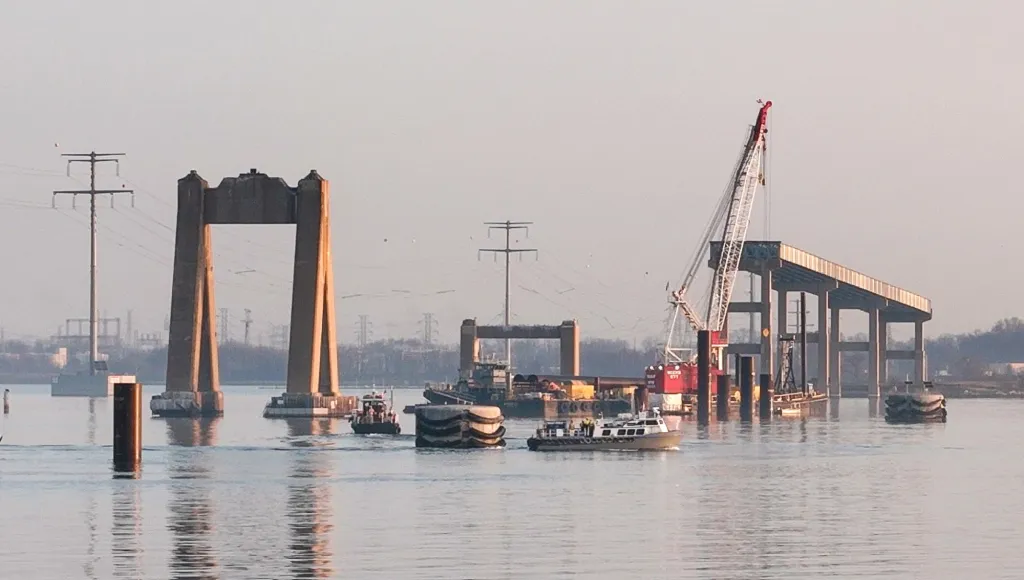
Federal prosecutors have charged Synergy Marine Group, Synergy Maritime and one employee in connection with the March 2024 collapse of the Francis Scott Key Bridge in Baltimore, alleging a conspiracy to conceal dangerous safety violations aboard the Dali container ship that contributed to the disaster and led to the deaths of six.
Read more When natural disasters strike, another crisis hits those recovering from opioid addiction
Singapore-based Synergy Marine, India-based Synergy Maritime and 47-year-old Radhakrishnan Karthik Nair, an Indian citizen who worked for both companies as the technical superintendent for the Dali, have been charged with conspiracy, willfully failing to immediately inform the U.S. Coast Guard of a known hazardous condition, obstruction of an agency proceeding and false statements.
The two Synergy corporations also have been charged with misdemeanor violations of the Clean Water Act, the Oil Pollution Act and Refuse Act for the resulting discharge of pollutants into the Patapsco River after the crash, including the shipping containers and their contents, as well as oil.
“The indictment reveals a pattern of deception and egregious violations that led to the unsafe operation of the Dali which recklessly endangered the public and resulted in the ship striking the bridge,” said Special Agent in Charge Jimmy Paul of the FBI Baltimore Field Office, speaking at a Tuesday news conference. “This indictment should send a message to all ship operators that circumventing safety requirements and breaking U.S. laws will not be tolerated.”
According to the indictment, the Dali suffered two blackouts in a four-minute span as it departed the Port of Baltimore before slamming into the Francis Scott Key Bridge. Investigators allege a loose wire in a high-voltage switchboard likely triggered the first outage. Although the ship briefly regained power, prosecutors say the vessel lost power again because operators had altered the fuel system and relied on a “flushing pump” never intended for continuous operation.
Unlike the ship’s approved backup systems, the flushing pump could not automatically restart after a blackout, leaving the vessel without propulsion or steering control as it approached the bridge.
Federal authorities allege the Dali would have regained power in time to safely clear the bridge had it been using the proper fuel supply pumps. Instead, prosecutors say, crew members and shore-side personnel concealed repeated safety issues, including prior blackouts and hazardous operating conditions that should have been immediately reported to the U.S. Coast Guard.
Paul said Tuesday that the charges of obstruction and providing false statements stem from the National Transportation Safety Board’s (NTSB) investigation. In discussions with the NTSB, Nair stated he was unaware that the Dali was using the flushing pump to provide fuel to the generators.
Acting U.S. Attorney General Todd Blanche called the indictment “a critical step toward holding accountable those whose reckless disregard for maritime safety regulations caused this disaster.” Speaking at Tuesday’s news conference, Blanche said the collapse caused more than $5 billion in economic damage, shut down shipping traffic through the Port of Baltimore for weeks and released pollutants into the Patapsco River and Chesapeake Bay.
The March 26, 2024, collapse killed six roadwork crew members who were filling potholes on the bridge overnight when the Dali struck a main support pier. The disaster severed a critical transportation link for the Baltimore region and triggered months of salvage operations and economic disruption tied to the temporary closure of the Port of Baltimore.
The criminal case comes as Maryland continues pursuing a separate civil lawsuit against the ship’s owner and operator in federal court, alleging negligence and mismanagement involving a vessel the state argues should never have been allowed to sail.
Read more La Habra council says Corn Festival ‘has to happen,’ approves funding help