
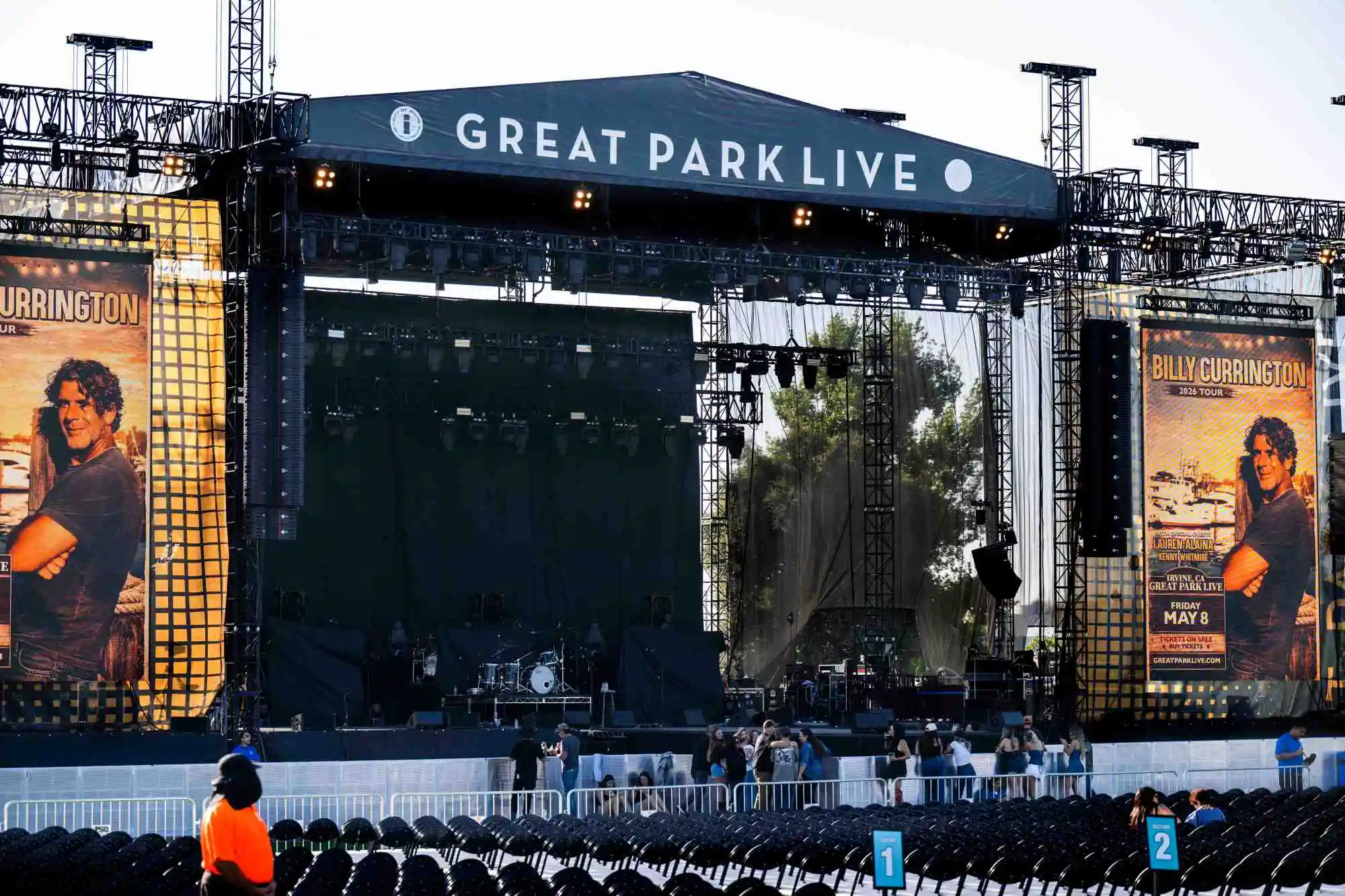
Irvine city officials said the Great Park Live concert venue is bleeding the city of “anywhere between $3 to $6 million” annually, and the loss is prompting discussions about moving the outdoor amphitheater elsewhere within the massive park that still has several future segments under development.
Read more Orange County restaurants shut down by health inspectors (Nov. 5-12)
After the FivePoint Amphitheater abruptly closed its doors in 2023 and negotiations with Live Nation for a permanent amphitheater fell through, Irvine city leaders the following year raised Great Park Live in hopes of preserving the city as a destination for major performances.
The 10,000-capacity outdoor concert venue currently neighbors the Great Park’s Sports Complex, which hosts games and tournaments year-round and is poised for a minor league baseball team by the 2027 season. The amphitheater is also the summer home of the Pacific Symphony.
“Quite frankly, the outdoor concert season is fairly limited to May to October,” Great Park Director Steve Torelli said during a recent City Council meeting about one reason why more entertainment options have not been pursued.
“There’s a number of sporting events that also limit our ability to host events,” Torelli said in his report to councilmembers, adding the concert venue is in the red for “a number of reasons,” including equipment leasing costs, fixed costs related to its proximity to communities and a contract obligation to support Pacific Symphony performances — “five full weekends a year that otherwise would be revenue generating.”
Great Park Live is operated by Irvine-based PSQ Productions, an event production and venue management company with a contract until 2030. The company has produced more than 500 events locally.
Following some council deliberation this week, including over potential noise and traffic repercussions on nearby neighborhoods, the City Council decided to support a proposal by Councilmember James Mai directing city staffers to return within 90 days with potential new locations within the Great Park to house the amphitheater.
“We know the demand’s there. We have the product,” Mai later said. “We just need to optimize it so that it’s making money.”
The council folded into its vote a direction for city staff to review the city’s restrictions on advertising, sponsorship policies and partnerships for opportunities to help offset operating costs and generate revenue toward patching a potentially cavernous budget deficit.
Mai also floated the idea of naming the relocated venue “Irvine Meadows” — a nostalgia grab referencing the longtime concert amphitheater that closed in 2016. The regional name recognition could be a draw, he argued, but the idea received lukewarm support from Mai’s colleagues on the dais.
PSQ Productions founder and CEO Mark Entner said he could see benefits to relocating the Great Park Live venue.
Read more 298,988-squarefoot warehouse proposed in Orange, neighbors are raising concerns about truck traffic
“With the growth of entertainment, and as well as the growth of sports programming at the Great Park, it’s both an opportunity and a challenge,” Entner said.
“It’s a daily dialogue with the city team on how we’re able to accommodate all this exciting growth.” he said. “The timing is right for us to work with the city and figure out, OK, what’s next?”
“Do we continue to operate a temporary venue, which, you know, has temporary amenities, and has a temporary operating model, or do we look at a more permanent venue in a permanent operating model, which at the end of the day, there could be some tremendous long-term savings there?” Entner said.
Great Park Live is heading into its fourth concert season, with performances by British-American rock band Foreigner on the calendar for March.
“The momentum or the growth in interest has been incredible, especially with Olivia Rodrigo’s Daisy Chain Fields festival that was produced by C3 Presents,” Entner said. “The calendar of events is gonna be much stronger than it’s ever been.”
The seeming success of Olivia Rodrigo’s one-day festival — its national draw brought more than 45,000 concert-goers to town — has prompted at least one councilmember to consider reevaluating the city’s longtime plans for a permanent, mid-sized amphitheater at the Great Park.
The City Council this year discussed potential operators for a permanent amphitheater in the Great Park — “we’ll cross that bridge when it comes,” they decided — but amid funding questions, meaningful next steps toward construction could be on pause “until 2029 or 2030,” Mai said.
Daisy Chain Fields organizers over the summer transformed the Great Park Live venue into the “Marigold Stage,” which split performances with a second stage that was trucked in and constructed in nearby soccer fields to anchor Rodrigo’s closing set. Early estimates suggest “potentially $60 million to $80 million in associated economic activity and visitor spending” related to Daisy Chain Fields, according to Mai’s memo to councilmembers.
The festival is likely returning for a round-two in the city next year and if councilmembers agree, the Great Park Live stage could potentially be moved in time for next year’s lineup.
“We already have the infrastructure in place,” Mai said. “It’s a matter of location.”