
By LORNE COOK
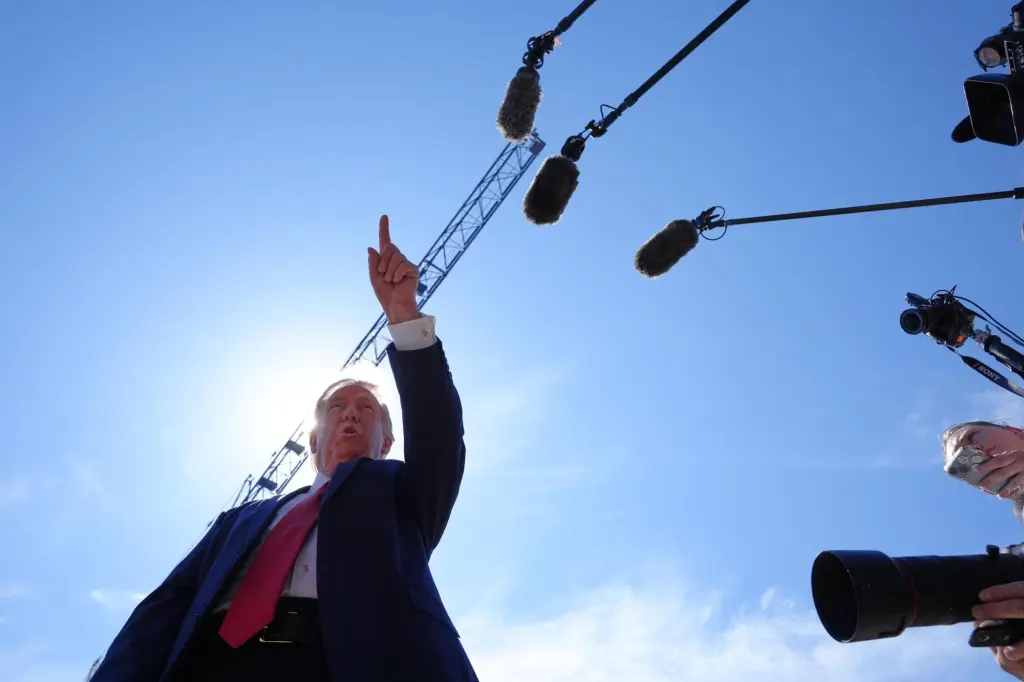
BRUSSELS (AP) — NATO’s top military officer said Tuesday that he doesn’t expect any more drawdowns of American troops from Europe — at least not anytime soon — beyond the 5,000 that U.S. President Donald Trump announced would leave the continent.
Read more Orange County boys athlete of the week: Dane Malloy, Aliso Niguel
The remarks by U.S. Lt. Gen. Alex Grynkewich follow Trump’s surprise announcement of the move early this month. The U.S. leader has bickered with allies over the Iran war and called for changes.
The Pentagon later said it would draw down thousands of troops in Europe by canceling deployments to Poland and Germany as opposed to yanking out forces already stationed there.
Trump’s announcement blindsided NATO and came despite U.S. promises to coordinate military moves with its allies and avoid creating security gaps.
“It will be 5,000 troops coming out of Europe,” Grynkewich told reporters at NATO headquarters in Brussels, where top officers from across the 32-nation military organization were meeting. “lt’s all that I’m expecting in the near term.”
Trump was notably angry at Germany, after Chancellor Friedrich Merz said the United States was being “humiliated” by the Iranian leadership and criticized what he called a lack of U.S. strategy in the war.
Initially it was thought that more cuts might be coming and Grynkewich’s remarks could allay those fears.
Read more A de-extinction company has hatched live chicks from an artificial eggshell
As things stand now, some 4,000 troops from the Army’s 2nd Armored Brigade Combat Team will no longer go to Poland as planned, and the deployment to Germany of around 1,000 personnel trained to fire long-range rockets and missiles has been halted. Much of the detail is still being worked out.
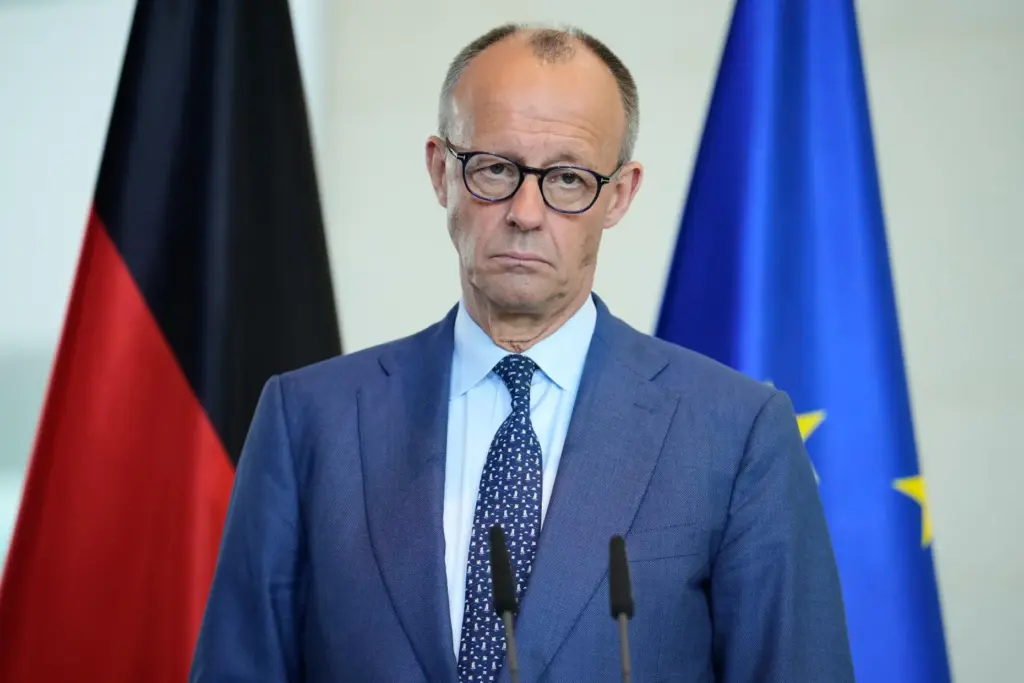 German Chancellor Friedrich Merz attends a joint press conference with President of the Swiss Confederation Guy Parmelin, not pictured, at the chancellory in Berlin, Germany, Tuesday, May 19, 2026. (AP Photo/Ebrahim Noroozi)
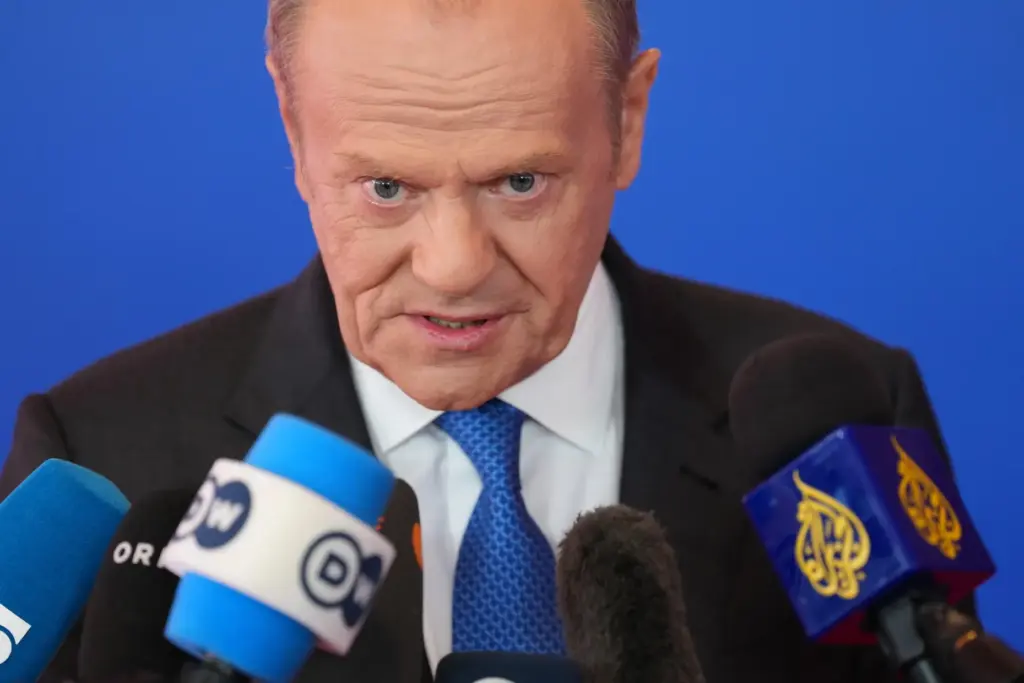 Poland’s Prime Minister Donald Tusk speaks with the media as he arrives for the EU Summit in Nicosia, Cyprus, Friday, April 24, 2026. (AP Photo/Petros Karadjias)
Grynkewich said that he spoke earlier in the day to military chiefs on the front line with Ukraine and Russia — commanders from Estonia, Latvia, Lithuania and Poland — about “some of the options and how we might array capabilities on the eastern flank.”
He insisted that security in Europe would not be compromised but warned European allies should expect more drawdowns in coming years.
“Over the long term, we absolutely should expect additional redeployments as European continues to build capability and capacity and step up to provide more of the conventional defense of Europe,” Grynkewich said.
“It’s going to be an ongoing process for several years,” he said, but added: “We’re going to stay well-synchronized with our allies moving forward.”
The number of troops leaving remains small compared to the 80,000 U.S. personnel estimated to be stationed in Europe and has not alarmed allies, but their uncoordinated departure and the view that Germany was being punished has.
Read more Board of Peace will ask the UN Security Council to press Hamas to disarm