
By JEFFREY COLLINS and DAVID A. LIEB
COLUMBIA, S.C. (AP) — Republicans in the South Carolina House cast aside Democratic suggestions and objections Tuesday as they worked toward a key vote on a congressional redistricting plan that could give the GOP a shot at winning an additional seat in the November midterm elections.
Read more US health officials order quarantine for 2 passengers from cruise ship with hantavirus outbreak
The redistricting plan, urged on by President Donald Trump, would reshape the state’s only Democratic-held U.S. House district to Republicans’ advantage as part of a broader national effort to retain the party’s slim House majority in the midterms.
To buy time for the newly proposed map to be implemented, the South Carolina legislation would remove U.S. House races from the state’s June 9 primaries and instead set a special primary election in August to select candidates for the state’s seven seats. Some absentee and overseas military votes that already have been cast for Congress would be tossed out.
Democrats objected repeatedly during Tuesday’s debate. And Republicans repeatedly rejected their amendments.
“What you all are doing is wrong,” said Democratic state Rep. JA Moore, adding: “You can justify it, rationalize it, but it’s wrong.”
Other Southern states have pursued a similar approach as they race to redraw U.S. House districts following a recent U.S. Supreme Court decision that struck down a majority-Black district in Louisiana as an illegal racial gerrymander and significantly weakened Voting Rights Act protections for minority districts.
Louisiana’s congressional primaries, scheduled for last Saturday, were postponed until later this summer by Republican Gov. Jeff Landry to allow time for new districts to be drawn.
Primary election ballots were being cast Tuesday in Alabama. But the state plans to void the results in four of the seven U.S. House districts and instead hold special primaries Aug. 11 for those districts under different boundaries. The revised districts could help Republicans win an additional seat in November.
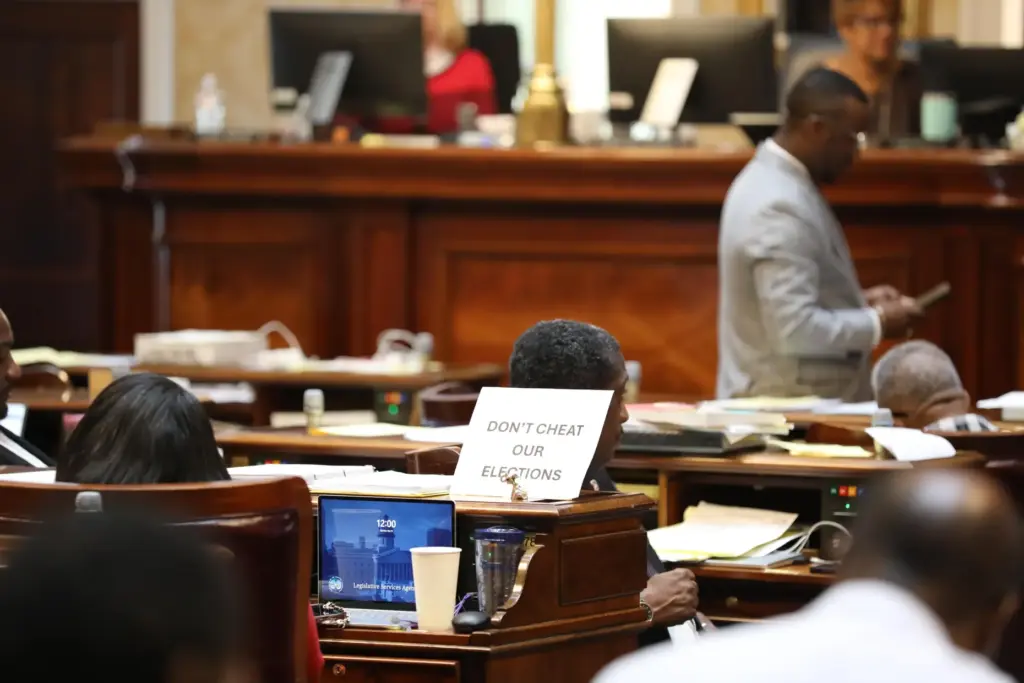 A sign sits on the desk of Democratic South Carolina Rep. Annie McDaniel during the House redistricting debate on Tuesday, May 19, 2026, in Columbia, S.C. (AP Photo/Jeffrey Collins)
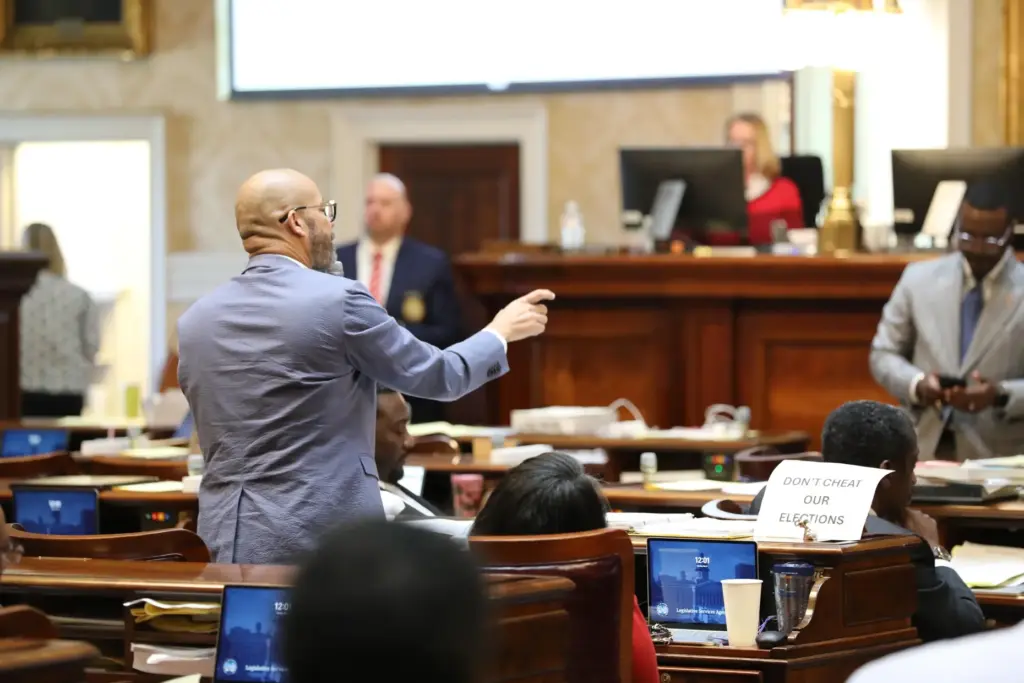 Democratic South Carolina Rep. John King asks a question during the House redistricting debate on Tuesday, May 19, 2026, in Columbia, S.C. (AP Photo/Jeffrey Collins)
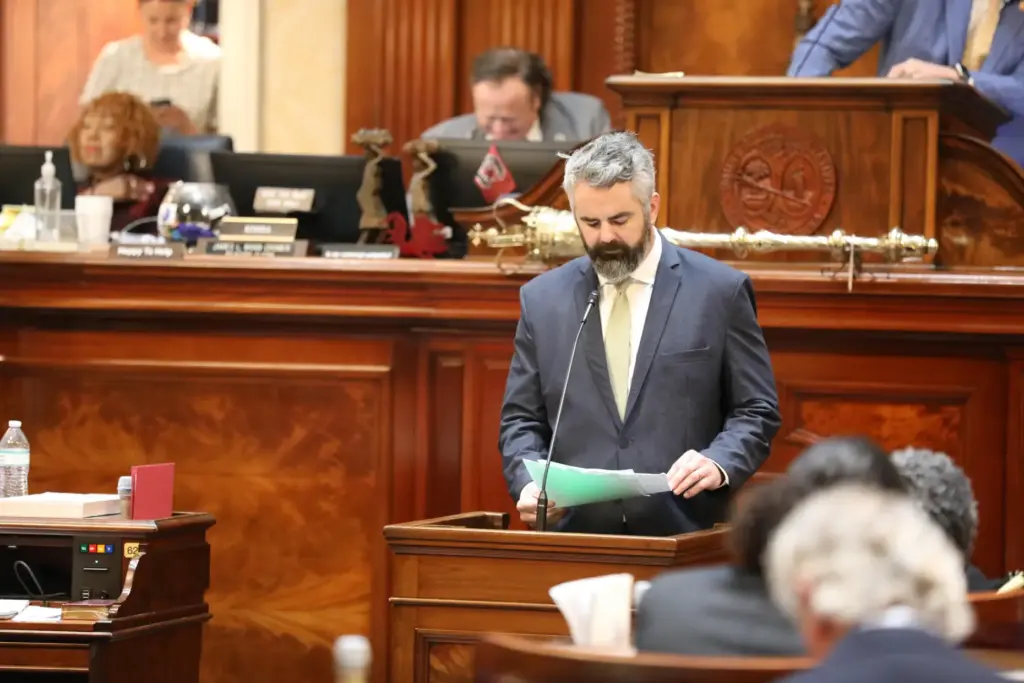 Republican South Carolina Rep. Micah Caskey reads a resolution limiting debate during the House session on redistricting on Monday, May 18, 2026, in Columbia, S.C. (AP Photo/Jeffrey Collins)
 Democratic South Carolina Rep. Leon Howard speaks during the House redistricting debate on Tuesday, May 19, 2026, in Columbia, S.C. (AP Photo/Jeffrey Collins)
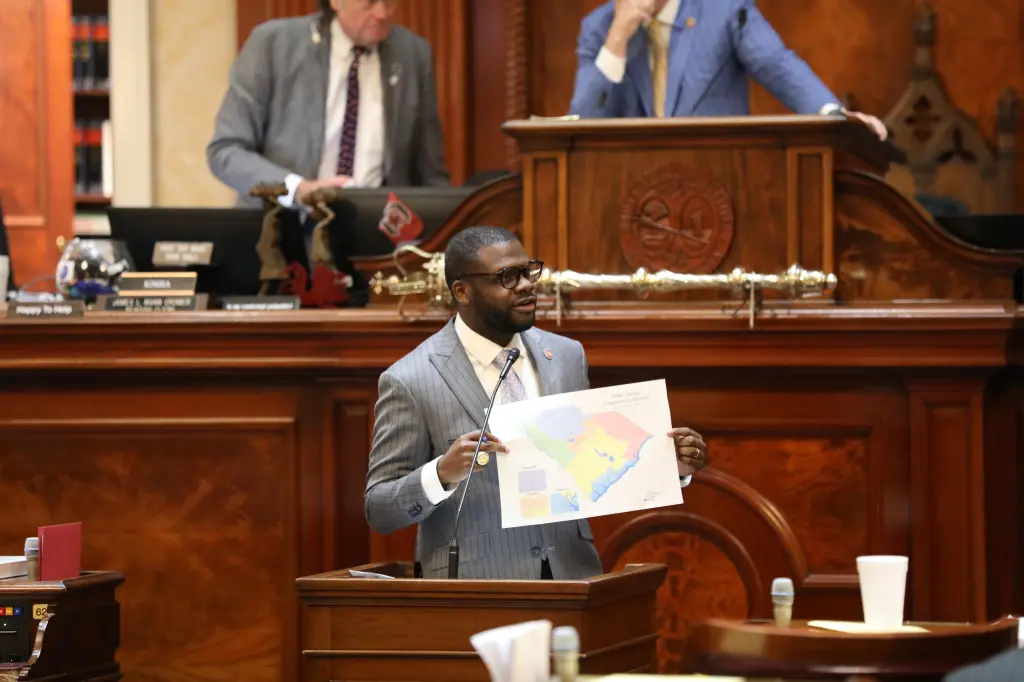
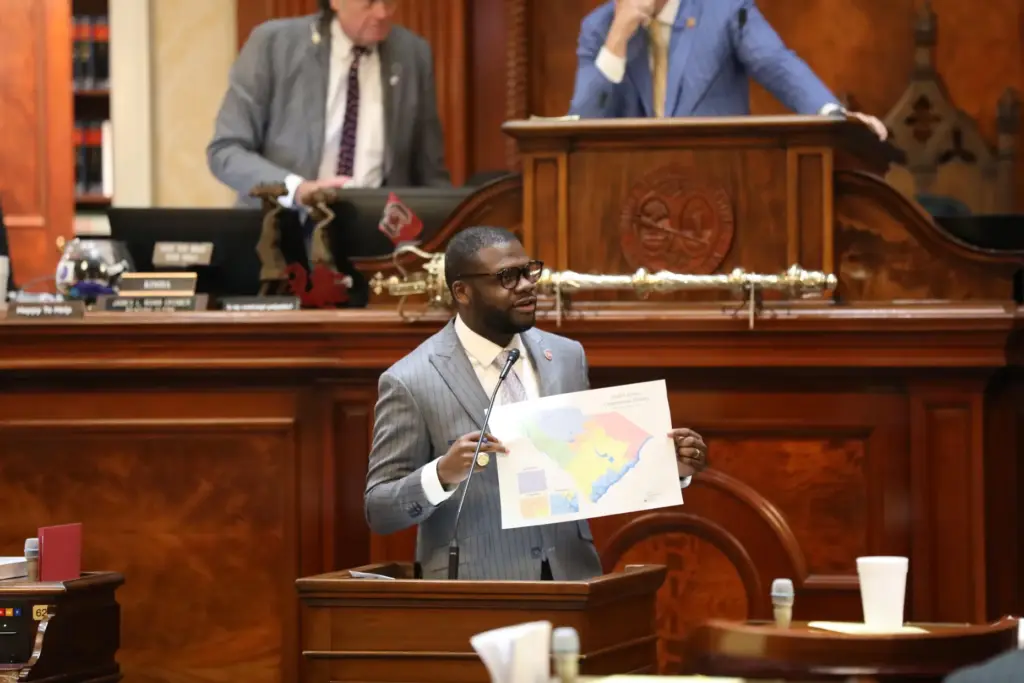 Democratic South Carolina Rep. Kambrell Garvin presents his version of a map for new congressional districts during the House session on redistricting on Monday, May 18, 2026, in Columbia, S.C. (AP Photo/Jeffrey Collins)
Redistricting ramifications are widening
All told, Republicans think they could win as many as 15 additional seats from revised US. House districts in seven states so far, while Democrats think they could gain up to six seats from new House districts in two states. That tally could change, though, as litigation continues in several states. Voters ultimately will decide whether those projections hold up.
Read more Timeline of recent US-Cuba relations amid heightened tensions in Trump’s second term
The ramifications could extend beyond government and politics.
The NAACP on Tuesday called on Black athletes and fans to boycott the athletic programs of public universities in states that “have moved to limit, weaken or erase Black voting representation.” The campaign specifically calls out Alabama, Florida, Georgia, Louisiana, Mississippi, South Carolina and Texas — though new voting districts have not yet been enacted in all of those places.
In South Carolina, Democratic state House members debated the proposed changes for hours on Monday. That led the Republican-controlled chamber to change the rules for Tuesday by limiting members to only one amendment and setting time limits for speeches.
Democratic state Rep. Beth Bernstein asked lawmakers to approve a voter education effort, since elections would look so different in 2026. She expressed concerns that some voters may stay away from the polls. But her amendment was rejected.
“When confusion becomes a barrier, a barrier becomes silence, and silence becomes a vote that was never cast,” Bernstein said.
Democratic Rep. Lonnie Hosey proposed a ban on drawing districts only to help one party. But his amendment also was swiftly defeated by Republicans.
“I love you and I believe you love me. But sometimes that doesn’t show,” said Hosey, who has served in the House for 27 years.
Republican lawmakers face some looming deadlines. Early voting is to start May 26 for the June 9 primaries.
Read more Israeli minister orders West Bank hamlet evicted after hearing he may face arrest warrant overseas
Lieb reported from Jefferson City, Missouri.