
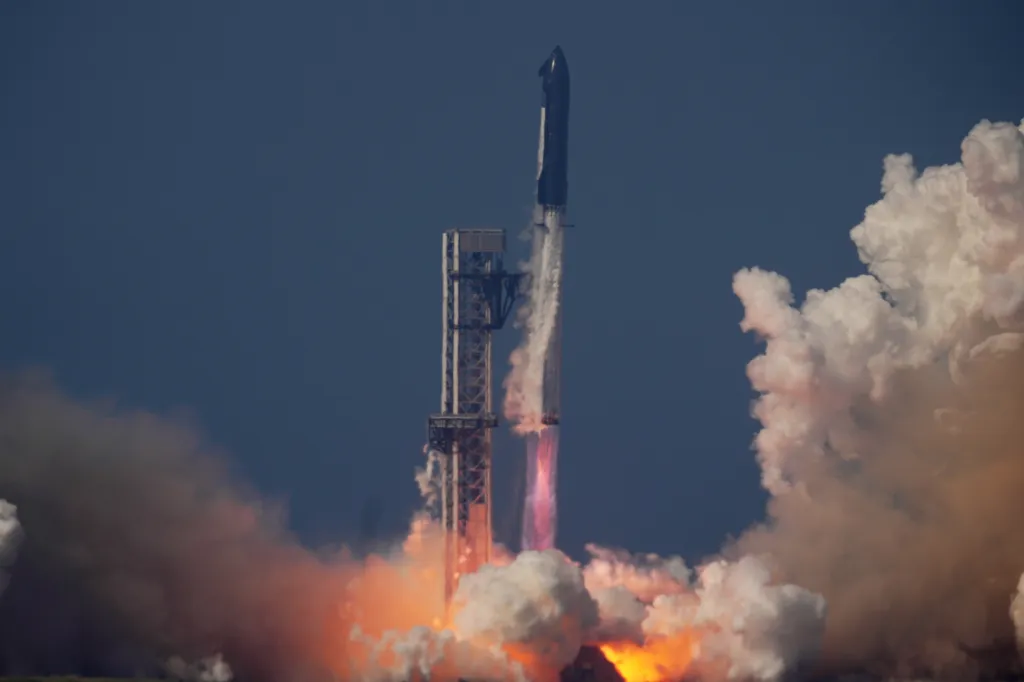
SpaceX’s first Starship mission of 2026 was mostly successful Friday, but the Super Heavy booster didn’t perform as expected, instead crashing into Gulf waters off the coast of Texas.
Read more Pretend City grows young artists with Wonder Studio
Shortly after the upper stage separated from the booster, its 33 Raptor engines cut out and no controlled landing could be performed as originally planned.
While this flight’s booster wasn’t set to return to the launch site as previous Starship flights had achieved, SpaceX did expect the booster to go through a controlled return that would have seen it hover over the water before the engines cut out.
Instead, without any engines, it fell like a missile into the Gulf.
The Federal Aviation Administration has in the past grounded Starship after issues seen during flight, but for now no such determination has been made.
“The FAA is aware an anomaly occurred during the SpaceX Starship Flight 12 mission that launched from Starbase, Texas, on May 22,” the FAA released in an emailed statement. “The anomaly involved the Super Heavy booster during its flyback over the Gulf … There are no reports of public injury or damage to public property. ”
The statement said the FAA was continuing to assess the operation, though.
“A mishap determination has not been made at this time,” it stated.
After the incident, the FAA activated a Debris Response Area, and notes that all of the booster debris fell within the hazard area.
Read more Supreme Court rejects Meta’s appeal in Vermont social media addiction case
As far as the launch’s effect on air traffic, the FAA stated there were six departure delays, five airborne holding events and no aircraft diversions.
SpaceX Starship launch muscles through engine issue, makes explosive yet successful landing
Without grounding, SpaceX could move forward with its 13th suborbital Starship mission sooner rather than later. Past groundings involved a variety of incidents, including the destruction on ascent of two of its upper stages, which exploded in a debris field as it crossed the skies headed east over the Caribbean. Those incidents in early 2025 delayed further flights, although the company ended the year with three mostly successful missions.
This 12th test flight, though, came more than seven months since the 11th one last October. That’s because this was known as Version 3 of the rocket, featuring upgrades to both the upper Starship stage and Super Heavy booster including new versions of its Raptor engines. It was also the first use of a new launch tower at the Texas site Starbase.
Despite the booster issue, as well as one of six lost Raptor engines on the upper stage, the mission was able to see a successful suborbital flight that deployed several satellite simulators and stick a mostly controlled landing over the waters of the Indian Ocean off the west coast of Australia.
Read more ‘Major chemical explosion’ kills multiple people at Washington paper mill