
By TED ANTHONY
DETROIT (AP) — From the beginning, many decades before it became the United States, American society was founded not on hundreds of years of common culture but on something less tangible: a series of stories that it told itself over and over — full of truth, tall tales and outright lies — until it willed itself into existence.
Read more Mini-heat wave to hit Southern California, pushing temps in some spots to over 100
“A city upon a hill.” “All men are created equal.” “Life, liberty and the pursuit of happiness.” Presidents splitting rails and telling the truth about chopping down cherry trees. A statesman out in a storm with a kite. And the biggest story of all, the “American Dream,” echoing across states and oceans.
The United States became the country that produced the most powerful storytelling engines in human history — the American frontier, Hollywood and Madison Avenue. And it sat at the epicenter of the rise of the internet and social media — platforms that confused and jumbled information even as they empowered previously muzzled groups to join the fray with different takes on the American experience.
Saturday marked 250 years of the Great Experiment. And even in these fragmented days, the American story means authority and influence. It means power over hearts and minds in a place where the national tale — and the question of who gets to tell it — has long prevailed. And, as is clear these days, it is the victors who write — and control — the history.
Some years ago, frontier historian Richard Slotkin put it bluntly. “There’s nothing organic about the United States. It’s an invented country,” he told The Associated Press. “And if we stop telling the American story, we’re just a bunch of folks. … You have to keep adding new chapters to the story and making the story make sense.”
And in politics and show business, in schools and in the history exhibited at tourist attractions, Americans do that, at a frenetic pace — sometimes, perhaps, too frantically or intensely for their own good.
From the very beginning, story has ruled
The United States today is home to countless stories; together they illustrate what America has been, is and could be. But when it comes to telling the American story in the 2020s, the field of play is crowded, contentious and brimming with misinformation and disinformation. From schools to political arenas, from news to entertainment to history books, the battle rages.
Is it “This Land Is Your Land,” “God Bless America” or “Courtesy of the Red, White and Blue”? Is it Sean Penn or James Woods? Tucker Carlson or Jimmy Kimmel? A bald eagle or a pride flag on your T-shirt? A pickup truck or an EV? The choices help define what kind of American you are and aspire to be.
Do you buy flag trinkets at Walmart or do you express your patriotism in a different way? Do you sing along with the National Anthem at ballgames? Do you share memes about how great America is — or how awful? Do you watch old World War II movies with reverence? Each time you do any of those, you’re helping to propel the American story.
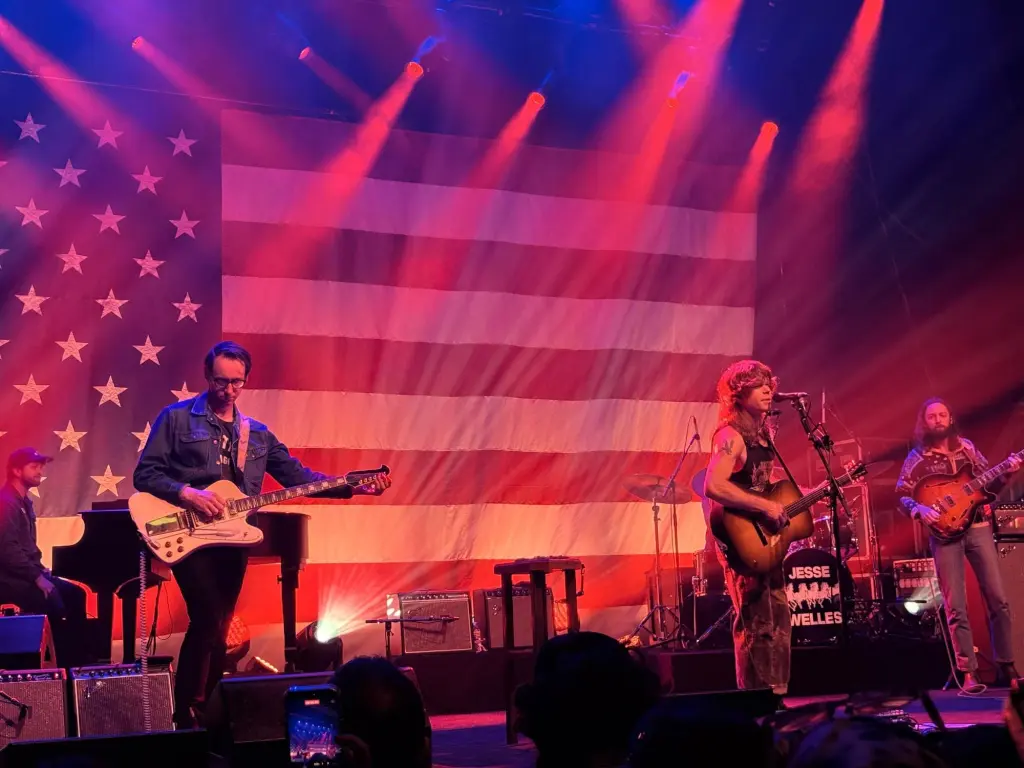
Are you singer-songwriter Jesse Welles, progressive and openly patriotic in the tradition of Woody Guthrie and Bruce Springsteen, using flag imagery and pointedly critical lyrics at his concerts to show that he and those who believe as he does refuse to be excluded from the American story? “Good morning, America. Good evening, America. I love ya,” he likes to sing.
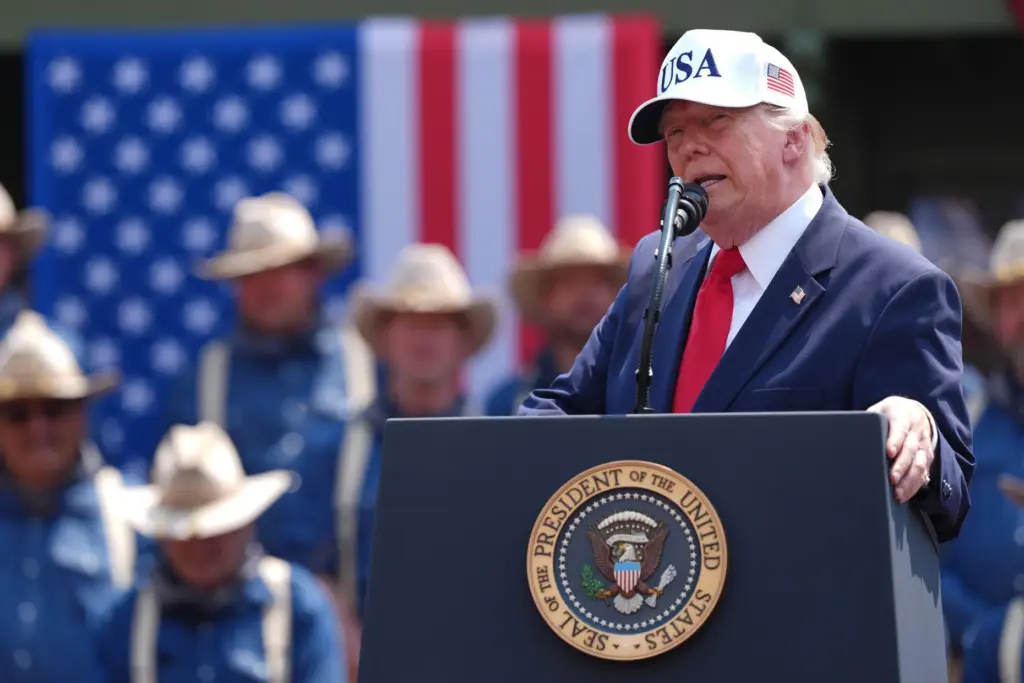 President Donald Trump speaks at Burning Hills Amphitheatre during the Theodore Roosevelt Presidential Library opening ceremony, Wednesday, July 1, 2026, in Medora, N.D. (AP Photo/Julia Demaree Nikhinson)
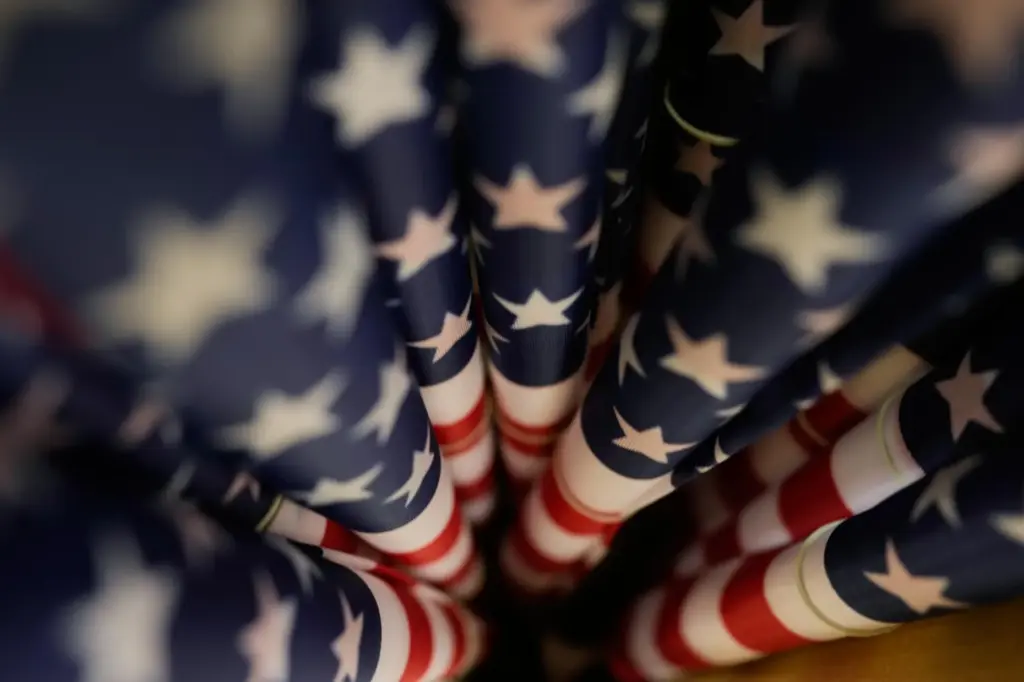 American Flags are for sale at Jungle Jim’s International Market Eastgate in Cincinnati, Tuesday, June 30, 2026. (AP Photo/Carolyn Kaster)
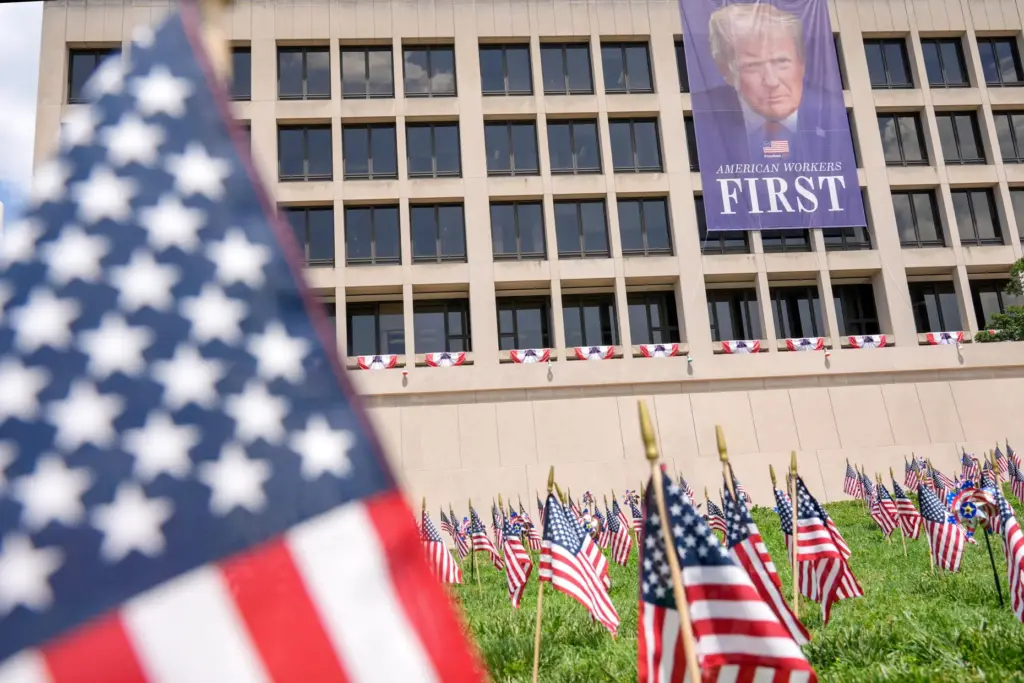 Flags are pictured in grass near a banner depicting a portrait of President Donald Trump, Thursday, July 2, 2026, on Capitol Hill in Washington. (AP Photo/Mariam Zuhaib)
 Fireworks explode over the Lewiston Clarkston Valley during the annual Clarkston Fourth of July fireworks show on Saturday, July 4, 2026, in Lewiston, Idaho. (August Frank/Lewiston Tribune via AP)
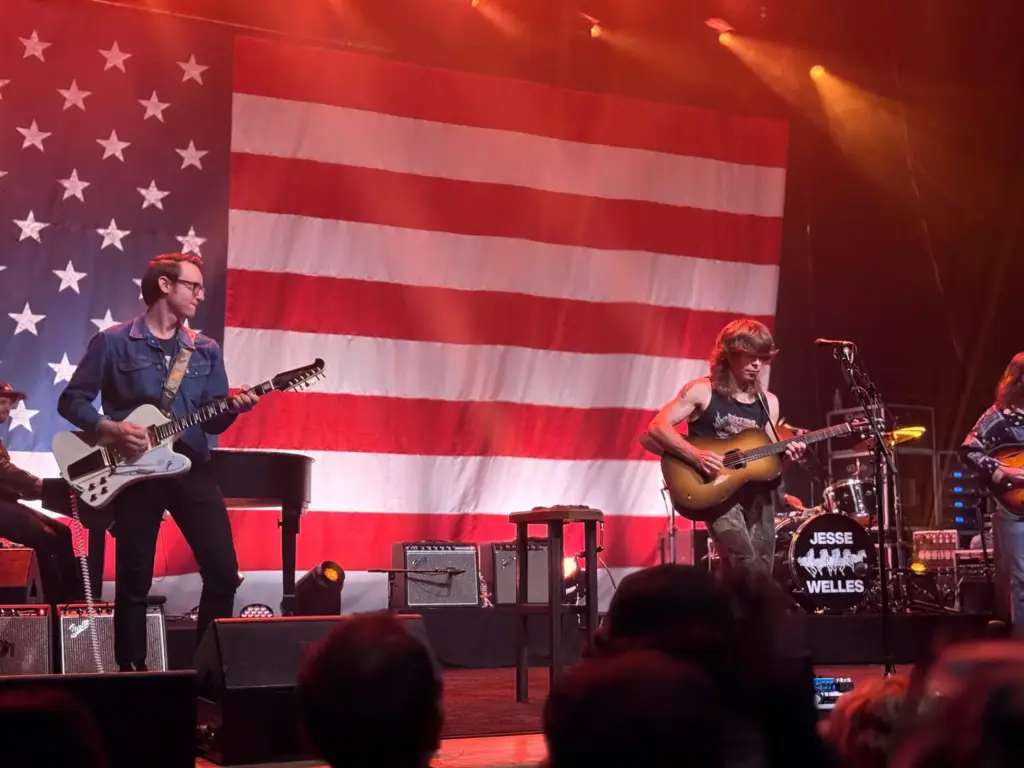 Singer-songwriter Jesse Welles performs with members of his band in Detroit, March 10, 2026. (AP Photo/Ted Anthony)
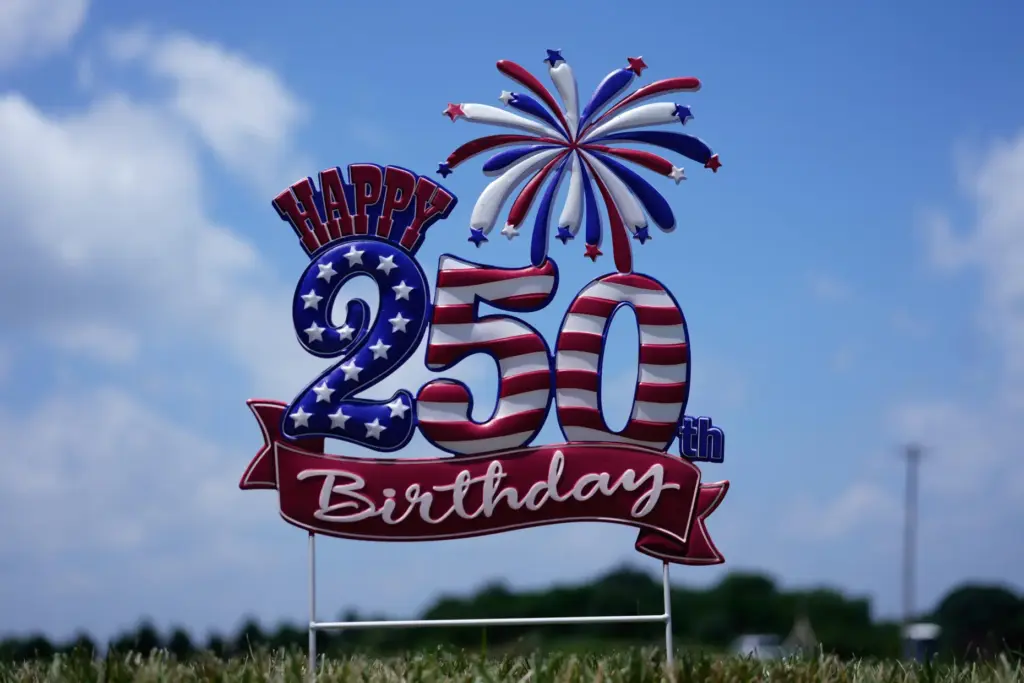 A “Happy 250th Birthday” signs seen near the entrance at Lucky Patriot Fireworks in Batavia, Ohio, Tuesday, June 30, 2026. (AP Photo/Carolyn Kaster)
Or are you Donald Trump, a master of brand-building narrative. who is vigorously reframing the story America tells about itself. Adore him or despise him, it’s hard to deny that the American narrative at home and abroad has his indelible stamp. He knows his power over the tale.
“The left has warped, distorted, and defiled the American story with deceptions, falsehoods, and lies,” Trump said shortly before losing the 2020 election.
The president’s version of the story, though, often focuses not so much on the nation as on Donald Trump himself.
Read more Obamacare rolls shrank dramatically in many states over the past year, new federal data shows
With an avalanche of superlatives and self-regard, he has made his own story front and center — both metaphorically and literally. He wants to be on Mount Rushmore. His face might end up on currency while he’s still alive. It will be on this year’s anniversary edition of the U.S. passport. His face is all over Washington, D.C., as are the stamps of his presence — from the triumph arch to the controversial redo of the reflecting pool to the equally contentious $400 million ballroom he is adding to the White House. Whatever else these are, they are efforts to commandeer pieces of the American story.
It’s a pattern he has repeated throughout his life — casting himself as the embodiment of American success. Even this month’s celebration itself featured a competition of what story to tell, and Trump’s thumb on the scale.
There was America250, a bipartisan effort, created by Congress. And there was Freedom 250, a Trump administration-backed version of the celebration far more aligned with the MAGA version of American history. They are, in effect, a wrestling match over which America is amplified. That was underscored by the musical acts that withdrew from Freedom 250 concerts, saying they’d become too political.
The story changed.
The flag is a useful case study for American storytelling
The American flag sits at the center of the national story, a piece of fabric that contains multitudes (“gave proof through the night, that our flag was still there.”). Always has, ever since the tale of Betsy Ross.
Its glorification — everywhere from ballparks to solemn military events to the aisles of Target — summons people to contemplate country and purpose. Its desecration under the principle of free speech — also an important part of the tale — is used by some to make passionate points and denounced by others as ugly and treasonous.
Not surprising, since the flag is a physical embodiment of the American story — as Jesse Welles demonstrates at his shows.
“It’s an extraordinarily potent symbol for anybody — left, right or center,” Ken Burns, the acclaimed documentary filmmaker, said. “It’s interesting when we have this assault on traditional democratic institutions that the people who are out in the streets protesting have sort of reclaimed — and they never should have relinquished — the American flag.”
But the story of the flag, and how it’s used, varies based on who you are. Republicans and older white Americans? More likely to fly it, wear it as clothing or, in Pete Hegseth’s case, wear it as a pocket square. Democrats and Black Americans? Not so much. So concluded an AP-NORC poll last month.
John Baick, a historian at Western New England University, sees less flag imagery in Trump’s second term than in his first; the intense focus on Trump himself may have crowded it out. Baick suggests that the use of storytelling in the political arena today impacts, as always, the larger sense of what the United States is. He sees it fragmenting — as evidenced by the use of the flag.
“I think it’s just become a muddled mess,” Baick says. “I think it’s just going to be almost the breakdown of a national system and states will figure it out, cities will figure it out, individuals will figure it out. They’ll put out their flags, but … they’ll tell their own stories.”
This national story is not close to complete. As Fox News business journalist Maria Bartiromo told her family’s story recently, she referred to “this young nation.” Places like China and Russia have millennia of tales to build upon. The United States has less than 400 even if you go back to its very beginnings.
And so the American story continues. Where will it go next? And who will tell it most persuasively?
Read more Medicaid funding is resuming for Planned Parenthood after being cut off for most of a year
Ted Anthony has been writing about American culture since 1990.