
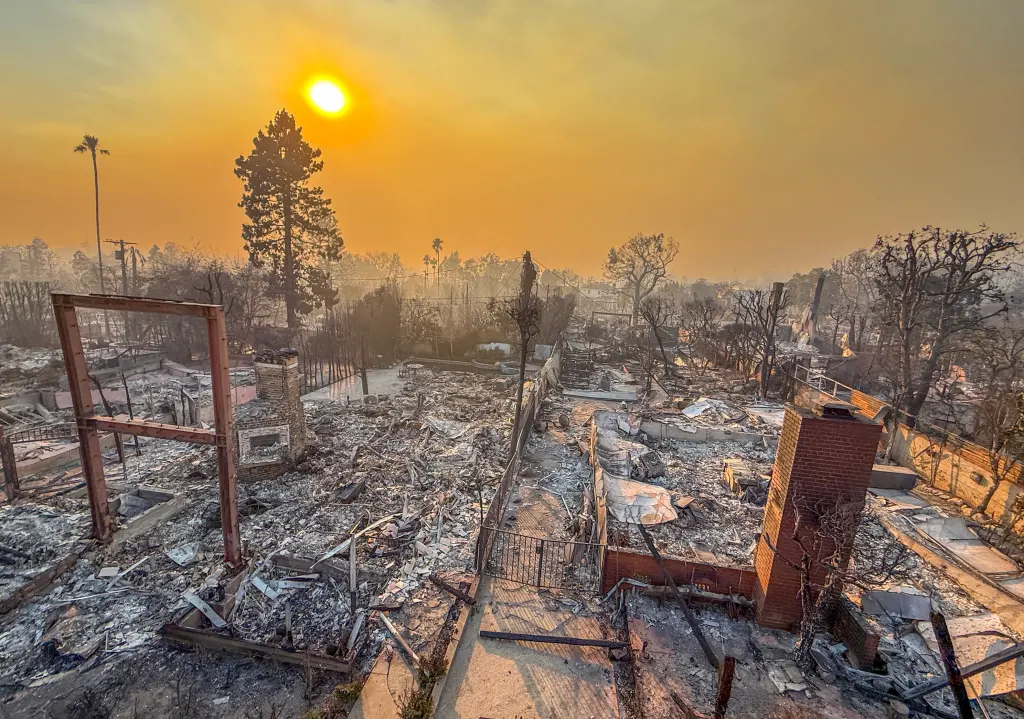
The top two vote-getters in the June primary for insurance commissioner are democrats Jane Kim and Ben Allen — a first for candidates going against each other from the same political party since the office became an elected position.
Read more Southern California becoming a hub for wildlife crossings
The next insurance commissioner will respond to a range of political problems, especially insurance industry demands to raise premiums to reflect growing wildfire risk and challenges to keep their distance from insurers who were accused during the primary campaign of getting too cozy with the current commissioner.
California’s Secretary of State completed tallying and July 10 for the 11 candidates vying for the Nov. 3 general election ballot.
As of July 10, Kim had a leading 2,328,836 votes, or 27.4% counted statewide, while Allen followed with 1,649,501, or 19.4% — a difference of 679,335 votes. She led in all votes counted in Southern California counties. Through late June, Allen raised $1,933,377.40, while Kim has raised $808,569.29, according to financial records kept by the Secretary of State.
One of the two candidates will replace term-limited incumbent Ricardo Lara, the eighth commissioner for the role since it became an elected position in 1988.
The 49-year-old Kim, a former Lakeport supervisor from San Francisco, has been endorsed by Vermont’s progressive U.S. Sen. Bernie Sanders, while Allen, 48, is an establishment candidate who has worked for the past dozen years in Sacramento as a state senator representing Santa Monica and Malibu.
Kim and Allen advance to the November 3 runoff with starkly different outlooks on how to fix a stalled insurance market. What are their major differences? Below are the issues they identified in interviews with the Southern California News Group.
Both candidates want to lower rates, reduce wildfire risks and depopulate the insurer of last resort — called the Fair Access to Insurance Requirements Plan. The similaries end there. Kim wants to reduce risk through a “universal disaster insurance for all” plan that would make coverage automatic and universal, with everyone in the same risk pool and premiums based on property cost and risk. Allen said that the state needs to encourage policies to reduce risk at its source by investing in wildfire mitigation and making communities more fire-safe — a policy that will eventually depopulate the FAIR Plan.
 Insurance commissioner candidate Jane Kim speaks with guests at the office of Singleton Schreiber, a law firm in San Diego, on Wednesday, June 24, 2026. (Kristian Carreon / The San Diego Union-Tribune)
 Insurance commissioner candidate Jane Kim speaks with guests at the office of Singleton Schreiber, a law firm in San Diego, on Wednesday, June 24, 2026. (Kristian Carreon / The San Diego Union-Tribune)
 Insurance commissioner candidate Jane Kim speaks with guests at the office of Singleton Schreiber, a law firm in San Diego, on Wednesday, June 24, 2026. (Kristian Carreon / The San Diego Union-Tribune)
 Insurance commissioner candidate Jane Kim speaks with guests at the office of Singleton Schreiber, a law firm in San Diego, on Wednesday, June 24, 2026. (Kristian Carreon / The San Diego Union-Tribune)
Jane Kim
Kim, who was the California political director and national political director for Sanders’ 2020 presidential campaign, isn’t running publicly on the back of the senator’s Democratic Socialist viewpoints — though the political movement is experiencing a political surge bolstered by the groundwork laid by the politician in cities like Denver, New York, Seattle and Los Angeles.
Kim got a phone call from Sanders the day after the June 2 primary, who congratulated her on the surge ahead of the deep field of candidates.
“I’m really excited about this office. It’s not just a seat-warmer for me,” said Kim in an interview before she spoke June 24 at a small gathering of political donors meeting at the law firm of Singleton Schreiber in San Diego. “This office is aligned with my values and what I’ve been fighting my entire career, which is around economic fairness, expanding opportunities and addressing wealth inequality.”
This isn’t Kim’s first shot at an elected office.
Kim, who earned a bachelor’s degree in political science from Stanford University and a law degree from UC Berkeley School of Law, previously represented San Francisco’s District 6 on the Board of Supervisors between 2011 and 2019. She also held previous elected posts as a member and president of the San Francisco Board of Education.
The candidate who wins in November will be faced with addressing the state’s FAIR Plan. In May, the FAIR Plan got the green light to raise rates 29.1% for certain homeowners starting Oct. 15 — just weeks before the general election.
In the interview, Kim said that she wants to stop the growth of the organization, which acts as a backstop for homeowners who can’t get insurance elsewhere due to fire zones they live in, or have filed claims too high for the insurer to absorb.
As of March 2026, the number of policies the FAIR Plan carried grew 47.2% to 684,388 from 464,900 in the fall of 2024 — just a few months before windswept January wildfires destroyed several communities in Los Angeles County.
“I think the FAIR Plan should exist, but we have to fix it,” she said. “A single-payer plan, if implemented well, would dramatically depopulate the FAIR Plan.”
Kim wants to replace the current multipayer private home insurance market and the FAIR Plan with a centralized, state-managed system to cover wildfire and flood risks.
The proposed single-payer, state-run “universal disaster insurance for all” would make coverage automatic and universal, with everyone in the same risk pool and premiums based on property cost and risk. By pooling premiums into a public system, she argues the state can directly fund home-hardening and community fireproofing with low interest loans or tax credits, whereas private insurers divert profits to shareholders — or, in some cases, to CEO pay.
The universal disaster insurance system would guarantee coverage and investment premiums in mitigation — like home hardening (using fire-resistant building materials), fuel management (clearing or cutting back vegetation and brush around homes) and community resilience (evaluating neighborhood-level risks rather than just individual properties, by upgrading drainage or building codes).
“We would still have a multipayer home insurance market — with State Farm, Auto Club or whomever — but that line item we already pay for disasters would be paid as a levy to the state. The state would claw back that portion of the premiums we’re already paying, invest it and then pay out claims when there is a disaster,” she explained.
A risk mitigation strategy should give homeowners discounted coverage, and avoid policy nonrenewals in high-risk areas, she said.
Read more He was nation’s most famous traitor. Why the utter loathing lives on 250 years later.
Kim also supports capping insurance executive pay, arguing that the current insurance market pads executive pay while leaving families stranded when disasters strike. Kim cited as a reason for capping compensation the fact that the top 10 insurance executives were paid 29% more in 2024 than in the previous year.
Other changes that Kim has proposed include:
Transparent FAIR Plan: The governing board should be restructured to include consumer advocates, homeowners, labor and elected officials and independent financial experts. She also wants to make governing board documents public, and basic financial data available — which isn’t the case now.
Leaving California: There should be consequences for insurers threatening to leave, including an exit fee, she said. Insurers should not be able to cherry-pick which lines of business they keep. If they exit the homeowners market, they should exit other insurance lines as well.
Databases: Would require insurers to regularly report key metrics including the number of claims filed, claims denied or closed without payment, and processing timelines. She wants to create a searchable database with company-by-company claims performance, complaint data, and payout patterns.
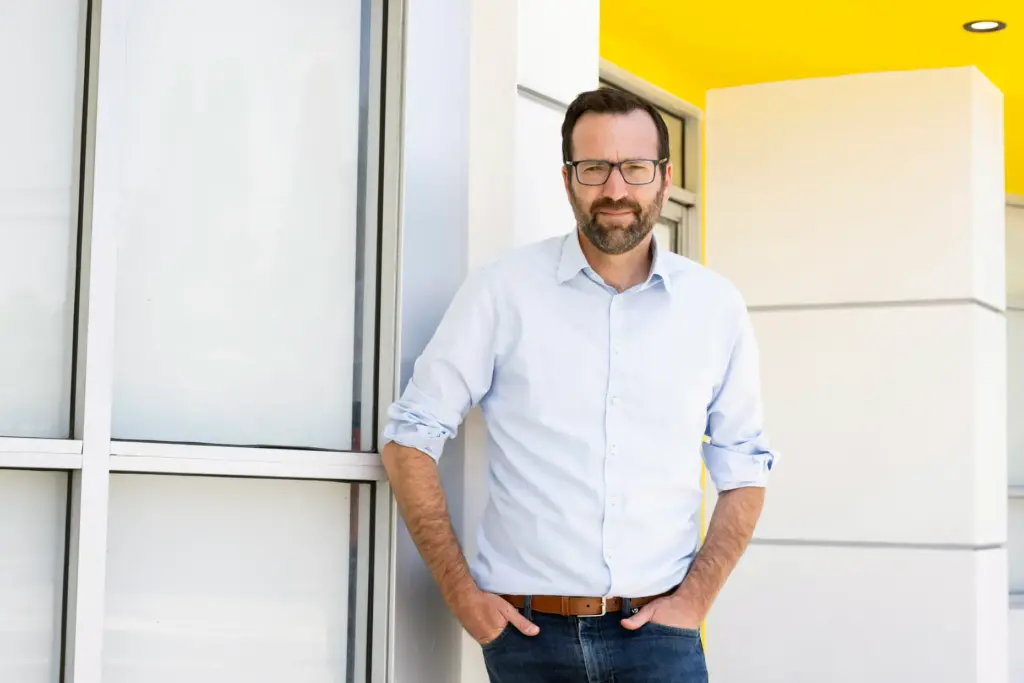 Ben Allen, a candidate in the state Insurance Commissioner’s race, stops in Westchester on his way to the airport on Friday, June 26, 2026. (Photo by Drew A. Kelley, Press-Telegram/SCNG)
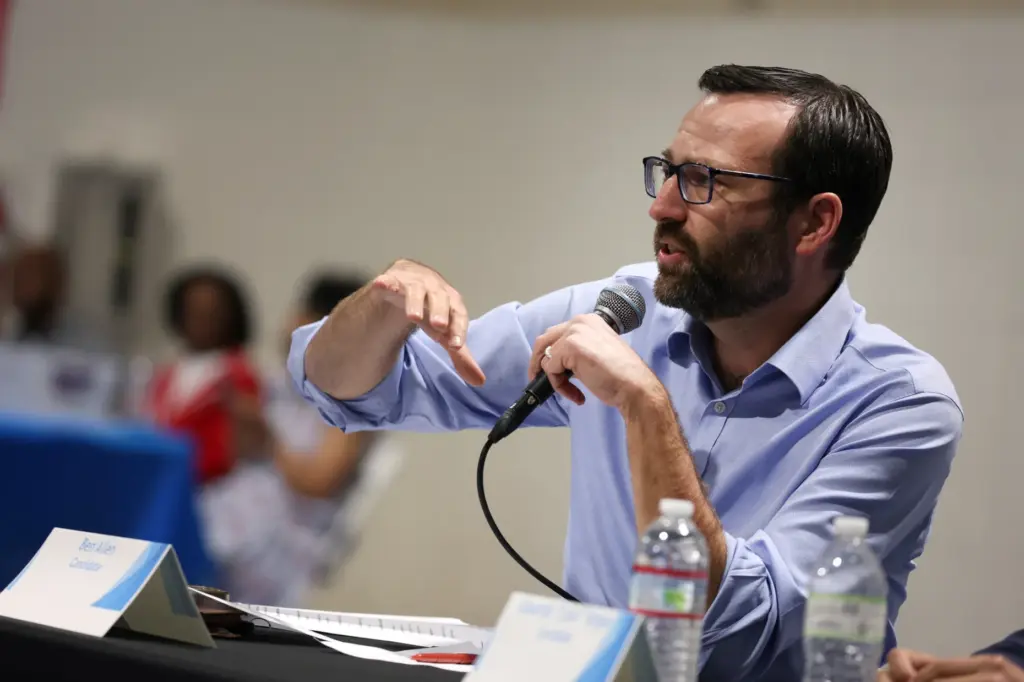 California Insurance Commissioner candidate Ben Allen speaks during a forum hosted by the NAACP Pasadena chapter at the Loma Alta Park Gymnasium in Altadena on Thursday, May 7, 2026. (Photo by Trevor Stamp, Contributing Photographer)
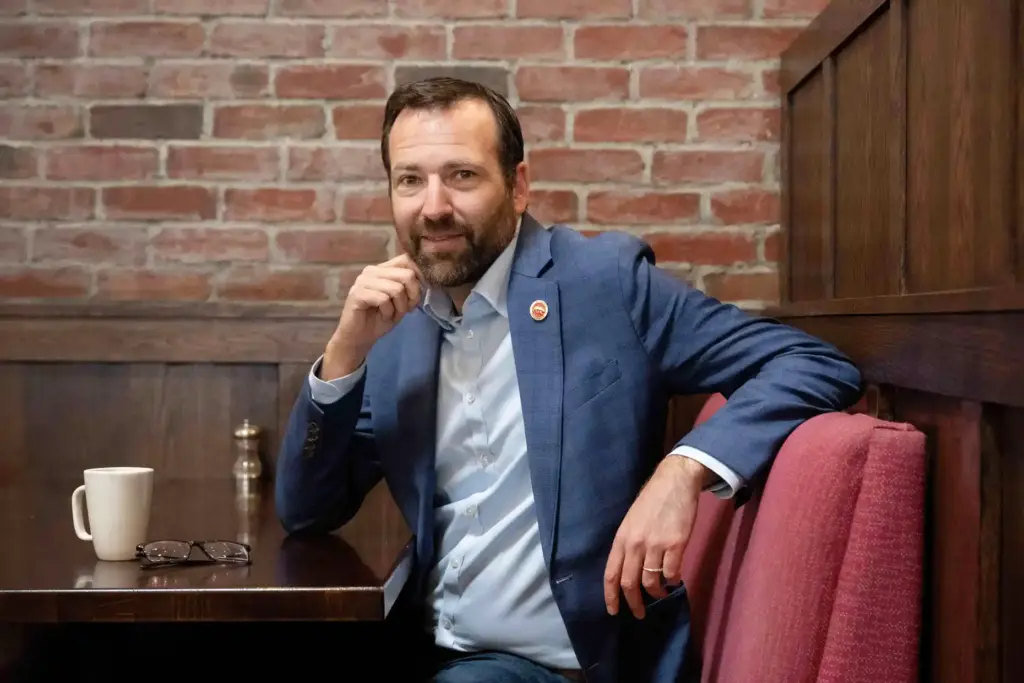 Ben Allen, a candidate in the state Insurance Commissioner’s race, stops in Westchester on his way to the airport on Friday, June 26, 2026. (Photo by Drew A. Kelley, Press-Telegram/SCNG)
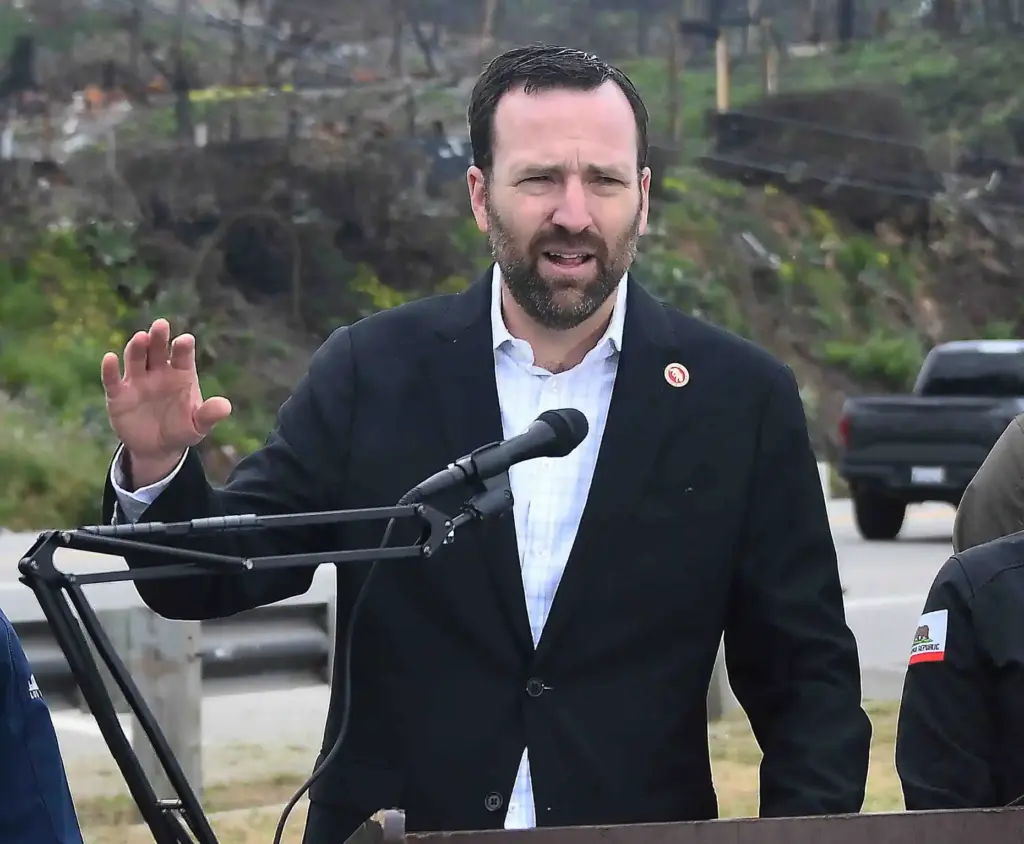 Senator Ben Allen speaks during a press conference at Will Rogers State Beach marking 100 days since the start of the horrific LA Fires Thursday, Palisades, CA. April 17, 2025. Community leaders and stakeholders to discuss policy proposals introduced to aid our recovery efforts. (Photo by Gene Blevins, Contributing Photographer}
Ben Allen
Allen, who represents parts of Santa Monica and Los Angeles that were badly damaged in last year’s wildfires, said the race against Kim will be a tough one with each candidate providing a different vision for the state.
On Jan. 7, 2025, Allen was in his car driving out to the Coachella Valley to greet former President Joe Biden and witness him sign a proclamation that would establish the Chuckwalla National Monument south of Joshua Tree National Park, making drilling, mining and other energy- and industrial-related activity illegal in the area. But then 60 to 90 mph winds kicked up, and he got hit with cell phone messages that fires had erupted not far from his Santa Monica condo.
Biden canceled his trip to the Chuckwalla dedication, and Allen ended up turning the car around with his colleagues, and getting dropped off at the train station in Rancho Cucamonga to ride back to his coastal enclave. When he arrived at the elevated Culver City station, the sun had already dropped below the horizon.
“I saw the fire. The hillsides were lit up, and I could smell the smoke. It was very scary,” said Allen as he stood on the station’s platform. “I ended up three weeks not going back to Sacramento [which was in session] and spending time intensely dealing with these fires.”
In his dozen years in the Legislature, Allen carved out a reputation focusing on environmental protection. In 2022, he authored legislation to reduce plastic pollution. In 2024, he was a lead author of a $10 billion bond measure — Proposition 4, which passed in 2024 — to invest in safe drinking water, wildfire prevention, drought preparedness and clean air. He also helped advance California’s historic climate goals, such as carbon neutrality by 2045 and 90% clean energy by 2035.
Since the L.A. fires, Allen has helped draft legislative fixes for the growing insurance crisis.
In the interview at a Westchester restaurant on June 26, Allen said he wants transparency in rate filings, and insurers to properly account for risk reductions.
Allen began his political career as a member of the Santa Monica-Malibu Unified School District’s board of education. He earned his bachelor’s degree in history from Harvard University, a master’s degree in Latin American Studies from the University of Cambridge with a focus on philosophy and a law degree from UC Berkeley.
Since last year’s L.A. fires, Allen has been knee-deep in legislation to improve the state’s insurance marketplace, including:
Consumer protections: Authored by Allen, SB 495 requires insurers to make significant upfront payments for personal property losses without forcing disaster survivors to itemize everything destroyed. Gov. Gavin Newsom signed the bill into law last October.
Wildfire catastrophe: Allen was a key supporter and co-author of SB 429, a 2025 California law that created the nation’s first publicly available wildfire catastrophe model. He acknowledged that rising costs for primary insurers are partly driven by global catastrophe losses and the skyrocketing costs of purchasing reinsurance (a type of insurance on insurance in catastrophic events). His long-term strategy involves leveraging the state’s climate investments from Prop. 4 to fund large-scale community risk reduction, which he argues will make California more insurable and reduce reinsurance and premium costs. Newsom signed the bill last October.
Oversight and accountability: He pushed for SB 1209, which gives the state Department of Insurance stronger authority to compel insurers to correct operational and compliance violations identified during routine audits. The bill is currently in progress.
Preventing nonrenewals: Authored by Allen, SB 1301 is aimed at protecting homeowners from sudden coverage drops. The proposal is designed to protect policyholders by requiring insurers to give 90-day notices and clear explanations for nonrenewals, granting property owners more time to find alternatives or mitigate risks. The bill is currently in progress.
Allen also wants to lower insurance costs by working on policies with the state legislature to update building codes to require more fire-resistant materials, revise land-use policies to minimize building in flammable areas near wildlands, and disincentivize oil companies from exacerbating climate change.
“We have to depopulate the FAIR Plan. It’s all about trying to create a more healthy market. That will happen through not only speeding up the rate review process, improving fraud enforcement, and creating more transparency, but also the broader play has to be focused on risk reduction,” he said. “I think the sustainable insurance strategy (also known as SIS) is an important step in that direction but from my perspective, SIS doesn’t work. It doesn’t emphasize risk reduction enough.”
SIS allows companies to use forward-looking climate risk and catastrophe models to adjust rates in exchange for writing policies in wildfire-prone areas.