
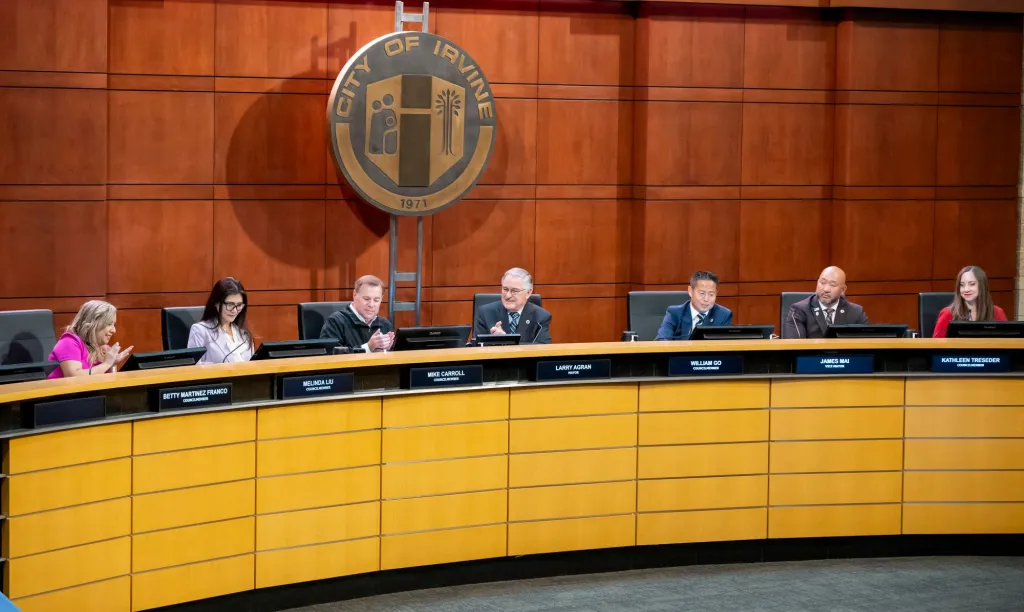
Irvine councilmembers are getting closer to asking voters whether the city should implement ranked-choice voting for local single-winner elections.
Read more US jobless aid filings rise to 229,000 last week, remain historically low despite Iran war headwinds
The City Council has now asked staffers to put together a package of the necessary documents to submit to the Orange County Registrar of Voters in time for the measure to appear on the general election ballot. And if in November voters approve, Irvine could be on track to adopt ranked-choice voting for all city elections starting in 2028.
Unlike in traditional elections where voters mark their ballots for one candidate per seat, the system Irvine’s elected officials are eying would have voters rank candidates for an office in order of preference. Last-place candidates would be eliminated until one candidate receives more than 50% of the votes.
“I’m thrilled that we’re taking this to the next step and we had the support of a large majority of the council. I think that this is going to serve the voters well, that they’ll be given the chance to choose if they want to do it,” said Councilmember Kathleen Treseder, who’s been leading the push for the voting system change.
Councilmembers James Mai and Mike Carroll were opposed on Tuesday, June 9, to proceeding.
Treseder and other proponents on the dais have said ranked-choice voting could promote voter engagement and deter “spoiler effects,” or when a losing candidate’s presence on the ballot skews election results.
Ranked-choice voting is used for some local elections in 13 states. But the voting system has historically seen some pushback. Efforts to allow ranked-choice voting for general law cities in California were shot down in 2007 by Gov. Arnold Schwarzenegger and in 2019 by Gov. Gavin Newsom.
Read more US producer prices rose 6.5% in May on higher energy prices, largest yearly jump since November 2022
However, a handful of California charter cities, such as San Francisco, Oakland and Berkeley, have been allowed to use the voting method. By also having its own local constitution, Irvine could open the door to its use as well.
But by being the first in Orange County to adopt the system, Irvine would “be responsible for all unique costs related to the use of that voting method,” a staff report to councilmembers said.
“For example, the city will be responsible for cunty-wide costs associated with reforming ballot cards from three columns to two. Over time, those costs could potentially be shared if other cities in Orange County adopt RCV,” staffers said.
OC Registrar of Voters Bob Page has said that because his office hasn’t conducted an election using ranked-choice voting, he couldn’t estimate what such an election would cost Irvine.
Irvine councilmembers folded into their vote a cap on how much they’re willing to pay to implement ranked-choice voting. If it costs more than $710,440, councilmembers agreed they’d abandon the endeavor, though no timeline was offered for when they’d expect a cost estimate.
Staffers said it would already cost the city up to $15,000 to put the option of ranked-choice voting on the November ballot.
Read more Spy program at risk over Trump’s pick of Pulte for director of national intelligence