
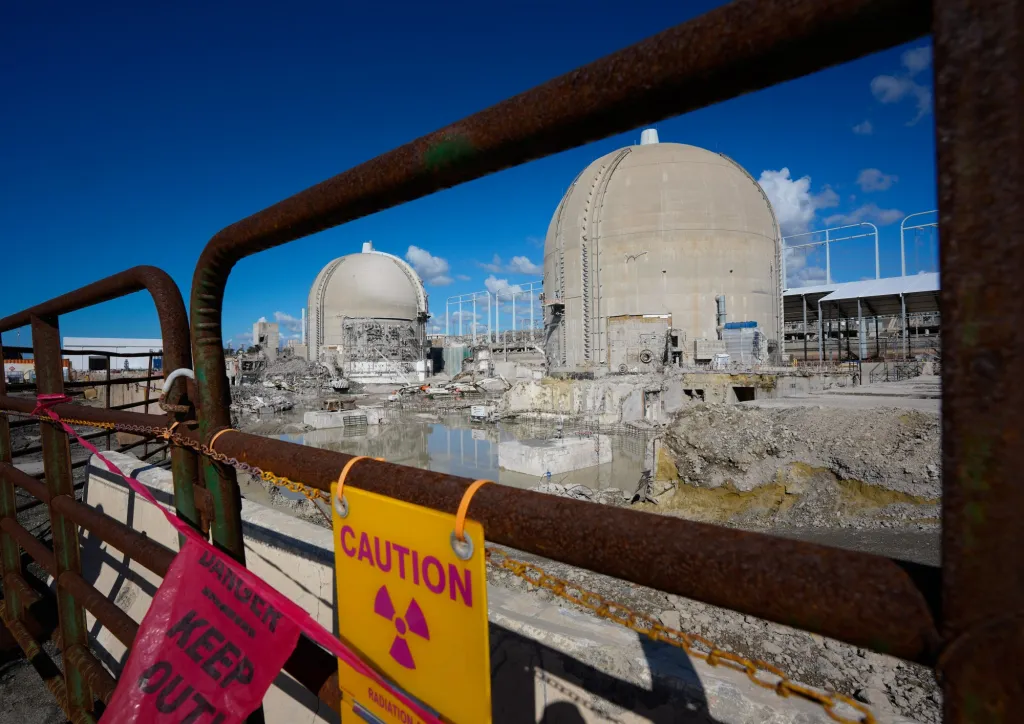
Unhappy that 3.6 million pounds of highly radioactive nuclear waste is being stored in your backyard, on a beach, prone to earthquakes, near 8 million people?
Read more New California bill aims to help those affected by Garden Grove chemical emergency
Buck up, Southern California. Your knight in shining armor may have just sauntered in on a white horse.
May we introduce you to Utah?
The connection came toward the bitter end of a multi-hour, marathon meeting on how we might finally, permanently, once and for all, dispose of this stuff, during the oft-interminable period set aside for public comment, when folks tend to call Southern California Edison names and share visions of nuclear annihilation. This happens at most every meeting — that’s the volunteer group advising Edison on the plant’s teardown. So I was pondering what shoes I’ll wear to my eldest daughter’s graduation, when I heard….
“This is Jeremy Pearson with Utah Office of Energy Development… thought it would be worth jumping on for a second just to say ‘hello’… Just wanted to say… that we are very much interested as a state in working with other states on finding a solution to this problem….”
What?! I sprang to attention like a dingo suddenly spying a human baby (credit: “Megamind”). A state is willing and eager to host America’s nuclear waste?!
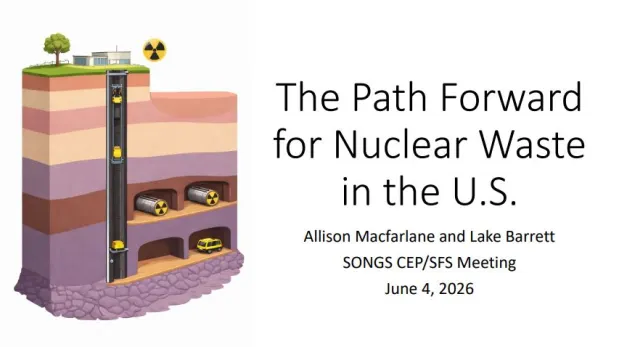
We told you about their thunderclap back in January: Take the job away from the federal government, which has failed miserably to get anything useful done over the past 40 years, and entrust it to the industry that’s stuck babysitting the waste, knows how to handle it, and is eager to get rid of it.
What’s important here is that the change in presidential administrations has brought, of course, an entirely new approach to nuclear. Trump is aggressively gung-ho and wants to create these “Nuclear Lifestyle Innovation Campuses” to support everything from fuel enrichment to energy generation to reprocessing to storage and disposition at the back end of the fuel cycle. The idea is that the campuses would bring jobs and scientists and technicians (along with nuclear waste) to town.
In addition to Utah, Tennessee, South Carolina and Nebraska have also stepped forward, willing to do all of the above. Another two dozen or so states/territories are willing to do some of the above, though maybe not the waste part. The U.S. Department of Energy hopes to announce candidates in July and break ground on at least one campus next year.
Seems exciting! But we’ll remind you that just a couple of years ago, the Biden administration’s DOE was all over “consent-based siting,” awarding $26 million to enlist communities interested in hosting the nation’s nuclear waste. And before that, the first Trump administration tried hard to resurrect the moribund Yucca Mountain project. And before that, the Obama administration scrapped Yucca and convened the aforementioned Blue Ribbon Panel to chart a bold new path forward.
And we have gotten exactly nowhere.
Point here is, U.S. nuclear waste policy is like looking through a kaleidoscope. A pretty image when you gaze through the eyepiece, until a new administration rotates the tube and creates an entirely new image, which is maybe also nice, until yet another administration comes along and rotates the tube yet again and creates yet another entirely new image. And so on.
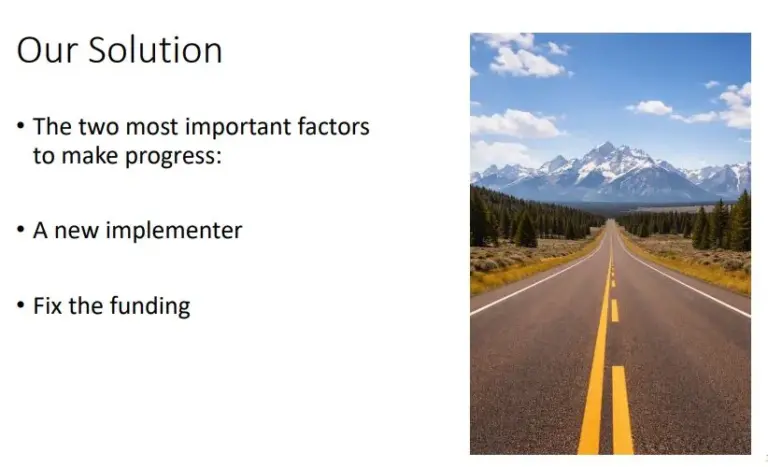
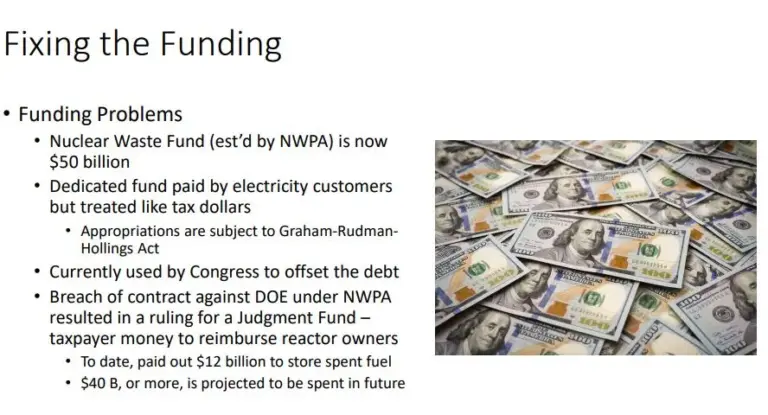
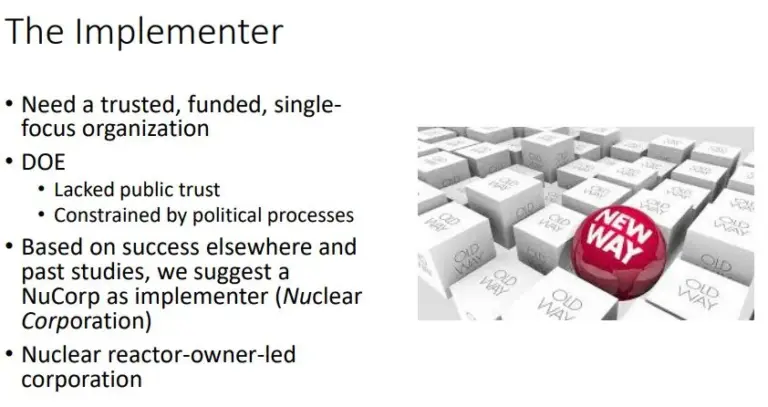
This is why nothing gets done. To fix it, Macfarlane and Barrett say we must strip the responsibility from the federal government and give it to a mythical-sounding NuCorp (“a nuclear reactor owner-led corporation, either an independent public benefit corporation or a non-profit corporation.” That’s what they do in Finland, Sweden, Canada and other nations that leave us in the dust, nuke-storage-wise. They also say we should free the $50 billion in the Nuclear Waste Fund, money that’s paid by ratepayers like us, for permanent waste disposal, but essentially locked inside a government version of Gringott’s Bank and guarded by the fierce three-headed dog Fluffy so no one can get at it to accomplish anything meaningful.
Congressman Mike Levin, D-San Juan Capistrano, is one of the few in Washington poking the bear here.
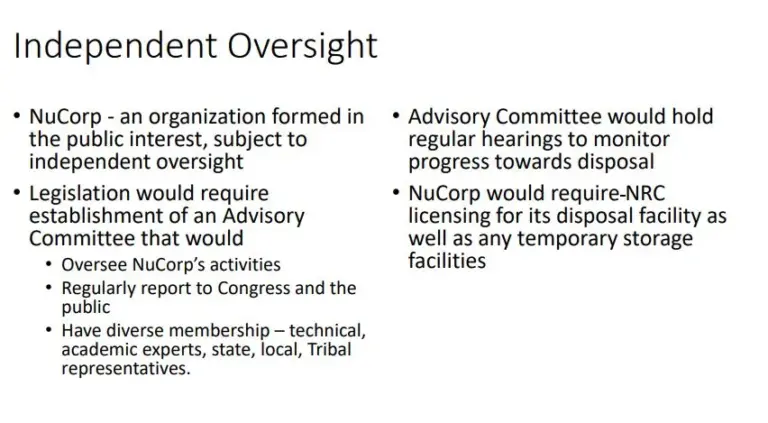
He has been working on bipartisan legislation to do what Macfarlane, Barrett and the nations making real progress say we must do: Remove the task of nuclear storage off the DOE’s crowded plate and create a sole purpose entity responsible for spent fuel disposal, and only spent fuel disposal. That, Levin said, would stabilize, and de-politicize, the task. The job will stretch across many decades and many administrations, and success depends on stability and unity of purpose. Which is to say, it should not be a kaleidoscope.
Read more Hats off to Santiago Canyon College’s class of 2026
This will require changes to the Nuclear Waste Policy Act — the law that said the DOE would start accepting commercial waste for disposal in, er, 1998. But we’ve split atoms and put men on the moon people. We can do this.
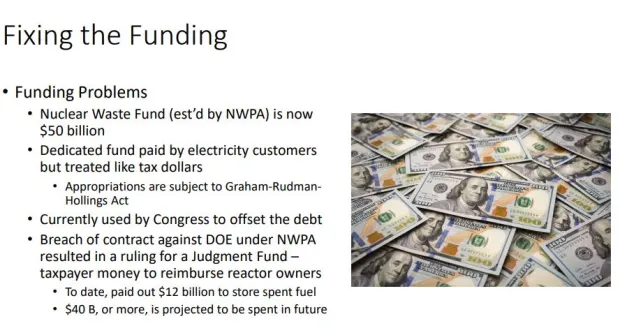
Every day of delay siphons millions from taxpayer pockets. While that $50 billion in ratepayer money sits locked away, the utilities stuck with the waste have sued the DOE for breach of contract to cover the costs of said babysitting — and won. So far it has cost all taxpayers – not just ratepayers – about $12.2 billion, and will cost another $40 billion or so before it’s over.
Finland will open its deep geologic repository for nuclear waste before 2030. Sweden is starting construction on its repository. Canada selected a site in 2024 and is already in the licensing process. France is in the licensing process, too, and Switzerland will finalize its site by 2031.
“This is at least the fifth report to look at what we need to do. All five of them come to basically same conclusion: Take the responsibility out of DOE and get the new entity access to the funds it needs to do that job,” said Tom Isaacs, an Edison advisor on nuclear waste management.
“What we need is legislation to get this back on track. It’s too easy to do nothing and push this down the road. Doing nothing has consequences and we will wind up paying for it. We need to accept the sense of urgency.”
There were squabbles about who might run a single-purpose waste disposal agency —- government? industry? some combination of both? — as well as the virtues and vices of reprocessing and recycling spent nuclear fuel.
But there also is cautious optimism that the Innovation Campus concept might survive a twist or two of the kaleidoscope: Rather than saying, “Raise your hand if you want America’s nuclear waste!,” it reframes the question as a larger economic and educational opportunity. Maybe Innovation Campuses can even make their way into the amendments to the Nuclear Waste Policy Act that’ll be required for progress. Those sorts of changes typically come during lame duck sessions of Congress, one of which will commence this fall.
“Keep the political screws on,” Macfarlane said. “It’s going to take a lot of political pressure to make progress.”
At attention in the wings is the California company Deep Isolation, which specializes in deep borehole technology — drilling way down into the earth, inserting waste canisters and sealing it all up permanently. Based in Berkeley, the company boasts more than 100 patents worldwide, and positions itself as the big answer to the big questions.
“The Nuclear Lifecycle Innovation Campus effort is complementary to what Deep Isolation is working to advance,” said the company’s CEO, Rod Baltzer, via email. It “has helped jumpstart momentum around used nuclear fuel disposal by encouraging states to voluntarily explore hosting future disposal solutions, which we view as a positive and important step forward for the industry.”
Utah, at least, seems eager to help. Pearson, the guy who introduced himself to the Community Engagement Panel, said Utah would love for folks to reach out and (https://bit.ly/3Q559dl). Pearson grew up in Southern California, did his Ph.D. at UC Irvine, and was there when San Onofre powered down for the last time, 14 years ago. “We really know and understand your concerns down there,” he said.
Incidentally, Utah has deep salt beds, perhaps thicker than those at the nation’s only deep geologic nuclear waste repository, the Waste Isolation Pilot Plant in New Mexico (solely for Defense Department, not commercial, nuclear waste).
Read more Fullerton city budget delayed, pending results of forensic audit
Swoon. California. Swipe right.
 From “Path Forward,” by Macfarlane and Barrett
 From “Path Forward,” by Macfarlane and Barrett
 From “Path Forward,” by Macfarlane and Barrett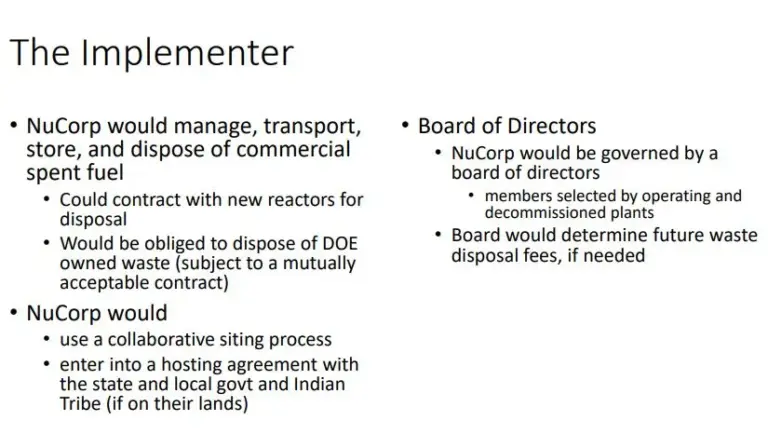
 From “Path Forward,” by Macfarlane and Barrett
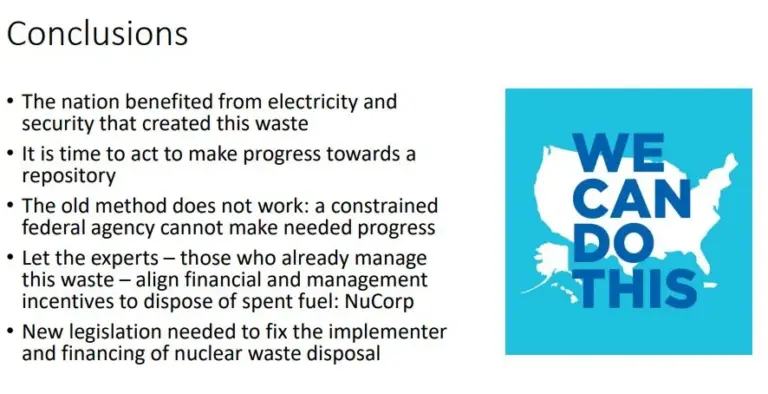 From “Path Forward,” by Macfarlane and Barrett