
Social media influencers can, as their titles imply, hold a lot of sway.
Political campaigns know this, which is why they court them, at times paying them to promote their candidate or cause.
Read more Some of the skydivers killed in Missouri plane crash were experienced jumpers
It’s not illegal. But existing California law requires campaigns to inform content creators that they must include a disclaimer if they’re being paid to say nice things about a candidate, negative things about an opponent or speak in support of or opposition to a ballot measure.
Failure by a campaign committee to notify the paid influencer about their legal obligations, or failure on the part of the influencer to post a disclaimer, could result in enforcement actions by the state’s Fair Political Practices Commission, an independent, nonpartisan body responsible for enforcing political campaign, lobbying and conflict of interest laws.
But the FPPC is limited in what it can hold parties liable for — an issue that garnered attention during the California governor’s race when, in the weeks leading up to the primary election, both the campaigns for Democratic candidates Tom Steyer and Xavier Becerra were accused of paying influencers who failed to disclose the arrangements.
Steyer’s campaign has insisted it followed the law, and when reached for this story, referred to a previous statement from spokesperson Kevin Liao, in which he said, “We notify creators we directly work with of their disclosure requirements.”
Meanwhile, Becerra spokesperson Jonathan Underland maintained that thecampaign did not pay outside content creators for posts. Influencer Jordan “Jay” Gonzalez — who had posted interviews with Becerra on TikTok and Instagram before the campaign hired him as an advisor — was not paid for those posts, the campaign said. Gonzalez, who frequently posts lifestyle and fitness-related content, has a combined 373,000 followers on these two platforms.
Becerra is projected to advance to the general election in the fall, according to the unofficial results of the primary, along with Republican Steve Hilton. Steyer came in third place.
But the governor’s primary election wasn’t just a battle for which two candidates would make it to the general election runoff. It also brought renewed attention to the issue of transparency in elections and campaign finance amid an increasingly digital age.
So now a new bill is being proposed in the California Legislature to strengthen compliance when it comes to campaign disclosure requirements.
Currently, if a content creator doesn’t disclose that they were paid by a campaign committee, the FPPC can seek a court order to force the person to add a disclaimer, but the FPPC can’t issue any fines against the individual.
The commission can hold the campaign committee liable — but only if it did not notify the influencer about their legal obligation to provide a disclaimer. In such instances, a committee could be fined up to $5,000 per violation, according to FPPC spokesperson Shery Yang.
But if a committee did let a paid influencer know about their obligation and the person still failed to post a disclaimer, the FPPC cannot fine or otherwise punish the committee.
Some lawmakers hope to change that.
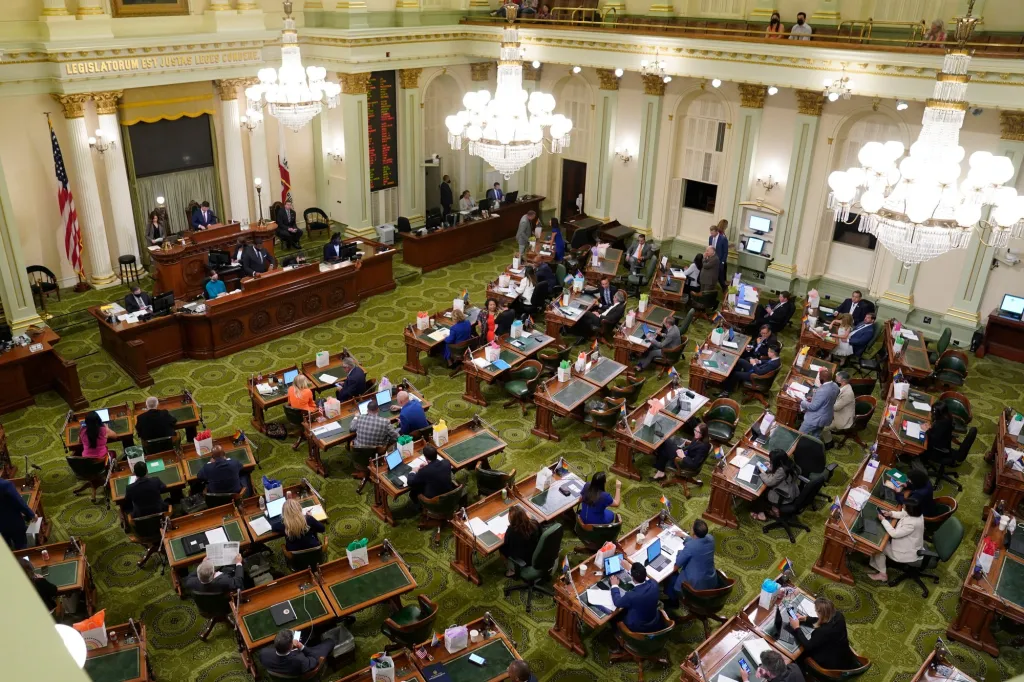
Last week, Assemblymembers Marc Berman, D-Menlo Park, and Blanca Rubio, D-Baldwin Park, introduced legislation to update the state’s Political Reform Act of 1974.
Under their bill, not only could the FPPC continue to seek a court order to force a paid influencer to comply with disclosure requirements, but the influencer could be fined, and the committee that paid them could be held jointly liable even if it had previously informed the content creator about the rules. In addition, the committee would be required to disclose the payment on their campaign finance report as a paid third-party post. A violation of the act could be considered a misdemeanor.
Read more Cape Verde secures stunning 0-0 draw with Spain in its World Cup debut
“AB 1130 would give the FPPC the authority to fine campaigns and influencers if an influencer does not disclose that they were paid by the campaign to post content supporting or opposing a state or local candidate or ballot measure, with penalties of up to $5,000 per violation,” Yang, the FPPC spokesperson, said.
The commission has not taken a formal position on the bill, but is expected to vote on whether to support it during this Thursday’s commission meeting, Yang said.
As campaigns increasingly turn to paid influencers for content, Berman said in a statement, there should be disclosures so voters understand that “those posts are essentially paid political advertisements.”
“AB 1130 will create that additional transparency for the public, require campaigns to properly report payments to influencers and ensure that voters are not misled by content that looks organic and authentic when it’s really the equivalent of an ad,” Berman said.
State Sen. Tom Umberg, D-Santa Ana, who authored the 2023 bill requiring disclaimers by paid social influencers, which was signed into law, has also signed on as co-author of this latest bill proposal. Californians, he said, deserve to know who’s behind online political messages.
“As digital campaigning continues to evolve, our laws must evolve with it,” Umberg said, adding that AB 1130 builds on his prior bill and strengthens disclosure requirements “to give voters the information they need to evaluate political content online and make informed decisions at the ballot box.”
To amend the Political Reform Act, AB 1130 would need to pass with at least a two-thirds vote in both houses of the legislature.
Umberg, whose 2023 bill received 38 votes in the state Senate, said he believes there will be enough support to get to the required 27 votes needed for this latest bill to pass in the upper house.
Berman similarly said he expects to have the votes needed, including bipartisan support.
“This bill is about increasing transparency for voters, which is a nonpartisan issue,” he said.
Should it become law, the bill is not expected to take effect until after the November general election.
“It would be challenging to change campaign filing laws in the middle of election season,” Berman said.
But, the Assembly member said he hopes “this signals to all campaigns that this is an issue we are following very closely, and at a minimum they should be following current law if they are not already.”
Read more Mexican president says FIFA should reflect on high World Cup ticket prices