
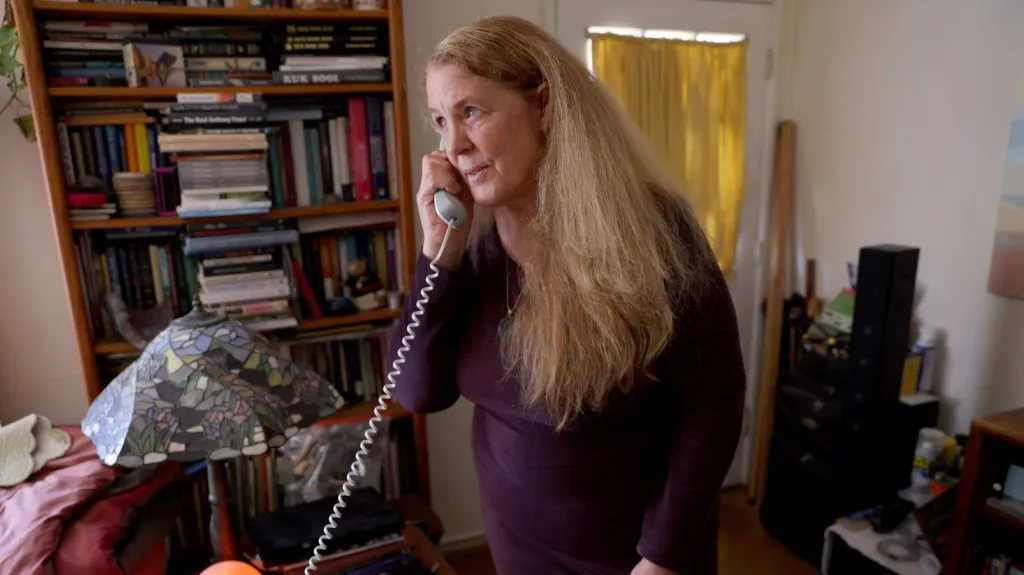
California officials are taking aim at AT&T’s attempt to get the federal government to override state authorities and allow it to end landline service for many Californians.
Read more World Cup: Switzerland, Bosnia and Herzegovina seek better finishes
The utility giant last month filed a federal court complaint against California regulators and submitted two petitions to the Federal Communications Commission, seeking to escape a long-standing obligation to provide landline service where alternative phone options don’t exist.
The utility’s lengthy battle to end its landline business has raised alarms that during earthquakes, fires, floods and storms, landline customers could be cut off from help, because cell phone infrastructure and internet service can be damaged or disrupted.
Susan Santana, AT&T’s president for California, said last month that the company had been working with the state’s policymakers and legislators for years to stop providing landline service, “unfortunately to no avail.”
The company has pledged to state regulators that it would only shut down a customer’s landline service when other options exist. But consumer advocates say landlines are key in disasters or in areas with poor cellular reception, and many people who would lose that service would lack reliable alternatives even if AT&T determined they had them.
The utility has said it wants to start disconnecting landlines as early as June 1, 2027.
This week, the State of California and the California Public Utilities Commission sent a letter to the FCC, asking the agency to reject AT&T’s requests, or at least remove them from streamlined processing, and order the utility to address purported deficiencies in its plan.
AT&T declined Wednesday to comment on the letter.
The missive claims AT&T has failed to show that ending landline service wouldn’t harm the public. The utility hasn’t demonstrated that cellular coverage is sufficient to replace the copper-wire network, the letter further alleged.
Also assailed in the letter is a landline replacement touted by AT&T, a device that connects to a broadband network or AT&T’s wireless service that a landline can plug into. The “AT&T Phone – Advanced” device features an antenna that can allow calls to go through even when cell connectivity is less than robust, and it has a battery backup, Santana said earlier.
Fees for the Advanced service are about $45 a month, while typical landline service costs $80, Santana said.
But the letter said Advanced could be “considerably more costly” to consumers than basic service.
“For areas of the state with a poor cellular signal — typically, rural and low-income areas — consumers would need to order and pay for a separate internet service, assuming one is available, which would make (Advanced) more expensive than Basic Service,” the letter said.
Read more MLB warned players about altering Pride Night caps, and Republicans took notice. Here’s what to know
While AT&T has claimed to regulators that cable, fiber, and fixed broadband services are offered by other providers in its service territory, the utility falls short of clearly identifying the companies, or the customers who would be affected by removal of landlines, the letter charged.
The letter also claimed that landline discontinuance would be concentrated in low-income and disadvantaged communities, and Tribal areas, which “raises significant concerns regarding equity, accessibility, affordability, and public safety.”
AT&T, which made $23.4 billion in profit last year according to its annual report, said in the federal court complaint it spends about $1 billion a year in California to maintain landline service, and could not invest in modernization while continuing to maintain landlines.
AT&T’s FCC petitions followed an order from the agency in March that allowed telecom companies to appeal to it in order to overrule states when seeking to discontinue landlines. State and local rules forcing phone companies to maintain “deteriorating legacy networks” and provide “near-obsolete services” conflict with federal policies and goals to modernize phone systems, .
Because of its earlier monopoly status and California law requiring voice communications for all who want them, AT&T is for large areas of the state the “carrier of last resort” — the utility legally required to provide phone service to anyone in its service area.
The utility has faced mounting opposition in recent years as it tries to exit the landline business. It backed a failed 2016 bill in the California Legislature that would have allowed the withdrawal. When the utility applied to the California Public Utilities Commission in 2023 to end landline service, thousands of people flooded the commission’s website with comments in opposition.
At the time, consumer group The Utility Reform Network estimated hundreds of thousands of households in the Bay Area and millions around California would lose landline service if the commission approved AT&T’s proposal.
In 2024, Bay Area members of Congress Ro Khanna, Barbara Lee, Anna Eshoo and Mark DeSaulnier joined 11 other California U.S. representatives in telling the commission in a letter that the proposal threatened public safety “in an area plagued by earthquakes, severe storms, floods, and fires, and that has a geography that often disrupts cellular service for days, if not weeks, at a time.”
That year, the commission rejected AT&T’s plan, after its administrative judge Thomas Glegola said services the utility claimed could replace landlines, including internet-based phone service and cell service, were not up to the task.
The court complaint against the utilities commission and the California Attorney General’s office asks for a court order declaring that California cannot stop AT&T from scuttling landlines. A Southern California federal court judge has given California authorities until July 17 to file a response.
Read more LA28: Want to be one of 60,000 on the volunteer crew for Olympic and Paralympic Games?