
By MELANIE LIDMAN and WILLIAM JARRETT
JERUSALEM (AP) — Over the past two and a half years, Israel has taken control of swaths of Gaza, Lebanon and Syria that amount to its biggest expansion of militarily occupied lands in decades.
Read more Army sergeant convicted of attempted murder in Georgia base shootings that wounded 5
It is an area larger than many major cities — roughly 386 square miles — and Israel has said it plans to stay indefinitely.
The land seizures began in the aftermath of Hamas’ 2023 cross-border attack, which ignited wars on multiple fronts. The Israeli military took over large portions of Gaza as part of a broad invasion, and later seized control of chunks of Lebanon and Syria.
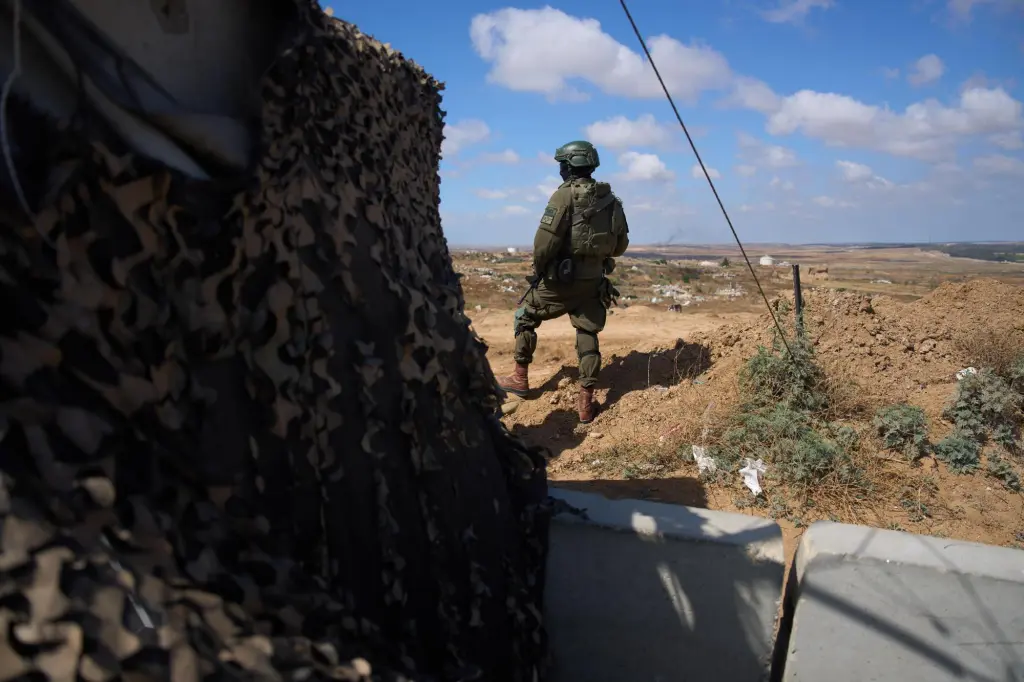
Israel calls these areas “buffer zones” and says they are needed to prevent future attacks by militant groups.
In Gaza and Lebanon, Israeli land seizures and evacuation warnings have pushed out more than 3 million people, and troops have demolished towns and neighborhoods, creating large, depopulated zones.
The “buffer zones” — equivalent to roughly 5% of Israel’s area soon after its founding — are not new borders, which require an agreement between two countries. But many fear these changes could become long-lasting. Iran has made Israel’s withdrawal from Lebanon a condition for ending its war with the U.S.
Since its founding in 1948, Israel has never had clear borders. Its boundaries have shifted through wars, annexations, ceasefires and peace agreements.
Here is a deeper look at the Israeli expansions:
Lebanon
Israel and Hezbollah have fought multiple wars since the Iran-backed Lebanese militant group was formed in 1982.
Israel occupied much of southern Lebanon between 1982–2000, saying it was necessary to protect northern Israeli communities. After Israel’s withdrawal in 2000, the U.N. drew up a boundary between the two countries.
A year of fighting between Israel and Hezbollah ended with an October 2024 ceasefire. That truce collapsed in March, days into the U.S.-Israeli war against Iran. Following missile and drone attacks by Hezbollah, Israel launched a ground invasion into Lebanon.
When fighting was halted in April, Israel said the military would occupy an area up to 6 miles deep.
Israel now holds 234 square miles in Lebanon, according to experts with the Carnegie Middle East Center.
Evacuation warnings have forced about 1.2 million Lebanese to flee, and Israel has warned civilians against returning.
Hezbollah has condemned Israel’s presence inside Lebanon, and the Lebanese government has called for Israel to withdraw.
Gaza
Israel seized the Gaza Strip from Egypt in the 1967 Mideast War. It unilaterally withdrew troops and settlers from the territory in 2005.
Hamas overran the territory two years later, and their Oct. 7, 2023, attack on Israel launched the devastating war in Gaza.
Read more Readers react: How they’d change Major League Baseball
When the Gaza ceasefire went into effect in October 2025, Israel withdrew its troops to a zone demarcated by the so-called “yellow line,” giving it control of just over half the strip.
Almost the entire population of Gaza, more than 2 million people, has been squeezed into vast, squalid tent cities dependent on international aid. The military has bulldozed or demolished wide swaths of the zone, and the area, where most of Gaza’s agricultural land lies, is inaccessible to Palestinians.
Israeli forces are meant to complete a fuller withdrawal under the U.S.-brokered ceasefire. But the U.S.-backed diplomat overseeing the truce says progress is deadlocked over the central sticking point of disarming Hamas.
With the ceasefire process stuck, Israel has since moved the line west and expanded its control to more than 60% of Gaza — 75 square miles, according to rights group Gisha. Prime Minister Benjamin Netanyahu says Israeli control of Gaza will increase to 70%.
Syria
Israel captured the Golan Heights from Syria during the 1967 Mideast war and later annexed it — a move not widely recognized by the international community.
After the 1973 Mideast war, the U.N. created a buffer zone in southern Syria next to the Israeli-controlled Golan Heights, patrolled by a U.N. force of about 1,100 troops.
In December 2024, after the surprise downfall of Syrian President Bashar Assad, Israel moved its troops into the U.N. buffer zone, saying it was concerned that Syrian rebels could attack Israel. It also wanted to disrupt Iran’s ability to smuggle weapons through Syria to Hezbollah militants in Lebanon.
The U.N. and other critics say the seizure of land violates a 1974 ceasefire agreement. Civilians in the area have not been instructed to evacuate but have faced checkpoints and tension, with occasional clashes between Israeli soldiers and villagers.
Syria’s interim president, Ahmad al-Sharaa, has called on Israel to withdraw from the area that the U.N. says is 91 square miles.
West Bank
Since capturing the West Bank in the 1967 Mideast war, Israel has built well over 100 settlements across the occupied territory.
The government has approved 47 new settlements and formalized or expanded 55 existing settlements just since 2022, according to Peace Now.
After the war in Gaza began, Israel expanded its military operations in the West Bank, displacing tens of thousands of Palestinians from their homes.
Some of the new settlements approved recently are retroactive legalizations of tiny outposts, while others are neighborhoods of existing settlements.
The precipitous growth of settlements stems from settler leaders and supporters holding key positions in Israel’s government and a U.S. administration that is largely pro-settlement.
The international community considers them illegal. The expanded settlements have put enormous restrictions on the daily lives of Palestinians, who view them as the main barrier to a lasting peace agreement because they are built on lands they seek for a future state.
Read more Where to see free Shakespeare in the park in Southern California
Jarrett reported from London.