
When I appointed myself as sports’ Commissioner of Everything a few weeks back and asked for reader responses, I had no idea I’d be deputizing so many new Assistant Commissioners of Everything.
Read more Where to see free Shakespeare in the park in Southern California
There were, in fact, 39 responses to the call for suggestions to fix sports, way too many for one column. There will be a Part II in the Sunday edition of this publication, and a Part III in Tuesday’s paper.
The premise, remember, was simple: If you were in charge, what kinds of changes would you make to one or more of our major sports, or the presentation of such?
Today’s column focuses on baseball, because so many of the respondents had so much to say about the National Pastime. We will get to the NFL, NBA, the NHL, college sports … and, yes, streaming.
And here’s the Commish’s first rule: If you use the phrase “get off my lawn,” it’s an automatic suspension.
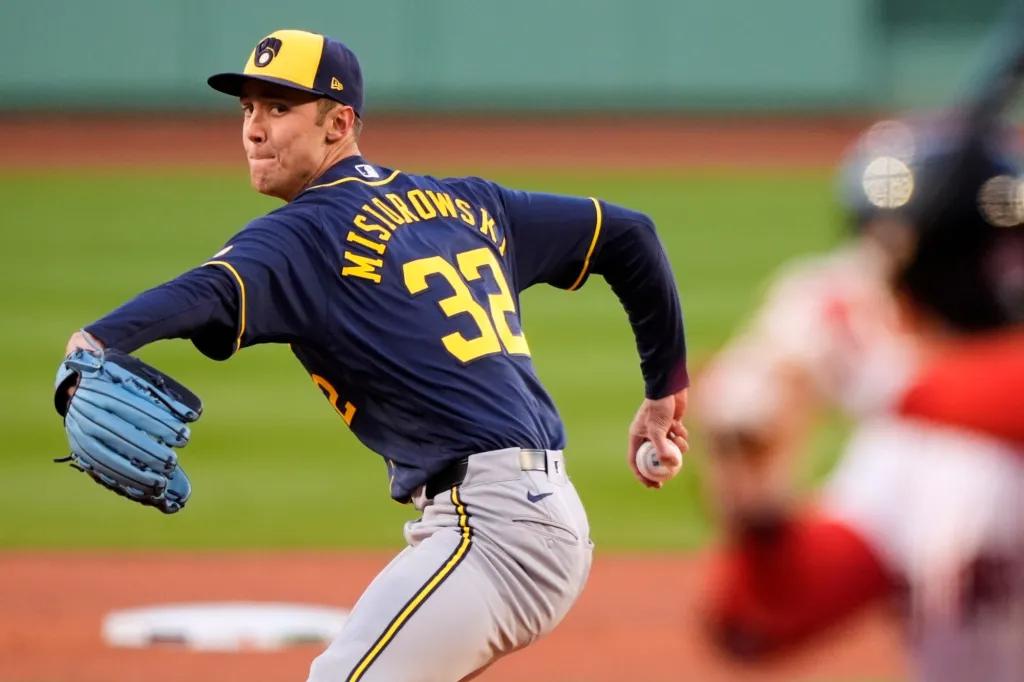
My take a few weeks ago suggesting a limit on pitch velocity to save arms brought some comment, and since then we’ve seen Milwaukee’s Jacob Misiorowski throwing 104-mph fastballs. My first reaction isn’t awe but fear that his arm, shoulder or elbow – or all three – are going to break down at some point.
Richie Locasso of Hemet suggested an 88-mph pitch limit, with anything over that called a ball, even if it was a swing and miss or fouled off. If it was a fair ball, it would be in play, and if there were too many of those, he suggested enlarging the strike zone or shortening the distance to the plate.
Scott Passafume suggested “starting young” and not allowing splitters or sliders. Likewise, Bill Urquhart said the culture of preserving pitchers’ arms “has to start at the (Little League) level … The trainers and sports/physical therapists have to become engaged in teaching and developing joint exercises/conditioning techniques that strengthen those areas of the body that are susceptible to injury, (instead) of defaulting to (or relying on) surgery later to repair.”
Drew Taylor of Huntington Beach disagrees with the speed limit concept – “you’re off your rocker,” he said, which suggests he might have conferred with people who know me – and said that the issues start in youth baseball. But his solution is to reduce or eliminate the body armor that hitters wear, thus also reducing “the confidence to stand on top of the plate which is what has caused pitchers to aim for more velocity and more spin, both of which wreak havoc on elbows.
“If a hitter goes back to fearing a fastball to the arm,” he added, “the difference between 92 mph and 100+ mph is irrelevant. They both hurt like hell.”
I’ll take his word for it.
Taylor is also a fan of the ABS challenge system, and like me he enjoys the strategy of when to challenge “especially when a batter challenges early in the game in a non-crucial situation and gets it wrong.” (Then again, Dodgers’ TV guys Stephen Nelson and Eric Karros – especially Karros – were all over White Sox rookie Sam Antonacci on Sunday for wasting a challenge on a fairly obvious strike call in the sixth inning. Antonacci hit Emmet Sheehan’s next pitch 415 feet for the first Sox runs in their 6-4 victory.)
Tony Scott of Riverside isolated an issue we saw in grotesque fashion last week, when Max Muncy and Arizona’s Ildemaro Vargas collided on a play at first base. Scott said, and I agree, that MLB should implement the double-bag at first, one for the fielder and one for the runner, to help avoid such collisions.
“Couple of years ago MLB increased the size of the bases from 15 inches to 18 inches for ‘player safety,’” he wrote, noting that the NCAA has gone to the double-bag for baseball and softball. “Now you don’t have two players going for the same base in fair territory. … Also this will encourage umpires to call players (out for) running the 45 feet in fair territory and not using the 45 foot lane.”
Back to the demands on arms: Bob Munson of Newbury Park suggests giving the offensive team an extra out to work every time there’s a pitching change, as incentive for starters to go longer.
Read more Federal regulators back Trump’s plan to speed power to energy-hungry AI data centers
“It’s the seventh inning,” he wrote. “The first two batters get hits. The manager normally brings in a relief pitcher. However, if facing a 4-out inning with two on, he will leave the pitcher in. More excitement for the fan. And starting pitchers will learn to not throw so hard and throw more strikes in order to have something left for innings 7-9.”
Mike Zmudzinski would get rid of interleague play, saying it was “a fun/interesting concept for a while, but now the All-Star Game and the World Series have lost a little bit of their mystique.” Urquhart and Marc Levine both suggested breaking the major-league season into halves, as is done in the minors, with the first half and second half winners automatically qualifying for the playoffs and the wild cards seeded into the field from there. (Levine also suggested a similar plan for the NBA).
“I offer this because I’m pretty sure I’m not the only fan who only gives cursory attention to the first half of the season and only really starts following their team until after the (All-Star) break,” Urquhart wrote.
Fans with long memories might recall that the 1981 season used that format, starting over after the 50-day work stoppage in midsummer. The Dodgers were declared first-half winners of the NL West when the labor issues were settled (and eventually won the World Series). Houston won the second half and qualified for the first Division Series. Cincinnati had the best record in the division overall and stayed home. I wonder if that grudge has ever gone away.
Bill McQuade of Garden Grove would opt for radical realignment, which would include the Dodgers and Angels in the same division. I’m not on board with that idea, because I like the idea of this being both N.L. and A.L. territory. Jeff Perkins of Huntington Beach would reduce the number of postseason teams, move Houston back to the National League and re-align the leagues at 16 NL teams and 14 in the AL, with East and West divisions only in each league.
Clay Halvorsen would implement three changes: Seven-inning games instead of nine innings, eight players in the field instead of nine, with the defensive team choosing which position to leave open (which sounds a lot like our neighborhood wiffle-ball games of yore), and a rule that the pitcher that starts an inning must finish it, no exceptions. “Overall the games would be more exciting and athletic,” he wrote.
Ralph Wetterhahn is less opinionated about the game itself and more concerned with the way it’s shown on television. The view from the center-field camera? “BORING!” he writes. He’d prefer more of the view from the camera behind the catcher and umpire.
Cindy Curti and Mark Diamond both advocate for the elimination of the runner on second base to start an extra inning. Diamond also suggested outlawing the ability of a runner to tag up and advance on a foul ball.
David Jones advocated that any pitch above 85 mph is an automatic ball (see above), and also wrote that anyone caught spitting on camera “is fined $10K.” Do sunflower seeds count?
George Conlisk suggests banning radar guns for all youth, high school and college leagues; gradually moving the pitching rubber back a foot to 61 feet, 6 inches, and tweaking the anti-shift rule so a middle infielder has to be at least five feet from second base when the pitch is thrown.
Les Birken of Northridge is in favor of changing the disengagement rule from two pickoff attempts to three or four or getting rid of it altogether. “The present rule gives too much advantage to the runner,” he wrote. He’d also get rid of a plate umpire having to walk all the way out to the mound to break up a meeting. Use the timer instead, he says.
And while Randy Goeken of Newport Beach noted that “baseball is now the least screwed up of the three major sports” – your guess as to which one he left out of “major” status – he suggested allowing a runner to take two bases on a four-pitch walk. Also, he’d double or even triple ABS challenges in the playoffs since “the umps at home are still often horrible,” shorten the season to 120 games, eliminate sliding gloves and head-first slides, make check-swing calls reversible and enlist “Little League coaches to teach MLB outfielders proper footwork on throwing to the bases and home. These throws are regularly 10 yards from the target.”
Ouch. But if you think the ideas for baseball change are harsh, be be forewarned: The NBA and NFL, among others, are next.
Read more Average 30-year U.S. mortgage rate falls to 6.47%, tracking lower bond yields as Iran war winds down