
In the nearly seven weeks since San Diego Humane Society descended on a Julian sanctuary in a massive rescue operation, many of the 728 animals — cats, dogs, farm animals — seized have been moved out, whether through adoption, relocation to other agencies or return to prior owners, the organization said Wednesday.
Read more Watch: Obama Presidential Center grand opening ceremony
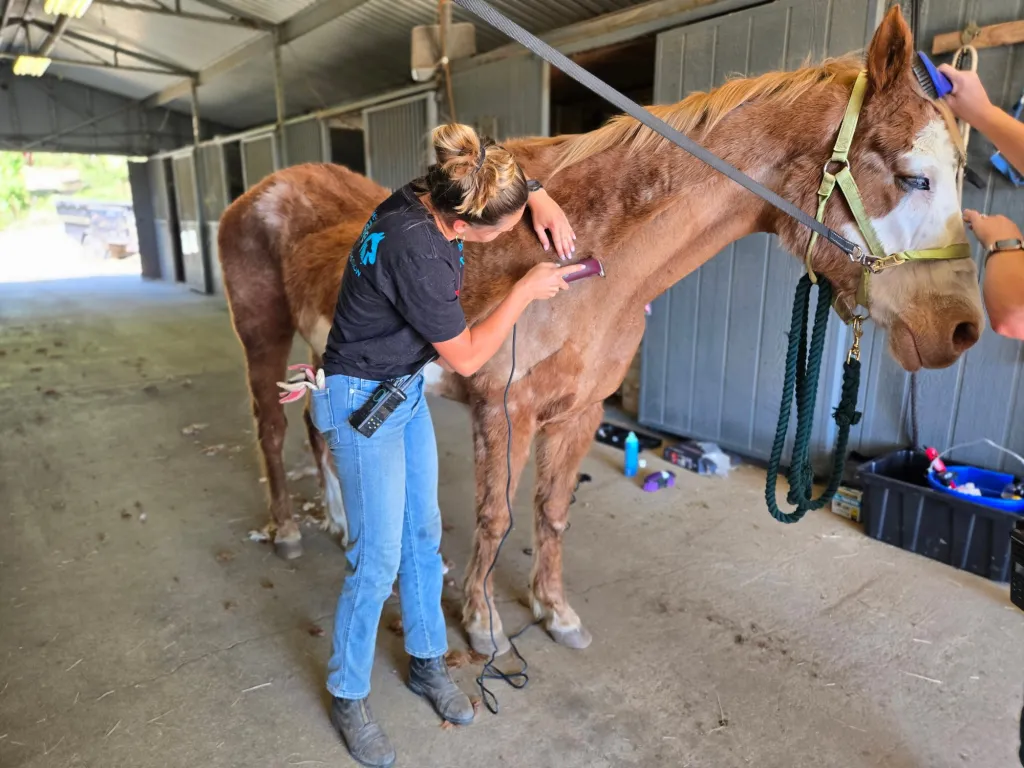
Still, some 107 horses remain at the 41-acre Villa Chardonnay site, receiving daily care from Humane Society staffers and volunteers, the organization said. It is an expensive operation, and ongoing veterinary care includes dental work, hoof care, diagnostic testing and treatment for chronic conditions. About half of the horses have received such care, with more work planned.
“Our team has made incredible progress, but the work isn’t finished,” San Diego Humane Society President and CEO Gary Weitzman said in a statement.
“Many of these horses are seniors with significant medical needs and they deserve the time, attention and resources necessary to help them recover and move on to brighter futures,” he said.
Villa Chardonnay Horses with Wings was a nonprofit sanctuary for hundreds of elderly, sick or disabled animals. On May 1, San Diego Humane law enforcement officers served a court warrant at the property to seize the animals — the largest rescue in the local Humane Society’s history. Authorities alleged there was evidence of severe neglect, including emaciation, untreated injuries and a lack of basic care. Years of turmoil presaged the takeover.
The sanctuary’s founder, Monika Kerber Perez, did not immediately respond to a request for comment Wednesday but has previously denied that the animals were mistreated. “We rescue the animals that nobody wants,” Kerber Perez said the day the takeover started. “We rescue from rescues.”
Villa Chardonnay filed for bankruptcy last year. An attorney representing the nonprofit in bankruptcy proceedings did not immediately respond to a request for comment Wednesday.
The trustee appointed by the bankruptcy court is seeking court approval to sell the property — worth between $2.5 million and $3.6 million — and use the proceeds to pay creditors, some in part and some in full until the money runs out, according to a carve-out plan laid out in court documents filed last week.
The rescue is a big effort for the Humane Society, and some of its staffers drive two hours a day to reach the site. Since the takeover on May 1, the local Humane Society has raised — and spent — more than $550,000 to support its emergency response efforts, primarily for Julian.
Read more Map: Where fireworks are legal, illegal in OC, LA, Riverside and San Bernardino counties
The fundraising has slowed; the costs have not. The organization says it has spent $50,000 a week on the Julian effort in recent weeks to cover staffing, food and care for the animals and more. It takes 400 pounds of pellets a day to feed the horses. The most underweight of them eat three times a day, the others twice a day. And then every other day, caretakers distribute 60 bales of hay (at 100 pounds each) to the horses.
Photos the Humane Society provided Wednesday show several people working at the site, feeding, grooming and caring for the remaining horses — so many horses that numbers were initially drawn on their sides for identification purposes. Many have since been microchipped and given names.
Animals at the site include Oscar, a horse with a hormone disorder called Cushing’s disease and a dip along his spine called swayback, the rescue organization said. When the rescue started, 20 horses were too skittish to let rescuers approach, the organization said. Staffers have slowly gained the trust of 15 of those horses and provided treatment, and are still working to get the other five to do more than take treats and run off.
There is also round-the-clock security while the investigation continues.
Once the horses are ready, the general plan is to relocate them with adopters or other rescuers. One horse moved from the site has tested positive for equine Strangles, a contagious bacterial disease that Humane Society officials said can emerge when horses experience stress. Quarantine is underway, and 11 horses have tested negative.
Some 446 cats were rescued, plus two kittens born later. The Humane Society said Wednesday that 305 have since been adopted, including 269 through its “working cat program,” which places what it says are “under-socialized” cats in homes where they can live outdoors. Another 84 cats have been transferred to other agencies, including 65 flown to Texas last month. Eight have died, and the rest remain with the Humane Society.
Rescuers also took in 30 dogs from Villa Chardonnay, with 14 remaining in the Humane Society’s care. Among those transferred out was Flora, a 10-year-old brindle shepherd who the organization said came in emaciated and missing her left front leg. Flora has since had dental surgery and a mass removed.
And all the farm animals — several types, including goats, alpacas, pigs and others — that rescuers removed from the property have been relocated to Humane Farming Association’s Suwanna Ranch in Elk Creek, about 100 miles south of Redding.
Read more Drummond: Yorba Linda adjusts fees to cover costs of delivering services