
By Enda Curran, Maria Eloisa Capurro and Catarina Saraiva | Bloomberg
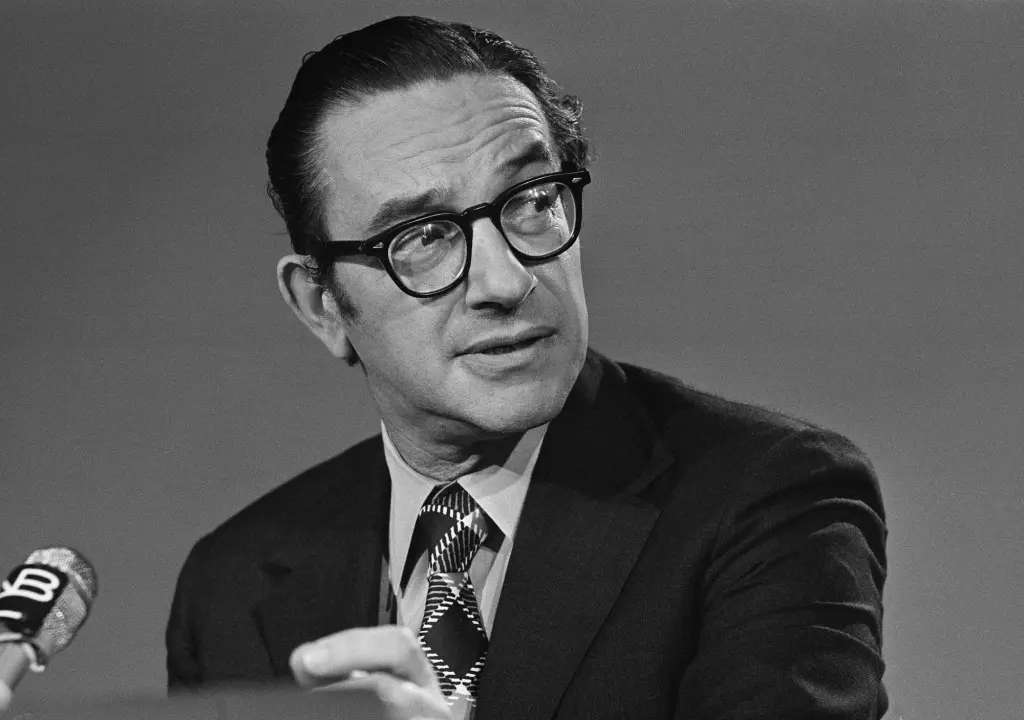
Tributes to former Federal Reserve Chairman Alan Greenspan poured in after the news of his death early Monday, many from former colleagues and market players who had a front-row seat during his 18-year tenure atop the US central bank.
Read more World Cup: Messi scores record-breaking goals as Argentina tops Austria
Several described him as a driving force for change at the Fed and a guiding light for investors — in his own inscrutable way — even as his ultimate legacy is clouded by the 2008-09 global financial crisis.
Policymakers and staffers who worked with Greenspan noted how his tenure spanned a period of significant economic change, from an era of high inflation to an economy powered by technology. Greenspan led the Fed from 1987 until 2006 and died on Monday at his home in Washington.
His former colleagues credit him for ensuring the central bank remained laser-focused on inflation, spotting the impact of a productivity boom in the 1990s and shaking up how the Fed communicates.
“He was a great central banker,” former Chairman Ben Bernanke said in emailed remarks. “We are still learning from him, even if he is no longer with us.”
Greenspan first made his mark by focusing on inflation, doubling down on the aggressive policy stance taken by his predecessor Paul Volcker.
“When Paul Volcker broke the back of double-digit inflation in the early 1980s, he left Alan Greenspan with a 4% inflation rate,” said Charles Evans, president of the Chicago Fed from 2007 to 2023. “Under Greenspan’s leadership, inflation was both deliberately and opportunistically reduced to 2%, and lower by the early 2000s.”
Others credited Greenspan for transforming the way the Fed spoke to the public. In February 1994, the Fed’s rate-setting committee for the first time issued a statement following a policy meeting with the basic details of its decision.
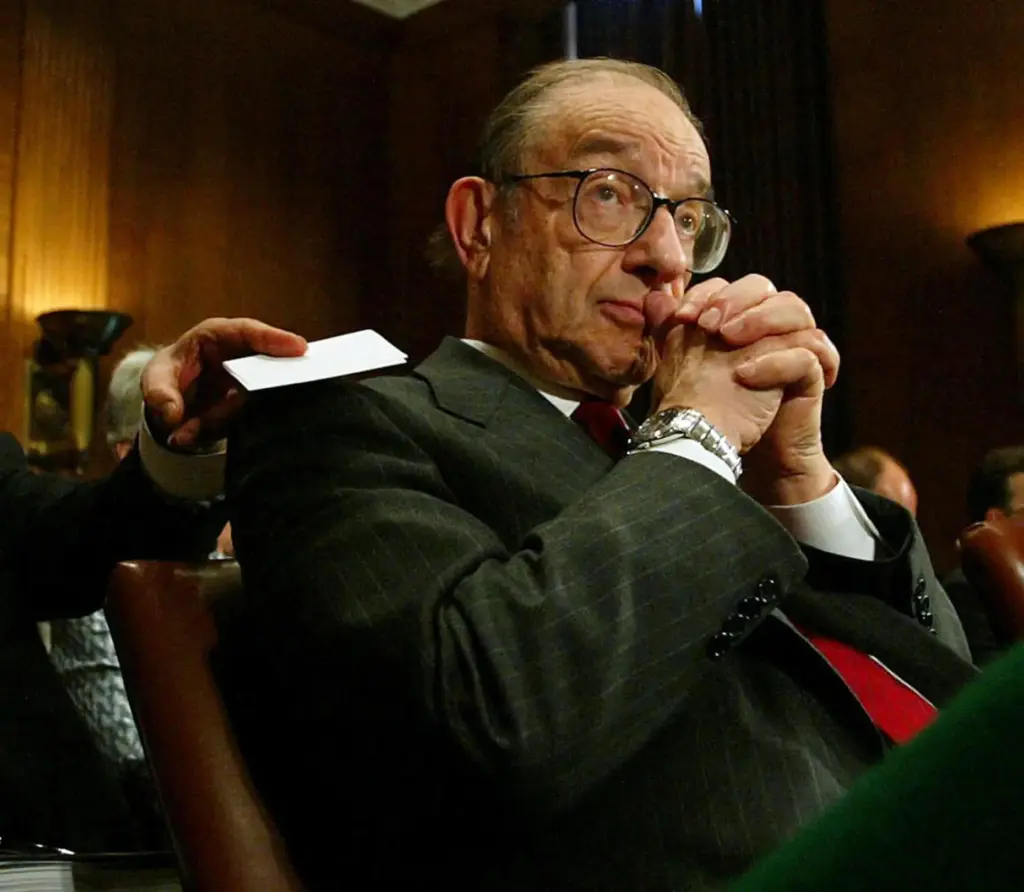 FILE — Alan Greenspan, chairman of the Federal Reserve Board of Governors, awaits the start of a Congressional hearing in Washington on April 20, 2004. Greenspan, who in nearly two decades as chair of the Federal Reserve nurtured a long run of prosperity, navigated crises and was a powerful and polarizing force in shaping market-friendly policies, died on Monday, June 22, 2026. He was 100. (Doug Mills/The New York Times)
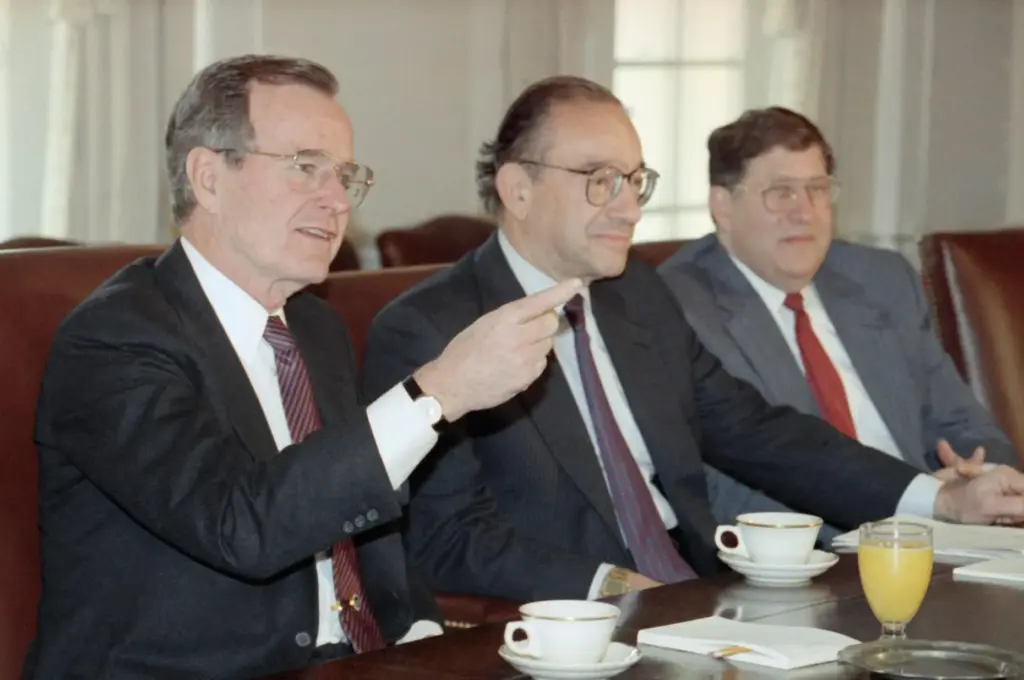 FILE – President George Bush gestures while meeting with economic advisers in the Cabinet Room of the White House, Jan. 15, 1991. Federal Reserve Board Chairman Alan Greenspan, center, and White House Chief of Staff John Sununu look on. (AP Photo/Doug Mills, file)
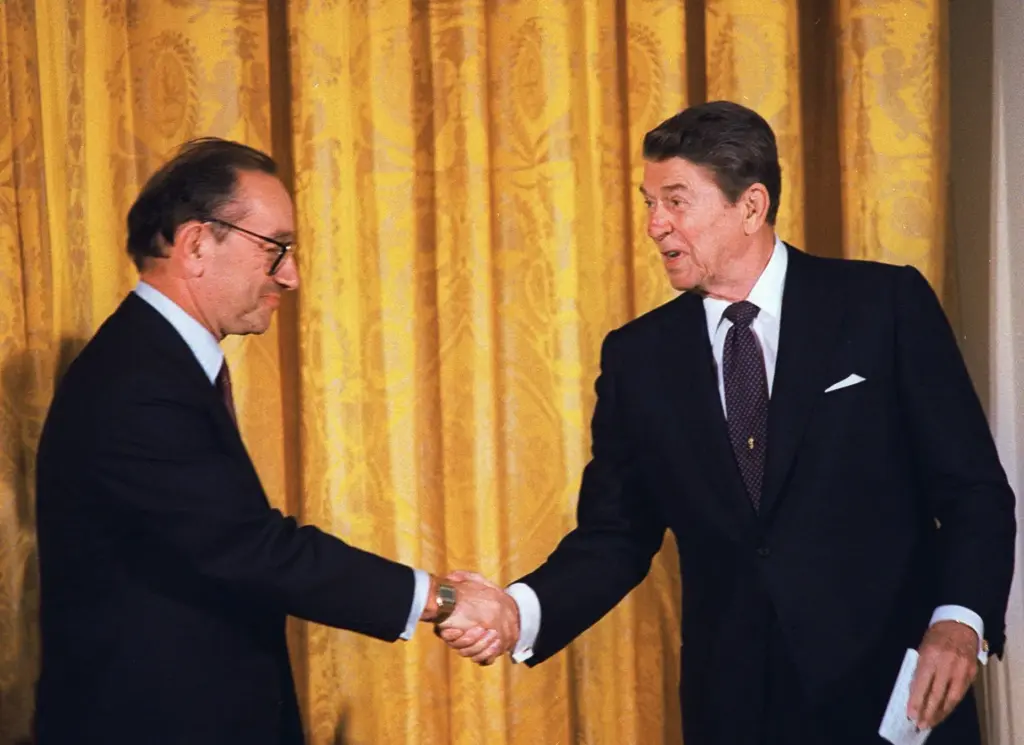 FILE – President Reagan congratulates Alan Greenspan after he was sworn in as new chairman of the Federal Reserve Board during a ceremony at the White House in this Aug. 11, 1987. (AP Photo/Barry Thumma, file)
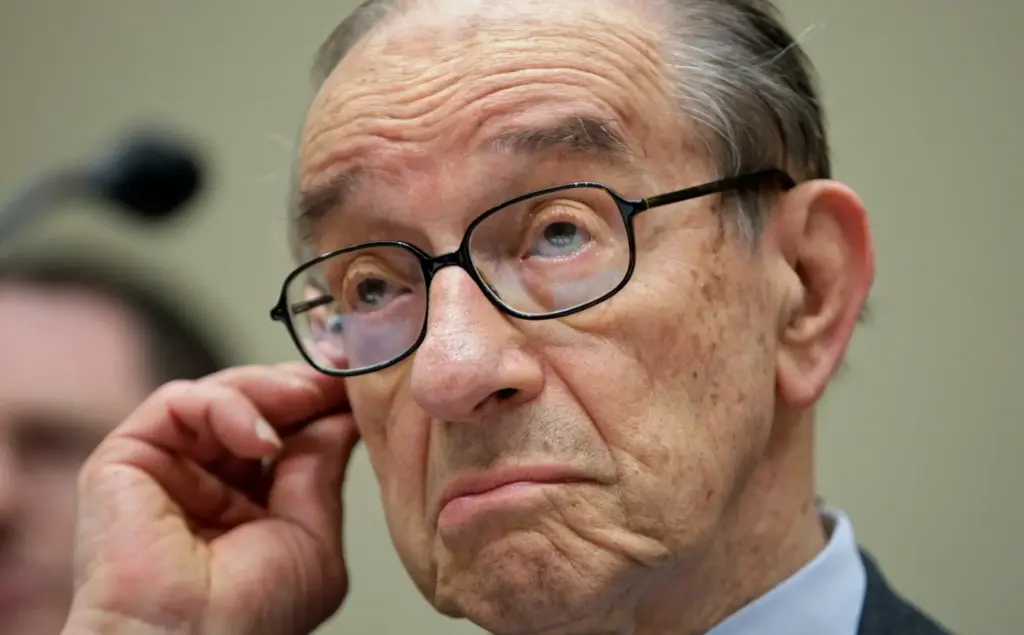 FILE – Former Federal Reserve Chairman Alan Greenspan testifies on Capitol Hill in Washington, Wednesday, April 7, 2010, before the Financial Crisis Inquiry Commission (FCIC) hearing examining the causes of the collapse of major financial institutions caused by subprime lending. (AP Photo/J. Scott Applewhite, file)
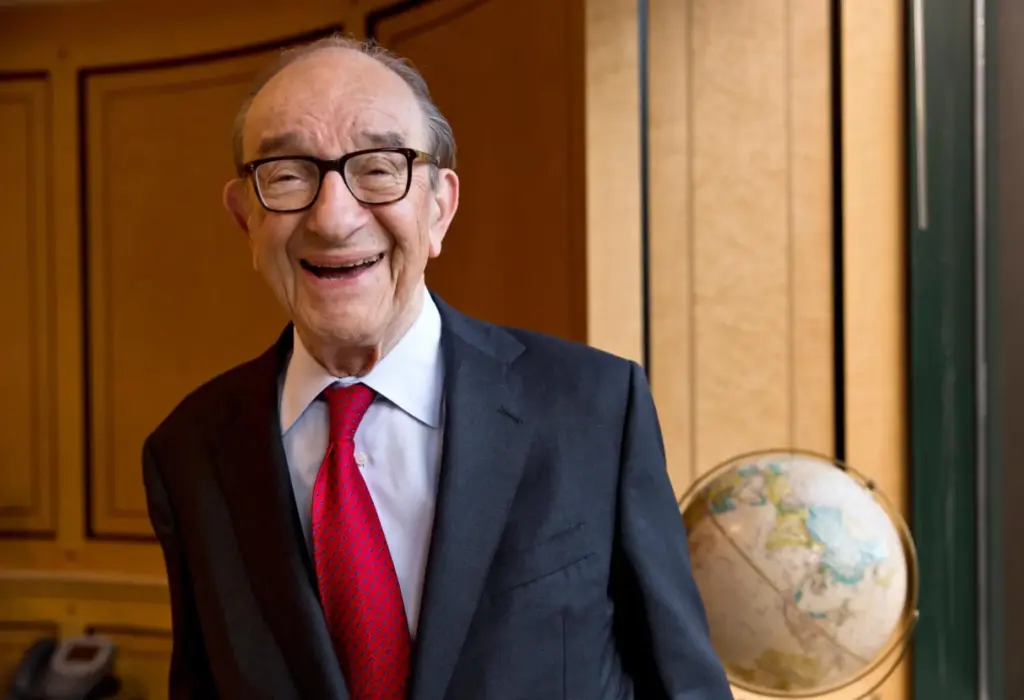 FILE – Economist Alan Greenspan, chairman of the Federal Reserve from 1987 to 2006, is seen in his office in Washington, Friday, Oct. 18, 2013. (AP Photo/J. Scott Applewhite, file)
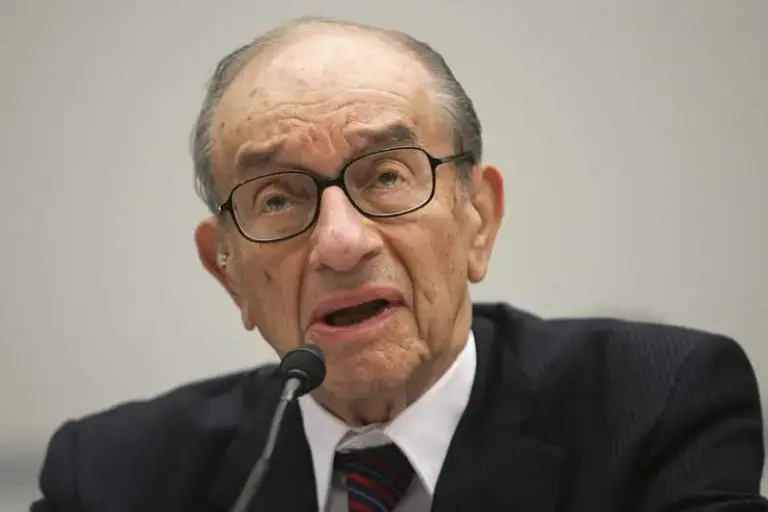 Former Federal Reserve Chairman Alan Greenspan testifies on Capitol Hill in Washington, Thursday, Oct. 23, 2008. (AP file photo: Lawrence Jackson
The Greenspan put
Among professional investors, Greenspan is fondly remembered for the prosperous years for financial markets under his stewardship. The S&P 500 Index of US stocks nearly quadrupled during those years, delivering an annual return above 10%.
“People would joke on Wall Street in the 1990s and early 2000s that if he ever passed away while in charge of the Fed, they’d have to stuff a dummy, put it in a chair and claim he was still chairman to keep financial markets confident,” said Jeremy Siegel, emeritus finance professor at University of Pennsylvania.
Beginning with the October 1987 stocks crash, Greenspan showed he was willing to step in to inject liquidity and defend markets, leading to what investors called “the Greenspan put.”
“When you have a financial crisis, as we did in 1987 in the stock market, his reaction was appropriate,” said Ed Yardeni of Yardeni Research. “But he did create a legacy of the Fed helping Wall Street whenever it got into trouble.”
Irrational exuberance
Greenspan was also willing occasionally to restrain financial markets, leading to one of his signature moments.
Tucked into a speech one evening in December 1996, the Fed chairman asked: “How do we know when irrational exuberance has unduly escalated asset values?”
A Fed staffer who handed the text to members of the media told journalists it didn’t include anything particularly noteworthy, and some reporters skipped the key line in their initial reports. But the stories that did include it caused an immediate ripple in Asian markets.
“He took a tremendous amount of criticism from people in the market who thought he overstepped his bounds,” Charles Lieberman, co-founder and chief investment officer at Advisors Capital Management, said Monday on Bloomberg Surveillance.
Read more Patrols and nanobubbles continue at the Reflecting Pool as Trump looks for a renovation do-over
Today, the phrase resurfaces as a kind of tribute to Greenspan every time a market begins to look frothy.
“‘How do we know when irrational exuberance has unduly escalated asset values?’ Turns out we didn’t, and his query serves as good advice in today’s markets,” said Bill Gross, co-founder and former chief investment officer of Pacific Investment Management Co.
Productivity call
Greenspan reached another crucial stage in his tenure during the 1990s as companies rapidly adopted new technology at the outset of the Internet age. As the economy picked up, he argued a resulting productivity boom would prevent an inflation spike, and refrained from raising interest rates.
“It’s rather remarkable how Greenspan came to the recognition that an easier policy was possible,” said David Wilcox of Bloomberg Economics, who worked as a staff economist under Greenspan. “Realizing that the productivity data at the time weren’t credible, he dug in, working with one of the senior staffers to build the empirical evidence that productivity growth was much stronger than the official statistics showed.”
Greenspan often took cues about how the economy was performing from unexpected places, according to famed investor Stanley Druckenmiller, who met the former central banker while a member of the Treasury Borrowing Advisory Committee.
“The great thing about Greenspan was he loved the models and he could go toe-to-toe with anybody on the details in terms of rigorous thinking,” Druckenmiller said. “But he was also interested in talking to businessmen on real time information and what was going on with orders in the economy that was outside the model.”
The shadow of crisis
Yet, the eruption of the credit crunch in 2007 that later morphed into a near global financial collapse in 2008 has marred Greenspan’s legacy.
While Greenspan was lauded as he left office in 2006, critics say he missed the build-up of a housing bubble that ultimately caused the worst economic downturn since the Great Depression.
Among the criticism is Greenspan’s view that the markets should run their course and the Fed could quickly clean up after.
“He made that trade-off to say, ‘Let’s have many, many years of growth and take perhaps a little bit more of a risk of some of that downside,’” Randall Kroszner, an economics professor at the University of Chicago and a Fed Governor from 2006 to 2009,” told Bloomberg TV. “We did try to clean some of that up, but it probably had a bigger, bigger cost than I think he would have anticipated.”
While criticism is merited, Greenspan was only one piece of a much bigger regulatory and policy jigsaw, said Don Kohn, a former vice chair at the central bank.
“It’s true that he didn’t raise a flag and say ‘something bad is happening here, we need to do something,’ but at the same time, his authority to do something, even if he had raised that flag, would have been quite limited,” Kohn said.
Others remembered him for his mastery of economic data and his ability, despite his obsession with the minutiae, to see a larger economic picture.
“I remember him at board briefings — he would be toe-to-toe with all of our experts on the real side of the economy on the most minute, detailed things,” recalled James Clouse, an economist at the Andersen Institute who worked for at the Fed for more than three decades. “He really knew the data at an extraordinary level and could accurately discuss all those details with the board staff, and at the same time he had this incredibly broad perspective.”
Isabelle Lee, Jessica Menton, Denitsa Tsekova, Maya Prakash, Vildana Hajric and Amanda Gordon at Bloomberg contributed to this report.
Read more Quarantine comes to an end for the last of the hantavirus ship passengers in Nebraska