
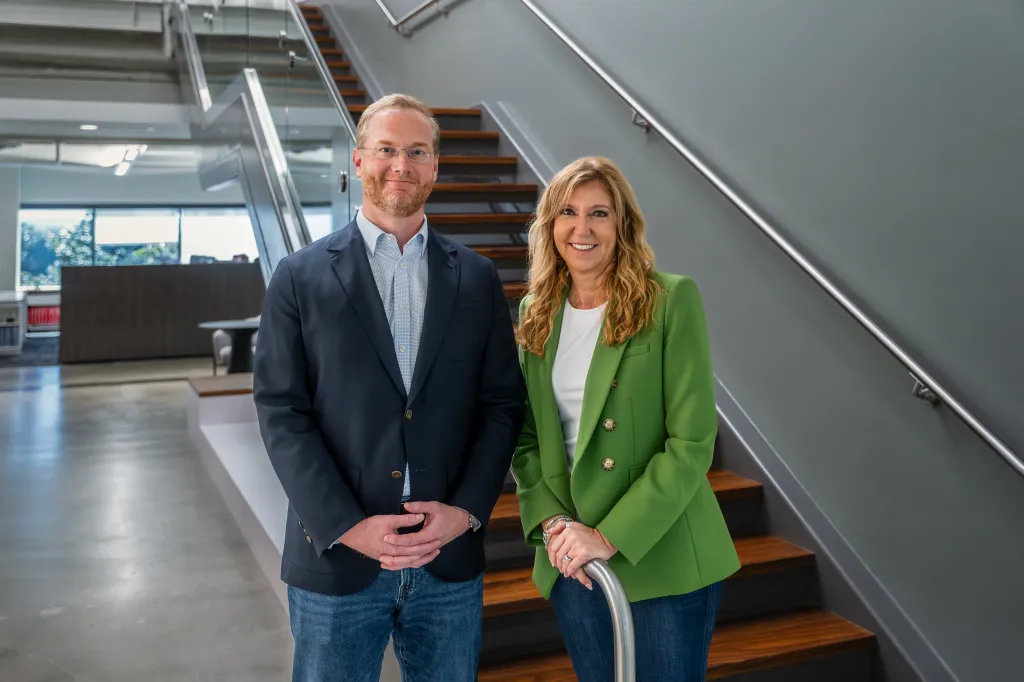
Architecture’s swift change — highlighted by technological innovation — was a key reason why Tricia Esser stepped down as chief executive of the KTGY design powerhouse earlier this year.
Read more By September, nearly a third of Americans will live in states with legal aid in dying
But retirement is no surrender. Esser knows it sounds a bit crazy, but she believes that all these new tools — including widely discussed and feared artificial intelligence — will only make architects better, not slash their need or value.
Thirty-five years ago, Essser joined a small design startup in Irvine and in 2006 became its CEO. During her two decades as the big boss, the company grew a nationwide footprint with 400-plus employees, as it added design studios in Los Angeles, Oakland, Dallas, Denver and Washington, D.C.
Today, she’s quite open about her retirement logic, saying she felt it was time for someone else to lead. Esser remains on KTGY’s board of directors and will serve as an adviser to the new CEO, William Bate.
“You have to keep learning in this role,” she said. “I used to have a passion for ‘teach me something new’ that has waned. So it really became a combination of what’s best for me and what’s best for KTGY. At the size that we are now, I really feel like we need somebody who understands the business at that size and then can grow it even more.”
All these evolving technologies are clearly part of that required learning curve. The rapid growth of artificial intelligence is an unsettling challenge for CEOs in nearly every industry.
Although change will be stressful, Esser believes AI will benefit the field of architecture.
“It’s a fear, but I don’t feel like it’s going to be anything but positive for our business,” she says. “Honestly. I know that sounds crazy, but our business is relationship-based, so you’ve got to really understand what the client wants and needs. Solve their problems, that’s what our designers do.”
Yes, Esser knows technology will change how work gets done. It has for years. But she says, “it’s called artificial intelligence for a reason, because it’s not real intelligence. We’re just coaching architects not to be fearful of this. Let’s embrace it and figure out how it makes us better at what we do. I think it’s going to take a long time, if ever, before it’s enough on its own to replace an architect.”
During our interview with Esser, which has been edited for length and clarity, she looked back over her career to note what’s changed and what the industry’s next generation could learn from it.
Read more Supreme Court kills suit claiming Cisco’s technology helped China persecute Falun Gong members
What is the biggest change you’ve seen in your career?
“The level of design when it comes to affordable housing. Now, there are still political issues, but 20 years ago, objections were often due to the design being so poor. I’m super proud of where it is now. You can drive down the street and not know whether something’s an affordable project or a market-rate project. I wish some of the politics around affordable housing would have changed as much as the ability to put a great project out there.”
What’s something that makes you proud?
“I saw a stat that showed how much the buildable square footage of buildings has grown in the last 10 to 15 years, and how energy use has stayed the same. That’s pretty fantastic. I don’t think people realize what architects and developers are doing to change the materials and make the buildings more efficient. And we need to talk about it more, because I think we haven’t done enough.”
- Also: SoCal’s $2 trillion economy is bigger than Florida’s
Big managerial lesson learned?
“There are so many things I wish I knew when I started. I think my biggest one is a mistake I made early on: saying it’s not personal, it’s business. And the truth is, everything is personal. When we look at employees, clients, everything, you’re looking at the whole person. You’re not just looking at who they are in business, but you’re looking at the whole human. It’s about their wellness, and what’s going on at home, and how do we put it all together and make it fit? And are they in the right seat that’s making their talent move forward the fastest? And 20 years ago, I think we were just thinking, come in, do your job, go home, we’re good. It’s just a different place. It’s so much better, a huge improvement. But it takes some learning along the way to be a leader. I made big mistakes saying this is just business. It’s not personal. And guess what? That was wrong.”
Big architecture lesson?
“I think what gives me some safety with AI is that we have seen technological advances that make it more efficient for the architect. It never diminished the importance of a good architect to a great building. Early in my career, the drawings were done, and they’re sent to the client. We’re done. It’s such a different involvement today to get that building up out of the ground. Architects are so passionate. They want everything to be right. We finally get to get involved all the way – and the clients want us there. That’s a positive for sure.”
- Also: Can LA-born Thrifty ice cream become a national brand?
If you had a magic wand and could change one thing, it would be …
“Get government out of the way. I’m going to go back again to affordable housing. If I had a magic wand, cities won’t change what they’re doing every two or three years because they switch gears on their plans or what they’ll allow or what the constraints are. It takes a long time to get a project off the ground, and we just have too many cities where we can’t get affordable housing consistently because the developers say, ‘Why would I go into that city? I don’t know what the rules are going to be.’ Very few people don’t want better opportunities for people on the housing side, but I think everybody wants to get there differently. That just complicates the process.”
Do you have a favorite project?
“I can’t because they’re like my children. It’s like picking a favorite child. It’s just wrong. It would be really, really hard for me, because on any given day, I’d probably pick a different one. I love the projects where multiple parts of the firm had to come together to get them done. When I came into the role, we were a little more siloed. We didn’t have as much collaboration as we do now. And I think it makes our work even that much better to have people work across the halls on a project. So that’s cool.”
- Follow local housing with our free “Home Stretch” email newsletter. SIGN UP HERE!
Is it me, or is every building now painted in the grayscale?
”Gray is very trendy right now, right? A few years back, it was orange. Bright orange everywhere. In my opinion, it’s usually not in the initial development of a project; it’s in renovations. They try to update it with whatever is trendy. We don’t see it too much in our business because most of what we do is ground-up. What I see more trending is a nice blend of materials. Everything’s not coated in stucco anymore. Better materials lend themselves to a nicer appeal than just something painted. That’s more of what we’re doing, varying degrees of finishes on the exterior.”
Advice for new architects?
“It’s still about who you know and building those relationships. In fact, it’s probably more important than ever. So get out. Get involved. Get connected within the industry. Architects can be inherently introverted, and I think sometimes they let too many years of their careers go by without getting out, seeing what’s happening, and meeting other people in the industry, whether it’s clients or peers. You need to lift your head up at times and say, “What’s happening in our industry and how can I make a difference?” Who should I be meeting and connecting with?”
Jonathan Lansner is the business columnist for the Southern California News Group. He can be reached at [email protected]
Read more Supreme Court rules Rastafari man can’t sue Louisiana prison officials who cut his dreadlocks
- Try Jonathan Lansner’s Substack collection of economic trends. CLICK HERE!