
Laguna Woods resident John Peters grew up in Intercourse, Pennsylvania, an Amish village in southeastern Lancaster County. He wasn’t Amish, but rather “English,” as the non-Amish residents were called.
Read more 10,000 pounds of illegal fireworks seized in Pasadena connected to Nevada street gang, officials say
But he came to embrace the Amish people, their culture and their values.
The Amish are an “Old World order,” Peters says. They’re a traditional group known for simple living, plain attire and limited use of modern conveniences such as cars, electricity and technology. An agricultural society, the Amish focus on family, hard work and traditions.
What Peters liked most about the Amish was their sense of community.
“People took care of each other,” he said. “They looked after each other, the kids and the businesses.”
Peters tells the story of the Amish in Intercourse in a film he created over eight months in 2004 for the village’s 250th birthday. The historical documentary is a “remembrance of when life was simpler and slower,” he said.
He will screen the film in a Laguna Woods Video Club event dubbed “Remember When?” on Wednesday, June 24, in Clubhouse 6.
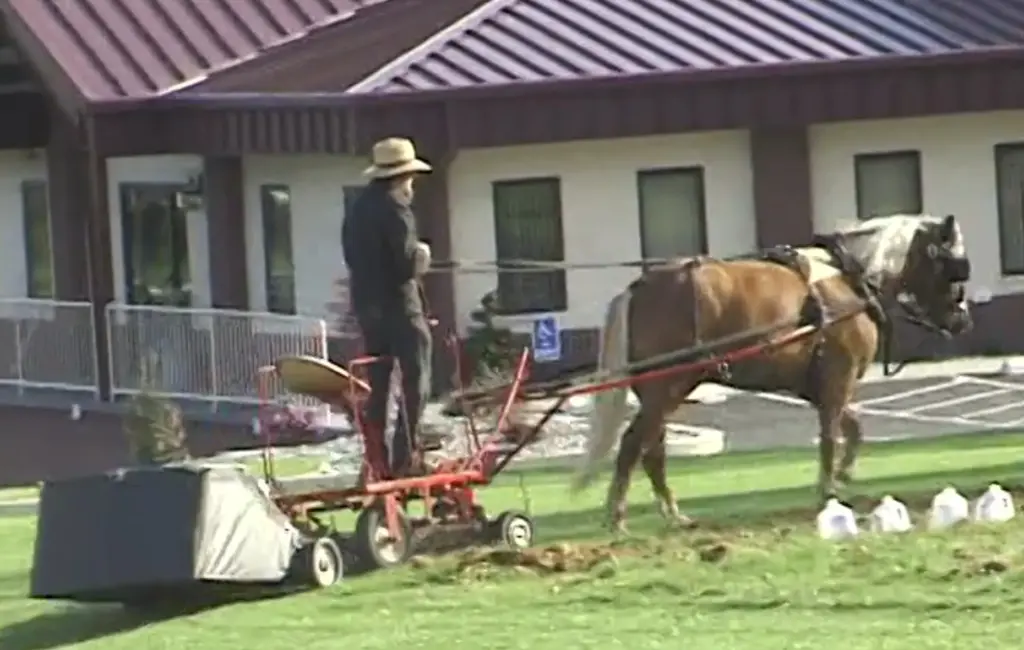 An Amish man rides a horse-drawn lawn mower in the village of Intercourse, Pennsylvania. Laguna Woods resident John Peters grew up in the village. (Courtesy of John Peters)
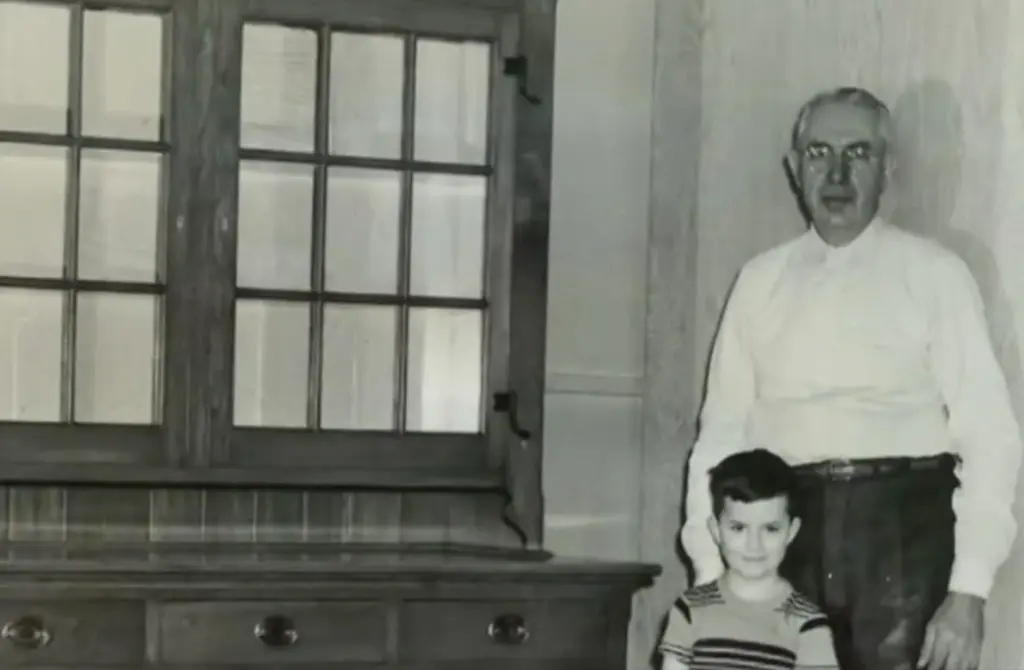 Laguna Woods resident John Peters is seen at age 5 with his adoptive father next to a hutch the older man built in the Amish village of Intercourse, Pennsylvania. (Courtesy of John Peters)
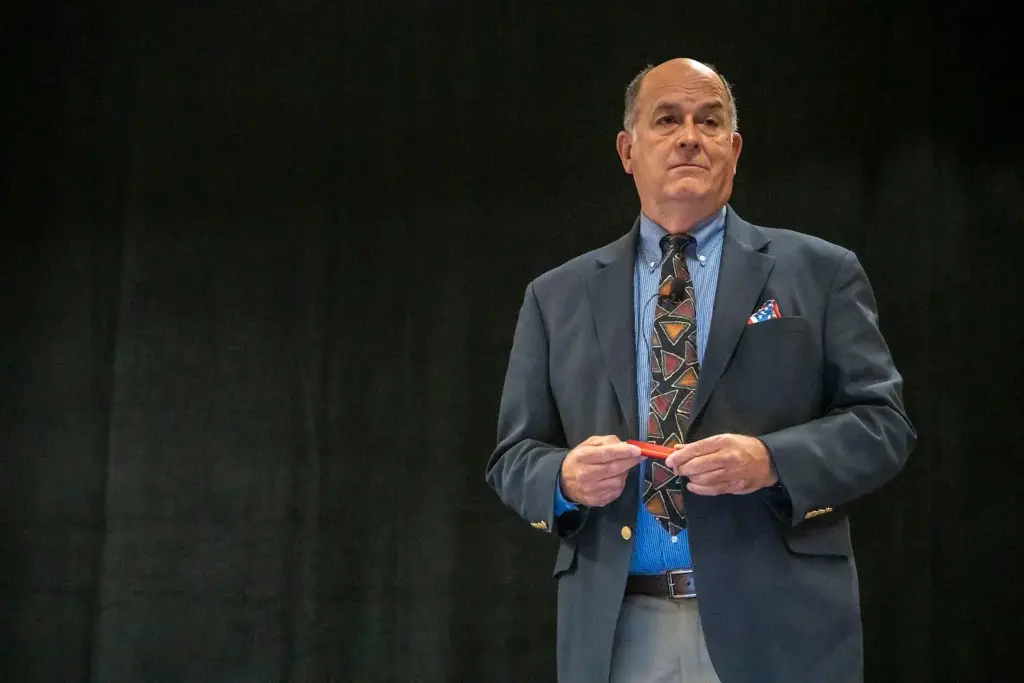 Laguna Woods resident John Peters lived in the Amish village of Intercourse, Pennsylvania, from birth through high school. He will screen a documentary on the village and its residents on Wednesday, June 24, 2026, in Clubhouse 6. (Courtesy of John Peters)
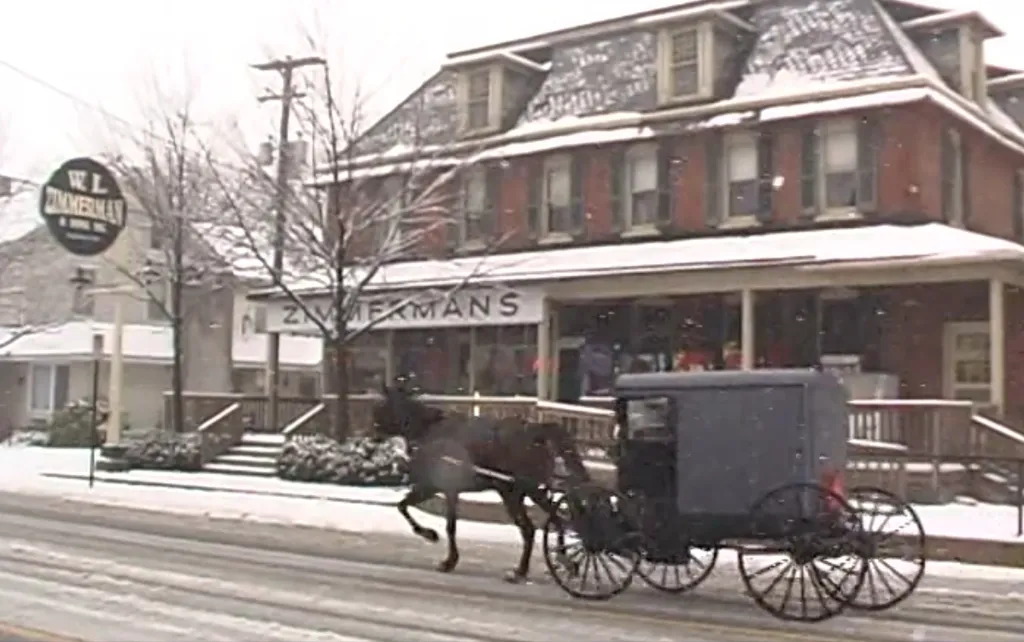
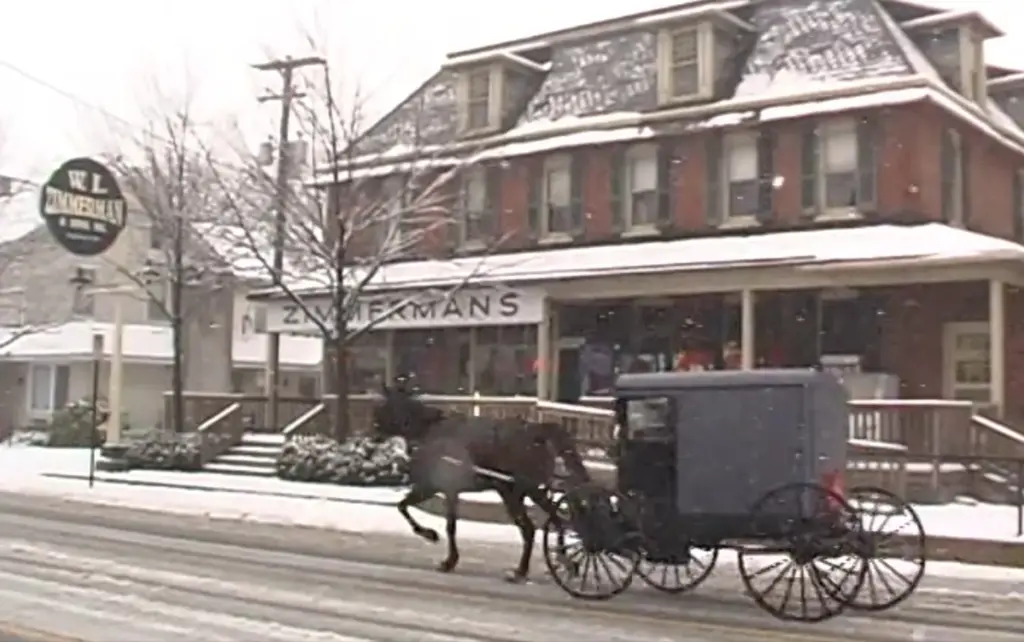 A horse-drawn buggy drives past a grocery store in the Amish village of Intercourse, Pennsylvania. Laguna Woods resident John Peters lived in the village through high school. (Courtesy of John Peters)
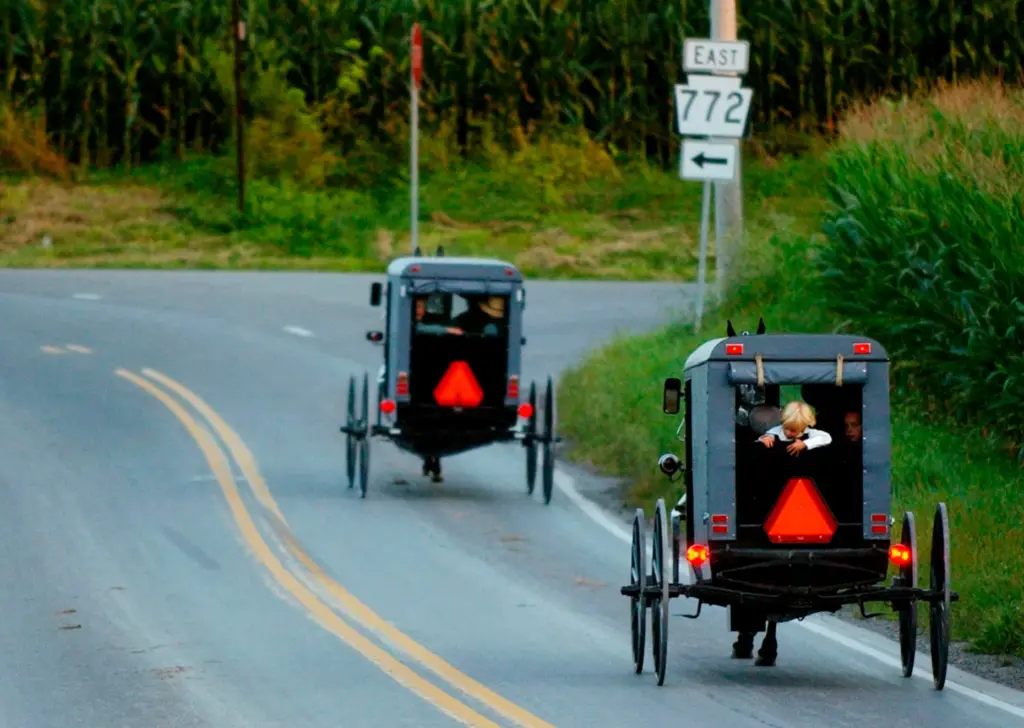 Amish horse-drawn buggies trot along the roads of Intercourse, Pennsylvania. Laguna Woods Video Club member John G. Peters Jr. was raised in Intercourse and will share a video of life in the village on Wednesday, June 24, 2026. (AP Photo/Carolyn Kaster)
After the screening, audience members will be invited to reflect on their own childhood, what it was like growing up and how the world has changed since then.
“I would like for the audience to reminisce about an earlier time, when things were slower,” Peters said. “I also want people to reflect on the fact that we are a village and we need to enhance the sense of community in this village.”
He also would like viewers to come away with a new understanding and appreciation of the Amish and their lifestyle, he said.
“These are real people; they’re not actors,” he said. “This is still the way they live. Their lifestyle is still around.”
Peters came to live in Intercourse in the 1950s and ‘60s when he was adopted at birth by a great uncle in the village after his impoverished mother couldn’t take care of him. His father died six months before he was born.
Through high school, Peters lived among Amish families in the neighborhood, he became friends with Amish children and attended one-room schoolhouses with them, he rode in horse-drawn buggies, and he worked the farmland during vacations. He even helped his adoptive father, a cabinetmaker, build the furniture that the Amish had in their homes.
The village had a population of 800 and included Amish, “English” and Mennonite residents. Mennonites are close in their origins to the Amish but have largely adapted to the modern world.
The Mennonites and the English had electricity in their homes, but the Amish did not.
“They used coal oil lanterns,” Peters said. “They went to bed when the sun went down and got up when the sun came up.”
Farm vehicles were either horse driven or they ran on gas engines. Household appliances such as refrigerators and washers ran on attached lawn mower engines.
“The Amish believed that electrical wires would bring in outside influences, especially TV and radio,” Peters said. His own family had an old black-and-white TV with three stations, and they listened to the radio.
Peters describes his life as a youngster in the village as boring.
“There weren’t a lot of children to play with, and not a lot of amusement – no bowling alley, no movie theater,” he said. “It stayed pretty traditional in the Amish and Mennonite ways.”
He vividly recalls attending school in one-room buildings: “The teacher would first talk to the first graders for an hour, then she would step to the right about 15 feet and talk to the second graders, all in the same room.”
Through eighth grade, Peters attended school with the Amish children. But only the English students went on to junior high and high school.
For the Amish, education ended with eighth grade and basic reading, writing and arithmetic skills, he said. Then they would go to work on the family farm or in the family business.
Entertainment in Intercourse was limited. “It was pretty much what you made it,” Peters said.
Every summer a rodeo and carnival came to town, and in 1954, the village celebrated its 200th anniversary with a chicken barbecue, a parade and bands.
“That was a very big deal,” he said. “The Amish put little wheels on their sleighs so that the horses could pull them down the street in the parade.”
Read more Housing bill passes Senate with lawmakers under pressure
Peters wasn’t entirely clueless about the world outside Intercourse. But he didn’t like it much. His family would go clothes shopping in the “big city” of Lancaster, population 25,000.
“I preferred to be out in the country,” he said. “We all came back and settled in with the culture as we knew it.”
Occasionally the outside world baffled him and his Amish friends. He remembers the hullabaloo when the Beatles came to America in 1964.
“We couldn’t understand what the big deal was about their haircuts because all the Amish boys had haircuts just like them.”
The Amish are a patriarchal society, with traditional roles for husbands and wives – men provide for the family, and women keep house. Peters says he was raised that way and believed it was the right way until he left Intercourse after high school and found out it didn’t have to be that way.
“It took a while to unlearn some of the male-dominant ‘rules,’” he said. “But I pretty much changed. I’m not a patriarchal person. I’m a collaborator. I like to treat everybody equally.”
He treasures some of the Amish values, such as a good sense of morality that was instilled in him and the value of hard work. “That was just expected,” he said.
He also grew up “colorblind,” he said. “I never heard anybody say a bad word about anybody. That’s how the Amish were.”
One Amish belief he came to disagree with was on education.
At first, he said, “I had this very poor image of education, having grown up in a community that didn’t value it.”
In addition, in 10th grade, “I was told, ‘You’ll never have a problem graduating from college because you’re too stupid to get in,’ and I believed it.”
When he left Intercourse to work for the federal government in Washington, Peters began taking courses at a community college.
“I really thought this education thing was pretty neat,” he said. “I found out I liked learning.”
He went on to get an undergraduate degree in criminal justice, a masters in public relations and communication from Boston University, a masters in business administration from Babson College, a PhD in applied management and decisions science from Walden University, and a post-doctorate degree in arts and education from Cal State San Bernardino.
He also graduated from the MIT Sloan School of Management and the Computer Science and Artificial Intelligence Laboratory (CSAIL).
From an early life of little technology, it would seem surprising that Peters would gravitate toward high tech.
“I think I saw the value of tech. I saw how tech can make your life much easier,” he said. “AI is here, and we’re going to have to live with it. There’s no reason to be afraid of it. Advantages certainly outweigh disadvantages.”
So, about the village’s name, which the community adopted in 1814. At the time, the word had a different meaning than it does today.
“It was no big deal. There are a lot of odd names in that region,” Peters said.
The name also was a novelty on college admissions forms and job applications because everybody seemed to remember it, he said.
And several checks he mailed were never cashed. After all, they were from the “First National Bank of Intercourse, signed John Peters,” he said. “The only thing I can think of is people kept the check as a souvenir.”
Peters believes the name was derived from social and/or business intercourse.
The screening of Peters’ film is a fundraiser for the Video Club to help replace equipment damaged when the lab was struck by a vehicle. A donation of $20 per family is encouraged, but any amount will help.
Doors open at 12 p.m., and the film starts at 12:30. Free wine and snacks will be provided.
“Maybe watching this video, people will become a little nostalgic,” Peters said. “We can still bridge community gaps, bridge cultural gaps, and make it a more vibrant community.”
Read more US slaps new sanctions on Cuban companies key to island’s crumbling economy
For information, visit videocluboflagunawoods.com.