
New reduced hours are in place for the popular bluff-top trail along the Dana Point Headlands.
Read more Check out these 8 new California laws going into effect in July
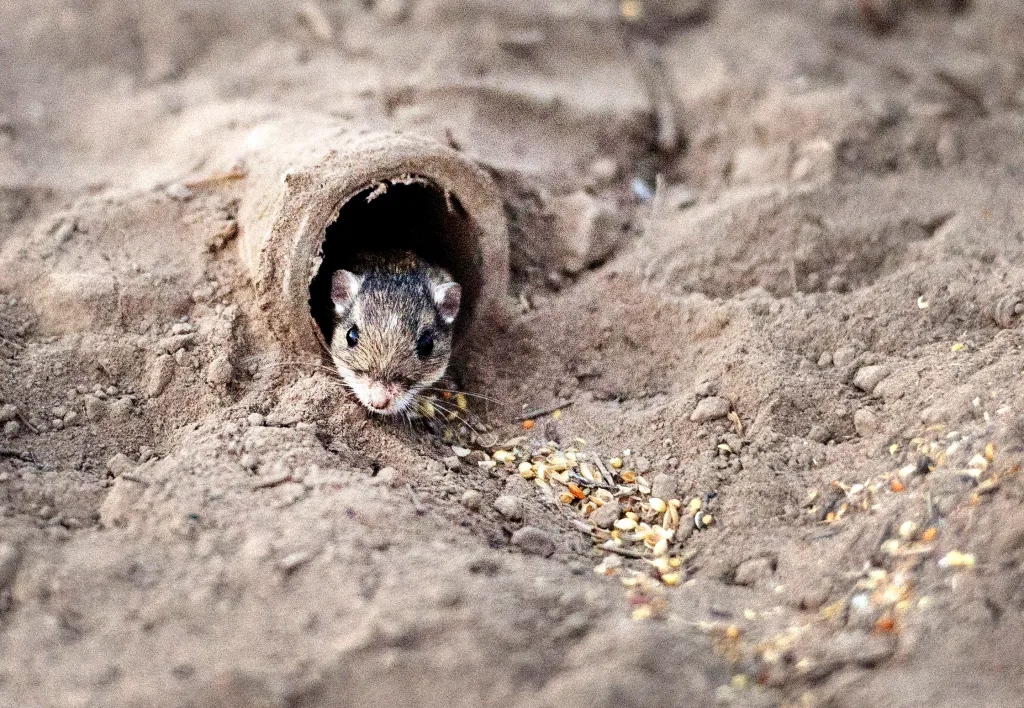
Trail access is now available Tuesdays, Thursdays and weekends, following a recent Orange County Superior Court judge’s order supporting a California Coastal Commission directive to the Center for Natural Lands Management to reduce by 60% public exposure that could threaten the endangered Pacific Pocket mouse. City leaders have pushed to maintain daily access for the public.
The nearly two-mile trail runs along the ridge of the massive rock outcropping and has been open daily from sunrise to sunset since 2022. The headlands bluff is popular for watching marine life and seabirds. The trail also connects Strand Beach and Dana Point Harbor.
The Center for Natural Lands Management, which bought the land in 2005, argues the local mouse population is sensitive to noise and vibrations and needs a break from human presence. The city has an easement for the trail.
In March, the Coastal Commission agreed that a reduction would be helpful to the fragile population, said Andrew Willis, enforcement staff counsel.
The new trail hours will be 8 a.m. to 6 p.m. on Tuesdays, Thursdays, Saturdays and Sundays until Labor Day and then the hours will end at 4 p.m.
Willis said the commission would have preferred the reduced hours had gone into effect much sooner, given the “dire situation,” and will support the Center for Natural Lands Management as it pursues permanently reduced access from the city’s Planning Commission through the permitting process. That decision is due by March, he said.
“This is how we envisioned the long-term hours to be established through the coastal development process,” he said, of the emergency measure now. “We needed something immediate because it’s taken a while.”
The focus is reducing impact during low-light hours and ensuring that the mice have “rest days,” which Willis said would allow them to travel freely across their habitat.
And as part of the consent order, the center must continue habitat mitigation to create more open, sandier areas for the mouse amidst the coastal sage, while also allowing scientists from the San Diego Zoo’s captive breeding program to conduct genetic management efforts.
“It’s not just about trail access, it’s about a full suite of measures to protect the mouse,” Willis said. “The goal is to continue this into the coastal development permit once it’s approved down the line.”
That work is already being done, Sarah Mueller, an attorney for CNLM, said, adding that vegetation work is done in winter, during the non-breeding season, which is also when population monitoring is conducted.
In 2017, the population appeared low, Mueller said, but it began to increase in 2020, peaking in 2021. In 2022, data show the start of a decline, when the trail was open from 7 a.m. to sunset, seven days a week, she said.
Read more Judge orders Pentagon to lift policy that New York Times journalists be accompanied by an escort
Mueller said monitoring indicates a marked decline in 2024 and 2025, nearly 40% from the high in 2021, when the trail was open three days a week from 8 a.m. to 4 p.m.
City officials said they are disappointed by the recent decision and that they believe protecting the mouse and providing public access to the trail can be done together.
Mayor John Gabbard said there is still active litigation, including over how the recent consent agreement was reached, in which CNLM, he said, bypassed the coastal development permit process to go straight to a consent decree. He also added that the city is seeking public input from trail visitors and encourages folks to contact the Coastal Commission via a link on the city and trail websites.
“We’ve got a trail system, designed to be a trail system knowing that the pocket mice were there, shut down just three days a week, which makes absolutely no sense,” he said, wondering how the mice can be impacted only on Monday, Wednesday, and Friday. “It’s mind-boggling the picking and choosing times as opposed to really analyzing what the mice need.”
There are only a few known places the pocket mouse lives beyond the headlands in Dana Point. There is a population on Camp Pendleton and a site in the Laguna Coast Wilderness Park where pocket mice raised at the San Diego Zoo have been released.
Gabbard said he spoke with zoo officials and recently learned that the Laguna Conservancy, which oversees preservation and protection at Laguna Coast Wilderness Park, has plans to expand the area where the mice from the zoo were taken and to “insert more mice.”
“They’re doing everything they can to breed these things and get a thriving, healthy population again,” he said. “The reality is there’s more work going on than just what’s going on at the Dana Point Headlands and Camp Pendleton to protect the pocket mouse.”
Gabbard said CNLM needs to continue its efforts to obtain the coastal development permit from the city. Among the arguments is whether the center needs a CEQA review, he said.
“I know they don’t think they need one; we’re still saying they do,” he said.
Ultimately, Gabbard said he would like to see measures in place that “actually protect” the mice.
One option is closing the trail system entirely during the mice’s breeding season, he said.
“That’s a motion I’m willing to entertain because it doesn’t do any of us any good to let these things die because of our own lack of action,” he said. “But, if they are thriving, let’s let the people back on the trail system that was designed and support it.”
Read more How the Supreme Court became a pivotal force in Trump’s immigration agenda