
By Rebecca K. O’Connor | Contributing Columnist
The addition of California native plants invites a magical micro ecosystem into your garden.
Read more Venezuelan security guard pulled alive from building basement 8 days after twin quakes
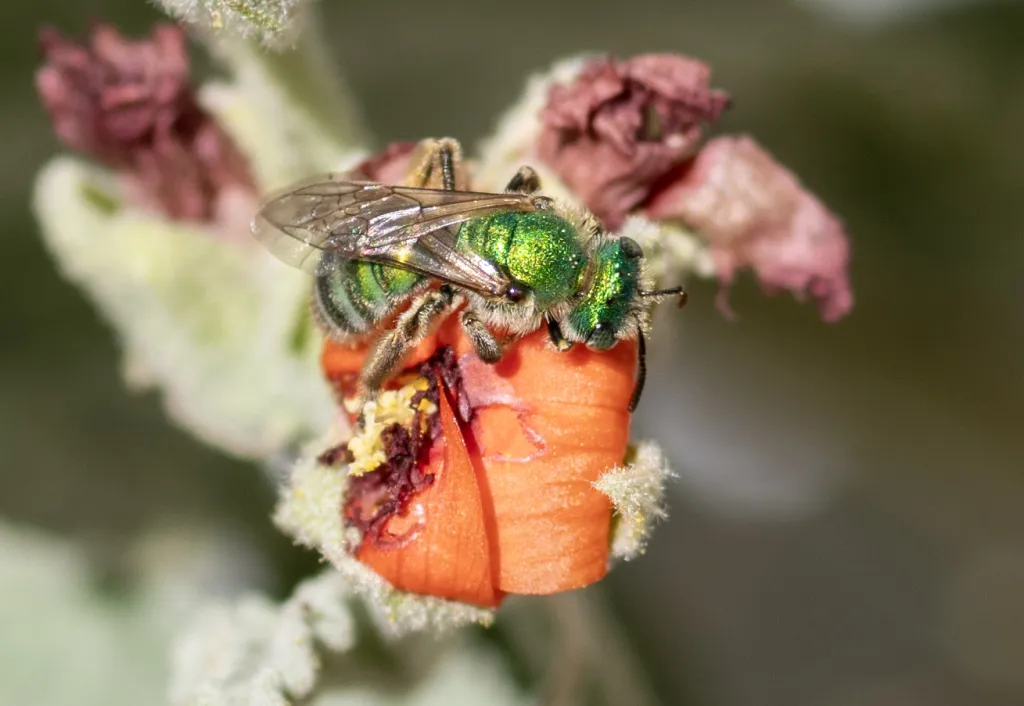
Walking through my garden of desert globemallow, sunflower bush, sage, and penstemon this spring, I noticed the incredible number of pollinators buzzing around the blooms. This was the first year that most of my plants were mature, and while I had seen butterflies and honeybees in past years, this was a new cast of insects. Peering into the mallow flowers, I caught flashes of metallic greens and much smaller bees. I realized if I wanted a closer look, I was going to need photographs.
I bought a used macro lens for my Pentax, took a macro photography workshop and when I brought those skills home and turned the lens on my garden, I found a world I hadn’t known existed. One of my first photographs was of a tiny bee wrapped around the stamen of a small pink globe mallow flower. It was delightfully fuzzy, its hind leg packed with pollen and its blue eye glinting. I had to know its name.
Fortunately, iNaturalist is available to anyone who has questions like mine. You can use this app on your computer or your phone, drop a photo in a new observation and you will quickly get suggestions for genus and species. iNaturalist told me that I was looking at a globe mallow bee (Diadasia diminuta), a specialist pollinator that has an ancient symbiotic relationship with globe mallows.
This solitary and small 7 to 9 mm bee relies almost exclusively on globe mallow plants for food and shelter, and my yard has four globe mallows. The females excavate burrows in partially compacted soil, constructing “chimneys” at the entrance of their burrows, which they stock with “pollen loaves” for their larvae. Males, which remain solitary bachelors, spend their nights and times of inclement weather curled safely inside closed mallow flowers. Without realizing it, I had created a paradise that wasn’t only inviting but had the exact specifications of what the tiny bee required to survive.
I soon found there were other native bees and pollinators previously unknown to me thriving in my garden. It took a macro lens to examine them, but with a closer view I came to think of it as a miniature glittering world. There was the jeweled shine of green sweat bees and so much sparkle in transparent wings. I couldn’t believe that all I had to do was look down and lean closer to realize I had made my own fairy garden.
It was a dangerous world as well. Tiny wasps not only pollinated flowers but preyed on native bees. I discovered beewolves in the garden, delighting in their name. I didn’t delight as much in their habit of paralyzing bees, carrying them back to their burrow, laying eggs on them and making them a feast for newly hatched larvae. Then again, even the fantasy of a feral fairy realm requires balance. The real world is no different.
Read more Trump administration’s $46 billion ‘smart wall’ races ahead on the US-Mexico border
Anyone can create a fairy kingdom and discover its players right at home. Calscape and Bloom California offer excellent online resources for native plants that will thrive in your area. It can be a whole garden, the addition of a few California native plants, or even containers on a patio. If you build it, this world will come to you.
At Rivers & Lands Conservancy, with the help of community volunteers, we create gardens like this in the city of Riverside and hope to expand to other cities. They are wonderful examples of California native plants that will thrive in local home gardens. You can find out more about them and their locations on the native gardens page on our website.
It’s amazing to me that an array of important pollinators and other invertebrates found their way to my yard because of my plant choices. I imagine inspiring my neighbors to do the same, and the impact a larger network of habitat patches could have on native species.
More than that, I imagine what the joy of discovery and wonder could do for us all. Sometimes, it only takes a couple of desert globe mallows and curiosity to make our world a better place.
Rivers & Lands Conservancy connects our community to natural, wild, and open spaces of Southern California through land conservation, stewardship, and education.
Rebecca K. O’Connor is the co-executive director of Rivers & Lands Conservancy, has an MFA in Creative Writing and Writing for the Performing Arts from UC Riverside and is the author of several books on the natural world.
Read more The Onion’s new parody of Alex Jones’ Infowars starts with $100,000 to Sandy Hook families