
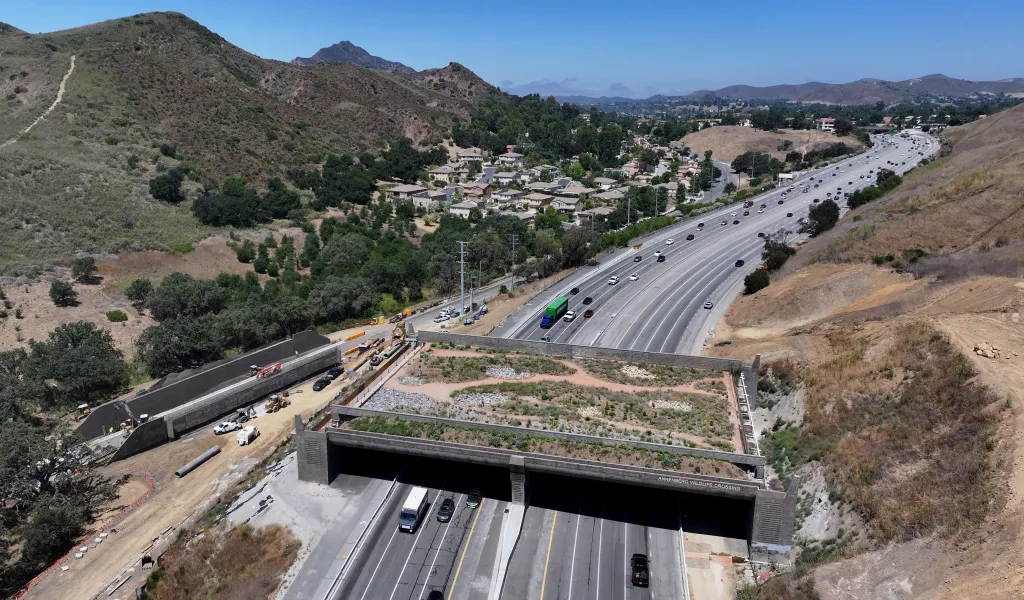
Life is blooming along the Wallis Annenberg Wildlife Crossing, the $114 million project in Agoura Hills designed to provide a safe pathway for wildlife looking to traverse man’s intrusion into their habitat.
Read more He was nation’s most famous traitor. Why the utter loathing lives on 250 years later.
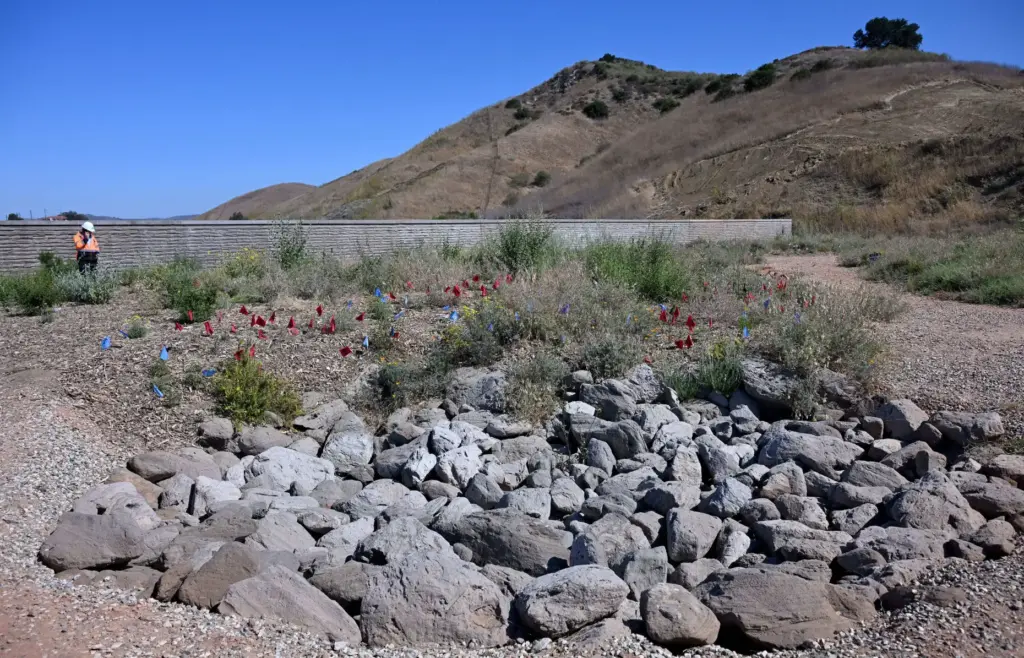
On a recent stroll, Beth Pratt, regional executive director of the National Wildlife Federation, pointed out California poppies, white sage and other native plants from the Santa Monica Mountains taking root along the span. She lights up at the sight of a native bee hovering over a cluster of poppies.
“I’ve recorded about eight species of birds, nine species of butterfly, and one American kestrel up here,” Pratt said. “It’s really fun to see the wildlife responding.”
Pratt said native vegetation has been carefully matched to the surrounding Santa Monica Mountains to create a natural pathway for wildlife along the unfinished crossing in Liberty Canyon.
Once completed, the bridge — scheduled to open Dec. 2 — will reconnect habitat severed for decades by the 101 Freeway, restoring a critical migration route for coyotes, deer, bobcats and, most notably, endangered mountain lions whose populations have declined as highways and development have fragmented their range.
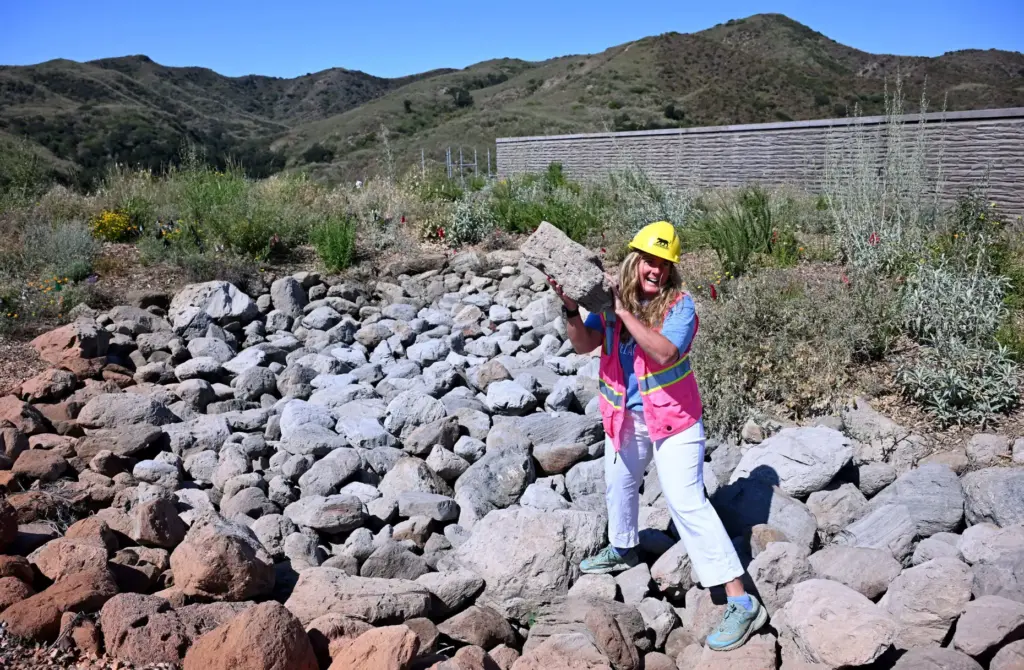 Beth Pratt, regional executive director for California for the National Wildlife Federation, lifts a volcanic stone that is lighter than a typical rock or boulder, as she provided a walk-through tour of the Wallis Annenberg Wildlife Crossing over the 101 Freeway in Agoura Hills, on Wednesday, June 17, 2026, which is scheduled to open on Dec. 2, 2026. (Photo by Dean Musgrove, Los Angeles Daily News/SCNG)
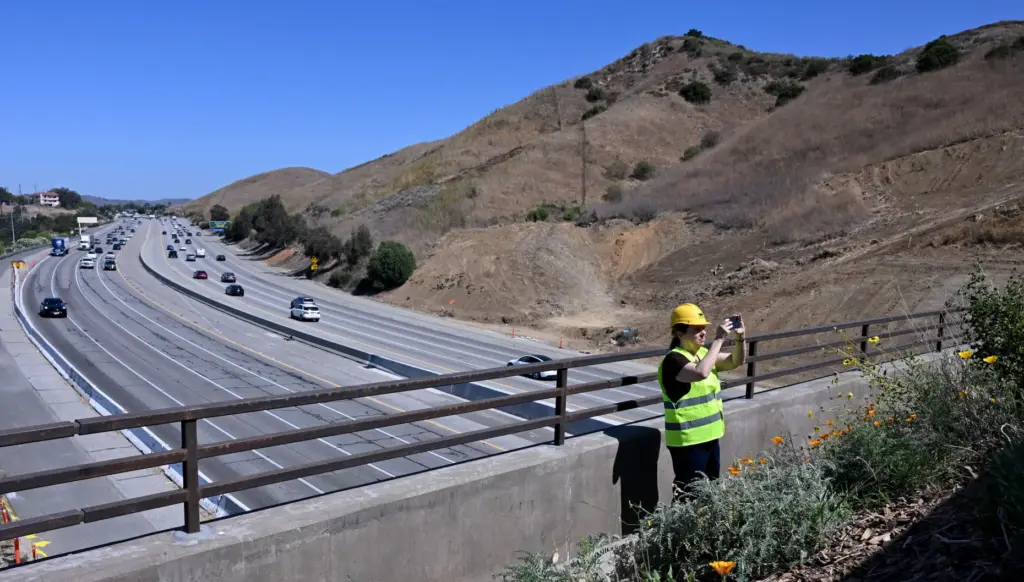 Wilda Lynn Garrett, art director designer and illustrator for the project, photographs the plants on the crossing during a walk-through tour of the Wallis Annenberg Wildlife Crossing over the 101 Freeway in Agoura Hills, on Wednesday, June 17, 2026, which is scheduled to open on Dec. 2, 2026. (Photo by Dean Musgrove, Los Angeles Daily News/SCNG)
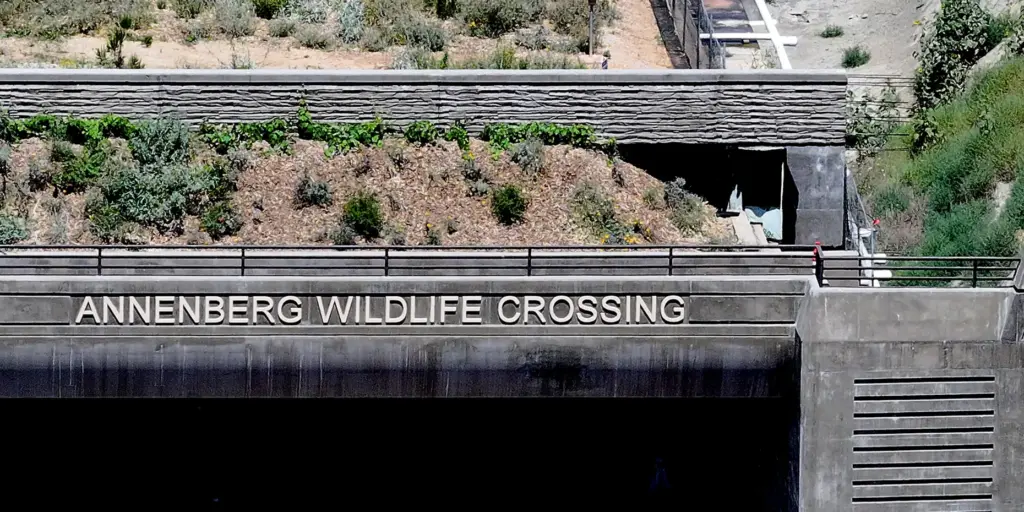 Work continues at the Wallis Annenberg Wildlife Crossing over the 101 Freeway in Agoura Hills, on Wednesday, June 17, 2026, which is scheduled to open on Dec. 2, 2026. (Photo by Dean Musgrove, Los Angeles Daily News/SCNG)
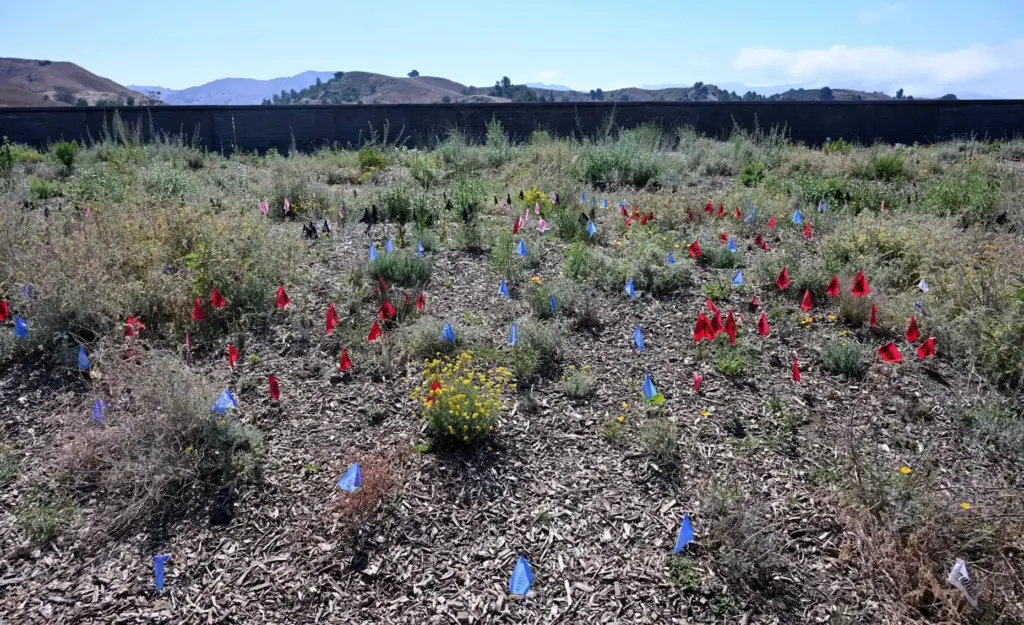 Markers identify plants on Wallis Annenberg Wildlife Crossing over the 101 Freeway in Agoura Hills, on Wednesday, June 17, 2026, which is scheduled to open on Dec. 2, 2026. (Photo by Dean Musgrove, Los Angeles Daily News/SCNG)
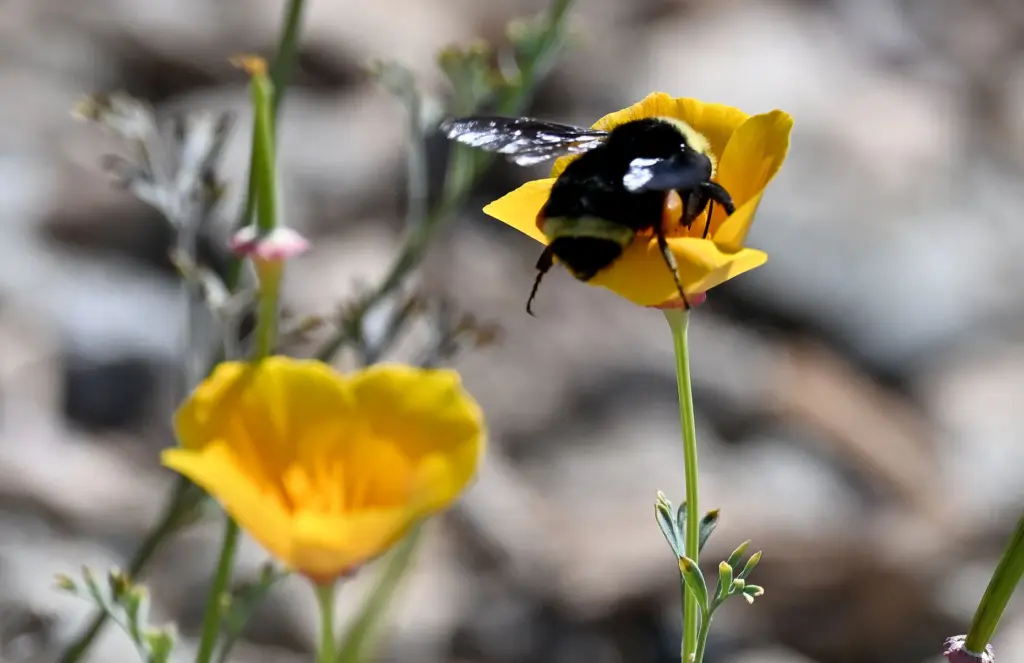 A native bee enjoys the plants on the Annenberg Wildlife Crossing. Beth Pratt, regional executive director for California for the National Wildlife Federation, provided a walk-through tour of the Wallis Annenberg Wildlife Crossing over the 101 Freeway in Agoura Hills, on Wednesday, June 17, 2026, which is scheduled to open on Dec. 2, 2026. (Photo by Dean Musgrove, Los Angeles Daily News/SCNG)
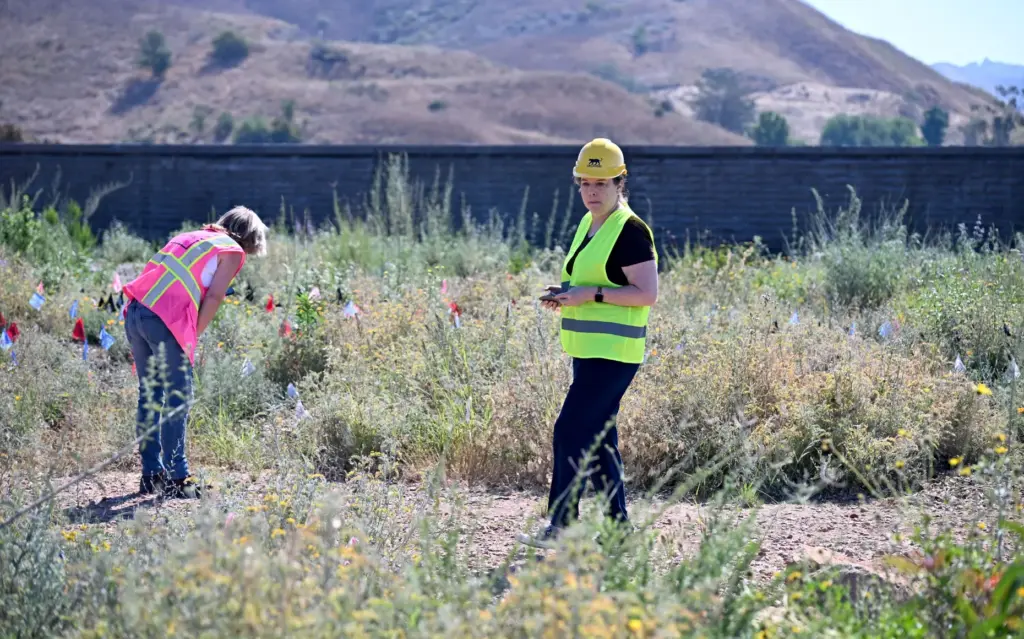 Lauren Gill, California deputy director of the National Wildlife Federation, and Wilda Lynn Garrett, art director designer and illustrator for the project, survey the plants on the crossing. Beth Pratt, regional executive director for California for the National Wildlife Federation, provided a walk-through tour of the Wallis Annenberg Wildlife Crossing over the 101 Freeway in Agoura Hills, on Wednesday, June 17, 2026, which is scheduled to open on Dec. 2, 2026. (Photo by Dean Musgrove, Los Angeles Daily News/SCNG)
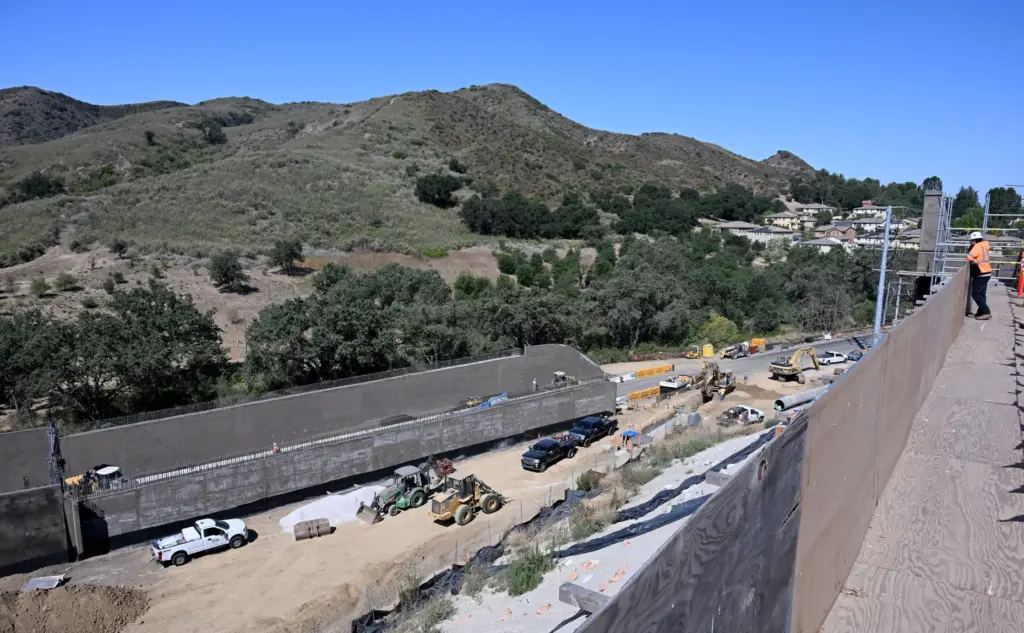 Diego Banda, Caltrans resident engineer, right, views the work on the part of the crossing that will go over Agoura Road during a walk-through tour of the Wallis Annenberg Wildlife Crossing over the 101 Freeway in Agoura Hills, on Wednesday, June 17, 2026, which is scheduled to open on Dec. 2, 2026. (Photo by Dean Musgrove, Los Angeles Daily News/SCNG)
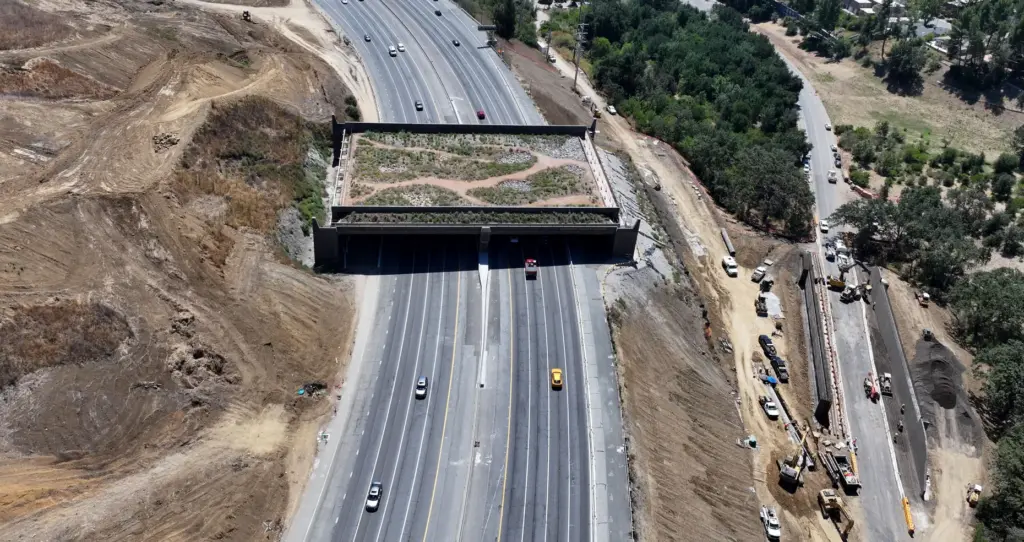 Work continues at the Wallis Annenberg Wildlife Crossing over the 101 Freeway in Agoura Hills, on Wednesday, June 17, 2026, which is scheduled to open on Dec. 2, 2026. (Photo by Dean Musgrove, Los Angeles Daily News/SCNG)
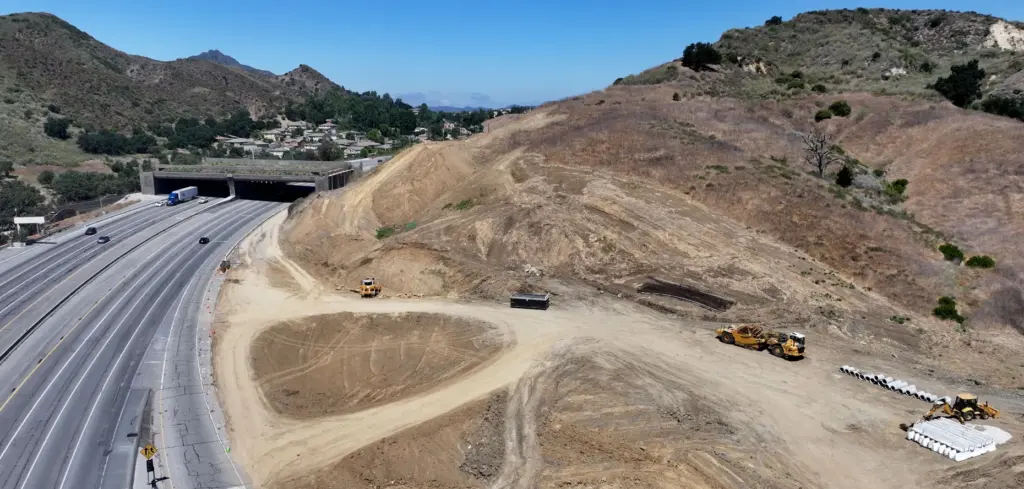 Work continues at the Wallis Annenberg Wildlife Crossing over the 101 Freeway in Agoura Hills, on Wednesday, June 17, 2026, which is scheduled to open on Dec. 2, 2026. (Photo by Dean Musgrove, Los Angeles Daily News/SCNG)
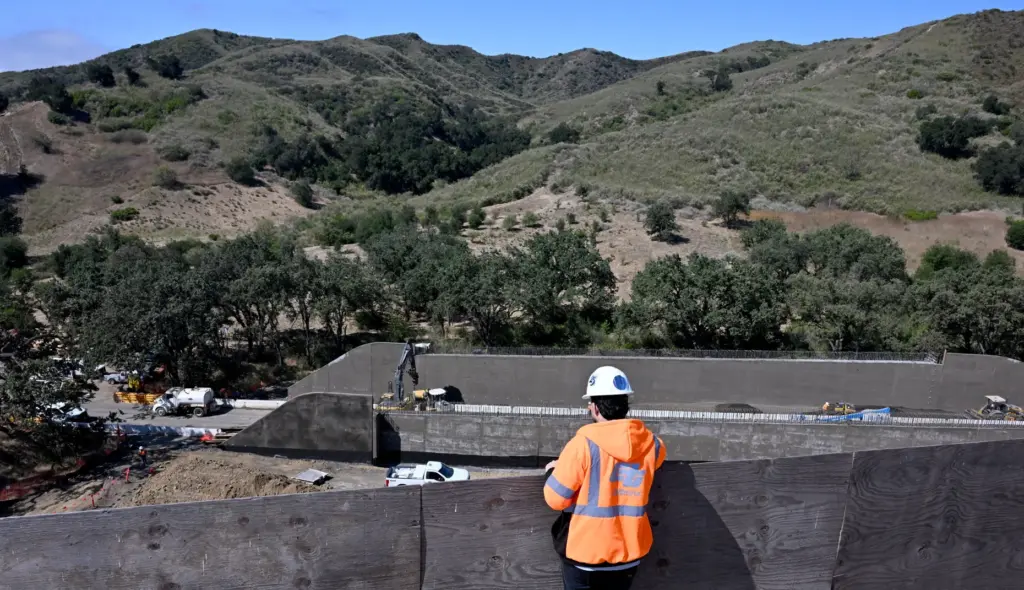 Diego Banda, Caltrans resident engineer, right, views the work on the part of the crossing that will go over Agoura Road during a walk-through tour of the Wallis Annenberg Wildlife Crossing over the 101 Freeway in Agoura Hills, on Wednesday, June 17, 2026, which is scheduled to open on Dec. 2, 2026. (Photo by Dean Musgrove, Los Angeles Daily News/SCNG)
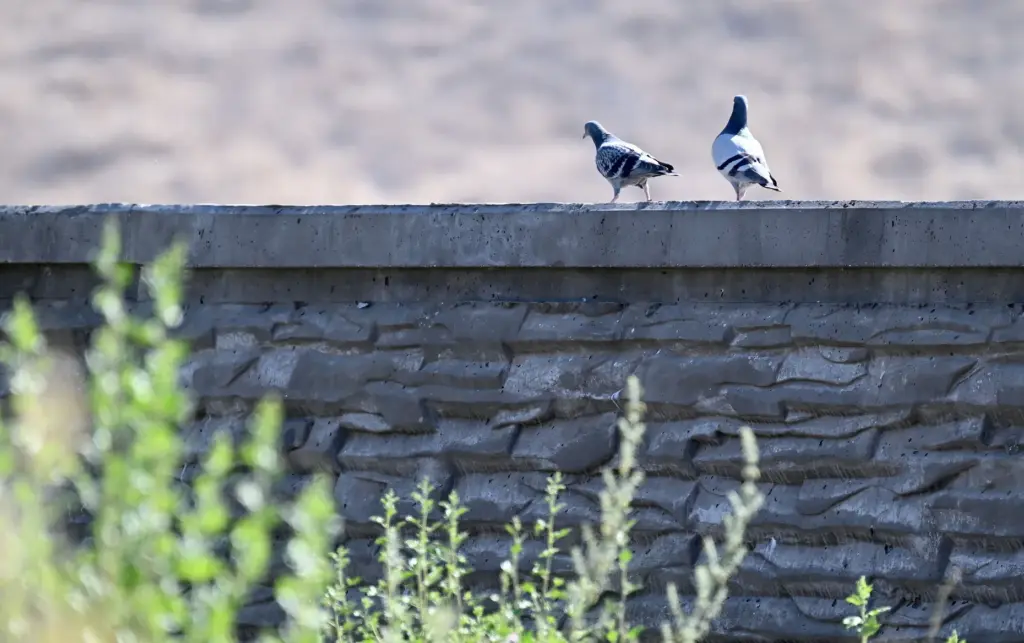 Birds walk along a sound wall on the Annenberg Wildlife Crossing. Beth Pratt, regional executive director for California for the National Wildlife Federation, provided a walk-through tour of the Wallis Annenberg Wildlife Crossing over the 101 Freeway in Agoura Hills, on Wednesday, June 17, 2026, which is scheduled to open on Dec. 2, 2026. (Photo by Dean Musgrove, Los Angeles Daily News/SCNG)
 The main bridge is about an acre on the Wallis Annenberg Wildlife Crossing over the 101 Freeway in Agoura Hills, on Wednesday, June 17, 2026, which is scheduled to open on Dec. 2, 2026. (Photo by Dean Musgrove, Los Angeles Daily News/SCNG)
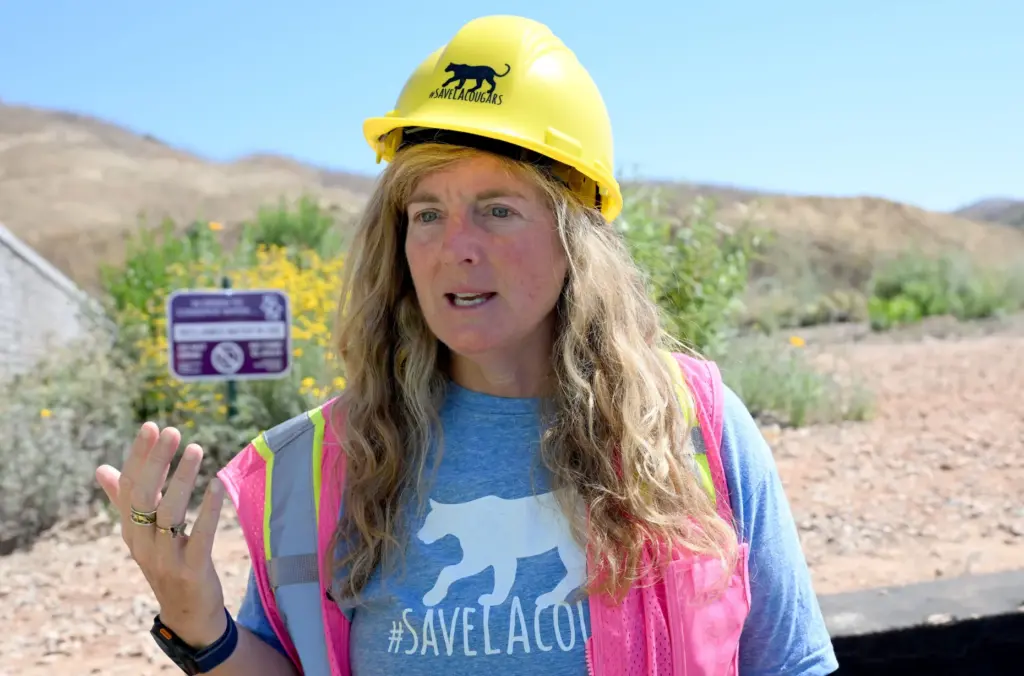 Beth Pratt, regional executive director for California for the National Wildlife Federation, provided a walk-through tour of the Wallis Annenberg Wildlife Crossing over the 101 Freeway in Agoura Hills, on Wednesday, June 17, 2026, which is scheduled to open on Dec. 2, 2026. (Photo by Dean Musgrove, Los Angeles Daily News/SCNG)
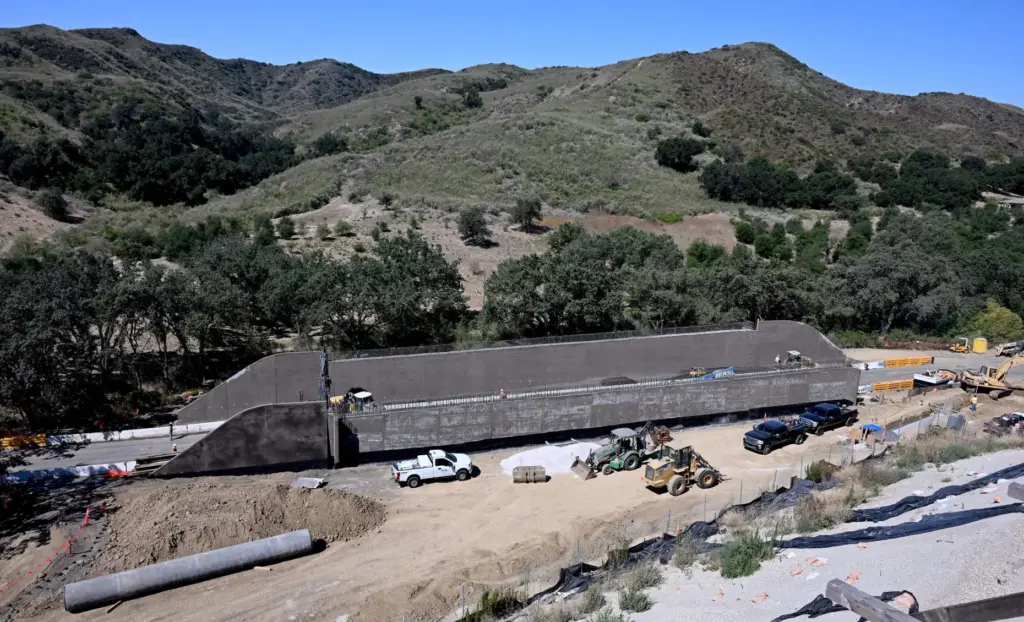 Work continues on the part of the crossing that will go over Agoura Road during a walk-through tour of the Wallis Annenberg Wildlife Crossing over the 101 Freeway in Agoura Hills, on Wednesday, June 17, 2026, which is scheduled to open on Dec. 2, 2026. (Photo by Dean Musgrove, Los Angeles Daily News/SCNG)
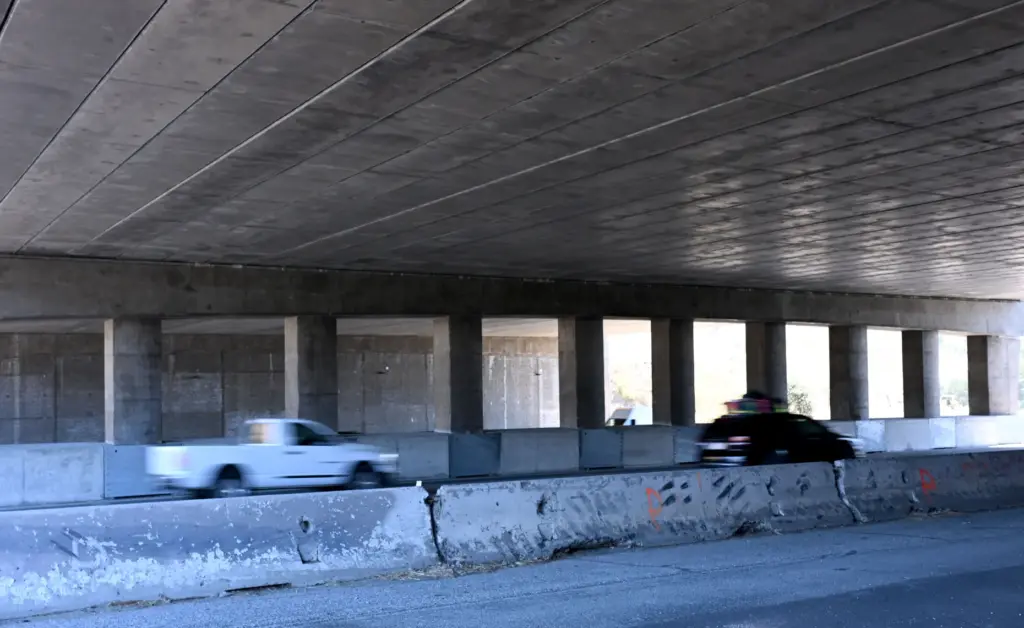 Traffic moves under the Wallis Annenberg Wildlife Crossing over the 101 Freeway in Agoura Hills, on Wednesday, June 17, 2026, which is scheduled to open on Dec. 2, 2026. (Photo by Dean Musgrove, Los Angeles Daily News/SCNG)
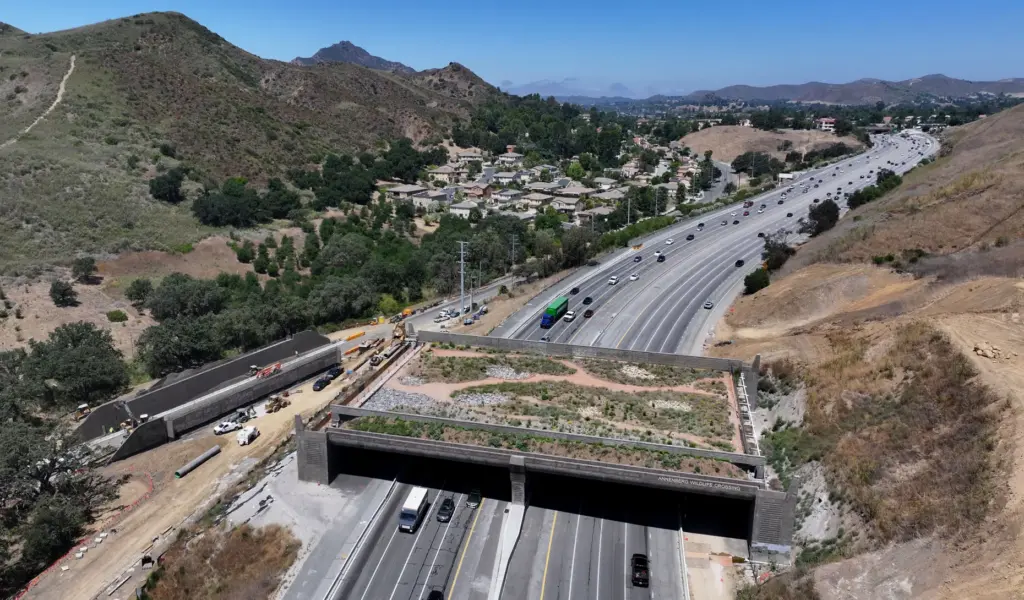 Work continues at the Wallis Annenberg Wildlife Crossing over the 101 Freeway in Agoura Hills, on Wednesday, June 17, 2026, which is scheduled to open on Dec. 2, 2026. (Photo by Dean Musgrove, Los Angeles Daily News/SCNG)
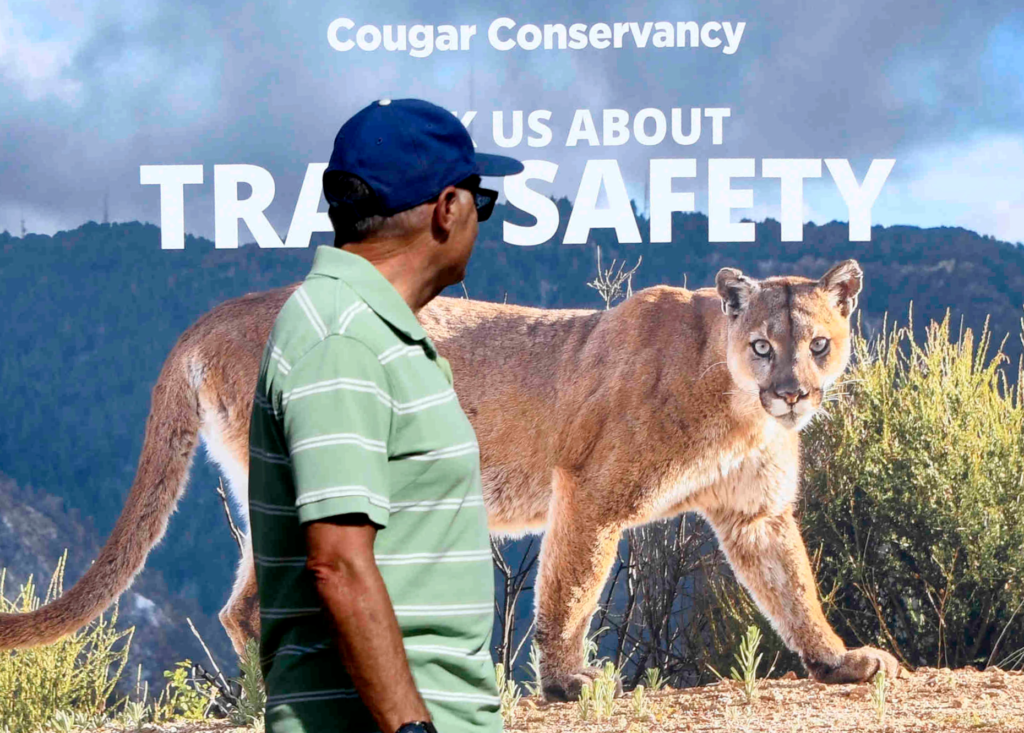 People walk by a P-22 poster from the National Wildlife Federation’s SaveLACougars campaign during the annual P-22 Day Festival in Griffith Park, in Los Angeles on Oct 22, 2023. It honors the famed mountain lion that made his home in Griffith Park before passing away in December 2022. (Photo by Gene Blevins/Contributing Photographer)
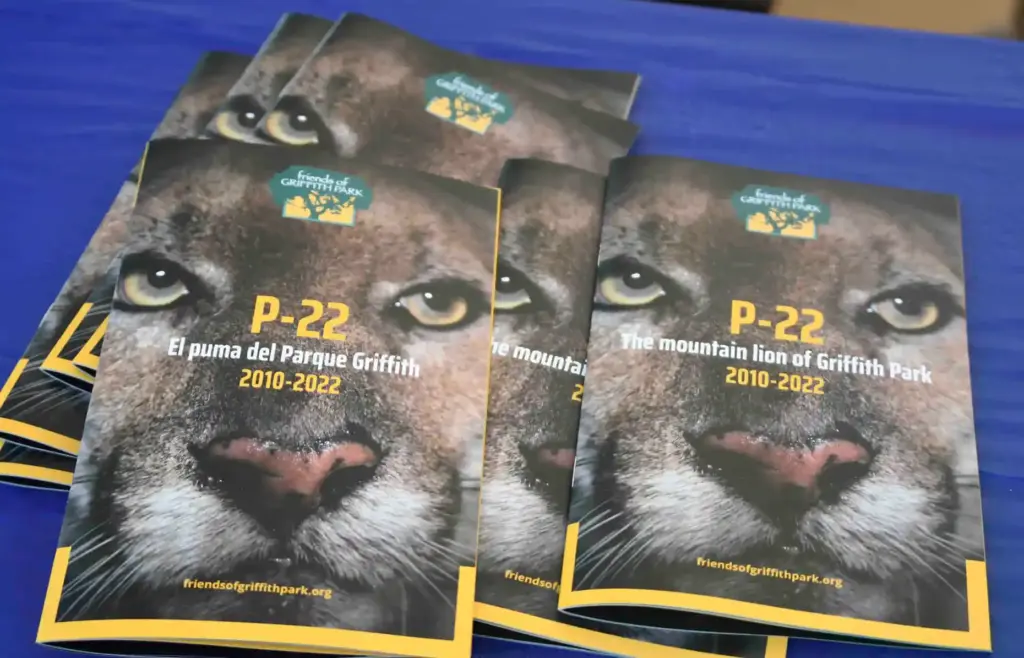 Information pamphlets on P-22 at the National Wildlife Federation’s SaveLACougars campaign eighth annual P-22 Day Festival in Griffith Park in Los Angeles on Oct 22, 2023. It honors the famed mountain lion that made his home in Griffith Park before passing away in December 2022. (Photo by Gene Blevins/Contributing Photographer)
It will be the largest wildlife crossing of its kind in North America, surpassing Colorado’s Greenland Wildlife Overpass in Douglas County, which opened in December 2025.
“We are taking bets right now on our website on who will cross first. The coyotes are leading, but my money is on the deer,” Pratt said, noting her recent spotting of a doe and fawn lingering around a stand of oak trees near the 101 Freeway, observing construction activity on Agoura Road.
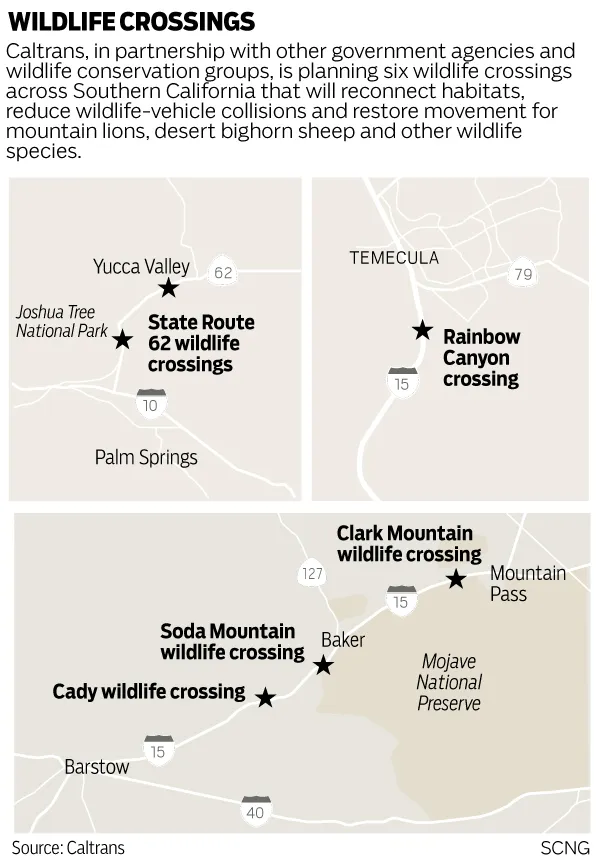
While the Wallis Annenberg Wildlife Crossing is poised to become the largest wildlife overpass in North America, it is only the most prominent of more than a half-dozen additional crossings planned across Southern California, including three in the Mojave Desert between Barstow and the Nevada state line, two in the Morongo Basin near Joshua Tree National Park and one in Temecula.
Together, the projects represent a broader effort to reduce wildlife-vehicle collisions and restore migration corridors fragmented by decades of highway construction and development.
Origins of crossings
According to a Federal Highway Administration report, the nation’s first wildlife crossing was a black bear underpass built in Florida in 1955, followed decades later by the first U.S. wildlife overpass on Interstate 15 in Utah in 1975.
The modern concept traces its roots to Europe, where the first known structure was a badger tunnel built in The Netherlands in 1974, followed by Europe’s first wildlife overpass in France in 1982. Canada built its first wildlife crossing that same year along the Trans-Canada Highway in Banff National Park.
Since then, bridges, tunnels and other structures designed to reconnect fragmented habitats have spread worldwide as transportation agencies have embraced “road ecology” — the study of how highways affect wildlife movement, habitat connectivity and motorist safety.
They have been shown to be quite effective, with the potential to reduce wildlife-vehicle collisions by more than 90%, reconnecting fragmented habitats and restoring migration routes, according to a report by The Pew Charitable Trusts.
Why here?
Wildlife experts say Southern California has become a focal point for wildlife-crossing projects because its extensive network of freeways cuts through mountain ranges, canyons and critical habitat corridors, while continued development leaves wildlife isolated in shrinking patches of open space.
The region has become one of the nation’s most acute examples of habitat fragmentation, particularly for wide-ranging species such as mountain lions, deer and desert bighorn sheep.
California’s emphasis on wildlife connectivity reflects challenges especially pronounced in Southern California, said Ben Goldfarb, an environmental journalist and author of the book “Crossings: How Road Ecology Is Shaping the Future of Our Planet.”
“It’s a state with a lot of people and a lot of traffic,” Goldfarb said. “In places like Los Angeles and San Diego, you’ve got these developed areas that still have patchworks of habitat left in them, so there’s still wildlife in relatively urban areas. If wildlife is going to persist in the long run in these little patches of habitat in Southern California, they have to link up and connect, and that means creating infrastructure that allows animals to cross highways.”
Collisions and connectivity
In recent years, Caltrans and the U.S. Department of Transportation have joined wildlife agencies and conservation groups in expanding support and funding for wildlife crossings, marking a shift in how roads and habitat conservation are approached.
The projects are being built in areas where wildlife populations have been increasingly threatened — in some cases nearing extinction — by habitat fragmentation and vehicle collisions.
The Safe Roads and Wildlife Protection Act of 2022 established a framework for prioritizing and coordinating wildlife crossing projects. The law requires Caltrans, in consultation with wildlife agencies, to identify connectivity needs, assess highway barriers and prioritize passage features that reduce wildlife-vehicle collisions and improve habitat connections.
Habitat fragmentation can isolate populations, limit access to historic migration routes and essential food and water sources, and reduce genetic diversity by preventing animals from safely moving beyond isolated areas to find mates, wildlife experts said.
A 2024 report by UC Davis estimated that at least 613 mountain lions were killed by vehicles in California from 2016 to 2023 — an average of 75 to 80 a year — and noted the true number is likely higher because many collisions go unreported. The report emphasized that wildlife corridors, fencing and crossing structures can restore connectivity and significantly reduce roadkill.
The report also found vehicle collisions were responsible for more than 10% of deer deaths each year as the state’s deer population has declined for decades.
Wildlife-vehicle collisions cost California taxpayers about $200 million annually, according to the UC Davis report. Nationwide, the cost is estimated at $9 billion to $11 billion a year, said Pratt, noting the cost includes animal carcass removal, property damage and human injuries.
“So there are returns on these,” Pratt said of the benefits of wildlife crossings.
P-22 galvanized support
A single mountain lion, known in Southern California as P-22, helped build public support for wildlife crossings.
P-22 accomplished what many considered impossible, crossing both the 405 and 101 freeways and making Griffith Park his home for a decade. But in December 2022, he was struck by a vehicle and later euthanized at age 12 because of severe injuries and declining health, including skull fractures, a wounded right eye and organs pushed into his chest cavity.
“It was people seeing his story in real time that helped galvanize support for this Wallis Annenberg crossing, but also put the concept of crossings in the public eye in the way they hadn’t been before,” Pratt said of Puma-22, so named because he was the 22nd mountain lion tracked in a study of cougars in the Santa Monica Mountains.
In February 2026, the California Fish and Game Commission listed six populations of imperiled mountain lions in Southern California and along the Central Coast as threatened under the California Endangered Species Act, providing new state protections and potentially opening the door to additional funding for wildlife crossings and habitat-connectivity projects.
The challenges of reconnecting habitat divided by major freeways — combined with the costs and consequences of wildlife-vehicle collisions — have driven a series of planned crossings across Southern California.
Barstow to Nevada
In San Bernardino County, Caltrans has partnered with federal agencies and Brightline West to construct three wildlife crossings on Interstate 15 between Barstow and the Nevada state line: the Cady Mountains crossing near Zzyzx Road, the Soda Mountains crossing west of the Mojave National Preserve, and the Clark Mountains crossing about 2 miles south of the Nevada border.
Each will be about 200 feet wide and 240 to 400 feet long.
The $86 million project is funded through federal wildlife crossing grants and state transportation dollars. Design is underway, with construction expected to be completed in late 2029, according to Caltrans.
Environmental impacts and mitigation measures were not required when Interstate 15 and most Southern California freeways were built in the 1950s. Today, there are no safe, sustainable wildlife crossings along the corridor between Barstow and Nevada, and, without them, ecological fragmentation created by the freeway is expected to persist, according to Caltrans.
Conservationists are paying particular attention to the planned Soda Mountains crossing, where they are concerned the Soda Mountain Solar Project could undermine its effectiveness. Opponents say the 2,670-acre solar facility could disrupt migration patterns of desert bighorn sheep native to the area.
Read more America’s expansion through the centuries
Neal Desai, senior Pacific regional director for the National Parks Conservation Association, said the success of wildlife crossings depends on allowing animals to move through familiar landscapes without disruption.
“They want to be in their area of familiarity and comfort that does not disrupt their migratory flow,” Desai said. “It needs to work for them. It needs to be familiar, and they need to be comfortable.”
Despite protests calling for further study and mitigation, the $700 million solar plant was approved by the California Energy Commission in April, followed by the Bureau of Land Management the following month.
Morongo Basin
In the Morongo Basin near Joshua Tree National Park, two wildlife crossings are planned over State Route 62 at the Morongo and Yucca grades between Morongo Valley and Yucca Valley.
The crossings are intended to restore habitat connectivity between the San Bernardino Mountains and Little San Bernardino Mountains, preserving an ecological corridor linking the Mojave Desert, Coachella Valley and nearby protected lands, including the Sand to Snow National Monument.
From October 2019 to November 2020, there were 232 fatal wildlife-vehicle collisions on State Route 62, including mountain lions, black bears, bighorn sheep and mule deer, according to the 2021 Morongo Pass Wildlife Connectivity Study commissioned by Caltrans.
Fraser Shilling, director of the UC Davis Road Ecology Center who co-authored the study, said the number likely represents only a fraction of the actual wildlife deaths.
“That’s just the number counted, not the number that actually occurred,” Shilling said. “It’s guaranteed to be more than that.”
Shilling acknowledged that although wildlife crossings can address habitat fragmentation and connectivity problems, they do not reduce roadkill. Extended fencing along highways and around crossings is essential to prevent animals from accessing highways and getting killed, he said.
The Mojave Desert Land Trust has secured more than $6 million in state grants to plan and design the crossings, including a $5.5 million grant from the California Wildlife Conservation Board in February and a $512,000 grant from the Coachella Valley Mountain Conservancy in May.
The funding came a month after an 18-month-old mountain lion was struck and killed on SR-62.
No firm timeline has been established, but officials estimate it could take seven or eight years before both crossings are completed. Construction funding is still being pursued.
State Route 62 has become a significant barrier for mountain lions moving between the San Bernardino Mountains and Little San Bernardino Mountains, leaving already vulnerable populations increasingly isolated, said Kelly Herbinson, executive director of the Mojave Desert Land Trust.
“There’s 10 left in the Eastern Peninsular population,” Herbinson said. “These numbers are really dwindling, and that is just great evidence of how much impact that particular stretch of the highway is having on this arguably very important species for that area.”
Traffic on SR-62 has also increased significantly over the past decade because of a threefold increase in visitors to Joshua Tree National Park, from about 1 million annually to more than 3 million now, said Geary Hund, project manager for the SR-62 wildlife crossings project.
“It’s really almost become impenetrable for wildlife to cross,” Hund said.
Temecula
A planned wildlife crossing over Interstate 15 at Rainbow Canyon in Temecula would reconnect habitat between the Palomar and Santa Ana mountains, giving mountain lions and other wildlife a safer route across a freeway that has fragmented the landscape.
In February, the Wildlife Conservation Board awarded nearly $4 million for planning, environmental review and design of the crossing as part of a broader statewide biodiversity funding package.
The project supports California’s 30×30 conservation goals to protect 30% of the state’s lands and coastal waters by 2030 while improving biodiversity and climate resilience through habitat connectivity.
The crossing will be located south of State Route 79 and remains in the planning and environmental review phase, said Caltrans District 8 spokesperson Carolina Rojas. Final design has not been completed.
Along with a wildlife crossing, the project will include extended fencing on both sides of the freeway to help guide animals safely across.
Shilling said other wildlife crossings are planned across Southern California, including one for Peninsular bighorn sheep on Interstate 8 in Imperial County, and another spanning Interstate 5 in Santa Clarita.
Overcrossings vs. underpasses
As California expands its network of wildlife crossings, another question has emerged: Should they go over highways or under them? Tunnels have proven successful in many areas of California.
The Harbor Boulevard Wildlife Underpass in La Habra Heights, for example, recently marked its 20th anniversary as a successful wildlife-connectivity project. Built in 2006 to reduce wildlife deaths along a heavily traveled roadway and reconnect fragmented habitat, the 160-foot undercrossing has reduced roadkill and provides safe passage for more than 1,800 animals annually, including coyotes, deer, bobcats and mountain lions.
Shilling acknowledged that mountain lions usually prefer undercrossings to overcrossings. “They don’t like big open spaces. They like cover,” he said.
In the case of the Wallis Annenberg crossing, however, experts from around the world evaluated potential sites and crossing types before determining a vegetated overpass at Liberty Canyon would be the best option. An underpass was rejected because it would not reconnect the entire ecosystem, some wildlife would avoid it, and construction would have been more costly and disruptive, requiring closure of the 101 Freeway.
“An underpass at Liberty Canyon wouldn’t be effective for any species at all, even coyotes and deer, because it would be too long and dark to get under 10 lanes of freeway and an access road,” said Pratt, the National Wildlife Federation’s regional executive director. “But in another location, an underpass would work fine.”
Shilling agreed that mountain lions should take to the bridge if vegetation is 6 to 8 feet high. “As long as they can maintain the vegetation on the bridge, and it’s that height, they’ll use it,” he said.
Pratt said some of the vegetation on the overpass will grow more than 6 feet high, with sage already reaching that height in some areas.
Additionally, Pratt noted that the Wallis Annenberg crossing also will include roughly 2 miles of fencing on both sides of the 101, to both guide wildlife to the crossing and prevent them from trying to cross the freeway.
Vision realized
Meanwhile, after working for 14 years to help bring California’s most notable wildlife overpass to fruition, Pratt is excited that the Wallis Annenberg project is finally nearing completion. Some 5,000 native plants have been planted along the 101 overcrossing and another 50,000 are taking root along across 13 acres of Liberty Canyon on both sides of the freeway.
She said she is especially proud that the Project Management Institute named the crossing one of the world’s 50 most influential projects in 2022, ranking it No. 15 on its annual list.
But mainly, the most meaningful measure of success for Pratt will not be awards or engineering milestones, but the moment an animal first crosses the bridge.
“We are doing something visionary here,” she said. “I hope people understand that L.A. and Southern California should be proud. This is going to benefit wildlife for decades.”
Read more Galaxy top Club America in tuneup for LAFC showdown