
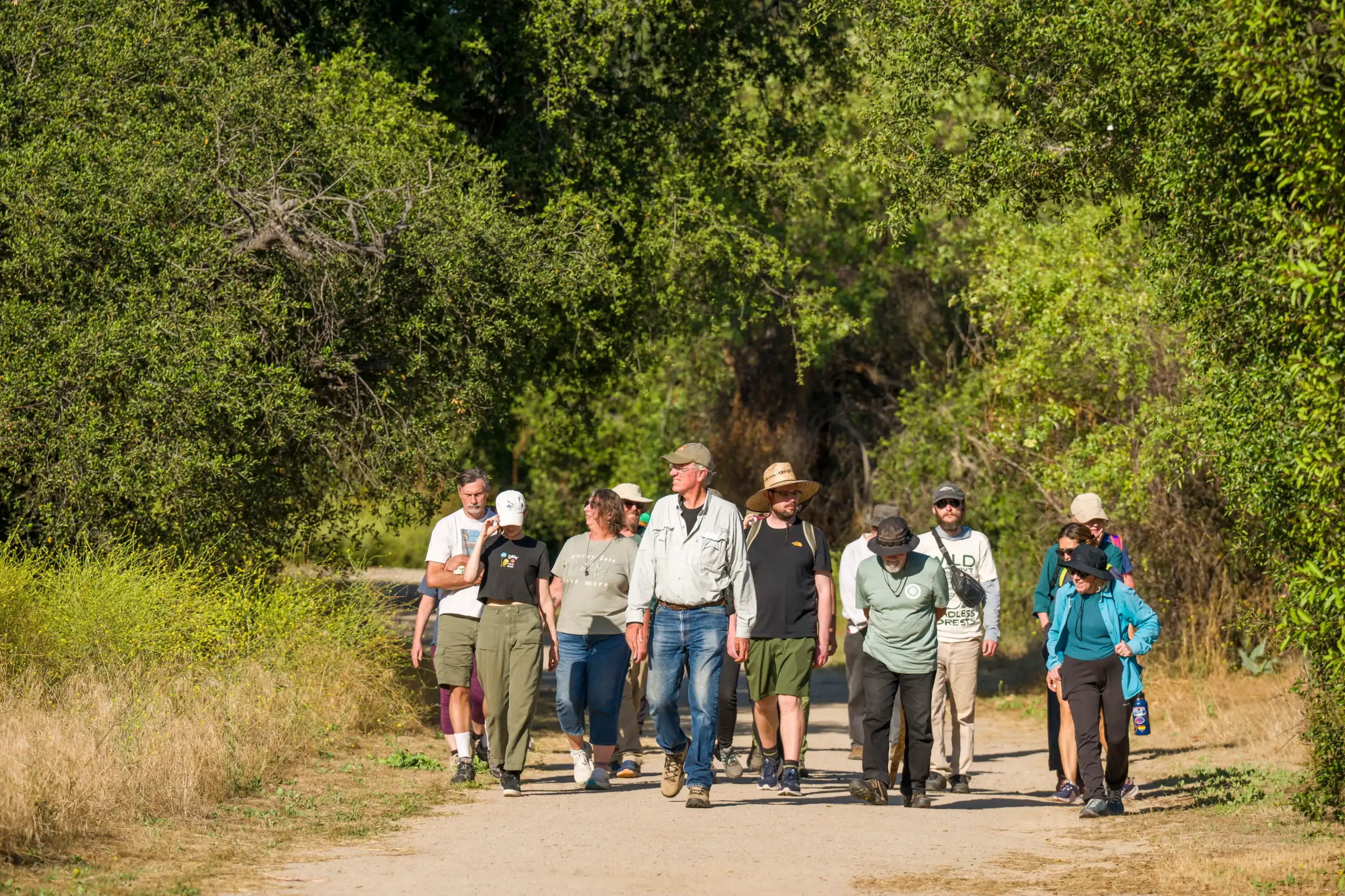
The public has until Oct. 6 to comment on a federal administration proposal to eliminate the Roadless Area Conservation Rule, a regulation in effect for more than 25 years that has prevented roads through 60 million acres of National Forest System lands for recreation and habitat protection.
Read more Kauai small businesses ask tourists to return after Hurricane Lowell, with aloha and some patience
The rule, adopted in 2001 by President Bill Clinton’s administration, blocks road building for logging and other access and development.
Upon word that President Donald Trump’s administration was considering the repeal, environmentalists statewide have been sounding the alarm that it could open up much of Southern California’s wildlands to roads.
The rollback could impact the biggest undeveloped stretch of Orange County in the Trabuco District Area of the Cleveland National Forest, wildlands in the San Gabriel Mountains National Monument in Los Angeles County, the San Jacinto Mountains and Pyramid Peak, Palm Canyon Creek in the Inland Empire, and the San Bernardino National Forest near Big Bear.
Administration officials call the Roadless Rule “outdated” and say it runs counter to the U.S. Forest Service mandate to protect the natural areas by making land management and wildfire prevention difficult. U.S. Secretary of Agriculture Brooke Rollins has called it a “bureaucratic barrier to action” and something that makes it nearly impossible to establish a reliable timber supply.
Rallies have been held throughout Southern California in recent months to alert the public to the proposal. In California, environmental groups argue the Roadless Rule has protected 4 million acres from logging, mining and other destructive human impacts.
The nonprofit CalWild points out that roadless areas provide critical clean water for downstream communities and farms. Rivers that flow through these areas also provide habitat for at-risk fish and wildlife, along with recreational activities for fishing and whitewater boating.
As early of this week, almost 170,000 people have written to the U.S. Department of Agriculture portal for regulations, and the public comment period was recently extended from Sept. 21 to Oct. 6.
When the rule was enacted in 2001, it followed 600 public meetings and 1.6 million comments. Getting loud now could be persuasive, said Melanie Schlotterbeck, a conservation consultant with environmental group Hills for Everyone.
“Everyone is taking to social media like I am,” she said of a recent direct-to-camera video she posted in which she talks about the importance of commenting. “It’s gained a lot of traction with people sharing it.”
“Clearly we’ve been heard because they extended the deadline,” she added. “Everyone is upset and is coming out of the woodwork. It’s not only environmentalists, but off-highway vehicle people are also considering supporting the Roadless Rule.”
Results were recently released from a poll by North Star Opinion Research commissioned by the Resources Legacy Fund that queried 400 voters in mid-June living within the recently redrawn 40th Congressional District, which includes foothills and open lands stretching from Mission Viejo to Murrieta. Schlotterbeck points to the polling, which reported that 88% of respondents agreed on the importance of valuing public lands and said they used them several times a year, and were more likely to support candidates — no matter their political leanings — who supported access to public lands.
Read more EU chief floats ‘associate membership’ for Canada. But that doesn’t exist yet
The poll said 65% of respondents reported visiting public lands at least a few times a year, with 24% visiting them at least once a month. They visit a variety of lands: 74% visit national parks, 49% visit national forests, 19% visit BLM lands, and 18% visit wildlife refuges.
“Southland residents highly value their public lands as the pressures of urban life and urban infrastructure limit opportunities to enjoy nature,” Schlotterbeck said. “Opportunities for recreation are both limited and prized by recreational enthusiasts.”
Among those are Orange County mountain bikers, who are also rallying the public to comment.
“We are strongly opposed to the rollback and all attempts to take away our access to our backcountry,” said David Browning, Orange County Mountain Bike Association president.
If the protective rule is rolled back, Schlotterbeck and others say they worry roads could be constructed across 18.2 million acres and temporary roads could be forged across another 11.3 million acres. The Roadless Area Conservation Rule currently protects these swaths of wild forests, including 4 million acres in California, from logging, mining and other destructive human activities.
If roads are built, opponents say their impacts could damage watersheds and increase fire risk, threatening wildlife and outdoor recreation.
“Roads are known ignition sources for the majority of fires,” Schlotterbeck said. “When you add roads to wilderness areas, you’re adding the likelihood that fires are going to start.”
But Rollins’ point has been that fire danger is elevated in the wildlands because a lack of road access has left backcountry areas susceptible to fire because they have been “unable to be properly managed for fire risk.”
While public comment is being taken on the administration’s proposal, two Congressional lawmakers, Sen. Maria Cantwell, D-WA, and Rep. Andrea Salinas, D-OR, are sponsoring the Roadless Area Conservation Act to codify the Roadless Rule as federal law.
Although the proposed legislation would preserve flexibility for the Trump administration and future presidents to allow the Forest Service to build roads or manage vegetation in specific situations, its broad goal would be to keep the 60 million acres currently protected as pristine as possible.
“I would support that,” Schlotterbeck said.
Find out more about the proposal and how to submit public comment at regulations.gov.
Read more Trump pushes his $5,000 ‘dividend’ pledge if GOP wins midterms. Republican candidates, not as much