
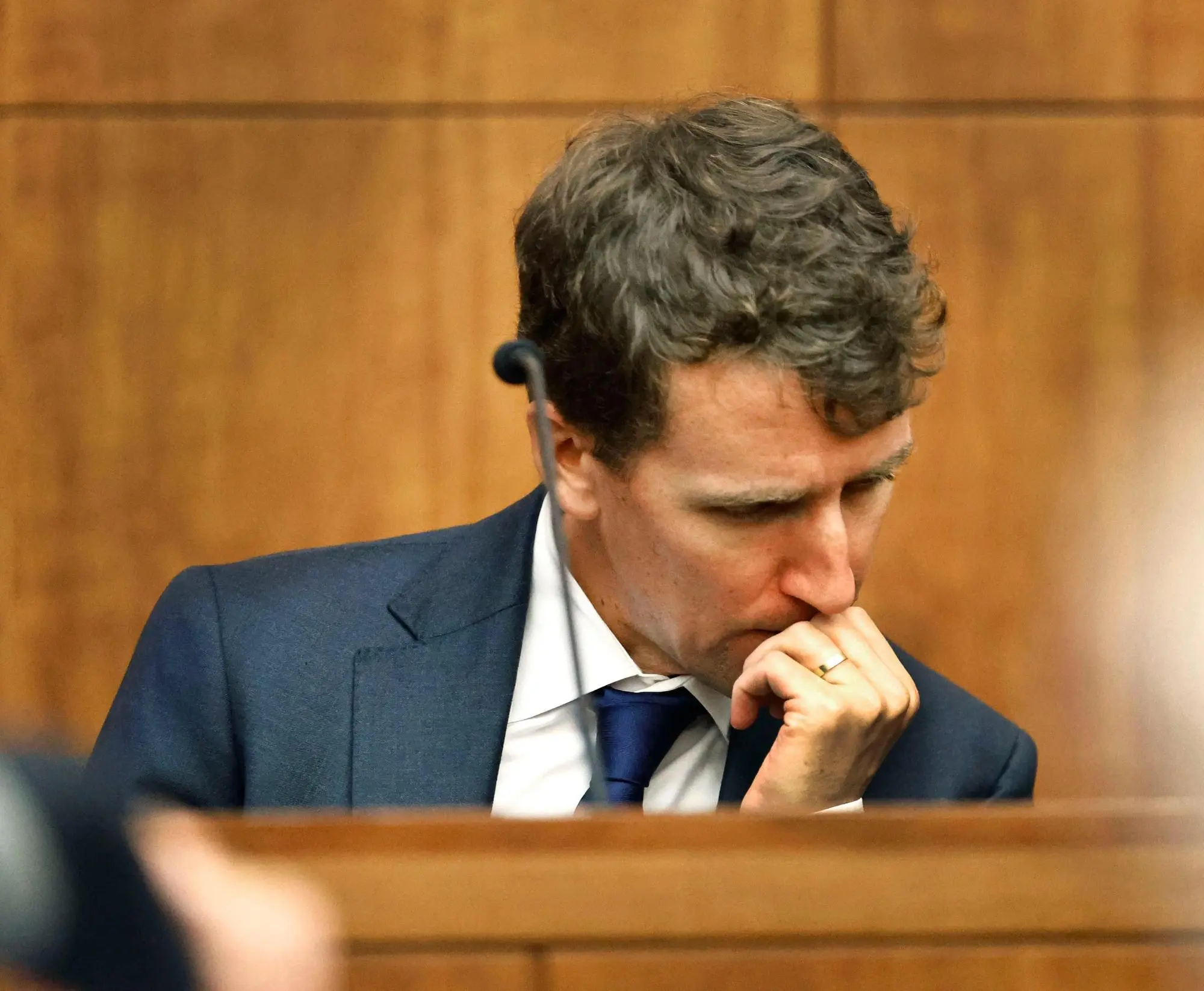
Patrick Clancy spoke out in a “60 Minutes” segment for the first time since a mistrial was declared in the case of his ex-wife Lindsay Clancy, remembering the tragic death of his children and speaking on the barrage of online attention and hate.
Read more Trump’s ‘grand conspiracy’ probe presses on with subpoenas after the lead prosecutor’s exit
“It’s deeply harmful to the legacy of my children,” Clancy told the “60 Minutes” correspondent of the theories that he’s “uncaring, unfaithful, and even the murderer of his children.” “It is a huge distraction from what really matters here, which is perinatal mental health, and it’s done real harm to real people, myself included, but also others.”
Patrick Clancy had so far remained quiet since the intensive scrutiny brought on by the Lindsay Clancy trial on charges of killing their three children, which ended in a mistrial on Sept. 4.
Starting the interview, Patrick Clancy remembered the night his children 5-year-old Cora, 3-year-old Dawson and 8-month-old Callan in January 2023 were killed and the months after, saying he didn’t know anything about how to manage postpartum mental illness before this experience.
“I think mental illness has this ability to be tragically deceptive, so I’m sure there are things that I didn’t see,” Patrick Clancy said.
December was when Lindsay really hit a low point, her ex-husband said.
“Just a huge lack of sleep, deep deep depression, intrusive thoughts, and at the end of that month, she went to the hospital,” Patrick Clancy said.
While Cora and Dawson died that January day after their mother’s attack in their home, Callan survived for four days after. Patrick Clancy recalled how “grateful” he was for those four days with his son before he died in his arms.
“I remember just thinking, just give me one, just give me one kid, and I would raise him as best I could, and I would give him the best life I possibly could, and I’d tell him about his brother and sister,” Clancy said. “And I was holding out hope for that, and then when I got to the hospital, I saw the doctor. I saw the look on her face, and I knew that it wasn’t going to be a good prognosis.”
Clancy recalled forgiving his wife in the days after.
“I saw headlines that said killer mom and baby murderer, monster, and none of them were accurate,” said Clancy. “I believe that it was her mental illness that caused that. So I shared those words, and I think when it comes to forgiveness, I also felt that if I didn’t get there, I would be eaten up inside forever.”
Read more The schools turning to AI to rate students beyond standard grades
The father said he thinks he “did the best I could with what I had at the time, and I live with the outcome, I live with it every day.”
After the tragedy, Clancy said he was suicidal, deciding to leave town after driving by the kids’ school one day as children were being dropped off. After moving to New York, he marked his son’s first birthday with a candle in St. Patrick’s Cathedral.
Clancy’s new wife, Rachel Danis, also spoke during the interview, saying all she can do is “honor (the children) and allow Pat to grieve.”
Asked about his intentions to start a family with Danis, Clancy said, “I can’t wait to tell them about their brothers and sister.”
Of the trial and the scrutiny he received for his testimony, Clancy said “testifying is very difficult.” On the second day before they played the 911 call, he said he had a “massive traumatic panic attack” and was put in an ambulance.
“They offered me some medication,” said Clancy. “But I said I don’t want it because I want to go back and I want to finish this, so I can be done with this.”
Clancy noted the scrutiny and hate “is painful to see, and it makes it difficult to be in public.”
Read more Converse apologizes and pulls sneaker ad that critics said included racist imagery