
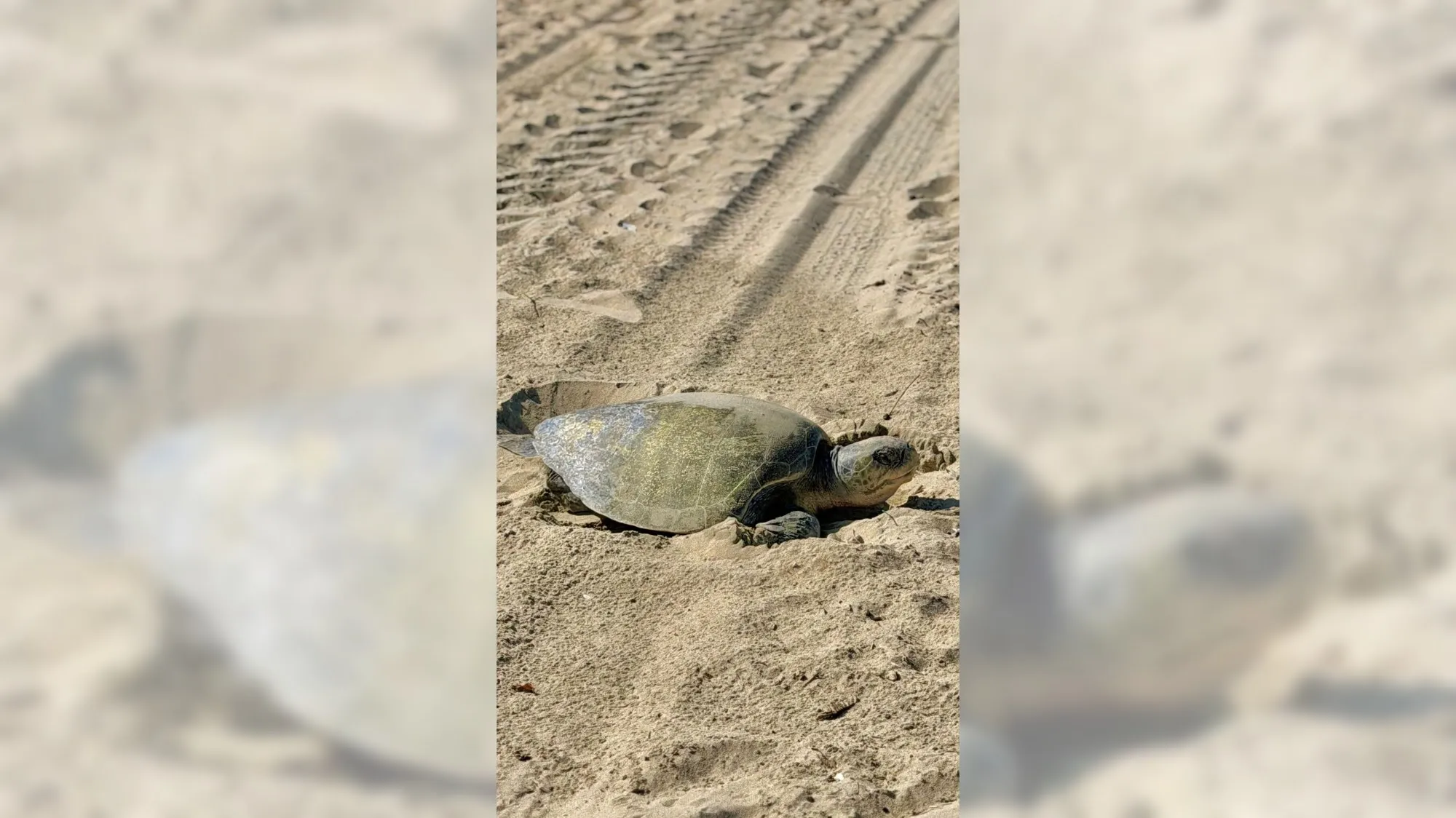
At first, it seemed as if the sea turtle was injured.
But responders to the wayward olive ridley sea turtle realized the creature wasn’t hurt, rather she was laying eggs on the sand, the first natural nesting recorded for any sea turtle species on the West Coast of the mainland United States.
Read more DoorDash to pay $131M for underpaying delivery workers in New York City
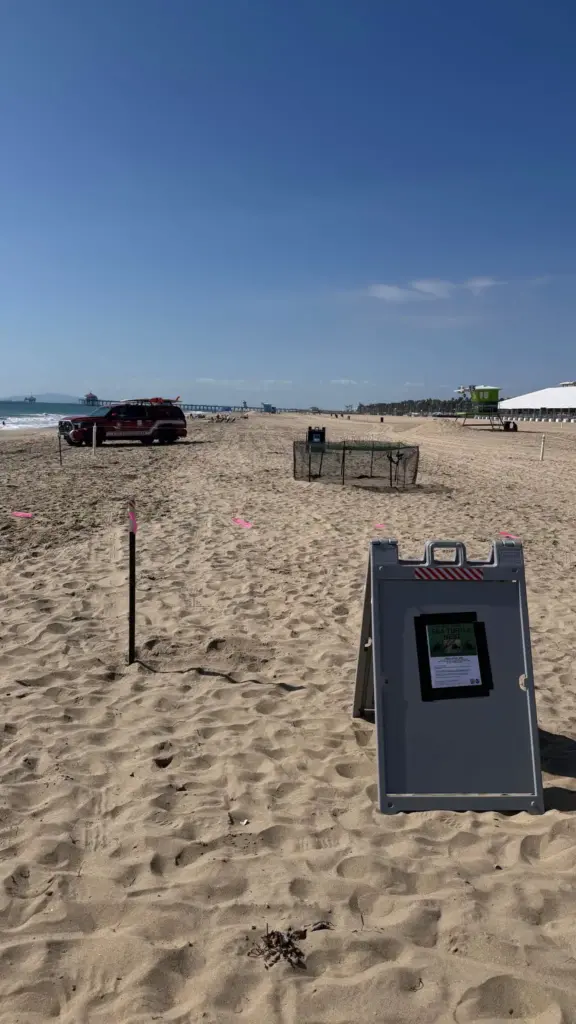 Two reports of olive ridley sea turtles off the coast this month, first in Surfside and another off Huntington Beach Pier, mark the first-ever documentation of a sea turtle nesting off the West Coast. (Photo courtesy of Huntington Beach Marine Safety/NOAA West Coast Fisheries)
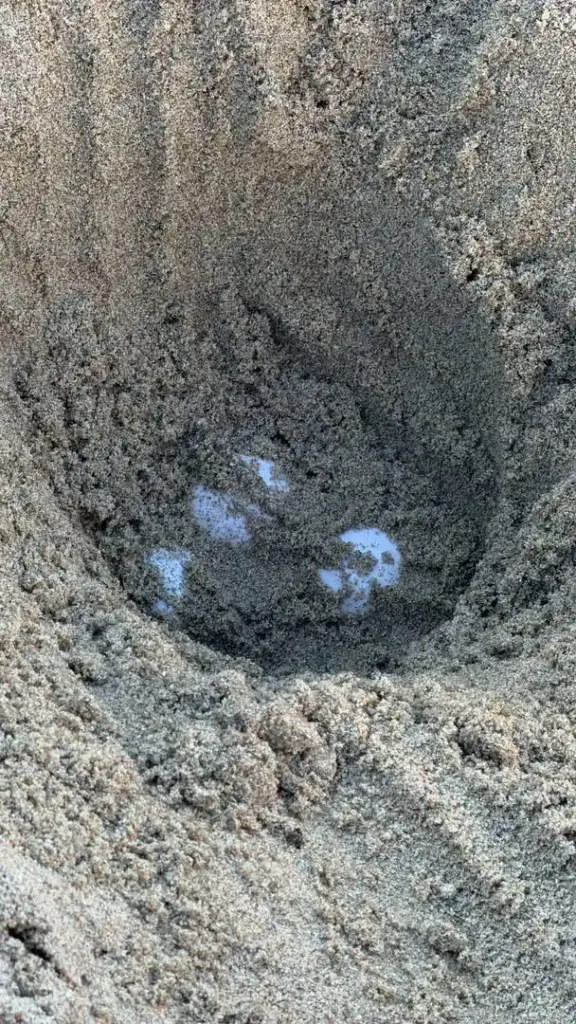 Two reports of olive ridley sea turtles off the coast this month, first in Surfside and another off Huntington Beach Pier, mark the first-ever documentation of a sea turtle nesting off the West Coast. (Photo courtesy of Huntington Beach Marine Safety/NOAA West Coast Fisheries)
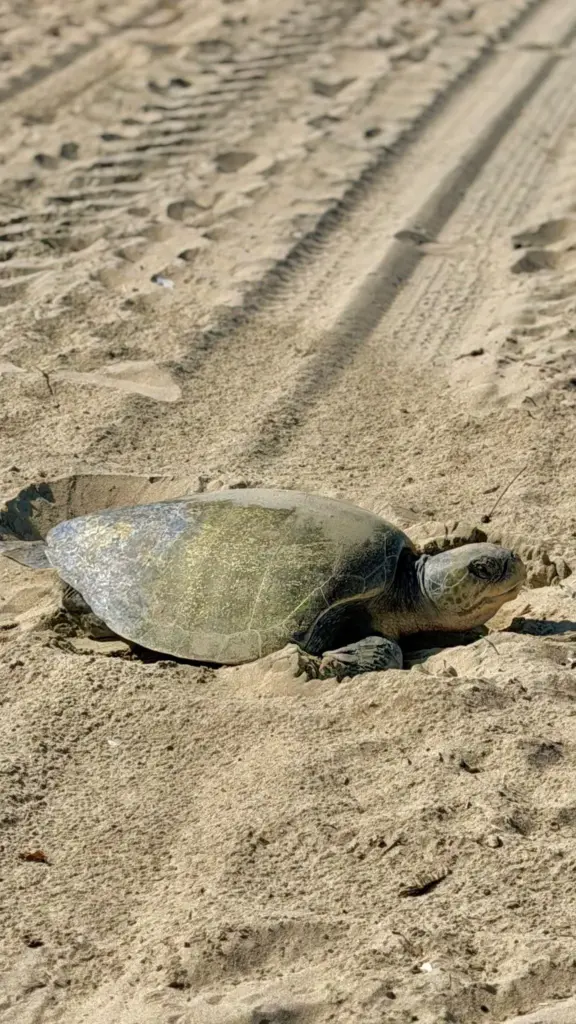 Two reports of olive ridley sea turtles off the coast this month, first in Surfside and another off Huntington Beach Pier, mark the first-ever documentation of a sea turtle nesting off the West Coast. (Photo courtesy of Huntington Beach Marine Safety/NOAA West Coast Fisheries)
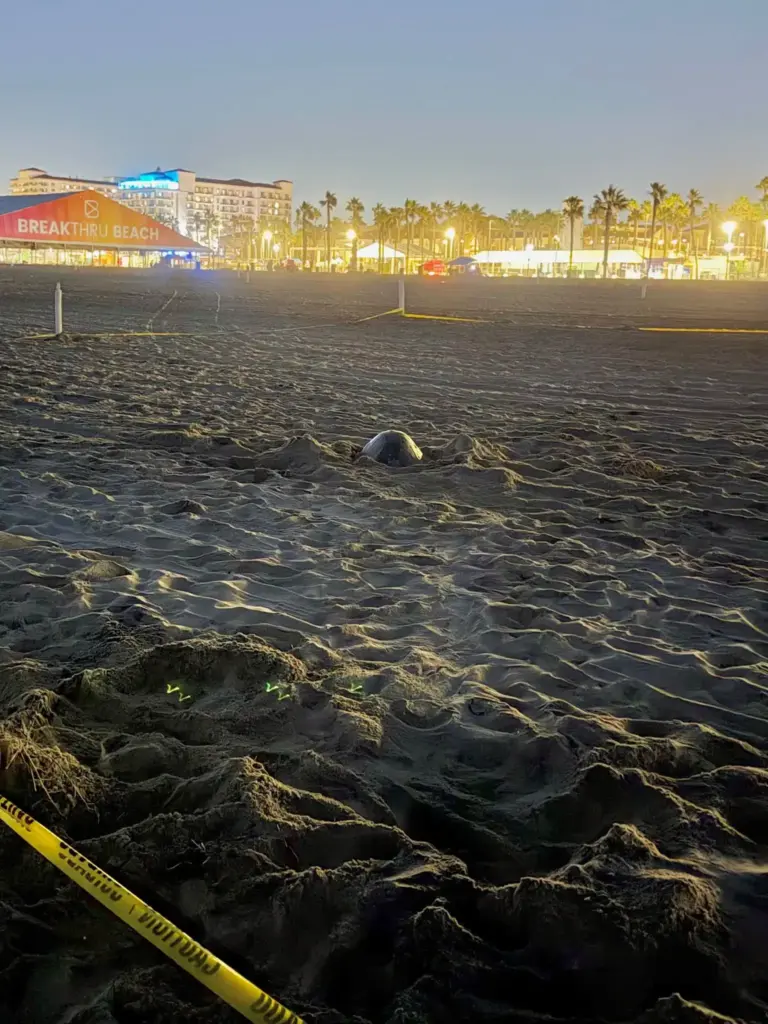 Two reports of olive ridley sea turtles off the coast this month, first in Surfside and another off Huntington Beach Pier, mark the first-ever documentation of a sea turtle nesting off the West Coast. (Photo courtesy of Huntington Beach Marine Safety/NOAA West Coast Fisheries)
Huntington Beach Marine Safety lifeguards responded to reports of a possibly injured sea turtle near Surfside, which borders Seal Beach, on Wednesday, Sept. 16.
When they realized the turtle was laying eggs, a perimeter was established in partnership with Seal Beach’s lifeguards. The National Oceanic and Atmospheric Administration and U.S. Fish and Wildlife Service were then notified, according to a social media post by the city.
The NOAA Fisheries West Coast determined the moment was unprecedented, the first recorded.
Three days later, on Sept. 19, Huntington Beach lifeguards responded to another sea turtle sighting near the pier and discovered a turtle laying eggs.
Another perimeter was created, with NOAA personnel returning to the area on Monday, Sept. 21, to establish a more permanent protected perimeter around the nesting site.
It is unclear at this time whether there are two turtles involved.
The NOAA team will monitor the nest throughout the incubation period, which typically lasts for 45 to 60 days.
“Both areas are fenced, protected, and have interpretive signage,” NOAA officials said. “We urge beachgoers to steer clear and not disturb the sites.”
The appearance of the nests comes just ahead of the Pacific Airshow in Huntington Beach, with one nest smack dab in a viewing area typically crammed with thousands of beachgoers who show up for the mega event.
Read more A US military plane crashes near a US air base in Germany, injuring the pilot
“We remind the public to keep a respectful distance from these animals and the protected nesting sites,” officials said in the post on social media.
Sea turtles are protected under the Endangered Species Act.
Olive ridley turtles are the smallest of the sea turtles with adults weighing up to 100 pounds and growing to 2.5 to 3 feet in length.
They are estimated to live 30 to 50 years, according to NOAA.
Sea turtles aren’t totally foreign to the region, with a green sea turtle community living in the San Gabriel River in Seal Beach.
The olive ridley sea turtles are found worldwide, primarily in the tropical waters of the Pacific, Indian and Atlantic oceans, with major Pacific nesting populations spanning Mexico, Nicaragua, Costa Rica, and Panama.
“While occasionally seen in Southern California following warm currents, this species has never been documented to nest in the United States,” NOAA officials said.
An olive ridley sea turtle was spotted swimming about six miles off the San Clemente Pier about a month ago by a Dana Wharf Whale Watching charter boat.
The sighting of the sea turtle is just one of many warm-water species finding their way to Southern California as unseasonably warm waters linger in the mid-70s. Hammerhead sharks have been spotted several times in recent weeks, sea snakes have made headlines and a whale shark was reported off of San Clemente Island recently.
Read more Day and night get equal billing on Tuesday. A guide to the fall equinox