
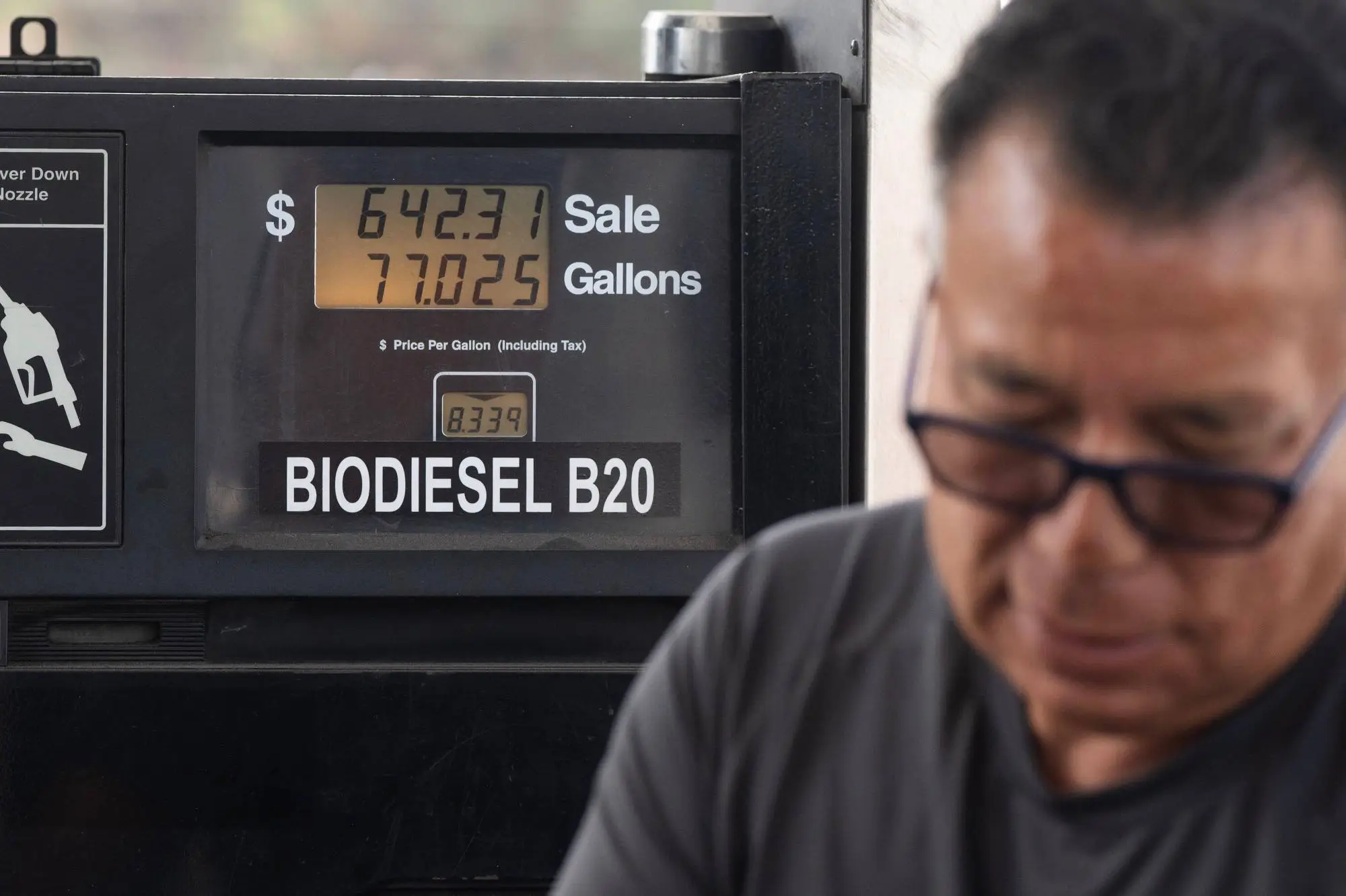
Carlos Quintanilla, a trucker with Max Transport, grimaced Thursday as he turned into the SC Fuels station in Anaheim to top off his 16-wheeler’s twin-fuel tanks with diesel.
Read more CIF denies Huntington Beach, Crean Lutheran football players full eligibility
Two days earlier, he paid $750 at the same station to fill his tanks as prices topped a record-setting $8.44 per gallon — the highest price for diesel ever recorded nationwide. His total for two fill-ups in 48 hours? $1,392.90.
“I’d hate to be the one paying for this,” said Quintanilla, who regularly picks up containers from the ports complex in Long Beach and Los Angeles, hauling goods to Inland Empire warehouses in Riverside and Rancho Cucamonga. “There’s nothing we can do about it.”
Southern California diesel prices in September are roughly $3.27 more per gallon than the state average a year ago, according to AAA Fuel Prices. The price of diesel has steadily increased over seven months as the U.S. led-war with Iran continues with no resolution in sight.
Those high prices have become a financial burden for truckers.
Jim Amen, president of Super A Foods in Commerce, says his transportation costs have risen dramatically to move goods from its warehouse to the chain’s eight family-owned supermarket stores that cater to Latino and Asian shoppers.
“It takes profit margins down,” he said. “It’s really tough to raise prices in this market because of the competition with Walmart and Costco, especially since (Donald) Trump became president. He cut out a lot of the food stamps that we relied on.”
The Trump administration cut the Supplemental Nutrition Assistance Program — often referred to as food stamps — for more than 3.5 million low-income beneficiaries under new rules imposed by last year’s One Big Beautiful Act, according to an analysis by the Center on Budget and Policy Priorities. Those cuts have affected how poor families pay for food, crimping revenue for grocers.
Everyone suffering
The financial pain of diesel’s runaway prices is being felt more acutely by mom and pop trucking outfits, which have seen a spate of bankruptcy filings in recent months.
Trucking sources say some of these smaller fleets have become cash-strapped because it’s taking vendors 30-60 days to pay for goods delivered, further aggravating balance sheet problems.
In September, A&B Transportation Inc. in Lake Elsinore, Alvand Transportation Corp. in Glendale, and Rothchild Transportation LLC in South Gate filed for bankruptcy protection, according to trade publication FreightWaves. Another carrier in Signal Hill, National Road Logistics LLC, filed in April.
Others have filed in Northern California in recent months — including NTL Truck Line, south of Stockton, and Commodity Transporters Inc. in Merced.
“Rising diesel costs are adding to the financial strain on smaller trucking companies in California, where they already face some of the highest taxes in the nation and costly regulatory requirements,” said Eric Sauer, chief executive officer of the California Trucking Association, a trade group in Sacramento.
Small trucking operators who own their own 16-wheelers make up 90% of the nation’s truckers.
One trade group, called the Owner-Operator Independent Drivers Association, dismissed social media reports of an Oct. 1 strike by its membership over the diesel crisis.
“We are not, have not been, nor plan to have any involvement whatsoever,” said OOIDA spokesman George O’Connor. “It is not possible for OOIDA to organize such an action because of the makeup of our membership. Owner-operators are not considered employees but rather individual small business operators. As such, for us to get together for the purpose of collectively setting rates or organizing boycotts would be a violation of anti-trust laws.”
The social media campaign is reminiscent of “Trucker parades for Trump,” grassroots semi-truck and pickup caravans organized by supporters of Trump during the 2020 and 2024 presidential campaigns.
This time, the social media campaign may have originated from a clip posted Sept. 15 from one Instagram user, “red_pill_patriot_1776.”
“Strike until the fuel prices drop. Shut down Oct. 1. Park it. Stand together,” he said on the post with more than 6,000 shares. “Truckers are done. You know what that means if they do that? Food shortages. If trucks aren’t moving, you’re not getting anything.”
On Facebook, poster Larry Cothran asked truckers in a clip whether they planned to strike.
Read more Trump said he would campaign in midterm battlegrounds. He’s starting in deep red states instead
“What’s the point of the strike? If you strike, you’re supposed to strike until you get what you want. If you only strike two or three days, that’s a vacation. Ain’t nothing going to change,” said one trucker responding to Cothran. “So what’s the purpose behind it?”
No relief coming
Trucking sources say they don’t expect to see relief at the pump anytime soon.
They point to a crude oil supply chain feeling the stress of the U.S.-led war in Iran that has dragged on much longer than originally planned, recent refinery closures in California pinching supplies, growing demand in Europe for diesel fuel taking away from the U.S., and rising expenses in California to run trucks on cleaner-burning fuel, according to the sources interviewed.
One logistics company that uses a cleaner-burning alternative to standard diesel is seeing shortages beginning to show up at fuel depots across the state.
“We’re committed to the state. It’s the largest gateway in the United States,” said Jim Gillis, president in charge of the Pacific region for IMC Logistics in Compton. “However, from an employer standpoint, California is exceedingly hard to do business in. There’s a lot of praying and hoping that we get some relief quickly. But the more worrisome aspect of this are potential shortages.”
IMC’s fuel supplier has warned the trucking firm of potential diesel shortages — especially out of its Bakersfield fuel depot. Gillis explained that the agriculturally rich Central Valley is drawing huge volumes of diesel fuel to operate heavy machinery needed during the critical harvest season.
“What I’m starting to see is an inability to deliver fuel to certain locations, like Bakersfield, where typically we’re receiving two to three deliveries per week, but we’re now being told we can only get one delivery per week,” said Gillis, who leads short-haul trucking and warehousing operations and sales in the West Coast and Nevada. “I’m primarily concerned about getting fuel into our trucks and servicing the customers at a reasonable rate, or without having to assess these huge surcharges to cover some of my costs.”
“We’re in picking season right now for the agriculture guys in the Central Valley, so they’re pulling diesel because of the refinery closures,” he said. Gillis explained that pulling diesel from storage in Northern and Southern California would only exacerbate a shortage.
Global supply disruptions
Gillis’ headaches relate to a global supply chain upheaval.
Since Feb. 28, the Iran war tightened the flow of crude oil through the Strait of Hormuz, a major water passageway in the Middle East that carries 20% of the world’s supply.
Another problem has emerged with the European Union heavily buying crude oil from U.S. suppliers. The EU is restricted from buying oil from Russia, which is having its own troubles caused by heavy bombing from drone strikes launched by Ukraine on its energy infrastructure.
Additionally, the higher diesel prices in the U.S. have stoked fears of inflation, with the Trump administration in recent days weighing an export ban — or certain restrictions — to limit shipments overseas.
The supply shortages also are growing in California, fueled by recent oil refinery closures, including the Phillips 66 facility in Wilmington, which ended production in late 2025, and Valero’s Benicia refinery in the Bay Area, according to Gillis.
The refinery closings have reduced the state’s refining capacity by nearly 20%.
“We assess our customers a fuel surcharge, so all of the swings in pricing we absorb. What’s happened over the last month is our customers’ wallets are getting pinched, and California is becoming a more unattractive location to bring their cargo in,” said Gillis. “We’re already paying the highest port fees (in Long Beach and Los Angeles) and now we’re paying the highest fuel surcharges in the nation, so it’s ultimately the consumer who pays this bill. It just takes a while to trickle down.”
IMC, with headquarters in Nashville, has 2,300 commercial trucks nationwide. It expanded into California in 2017 and today operates roughly 350 trucks in the state, moving shipping containers over a short distance. In late 2024, the Swiss global logistics giant Kuehne+Nagel bought a majority stake in IMC Logistics to expand its North American sea logistics footprint.
“We’ve got deep enough pockets that we can weather these dramatic price increases, but the smaller companies, the guys that have 10 trucks or less, when fuel goes up $1 they have to assess a fuel surcharge, and they’re not getting paid for 60 days,” observed Gillis. “There’s a cash crunch in these companies that they’re feeling to an extent that they never have before.”
Meanwhile, L.A.’s traffic-jammed freeways aren’t helping.
At IMC’s fuel depot along East Artesia Boulevard in Compton, trucker Juan Delgadillo kept a watchful eye on his smartphone Thursday morning as traffic began to choke the northbound lanes of the 5 freeway after a crash near Gorman.
Instead of a straight drive up the 5 to Bakersfield, about 135 miles away, he considered an alternative route that would take him over State Route 14, then through the Tehachapi Mountains along state route 58 into Bakersfield. The alternative 200-mile route would cost an additional $84 to $100 to travel 70 miles, avoiding the 5 traffic jam but adding four or more hours to his drive.
It’s not the only problem for Delgadillo. The extra time on the road cuts into his allowed drive time in a single workday under federal regulations. Commercial truck drivers can drive a maximum of 11 hours in a 14-hour driving window.
“The 5 takes a lot of money to drive,” said Delgadillo, who is paid on IMC’s clock. “A lot of owner-operators are refusing to come to California for this reason.”
Read more In race to reach 50% zero-emission buses by Olympics, Metro will buy 220 e-buses, options for more
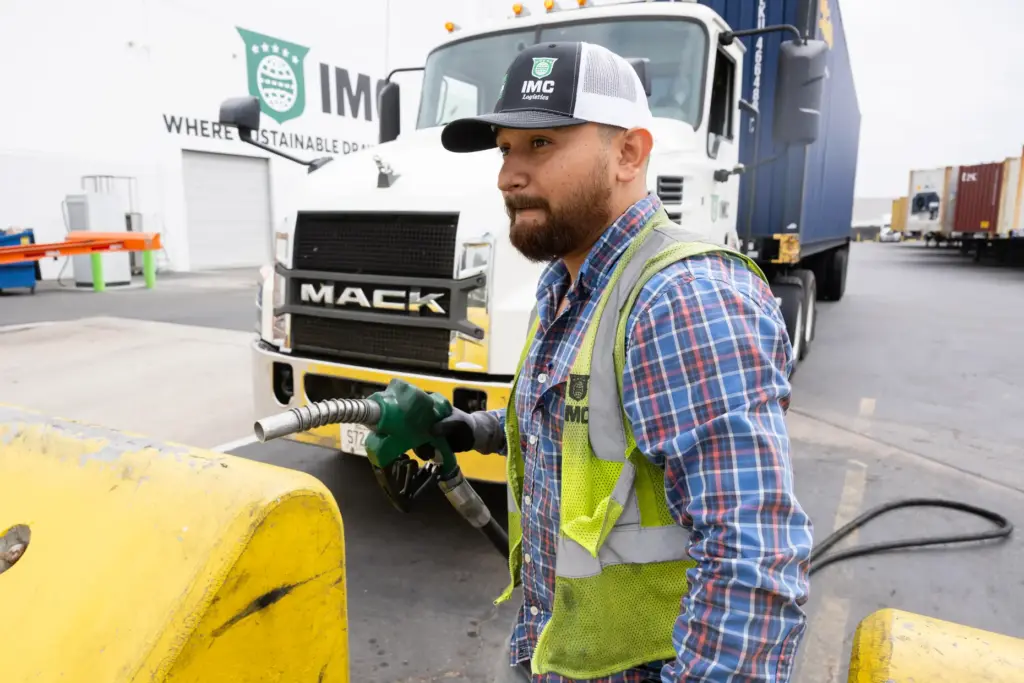 Truck driver Juan Delgadillo tops off his diesel truck at IMC Logistics in Compton on Thursday, September 24, 2026. (Photo by Drew A. Kelley, Press-Telegram/SCNG)
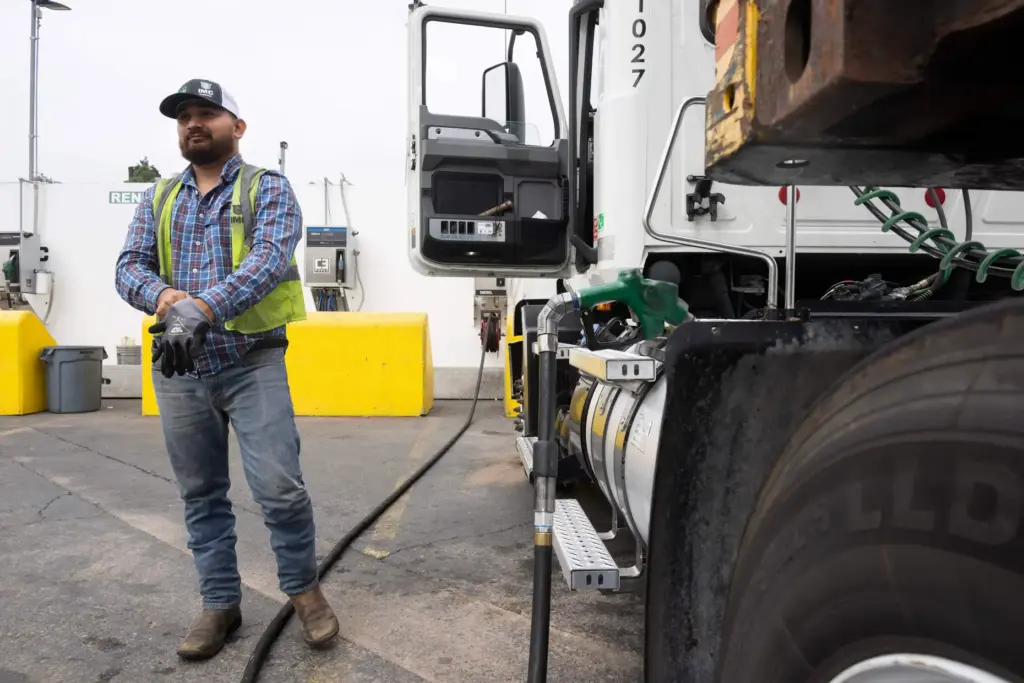 Juan Delgadillo tops off his diesel truck at IMC Logistics in Compton on Thursday, September 24, 2026. (Photo by Drew A. Kelley, Press-Telegram/SCNG)
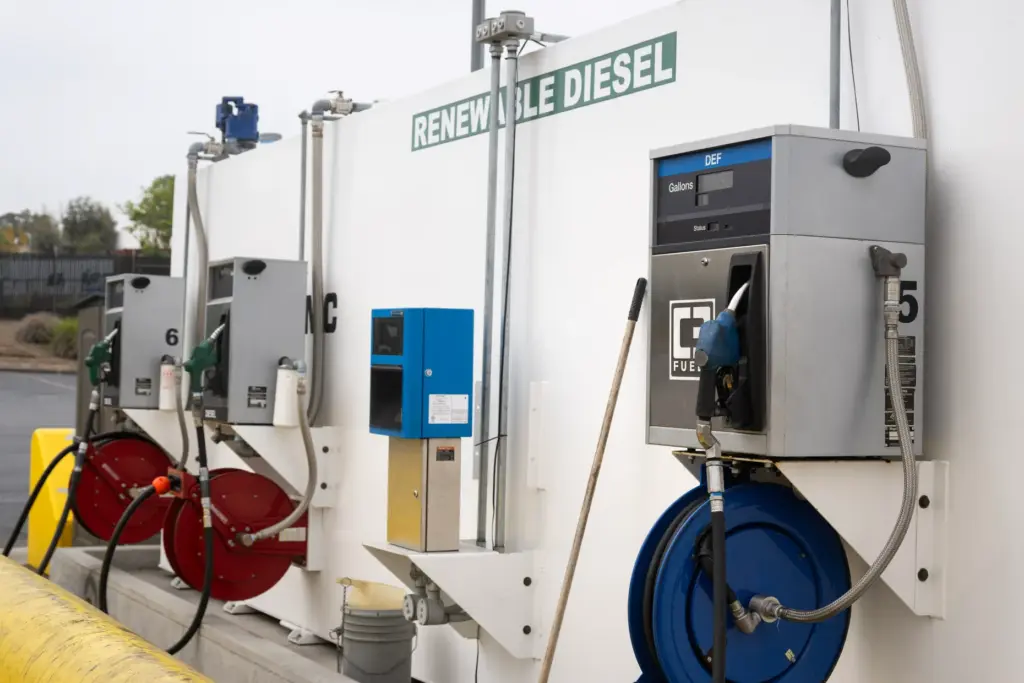 IMC Logistics’ diesel refueling station in Compton on Thursday, September 24, 2026. (Photo by Drew A. Kelley, Press-Telegram/SCNG)
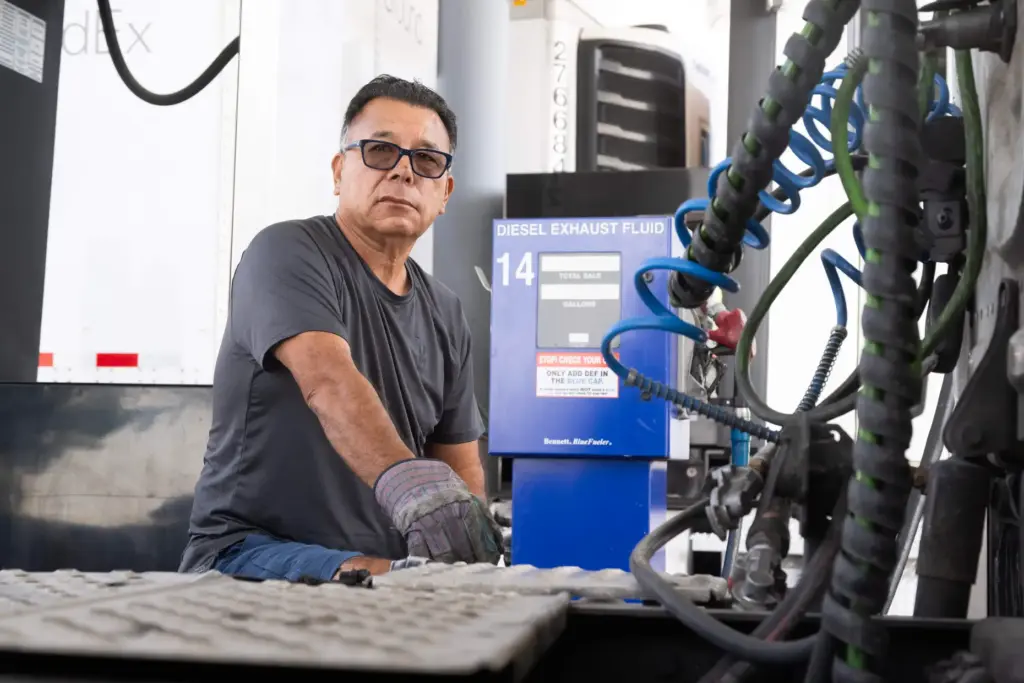 Truck driver Carlos Quintanilla refuels his diesel truck at SC Fuels in Anaheim on Thursday, September 24, 2026. (Photo by Drew A. Kelley, Press-Telegram/SCNG)
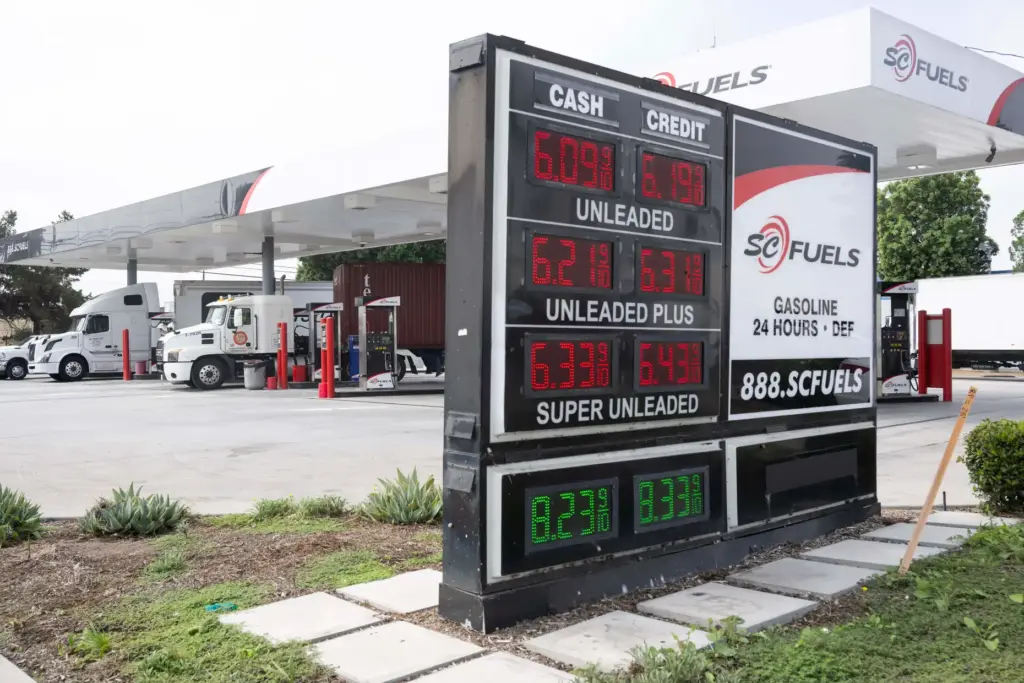 SC Fuels offers diesel for $8.23 per gallon in Anaheim on Thursday, September 24, 2026. (Photo by Drew A. Kelley, Press-Telegram/SCNG)
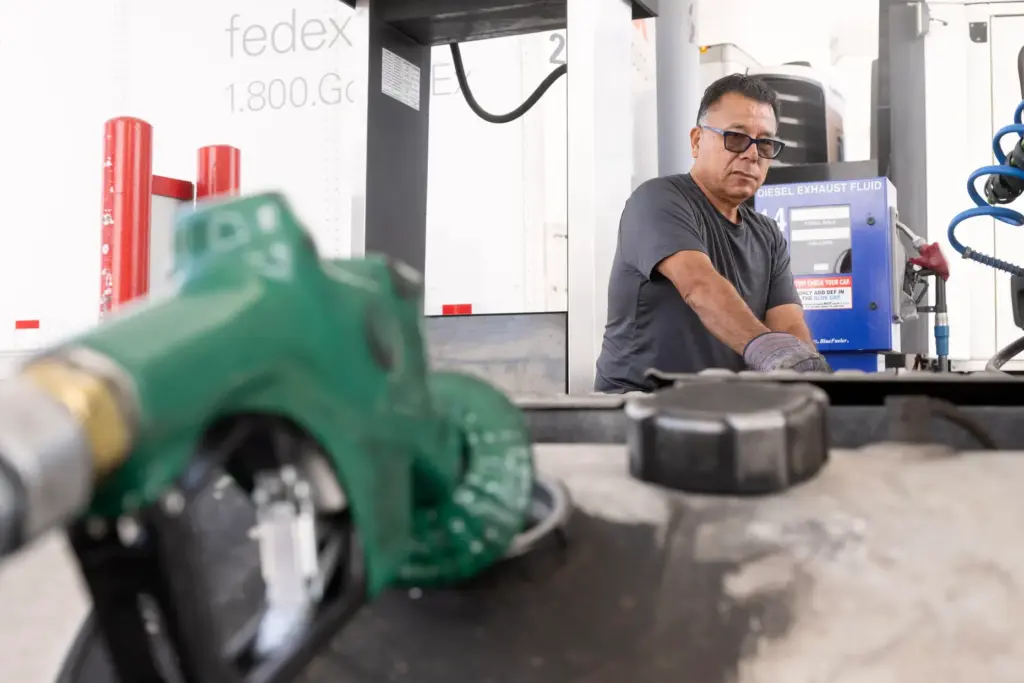 Truck driver Carlos Quintanilla refuels his diesel truck at SC Fuels in Anaheim on Thursday, September 24, 2026. (Photo by Drew A. Kelley, Press-Telegram/SCNG)
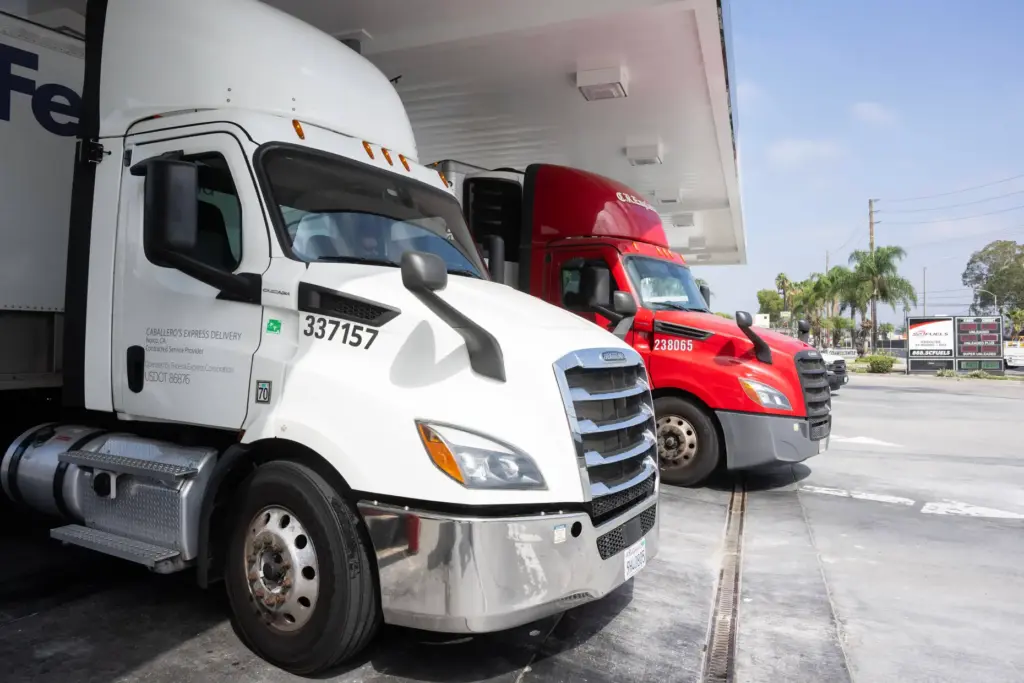 Diesel trucks refuel at SC Fuels in Anaheim on Thursday, September 24, 2026. (Photo by Drew A. Kelley, Press-Telegram/SCNG)