
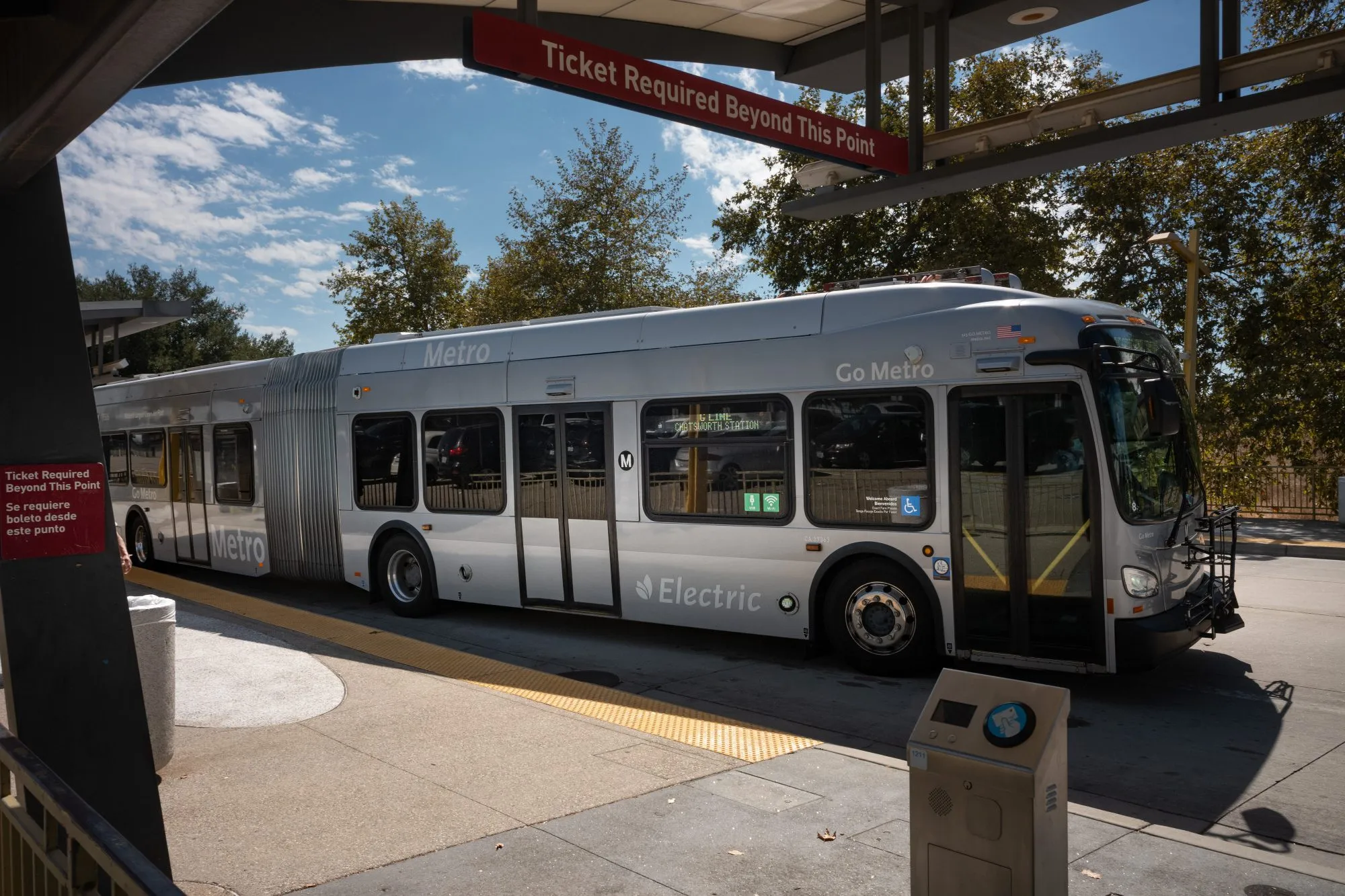
LA Metro’s move to buy 220 battery-electric buses on Thursday is being called a positive step toward eventually having an all zero-emission fleet by 2035 or sooner.
Read more Tasia Fortune’s hanging was ‘staged’ after her death in a drug dispute, Mississippi police say
But many still question if the agency is losing the race to reach at least 50% of its fleet of about 2,000 buses become all-electric by the start of the LA Summer Olympic games in July 2028.
“It will be hard for them to get to 50% (by the Olympics),” said Adrian Martinez, director of EarthJustice’s Right to Zero campaign on Friday. “But we will continue to push them to go hard on that goal.”
Earthjustice praised the purchase, saying LA Metro is on track to electrify 20% of its fleet but the environmental group would like to see L.A. Metro keep up with the rest of the world, particularly cities that made the changes for use during their own Olympic games.
For example, Paris electrified nearly 1,000 buses by the 2024 Summer Games. Milan, which hosted the 2026 Winter Games, electrified half their bus fleet, EarthJustice reported.
LA Metro is planning on providing buses to all Olympic venues, which will be spread out from Hansen Dam in the San Fernando Valley to Long Beach Harbor. The agency will need to borrow about 1,750 additional buses from partnering agencies to meet its goals.
Martinez said LA Metro can ask to use electric-powered buses currently on the road from Santa Monica’s Big Blue Bus, Los Angeles Department of Transportation (LADOT) and other Southern California transit providers running battery-electric transit buses.
“There are a lot of electric buses in California,” he began. “Our hope is they can borrow (electric) buses from these other transit agencies in the state. This would be a unique opportunity to showcase that we have a lot of electric buses. But the agencies have to work together.”
A coalition of environmental groups, including EarthJustice, and labor unions called for speeding up electric bus purchases in 2025, saying LA Metro would take 250 years at the current pace to reach its 2035 goal.
By a 10-1 vote, LA Metro’s board moved the needle on Thursday by approving nearly $338 million for the manufacturing and delivery of 220 battery-powered electric buses to its fleet, a doubling of its electric fleet.
The board directed staff to enter a contract with ElDorado National California, Inc., also known as ENC for a total contract amount of $382,355,185. The 40-foot buses will be used to replace older buses with zero-emission battery-electric buses, said LA Metro’s Matthew Dake, deputy chief of vehicle maintenance and engineering.
He told the board the purchase will be helped by $168 million in state grant funding.
L.A. Mayor and Board Chair Karen Bass added an amendment, holding in abeyance an additional 1,600 battery electric bus purchases from ENC until LA Metro is satisfied with working conditions at the company’s Riverside plant and other conditions that need to be met.
LA Metro can then purchase more e-buses in increments of 300, or decide to re-bid future purchases.
L.A. County Supervisor and LA Metro Board member objected, saying ENC has only built 16 electric buses and doesn’t have enough experience with this technology. The staff said ENC scored higher in their ratings sheet than New Flyer of America, Inc., a company with a plant in Torrance that has built a lot more electric buses in a union shop.
Read more Rams WR Puka Nacua doubtful to play vs. Broncos
Hahn said New Flyer has built 1,500 battery-electric buses, as compared to 16 at ENC. But ENC has been in the bus-manufacturing business since 1975 and since then, has produced more than 10,000 transit vehicles. The company said it is open to discussions about union representation.
“I know that Metro can’t legally require to bid this as union, but it’s still disappointing to me because if we’re anything in L.A. County, if we’re anything in L.A., we are very union-friendly, and that’s kind of what we’ve built our reputation on,” Hahn said.
Some representatives of the United Auto Workers union were concerned about low wages and poor working conditions at the Riverside company, a charge many ENC workers who spoke at the meeting said was not true and reported a positive work environment.
“A pro-worker green economy must include the right for workers to have a voice through a labor organization of their choosing,” said Robert Ankerman, a member and organizer with United Auto Workers Region 6.
Hahn also mentioned hiccups with this technology, saying LA Metro staff must monitor progress and quality of the 220 buses being purchased.
In fact, Protera, an electric bus company from South Carolina that in 2017 established a manufacturing facility in City of Industry headed by Ryan Popple, Tesla CEO Elon Musk’s former finance director, began producing and selling electric buses to transit agencies. But by 2023, the promising company closed its doors.
In 2021, Foothill Transit began experiencing problems with its electric buses. One caught fire. Others stopped working before their warranties expired. Also, the San Gabriel Valley bus agency had trouble getting replacement parts for its e-buses. Of its fleet of 32 electric buses at the time, 67% percent were not operating during 2019 and 2020 as maintenance costs rose, the transit agency reported.
At least two Proterra buses began giving Foothill Transit problems, the agency reported. The bus agency serves riders in the San Gabriel Valley, into Los Angeles as well as parts of the Inland Empire.
In 2021, Foothill Transit was faced with trying to return 31 first-generation electric buses with multiple mechanical problems.
The local transit agency has been a pioneer in swapping out compressed natural gas (CNG) buses for battery-electric ones, which reduces smog components and greenhouse gases that cause global climate change. Also, the agency is one of the first in the state to begin fulfilling a state mandate for 100% zero-emission buses by 2040.
Environmental groups praised LA Metro for getting back on board with the purchase of more electric buses. The agency has already replaced compressed natural gas buses with electric buses along the BRT G Line (formerly Orange Line) in the San Fernando Valley. Also, electric buses run on the J Line running between El Monte and the Harbor Gateway Transit Center.
Some of the 220 new electric buses will operate in El Monte and Carson, two communities disproportionately burdened with poor air quality due to air pollution from vehicles on freeways and major roads, according to EarthJustice.
Tailpipe pollution from vehicles burning fossil fuels will produce nitrogen oxide compounds (NOx), and also particulate pollution. The most dangerous kind are PM10, which contain tiny particles that can get into the lungs and even the brain, causing disease.
“LA Metro’s approval of 220 battery-electric buses is a major win for cleaner air, healthier communities and an electric transportation future,” Sierra Club Clean Transportation for All Campaign Organizer Jennifer Cardenas said in a statement. “We applaud Metro for taking this important step toward delivering on its zero-emission bus commitment. Zero-emission transit is a smart investment as families look for cleaner, more affordable ways to get around.”
Read more Takeaways from Trump-Xi summit: Lots of pomp and even more punting on tensions in US-China relations
City News Services contributed to this report.