
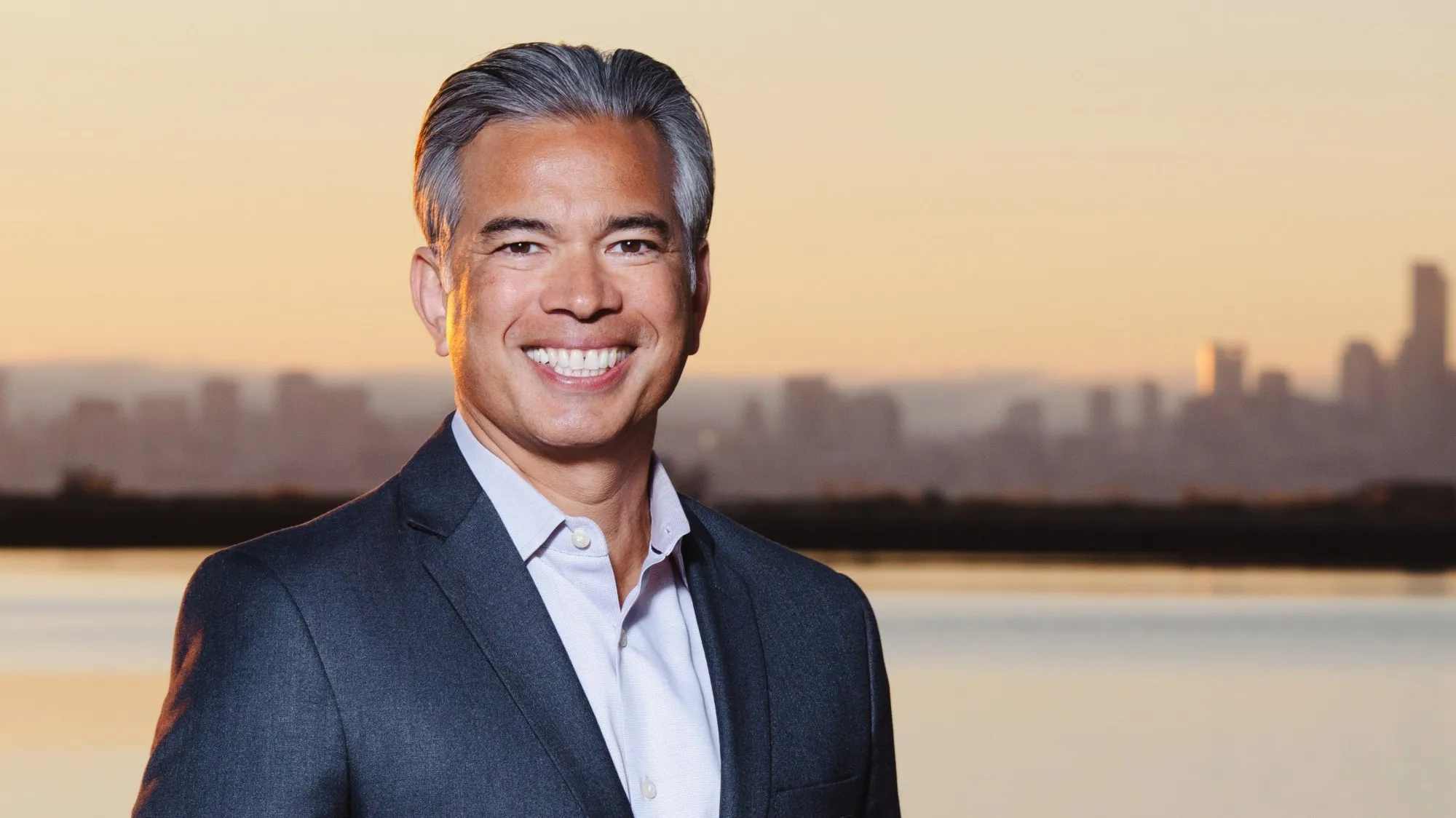
Ahead of the November general election, the Southern California News Group compiled a list of questions to pose to the candidates who wish to represent you. You can find the full questionnaire below.
Read more Michael Gates, California attorney general candidate, 2026 election questionnaire
Name: Rob Bonta
Age: 54
Current job title: California Attorney General
Political party affiliation: Democrat
Incumbent: Yes
Other political positions held: Alameda City Councilmember, California State Assembly
City where you reside: Alameda
Campaign website or social media: https://robbonta.com
Should the attorney general’s office sue the Trump administration over its active deportation of people living in the U.S. with expired visas — but who have pending applications to renew them or to gain more permanent residency status? Explain your position. (Please answer in 200 words or less.)
It’s wrong for the federal government to contribute to conditions for technical immigration violations and then punish people for the consequences. When you follow the rules by filing your paperwork on time, pay every fee, and wait in line, the government should timely act and provide you with the process the law requires.
The Fifth Amendment promises due process to everyone on American soil, regardless of status. Before the administration deports someone whose application is pending, they must have the opportunity to respond. Those rights are decided by law, not the president. As attorney general, I will defend them.
I won’t prejudge specific litigation. But my standard is consistent: Break the law or threaten Californians’ rights, and we will use every tool to stop you. When California has standing, we sue – that’s how I protected birthright citizenship, stopped ICE from using Medi-Cal data for enforcement, and challenged the unlawful federalization of our National Guard. When violations impact individuals, we stand behind them: filing amicus briefs, advocating before federal agencies, and exposing the injustice of these enforcement actions. If Trump stops breaking the law, we stop fighting him. Until then, I will show up, fight back, and deliver for California.
In instances where federal immigration enforcement clashes with California’s own policies or requests for state data, what legal criteria should the attorney general utilize to determine when the state complies or challenges? (Please answer in 200 words or less.)
We will stand up for state-held information and state policy against unlawful or inappropriate federal demands while honoring valid legal processes and our obligations under federal law.
My criteria is simple. If a valid law, warrant or court order requires California to share information, we comply. If a federal demand goes beyond what the law allows, breaks privacy protections in state or federal law, or skips the legal process, we challenge it – and let the courts decide.
Trump’s HHS handed Medi-Cal recipients’ health data to ICE; we sued and blocked it. His USDA demanded five years of personal data on every CalFresh recipient – Social Security numbers, home addresses – and threatened a billion dollars in funding to get it; we sued and blocked that too.
Californians share their personal information to access healthcare, feed their families, and vote – trusting it won’t be weaponized against them. I intend to make sure we keep that promise.
California has been on the receiving end of a lot of criticism and heat from the Trump administration recently over alleged fraud schemes, from real estate to healthcare and hospice care. How can the office target these schemes on its own, not only to bring justice for victims but also to alleviate pressure from the federal government? (Please answer in 200 words or less.)
My office is, and always has, protected the integrity of government programs and protected Californians from harm by investigating fraud and prosecuting wrongdoers. Criticism from the Trump administration is nothing more than political grandstanding, and it won’t change the facts: on my watch, California is rooting out fraud.
On my watch, we have opened up nearly 300 hospice-related investigations, filed more than 100 criminal cases, and won 51 convictions. In April, we broke up the biggest hospice fraud ring in state history, an operation out of Los Angeles that billed Medi-Cal $267 million for care nobody received. Twenty-one people are facing charges as a result.
We go after fraud because it preys on vulnerable people, steals taxpayer money, and violates the law, not because the president tweeted about it. We protected Californians from fraud before Trump; we are doing it now in spite of him, and we will be doing it long after he’s gone.
When it comes to addressing homelessness, how do you believe local governments can balance getting people off the streets while not criminalizing poverty? What is the attorney general’s role in helping local governments address homelessness? (Please answer in 200 words or less.)
Local governments set the ceiling on housing policy, but state law sets the floor. My job as attorney general is to ensure no city operates below it. I created the DOJ’s Housing Justice Team to hold cities to California’s housing laws – and since 2021, we’ve led cities to plan for 32,000 new homes and unlocked entitlements to build another 50,000.
Cities that block housing drive the affordability crisis, squeezing working families. When homes don’t get built, rents climb and first-time homebuyer costs skyrocket. It gets harder to build wealth, to live where you work, to stay in the community you love. It’s untenable.
Homelessness is the sharpest edge of that crisis, and housing combined with services – like mental health and drug addiction treatment – helps solve it. When Washington tried to defund permanent supportive housing, we sued and won. When we pair housing with behavioral health and addiction treatment, we give people a real shot.
On encampments, enforcement – such as restrictions on obstructing sidewalks and sleeping near sensitive locations – should be a last resort. Our frontline response must be to build supportive housing, prioritize outreach, and offer shelter. It is not a crime to be homeless.
Read more PEN America: Nearly 12,000 school book bans in a year, a record high
How do you assess California’s approach to juvenile diversion? And what would you change, if anything, to reduce serious youth offending while keeping young people out of the criminal justice system when appropriate? (Please answer in 200 words or less.)
We know what works. The science on adolescent development is clear: young people diverted into community-based programs – where they receive mentoring, mental health care, education, job training, and more – reoffend less than those pushed deeper into the system. Look at L.A. County’s own youth diversion program – 95% of enrolled young people do not reoffend, at a fraction of the cost of a cell.
I secured a stipulated judgment against Los Angeles in 2021 over illegal, unsafe conditions in its juvenile halls, went back to court to enforce it, and asked a judge to take those halls out of the county’s hands. I pushed the state board to strengthen standards for youth in detention.
We cannot keep running the same play with young people: incarcerate, release, repeat – and expect different outcomes. It is expensive for taxpayers, devastating for families, and it doesn’t improve community safety. California made the right call moving to county-based care, but when counties fail the kids in their care, I act.
Describe for us your prosecutorial philosophy. (Please answer in 200 words or less.)
Follow the facts and apply the law, without fear or favor, no matter how powerful the wrongdoer. My responsibility is to uphold the law, and my loyalty is to the people of California – not any party, administration, or ally. I go wherever the harm is, wherever the law is broken, and pursue justice.
We’ve made communities safer by removing illegal firearms and fentanyl, dismantling trafficking and retail crime rings, shutting down fraud targeting Medi-Cal and hospice care, holding Big Pharma, Big Tobacco, Big Oil, and Big Tech accountable for exploiting people, protecting seniors, veterans, and workers from scams and exploitation, suing cities that refused to build housing, and taking this president to court whenever he violated our laws.
I grew up in a trailer in La Paz, at United Farm Workers headquarters. My parents were social justice warriors who taught me that when something’s not right, you fight. That everyone deserves their California Dream – no matter how they look, speak, earn, or where they live. That’s why I’m here. This office is a public trust, and real public safety pairs accountability with prevention: treating addiction, keeping kids out of the system where alternatives work, building housing that keeps families stable.
What specifically do you think this office could do better to be transparent about its lawsuits? (Please answer in 200 words or less.)
We strive to be as transparent as possible. It’s why we put out press releases and statements about all of our actions, issue reports throughout the year, regularly hold press conferences and work hard to get back to all reporters who reach out with questions in a timely fashion, post updates across all social media platforms, hold roundtables in our communities, and why our website is full of information on every facet of our work. That’s not to say we’re perfect — there is always room for improvement. Right now, we’re working to update our website to ensure it’s as communicative and accessible as possible.
Tell us about a time you’ve changed your mind on a political position. What was it, and what changed your mind? (Please answer in 200 words or less.)
I’m constantly evolving in my views, and each office I’ve held has opened my eyes to a new way of governing.
On the Alameda City Council, I was focused on my community – issues that impacted my neighbors’ everyday lives: potholes, public schools, playgrounds. People affected by my vote sat 10 feet away; I’d run into them at the grocery store or my daughter’s soccer practice that weekend. In the Assembly, I learned to build partnerships with members whose districts looked nothing like mine and came to see hard-won compromise as effective democracy: durable laws reflecting many Californians’ interests at once.
As attorney general, I learned what it takes to put the bills I spent nine years authoring into action through implementation and enforcement. Effective government depends on trust. A statute is a commitment, and the greatest impact is whether people feel that commitment in their daily life.
I’m interested in evidence and open to argument. If I’m not growing, learning, and keeping an open mind, then I’m not doing my best by the people I represent. Fifteen years across three levels of government have deepened my conviction that politics, practiced honestly, is our best tool for solving shared problems together.
Bonus question: What is the best book you’ve read this year? Explain why you found it compelling.
A recent favorite is “How to Stand Up to a Dictator: The Fight for Our Future” by Maria Ressa, the Filipina journalist who won the Nobel Peace Prize for defending press freedom.
The book hits close to home for me. Ressa chronicles the Philippines under authoritarian rule – the same political climate my mother and father fled when they brought our family to California – and shows how disinformation and attacks on the press can resurrect a dictatorship a generation later. Reading it, I couldn’t help but think of our own political moment: a president who attacks judges and journalists, defies court orders, and treats the law as a mere speed bump on the way to advancing his agenda. California is on the front lines of that fight, and Ressa’s lesson sticks with me: democracy dies quietly, through a thousand small surrenders, and the time to stand up and fight is now – while we still can.
Read more Ben Allen, California insurance commissioner candidate, 2026 election questionnaire